Ingredients
Method
Prepare and Sear the Duck
- Pat duck legs dry and score the skin in a tight crosshatch, cutting through the fat but not into the meat.
- Season both sides with salt and pepper, then place duck legs skin-side down in a cold, oven-safe skillet.
- Set the skillet over medium-low heat and let the fat render slowly for 12-15 minutes, until the skin is deep golden and most of the fat has pooled in the pan.
- Flip the duck legs and sear the flesh side for 2 minutes.
- Transfer the skillet to a 190 C / 375 F oven, skin-side up, and roast for 20-25 minutes until the internal temperature reaches 165 F / 74 C and the skin is crisp.
- Remove duck legs from the skillet, tent loosely with foil, and rest for 5 minutes while you finish the lentils. Reserve 2 tbsp of the rendered duck fat.
Cook the Bacon and Lentils
- While the duck roasts, cook the bacon lardons in a medium saucepan over medium heat for 5-6 minutes until crisp. Remove bacon and set aside, leaving the fat in the pan.
- Add the reserved duck fat, onion, carrot, and celery to the saucepan and cook for 5 minutes until softened.
- Stir in garlic and lentils, then add chicken stock, thyme, and bay leaf. Bring to a simmer.
- Cook uncovered for 20-25 minutes, stirring occasionally, until the lentils are tender but still hold their shape and most of the liquid has absorbed.
- Remove the bay leaf and thyme sprigs, stir the bacon back in, and deglaze with sherry vinegar, scraping up any browned bits.
- Season with salt and pepper, stir in the butter, and finish with chopped parsley.
Plate
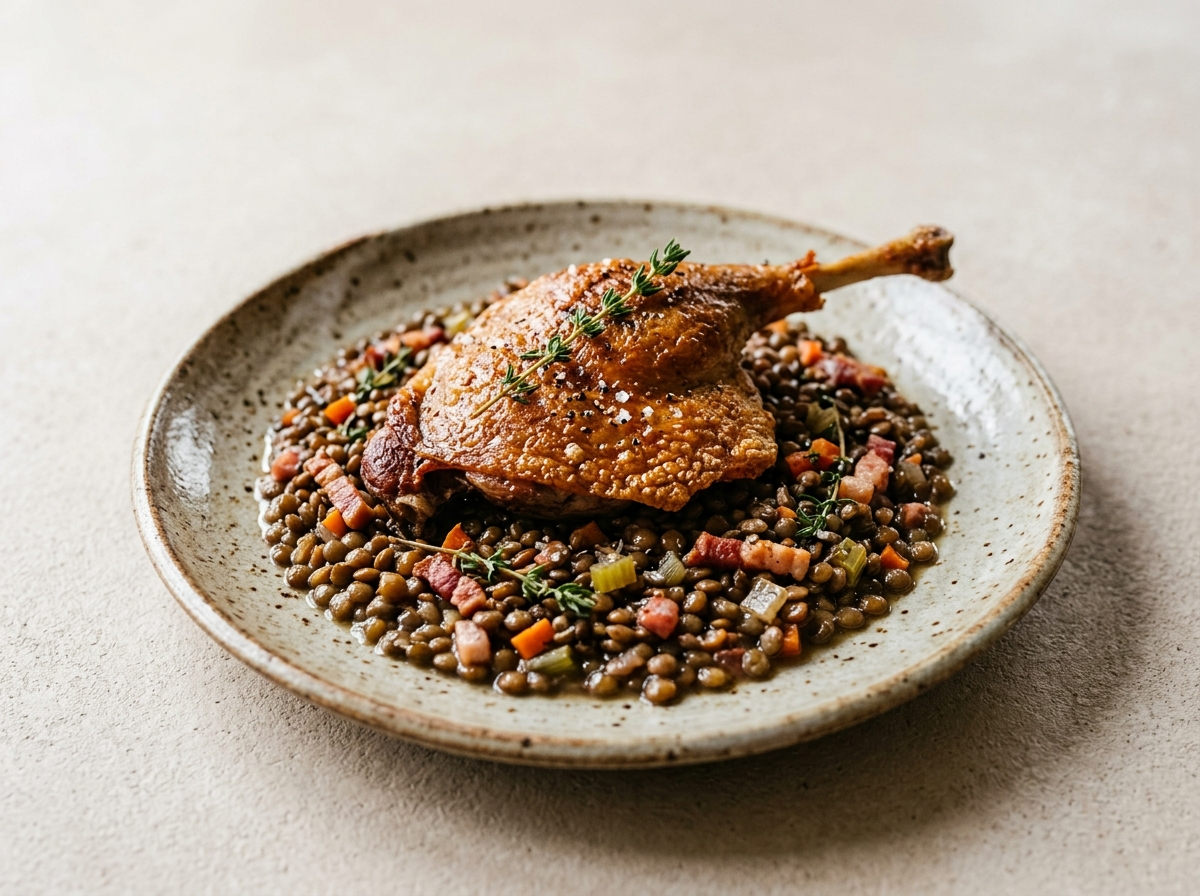
- Spoon the warm lentils onto plates and set a crispy duck leg on top of each portion. Serve right away while the skin is still crackling.
Notes
- Render duck fat slowly on low heat or the skin burns before it crisps.
- Use dried Puy lentils, not canned, so they don't turn mushy.
- Save leftover duck fat for roasting potatoes another night.
- Deglaze with sherry vinegar right after cooking to lift the browned bits.