Ingredients
Method
Prepare and sear the duck
- Pat the duck legs completely dry with paper towels. Score the skin in a 1 cm crosshatch pattern, cutting through the fat but not into the meat.
- Season the legs on both sides with salt, pepper, and garlic powder. Let them sit at room temperature for 15 minutes while you prep the cabbage.
- Place the duck legs skin-side down in a cold, dry oven-safe skillet. Set the heat to medium-low and cook for 18 to 22 minutes, pouring off rendered fat into a heatproof bowl every 5 minutes, until the skin is deep golden and releases cleanly from the pan.
- Flip the legs and sear the flesh side for 3 minutes. Transfer the legs to a plate. Reserve 2 tablespoons of the rendered duck fat in the skillet and set the rest aside.
Braise the cabbage
- Heat the oven to 160 C / 320 F.
- With the skillet still over medium heat, add the sliced onion to the 2 tablespoons of reserved duck fat. Cook for 5 minutes, stirring occasionally, until softened and translucent.
- Add the sliced garlic and caraway seeds and cook for 1 minute until fragrant. Add the cabbage strips and toss to coat in the fat.
- Pour in the apple cider vinegar and chicken stock. Season with salt and pepper. Stir to combine, scraping up any browned bits from the pan bottom.
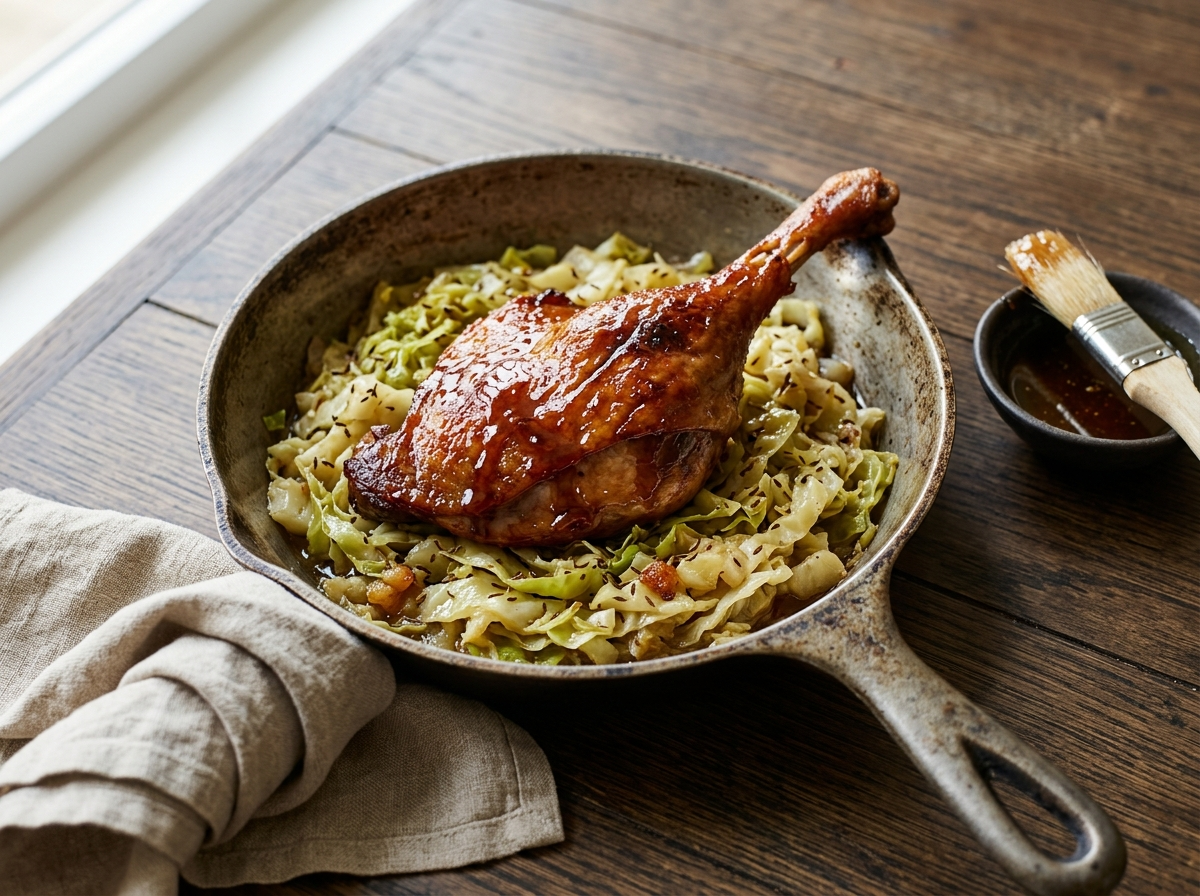
- Nestle the seared duck legs skin-side up on top of the cabbage, making sure the skin sits above the liquid and is not submerged.
Oven braise
- Transfer the skillet uncovered to the oven. Braise at 160 C / 320 F for 50 minutes until the duck legs register 72 C / 162 F internally and the cabbage is fully wilted.
Make the glaze and finish
- While the duck braises, whisk together the honey, soy sauce, Dijon mustard, apple cider vinegar, and grated garlic in a small bowl until smooth.
- Increase the oven temperature to 220 C / 430 F. Brush the duck skin with half the glaze using a pastry brush. Return to the oven for 6 minutes.
- Brush with the remaining glaze and roast for a further 5 to 7 minutes until the skin is lacquered, deep amber, and crisp. Watch closely as the honey can burn quickly at this temperature.
- Check the internal temperature - it should read 75 C / 165 F at the thickest point away from the bone. Remove from the oven.
- Transfer the duck legs to a wire rack and rest for 5 minutes before serving.
Plate and serve
- Spoon the braised cabbage into shallow bowls or onto plates. Place a glazed duck leg on top of each portion. Spoon any remaining pan juices from the skillet over the cabbage.
Notes
If your skillet isn't large enough for all four duck legs without crowding, use two pans for the sear and combine into a roasting pan for the oven stage. Crowded skin steams rather than crisps.