Ingredients
Method
Prepare
- Heat the oven to 200°C (390°F). Position a rack in the center of the oven.
- Trim any silver skin from the tenderloin using a sharp knife, sliding it under the membrane and pulling it away. Pat the meat completely dry with paper towels.
- Season the tenderloin on all sides with kosher salt and black pepper.
- In a small bowl, combine the Dijon mustard, whole-grain mustard, honey, apple cider vinegar, minced garlic, and a pinch of salt. Stir until smooth and set aside.
Sear
- Heat the olive oil in a 10-inch oven-safe cast iron skillet over medium-high heat until the oil just begins to shimmer.
- Add the tenderloin and sear on each side for about 2 minutes per side, turning with tongs, until the surface is deep golden brown on all four sides - about 8 minutes total.
- Remove the skillet from the heat briefly. Using a pastry brush or spoon, coat the top and sides of the tenderloin generously with the honey mustard glaze.
Roast
- Transfer the skillet to the preheated oven. Roast for 15-18 minutes, brushing with any remaining glaze halfway through, until an instant-read thermometer inserted at the thickest point reads 145°F (63°C).
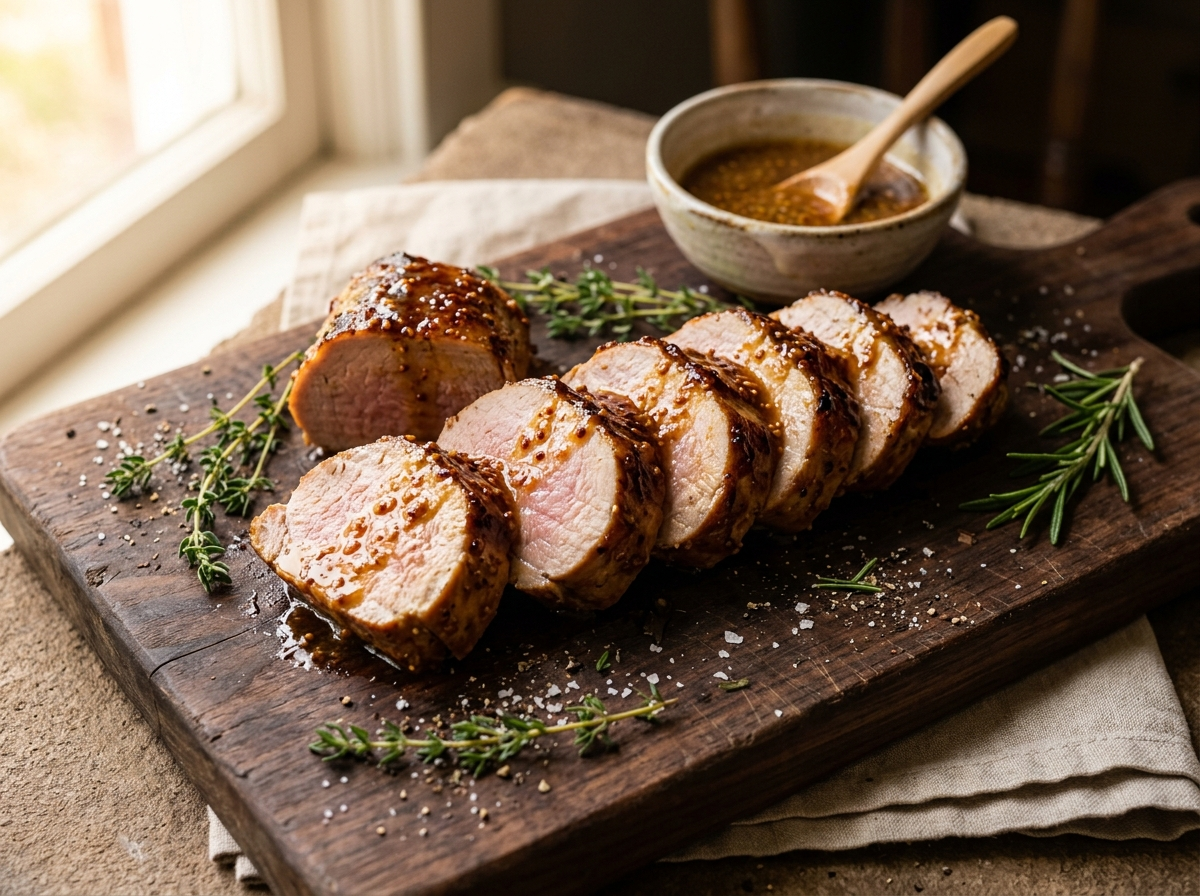
- The glaze should look deep amber and set rather than shiny and wet. If the surface browns too fast before the internal temp is reached, tent loosely with foil.
- Remove the skillet from the oven. Let the tenderloin rest in the pan for 5 minutes before slicing.
Slice and Serve
- Transfer the rested tenderloin to a cutting board. Slice into medallions about 1.5 cm (1/2 inch) thick.
- Arrange on a serving plate and spoon any pan juices from the skillet over the slices. Serve immediately.
Notes
Pork tenderloin is safe and juicy at 145°F (63°C) - the center will look slightly pink, which is correct. Cooking past 160°F will dry it out quickly.