Honey Mustard Glazed Pork Tenderloin
Jump to Recipe
Pork tenderloin is one of the leanest cuts you can roast, and it cooks fast – usually 20 to 25 minutes in a hot oven after a quick sear. The problem most cooks hit is pulling it too early or too late, which gives you either pink-raw or chalky-dry meat.
A honey mustard glaze fixes both issues. The sugars caramelize quickly in a 400°F oven, forming a sticky coat that insulates the meat and signals visually when the surface is done. You’re not guessing – you’re reading the crust.
I use a two-mustard approach here: Dijon for sharpness and whole-grain for texture, similar to the Dijon-based crust on a pistachio crusted rack of lamb. The honey rounds out the acidity without making the glaze cloyingly sweet. A splash of apple cider vinegar keeps everything balanced.
This comes together in about 40 minutes start to finish, eats like a full meal with a simple side, and the leftovers slice cold for lunch the next day.
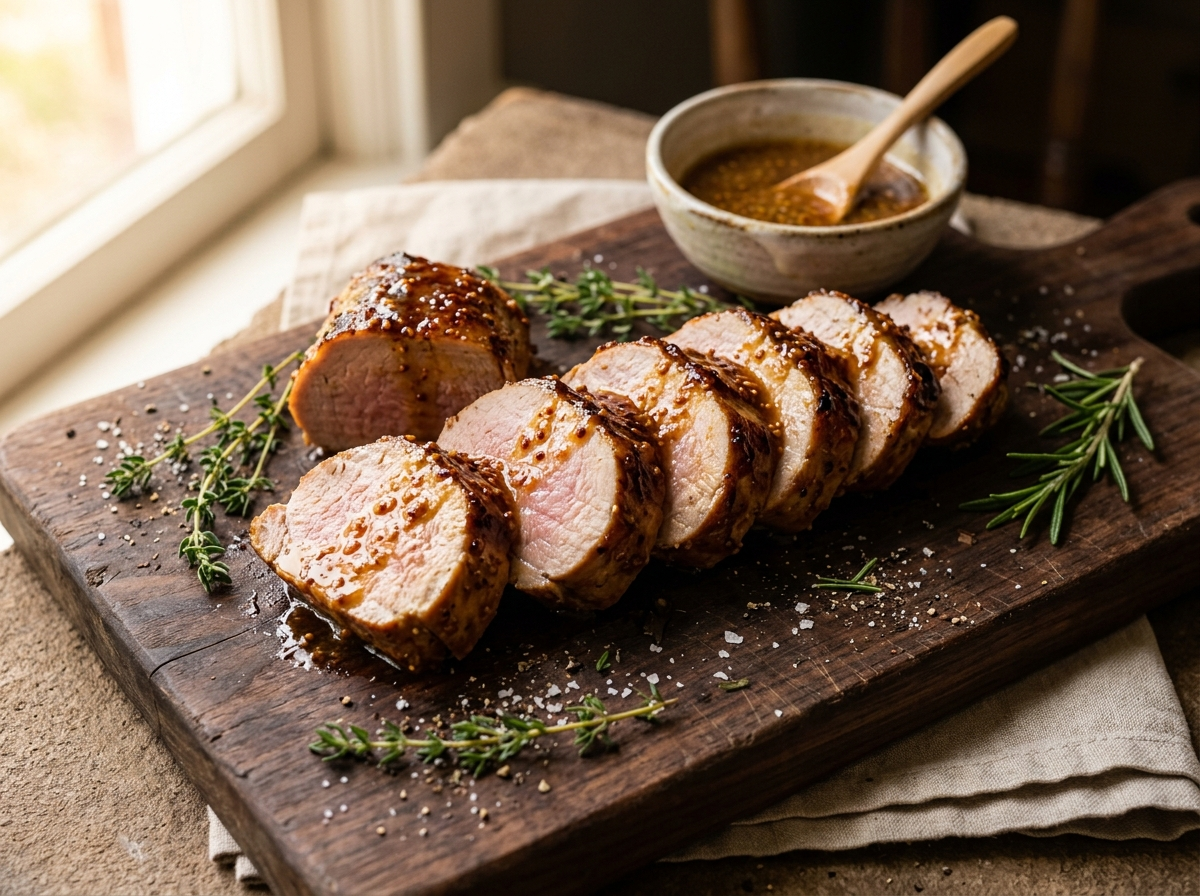
Why You’ll Love This Recipe
- Glaze caramelizes into a sticky, lacquered crust
- Ready in 40 minutes, including sear and roast
- Lean, high-protein cut with big flavor payoff
- One skillet from stovetop to oven, minimal cleanup
Ingredient Notes
- Pork tenderloin: Look for a piece around 500-600 g (about 1.2 lbs). Two smaller tenderloins work just as well – just adjust roasting time down by 3-4 minutes.
- Dijon mustard: Dijon gives the glaze its sharp backbone. French’s yellow mustard works in a pinch but produces a milder, less complex result.
- Whole-grain mustard: The seeds add texture and a mild pop of heat to the crust. Swap for extra Dijon if you don’t have it on hand.
- Honey: A neutral honey like clover or acacia works best here. Darker honeys like buckwheat can overpower the mustard. Maple syrup is a solid substitute.
- Apple cider vinegar: Just one teaspoon cuts through the sweetness and keeps the glaze from tasting flat. White wine vinegar is a fine swap.
- Garlic: Fresh minced garlic adds depth to the glaze. Garlic powder (about 1/4 tsp) works if that’s what you have, but the flavor is less pronounced.
- Olive oil: Used for searing. A neutral oil like avocado or grapeseed handles the high heat better if your pan runs very hot.
Honey Mustard Glazed Pork Tenderloin
Ingredients
Method
- Heat the oven to 200°C (390°F). Position a rack in the center of the oven.
- Trim any silver skin from the tenderloin using a sharp knife, sliding it under the membrane and pulling it away. Pat the meat completely dry with paper towels.
- Season the tenderloin on all sides with kosher salt and black pepper.
- In a small bowl, combine the Dijon mustard, whole-grain mustard, honey, apple cider vinegar, minced garlic, and a pinch of salt. Stir until smooth and set aside.
- Heat the olive oil in a 10-inch oven-safe cast iron skillet over medium-high heat until the oil just begins to shimmer.
- Add the tenderloin and sear on each side for about 2 minutes per side, turning with tongs, until the surface is deep golden brown on all four sides - about 8 minutes total.
- Remove the skillet from the heat briefly. Using a pastry brush or spoon, coat the top and sides of the tenderloin generously with the honey mustard glaze.
- Transfer the skillet to the preheated oven. Roast for 15-18 minutes, brushing with any remaining glaze halfway through, until an instant-read thermometer inserted at the thickest point reads 145°F (63°C).
- The glaze should look deep amber and set rather than shiny and wet. If the surface browns too fast before the internal temp is reached, tent loosely with foil.
- Remove the skillet from the oven. Let the tenderloin rest in the pan for 5 minutes before slicing.
- Transfer the rested tenderloin to a cutting board. Slice into medallions about 1.5 cm (1/2 inch) thick.
- Arrange on a serving plate and spoon any pan juices from the skillet over the slices. Serve immediately.
Notes
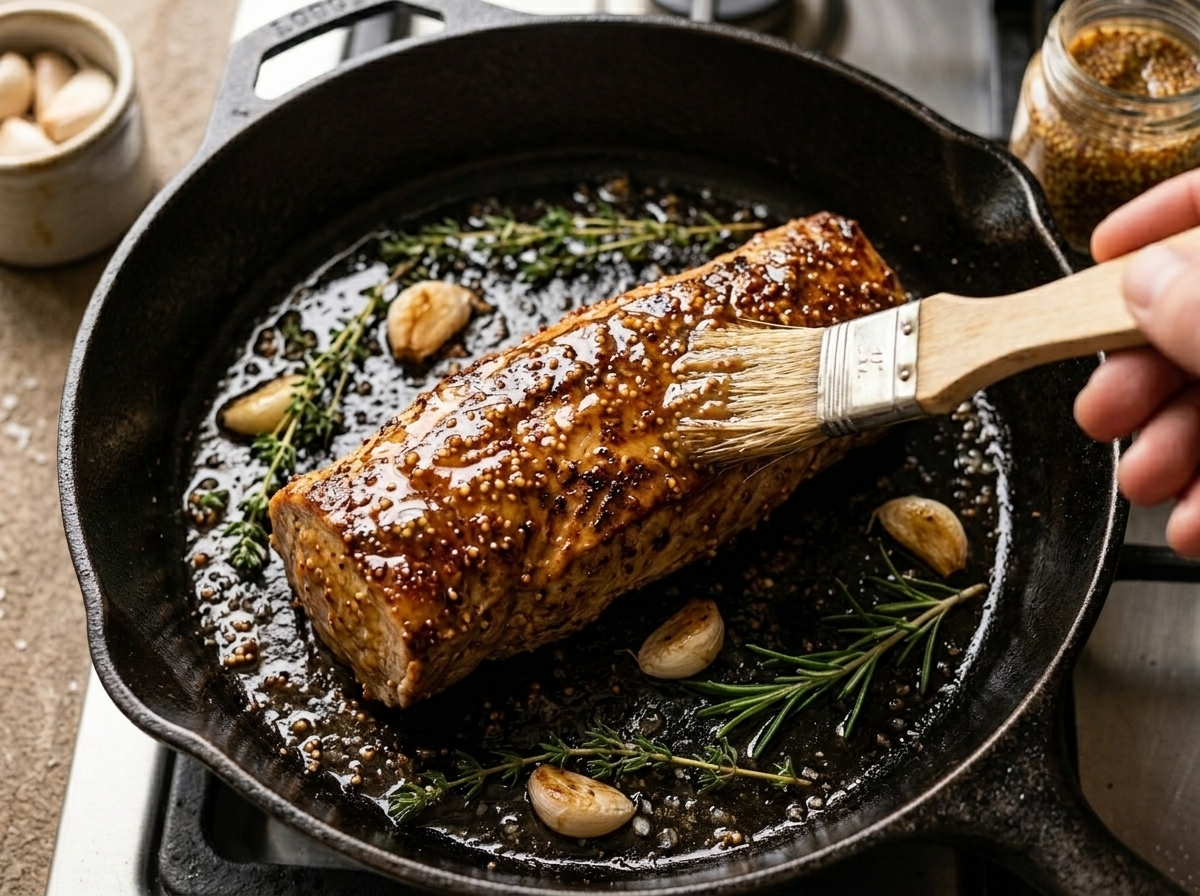
Tips for Success
- Pat the tenderloin completely dry before seasoning so the surface sears rather than steams.
- Sear all four sides until golden brown, about 2 minutes per side, before applying the glaze — the same high-heat searing technique used for crispy pork schnitzel.
- Brush on the glaze after searing, not before, so the honey doesn’t scorch during the stovetop step.
- Use an instant-read thermometer and pull the meat at exactly 145°F (63°C) for a juicy, blush-pink center.
- Rest the roasted tenderloin for 5 full minutes before slicing so the juices redistribute evenly.
Variations
- Swap honey for maple syrup and add 1 tsp smoked paprika for a smoky-sweet glaze with a deeper color.
- Add 1 tsp fresh rosemary and 1 tsp orange zest to the glaze for an herby, citrus-forward version.
- Use the same glaze on pork chops: sear 3 minutes per side, brush glaze, finish under the broiler 2 minutes.
Storage and Reheating
Store leftover pork tenderloin in an airtight container in the refrigerator for up to 4 days. Slice before storing so portions reheat evenly.
To reheat, place slices in a skillet over medium-low heat with a splash of chicken broth or water, cover, and warm for 2-3 minutes until heated through. Avoid the microwave if possible – it dries out the lean meat quickly.
For freezing, wrap the whole or sliced tenderloin tightly in plastic wrap, then foil, and freeze for up to 2 months. Thaw overnight in the refrigerator before reheating.
Serving Suggestions
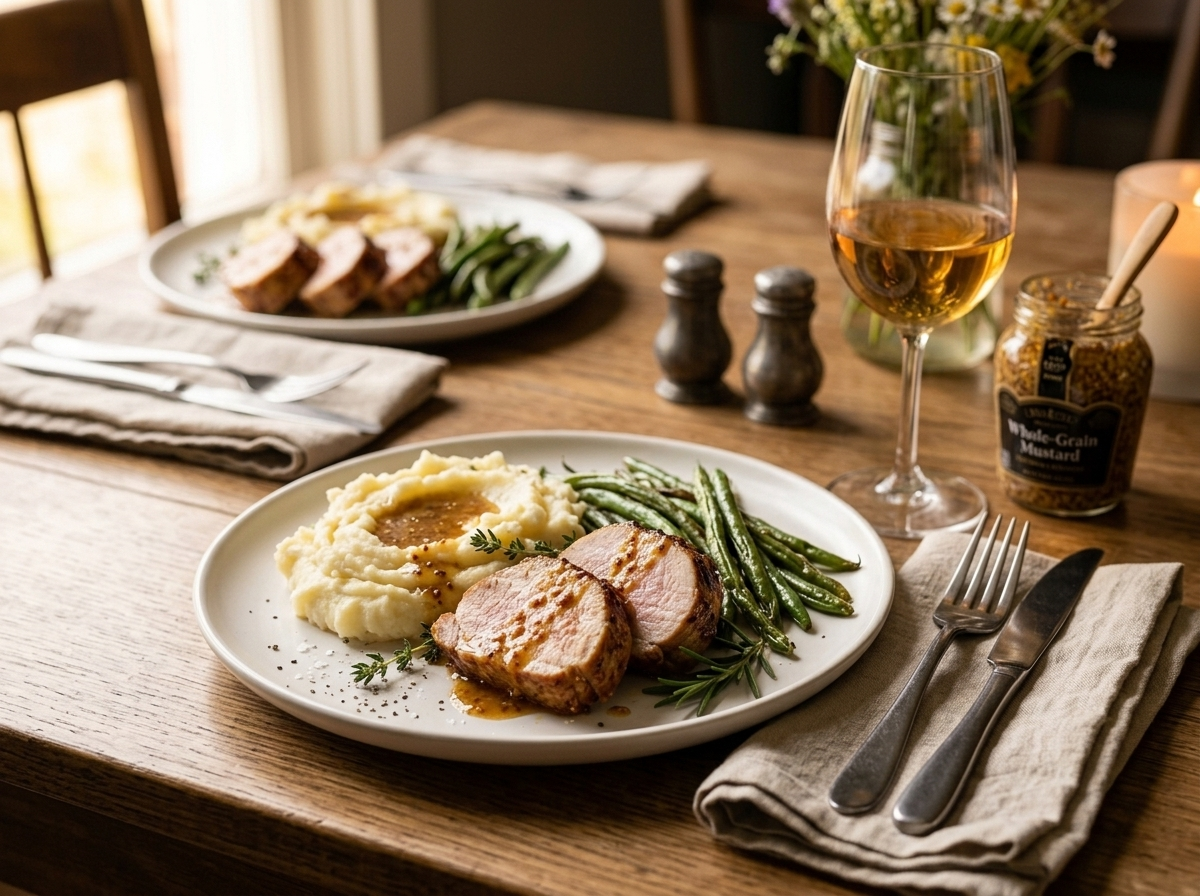
The glaze has enough acidity and sweetness to pair well with starchy sides that absorb the pan juices, much like the sticky-sweet finish on a maple bourbon glazed pork belly. Creamy mashed potatoes or a simple roasted sweet potato are the most natural choices. A quick sauté of green beans or broccolini with garlic rounds out the plate without competing with the glaze.
For a lighter option, slice the tenderloin thinly and serve over a grain like farro or brown rice with a handful of arugula dressed in lemon and olive oil. The peppery greens cut through the richness of the glaze.
Leftover slices work well in a sandwich the next day – thin-sliced on sourdough with a smear of extra Dijon and some pickled red onion.
FAQ
Why is my honey mustard glaze burning before the pork is cooked through?
The honey caramelizes fast at high heat, so always apply the glaze after the initial sear, not before. If the glaze is darkening too quickly in the oven, tent the pan loosely with foil for the last 5 minutes.
Can I use yellow mustard instead of Dijon in this pork tenderloin glaze?
You can, but yellow mustard is milder and more vinegary, so the glaze will taste less complex. If that’s what you have, add a pinch of dry mustard powder to sharpen it up.
Can I marinate the pork tenderloin in the honey mustard glaze overnight?
Yes, and it deepens the flavor noticeably. Keep the marinating tenderloin covered in the fridge for up to 24 hours, but pat it dry before searing so you still get a proper crust.
What sides go well with honey mustard glazed pork tenderloin for a weeknight dinner?
Creamy mashed potatoes or roasted sweet potatoes soak up the pan drippings nicely. A quick green vegetable like sautéed green beans or roasted broccolini keeps the plate balanced without much extra effort.
Is honey mustard glazed pork tenderloin gluten-free?
This recipe is naturally gluten-free as written, since the glaze uses only mustard, honey, vinegar, garlic, and oil. Just check your mustard label – some brands add thickeners that contain gluten.
How do I know when the pork tenderloin is done roasting?
Pull it at an internal temperature of 145°F (63°C) measured at the thickest point – that’s the USDA safe temperature for pork and still gives you a slightly pink, moist center. The glaze should look deep amber and set rather than wet and shiny.
More from the kitchen
About The Author

John
John Watson is the passionate food enthusiast behind MePlusFood.com. With a deep love for exploring culinary delights, he shares honest restaurant reviews, mouthwatering recipes, and culinary adventures. Join John on his flavorful journey to savor the world one bite at a time.