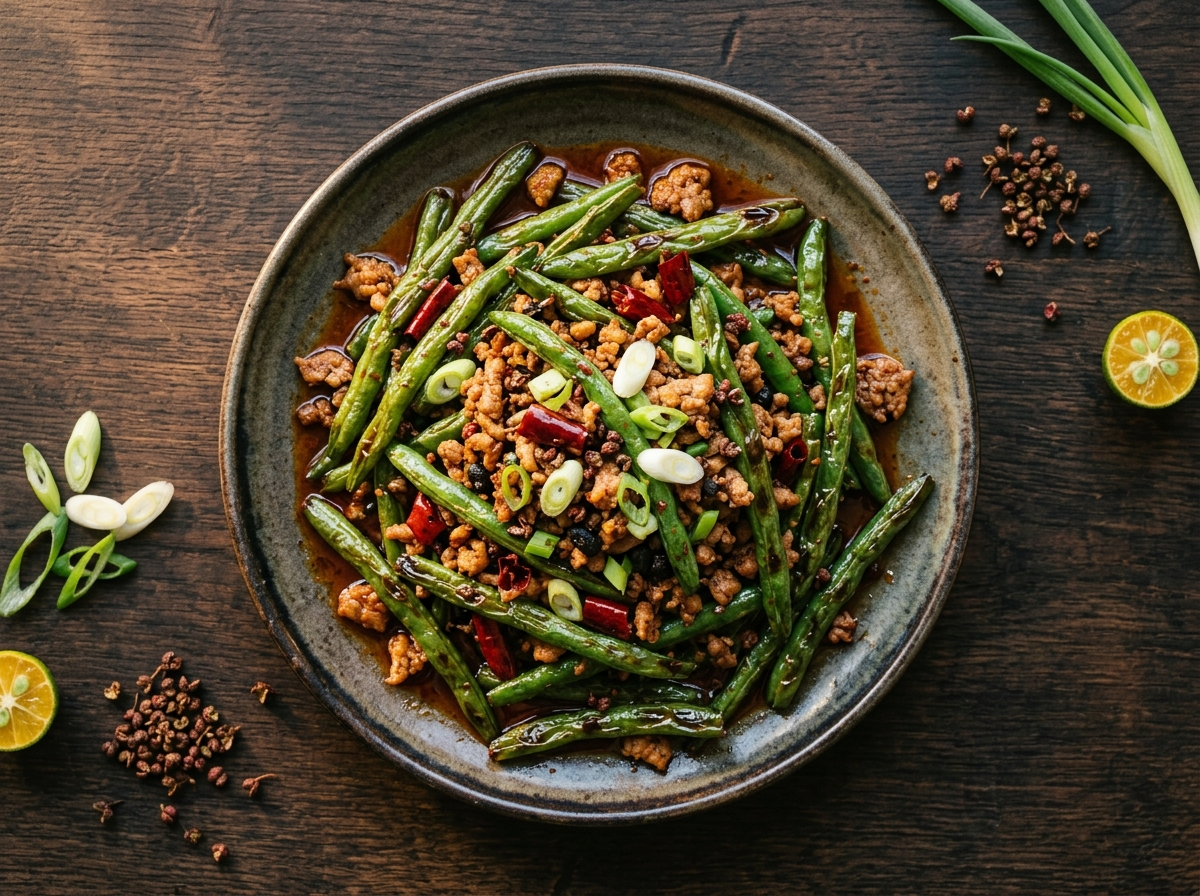
Ingredients
Method
Blister the beans
- Heat a dry 14-inch wok over the highest heat your stove allows for 2 minutes, until the surface is smoking and a drop of water evaporates on contact.
- Add the dried green beans with no oil. Spread in a single layer and let sit undisturbed for 90 seconds until the undersides start to blister and turn spotted.
- Toss the beans and spread again. Repeat this process - toss every 90 seconds - for 8 to 10 minutes total, until the beans are wrinkled, olive-colored, and lightly charred in spots. Transfer to a plate and set aside.
Build the pork and sauce
- Return the wok to high heat. Add the vegetable oil and swirl to coat. Add the ground pork and press into the wok in a thin layer. Cook undisturbed for 2 minutes until browned on the bottom, then break apart and stir-fry for another 2 minutes until cooked through with no pink remaining.
- Push the pork to one side of the wok. Add the doubanjiang directly to the hot oil and fry, stirring constantly, for 60 to 90 seconds until the oil turns deep red and fragrant.
- Add the fermented black beans, garlic, ginger, dried chilies, and the white parts of the scallions. Stir-fry everything together for 60 seconds until fragrant.
- Add the soy sauce, Shaoxing wine, and sugar. Toss to combine and cook for 30 seconds.
Finish and serve
- Return the blistered green beans to the wok. Toss vigorously over high heat for 2 minutes until the beans are fully coated in the sauce and heated through.
- Remove from heat. Drizzle with sesame oil, scatter the cracked Szechuan peppercorns and the green parts of the scallions over the top.
- Serve immediately over steamed rice, scooping the pork and spiced oil from the bottom of the wok over each portion.
Notes
If your stove runs low on BTUs, blister the beans in two batches to avoid steaming. A cast-iron skillet gets hot enough to substitute for a wok on most home ranges.