Szechuan Dry Fried Green Beans with Pork
Jump to Recipe
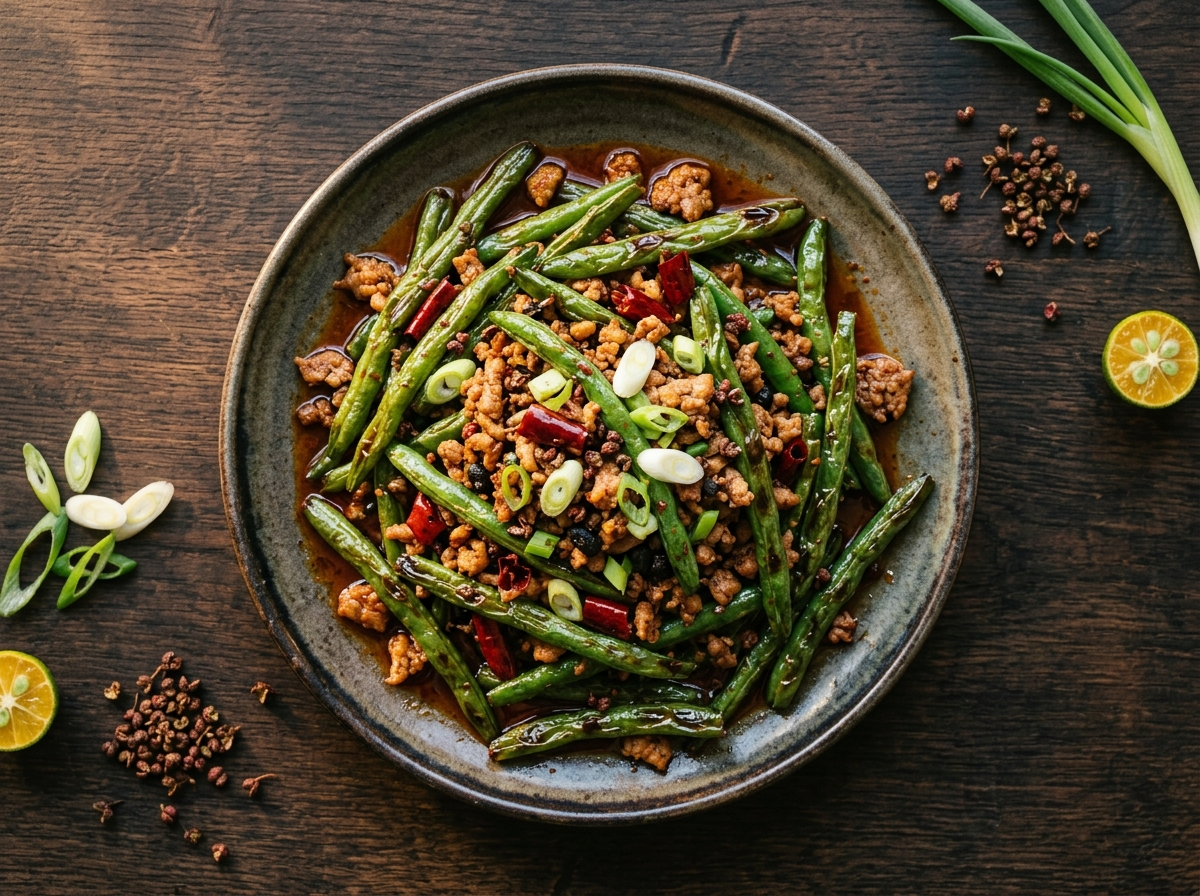
Dry-fried green beans, or gan bian si ji dou, is one of the most requested dishes at Szechuan restaurants – and one of the most botched at home. Most home versions steam or stir-fry the beans instead of blistering them, and you end up with soft, squeaky beans that miss the point entirely.
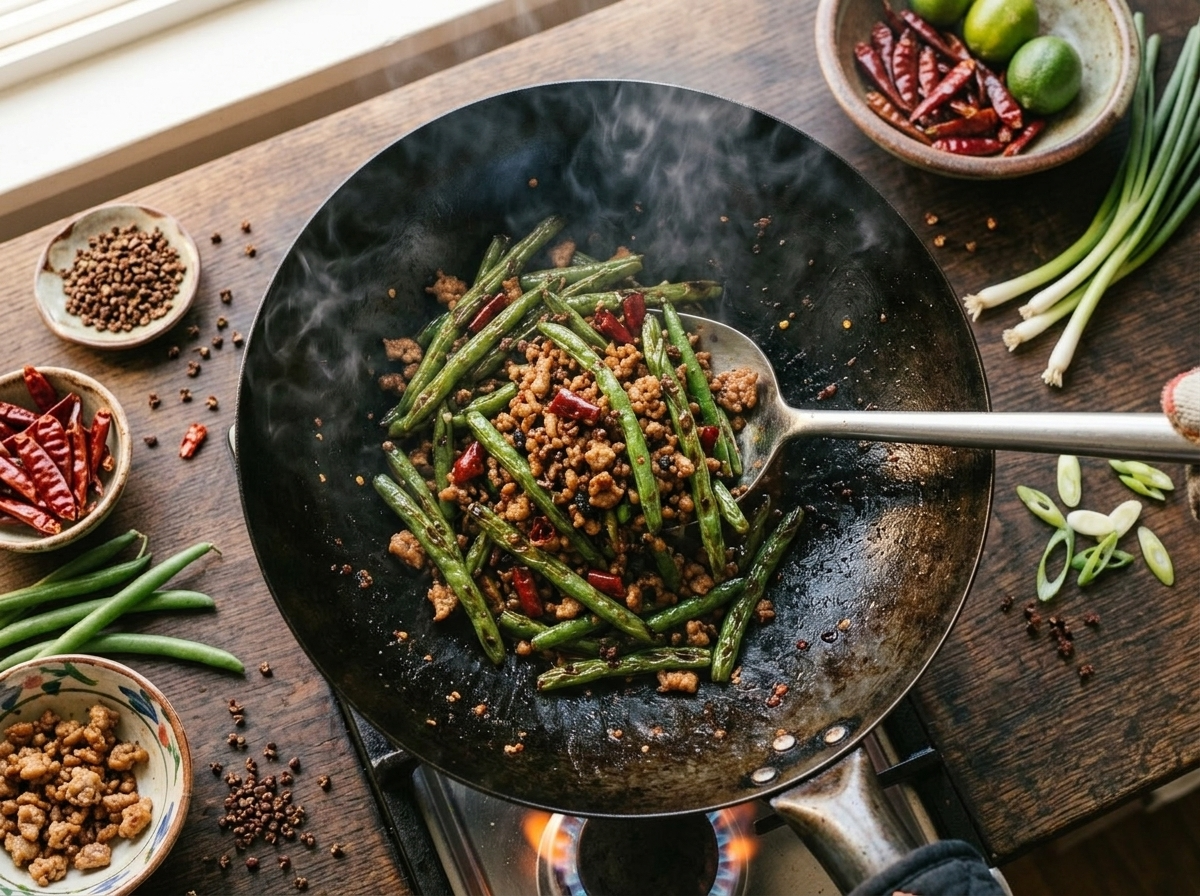
The fix is patience and a hot, dry wok. No oil at first. You let the beans sit and blister, tossing only occasionally, until the skins wrinkle and the color deepens to a spotted olive green. That takes 8 to 10 minutes, and it’s non-negotiable.
Ground pork adds the savory backbone. Fermented black beans and a little doubanjiang (Szechuan chili bean paste) bring the heat and funk. Dried chilies and Szechuan peppercorns give you that distinctive ma la – numbing and spicy – that makes the dish unmistakable.
This comes together in about 40 minutes and works as a main over rice or as a side alongside a simple soup.
Why You’ll Love This Recipe
- Beans blister dry before any oil – real Szechuan technique
- One wok, minimal cleanup, done in 40 minutes
- Doubanjiang and fermented black beans build deep, savory heat
- Holds well – flavors sharpen on day two
Ingredient Notes
- Green beans: Use long green beans or regular snap beans, dried thoroughly before they hit the wok. Any surface moisture causes steaming instead of blistering, so pat them well after washing.
- Ground pork: 80/20 ground pork works best here – the fat renders into the wok and bastes the beans. Ground turkey is a leaner substitute but will need a teaspoon of sesame oil to compensate.
- Doubanjiang: This Szechuan chili bean paste is the flavor anchor of the dish. Lee Kum Kee or Pixian brands are widely available. If you can’t find it, substitute with a mix of gochujang and a teaspoon of soy sauce, though the flavor profile will shift.
- Fermented black beans (douchi): Sold in small bags or jars at Asian grocery stores. Roughly chop them before adding to release their briny, pungent flavor. Rinse lightly if yours taste very salty.
- Szechuan peppercorns: Toast them in a dry pan for 60 seconds then crack in a mortar – they lose potency fast after grinding. No direct substitute exists for the numbing effect, but if unavailable, the dish is still worth making.
- Dried red chilies: Chinese er jing tiao or facing heaven chilies are traditional. Dried arbol chilies work as a substitute. Adjust the quantity based on your heat tolerance – the seeds stay in for full heat.
Szechuan Dry Fried Green Beans with Pork
Ingredients
Method
- Heat a dry 14-inch wok over the highest heat your stove allows for 2 minutes, until the surface is smoking and a drop of water evaporates on contact.
- Add the dried green beans with no oil. Spread in a single layer and let sit undisturbed for 90 seconds until the undersides start to blister and turn spotted.
- Toss the beans and spread again. Repeat this process - toss every 90 seconds - for 8 to 10 minutes total, until the beans are wrinkled, olive-colored, and lightly charred in spots. Transfer to a plate and set aside.
- Return the wok to high heat. Add the vegetable oil and swirl to coat. Add the ground pork and press into the wok in a thin layer. Cook undisturbed for 2 minutes until browned on the bottom, then break apart and stir-fry for another 2 minutes until cooked through with no pink remaining.
- Push the pork to one side of the wok. Add the doubanjiang directly to the hot oil and fry, stirring constantly, for 60 to 90 seconds until the oil turns deep red and fragrant.
- Add the fermented black beans, garlic, ginger, dried chilies, and the white parts of the scallions. Stir-fry everything together for 60 seconds until fragrant.
- Add the soy sauce, Shaoxing wine, and sugar. Toss to combine and cook for 30 seconds.
- Return the blistered green beans to the wok. Toss vigorously over high heat for 2 minutes until the beans are fully coated in the sauce and heated through.
- Remove from heat. Drizzle with sesame oil, scatter the cracked Szechuan peppercorns and the green parts of the scallions over the top.
- Serve immediately over steamed rice, scooping the pork and spiced oil from the bottom of the wok over each portion.
Notes
Tips for Success
- Dry the green beans completely with a kitchen towel before they go into the wok – any moisture steams the beans instead of blistering them.
- Start the beans in a completely dry wok over high heat for 8 to 10 minutes, tossing every 90 seconds, until the skins wrinkle and develop charred spots.
- Add oil only after the beans are blistered – swirl it around the hot wok, then push beans to the side and cook the pork directly on the hot surface.
- Fry the doubanjiang in the pork fat for 60 to 90 seconds until the oil turns red – this blooms the paste and removes the raw edge.
- Add the cracked Szechuan peppercorns at the very end, off the heat, so the numbing compounds stay volatile and fragrant rather than cooking off.
Variations
- Vegetarian version: swap pork for finely diced firm tofu or crumbled tempeh, and add an extra tablespoon of fermented black beans for depth.
- Extra-spicy: double the dried chilies and add a teaspoon of chili oil at finish for a glossier, hotter sauce that coats the beans.
- Garlic lover’s version: add 4 minced garlic cloves with the ginger for a more pungent, less spice-forward profile that pairs well with plain jasmine rice.
Storage and Reheating
Store leftover dry fried green beans in an airtight container in the refrigerator for up to 3 days. The flavors deepen overnight as the beans absorb the pork sauce.
Reheat in a hot wok or skillet with a splash of water – about 1 to 2 tablespoons – over medium-high heat for 3 to 4 minutes, tossing frequently. Avoid the microwave if you can, as it softens the beans and loses the blistered texture.
This dish does not freeze well. The beans turn mushy after thawing and lose the textural contrast that makes the dish worth eating.
Serving Suggestions
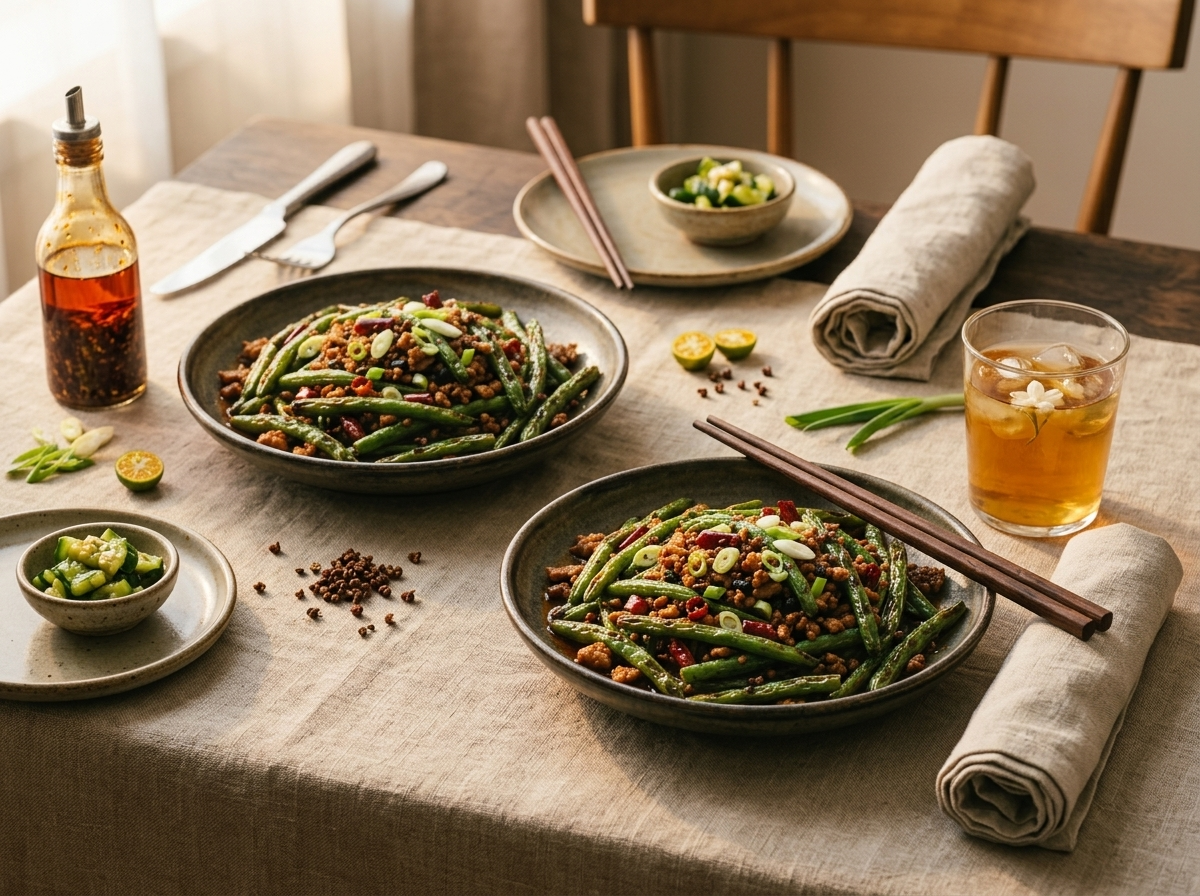
Serve over steamed jasmine rice or short-grain white rice, which absorbs the spiced pork oil from the bottom of the wok. A bowl of plain congee alongside cuts the heat well if you’re serving guests with lower spice tolerance.
For a fuller spread, pair with a simple egg drop soup or a cold cucumber salad dressed with rice vinegar and sesame oil – both neutral flavors that let the Szechuan spice stand out without competing.
This also works as a side alongside mapo tofu or a whole steamed fish with ginger and scallion for a restaurant-style Szechuan dinner at home.
FAQ
Why are my dry fried green beans soft instead of wrinkled and chewy?
The beans weren’t dry enough before they hit the wok, or the wok wasn’t hot enough to blister them. Pat the beans completely dry and cook them in a dry wok over the highest heat your stove produces for the full 8 to 10 minutes.
Can I use canned black beans instead of fermented black beans in this recipe?
No – canned black beans are a completely different ingredient. Fermented black beans (douchi) are small, salty, pungent, and funky. You can find them at any Asian grocery store, and there’s no real substitute that replicates their flavor in this dish.
Can I prep the blistered green beans ahead of time and add the pork later?
Yes. Blister the beans up to 4 hours ahead and hold them at room temperature. When ready to serve, reheat the wok, cook the pork and sauce from scratch, and toss the pre-blistered beans in during the final 2 minutes.
What goes well with Szechuan dry fried green beans besides plain rice?
Cold sesame noodles, steamed bao, or a simple warming broth all work well alongside this dish. The beans are bold and oily, so you want neutral, starchy accompaniments that absorb the sauce rather than add more flavor layers.
Is Szechuan dry fried green beans with pork gluten-free?
Not as written – doubanjiang and many fermented black bean brands contain wheat. To make it gluten-free, use a certified gluten-free chili bean paste and tamari instead of soy sauce, and check the black bean label carefully.
What’s the difference between dry fried green beans and regular stir-fried green beans?
Dry frying starts with no oil and a very hot wok, which collapses the beans and wrinkles the skin before any fat is added. Stir-frying uses oil from the start, which cooks the beans faster but leaves them crisp and bright green rather than chewy and blistered.
About The Author

John
John Watson is the passionate food enthusiast behind MePlusFood.com. With a deep love for exploring culinary delights, he shares honest restaurant reviews, mouthwatering recipes, and culinary adventures. Join John on his flavorful journey to savor the world one bite at a time.