Ingredients
Method
Make the Tamarind Glaze
- Combine the tamarind concentrate, brown sugar, fish sauce, lime juice, garlic, ginger, and neutral oil in a small bowl. Stir until the sugar dissolves and the mixture is smooth. Set aside.
- Taste the glaze - it should be tangy, savory, and just slightly sweet. Add a pinch more sugar if too sharp, or a small squeeze of lime if too flat.
Cook the Coconut Rice
- Rinse the jasmine rice under cold water until the water runs clear, then drain.
- Combine the rinsed rice, coconut milk, water, and salt in a medium saucepan. Bring to a boil over medium-high heat, stirring once.
- Reduce heat to low, cover with a tight-fitting lid, and cook for 15 minutes without lifting the lid.
- Remove from heat and let the rice rest, still covered, for 5 minutes. Fluff with a fork before serving.
Cook the Salmon
- Pat the salmon fillets completely dry with paper towels. Season the flesh side with salt and pepper.
- Heat 1 tbsp neutral oil in a 10-inch nonstick or cast iron skillet over medium-high heat until shimmering.
- Place the salmon fillets skin-side down in the skillet. Press gently with a spatula for the first 30 seconds to prevent curling. Cook undisturbed for 4-5 minutes until the skin is golden and crisp and the flesh has turned opaque two-thirds of the way up the sides.
- Flip the fillets and cook on the flesh side for 1 minute.
- Reduce heat to medium. Spoon or brush the tamarind glaze generously over the top of each fillet. Cook for 1-2 more minutes until the glaze bubbles and darkens slightly. Internal temperature should read 52-55 C (125-130 F) for moist results.
- Remove the pan from heat and rest the salmon in the pan for 1 minute so the glaze sets.
Plate and Serve
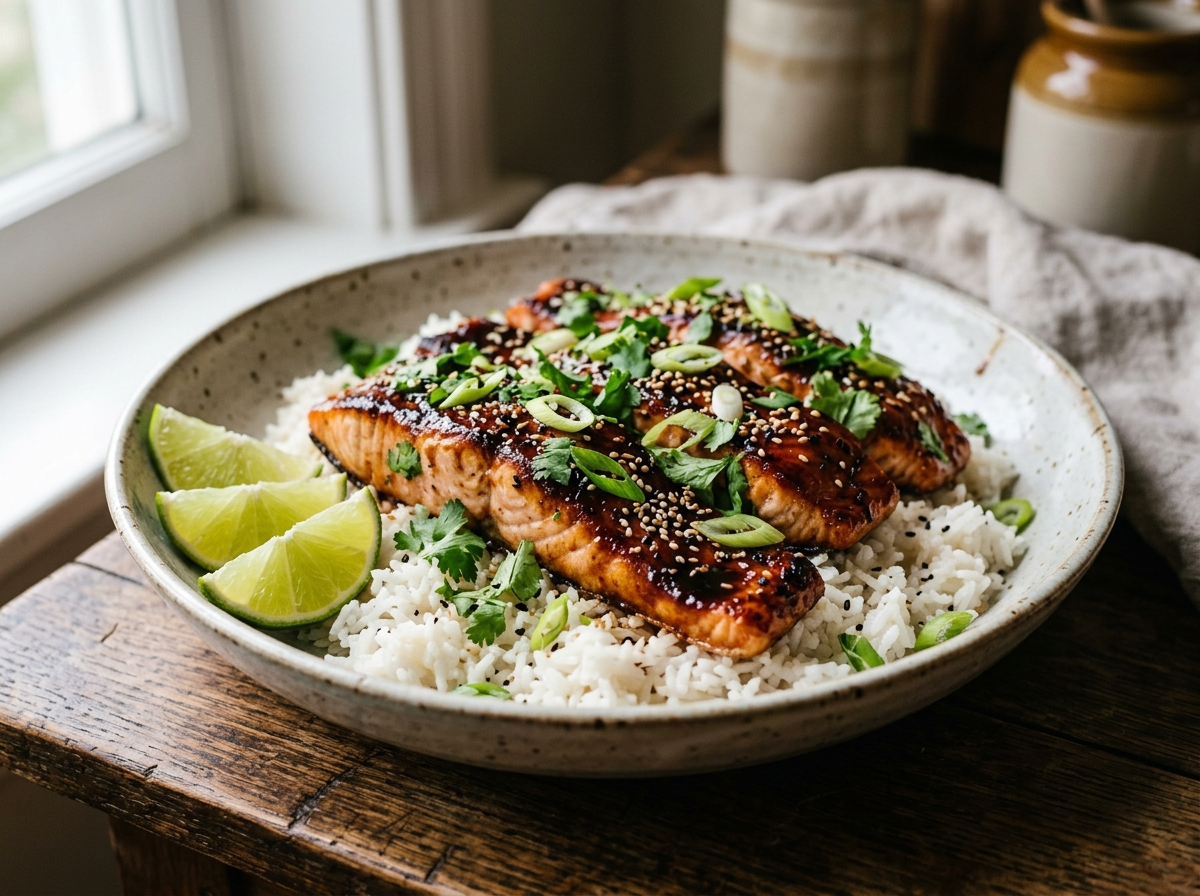
- Spoon a mound of coconut rice onto each plate. Place one salmon fillet on top or alongside the rice, skin-side up to keep it crisp.
- Scatter fresh cilantro, sliced scallions, and sesame seeds over the top. Serve with lime wedges on the side.
Notes
If your salmon fillets have uneven thickness, fold the thin tail end under itself before cooking so the whole fillet cooks at the same rate.