Tamarind Glazed Salmon with Coconut Rice
Jump to Recipe
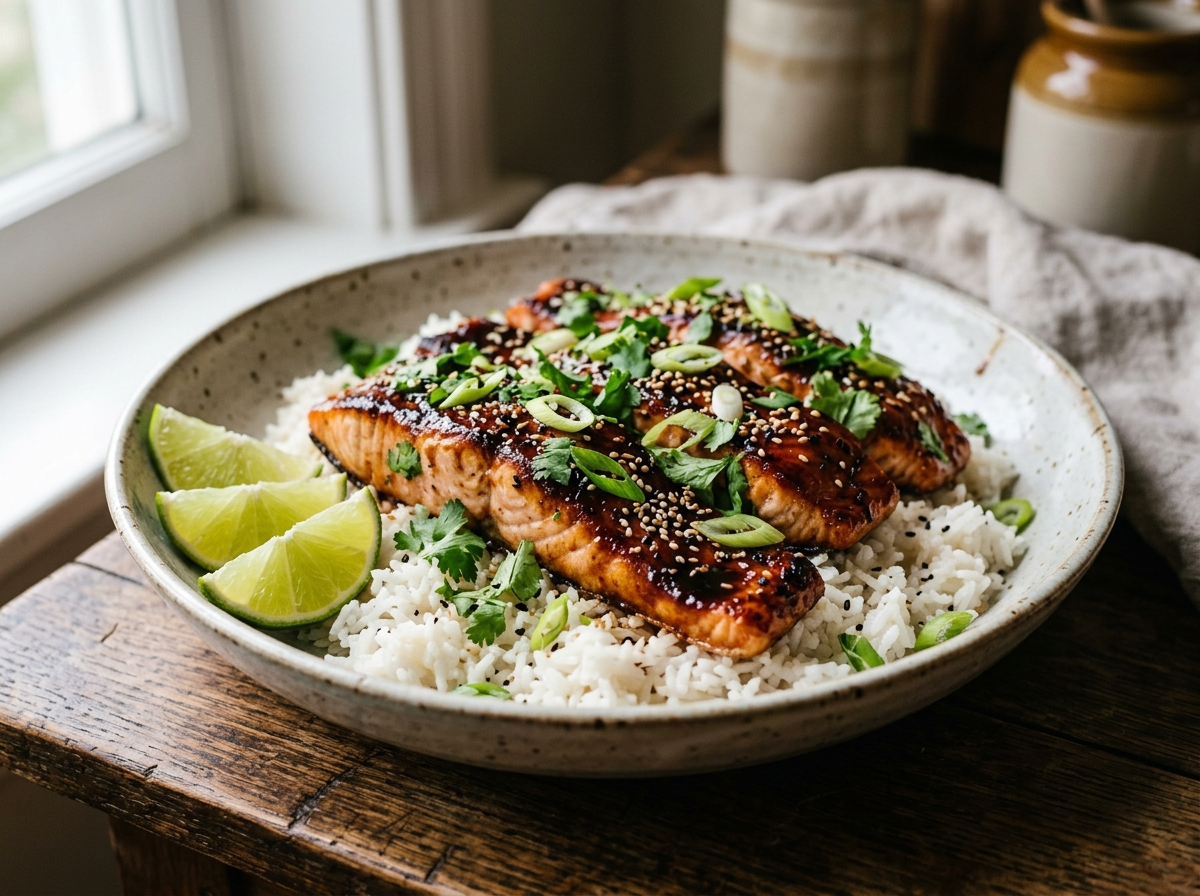
Tamarind and salmon are a natural match. The tartness cuts through the fat in the fish, and a touch of brown sugar in the glaze gives you those slightly charred, sticky edges that make this worth cooking on a Tuesday night.
The coconut rice isn’t an afterthought here. Cooked in a mix of coconut milk and water, it absorbs just enough richness to balance the sharp glaze without tasting like dessert.
The whole plate comes together in about 40 minutes, and most of that is passive cooking time. You can have the glaze mixed and the rice simmering before you even touch the salmon.
I use tamarind concentrate for speed, but if you have tamarind paste from a block, it works even better – just soak, strain, and measure.
Why You’ll Love This Recipe
- Sticky tamarind glaze caramelizes in minutes on the stovetop
- Coconut rice cooks hands-free while you prep the salmon
- One skillet for the fish, one pot for the rice – minimal cleanup
- Bold Southeast Asian flavor from pantry-friendly ingredients
Ingredient Notes
- Tamarind concentrate: Look for tamarind concentrate or paste in the Asian or international aisle. If you only have a block of tamarind pulp, soak a walnut-sized piece in 3 tbsp of warm water for 10 minutes, then push it through a sieve.
- Salmon fillets: Skin-on fillets hold together better in the pan and the skin crisps up nicely under the glaze. Center-cut pieces of even thickness cook more uniformly – aim for around 170-180 g each.
- Coconut milk: Full-fat canned coconut milk gives the rice a creamier texture. Light coconut milk works but produces a leaner result with less flavor. Shake the can well before opening.
- Fish sauce: Fish sauce adds a savory depth to the glaze that soy sauce doesn’t quite replicate. If you need a substitute, use low-sodium soy sauce and add a small squeeze of lime to compensate.
- Jasmine rice: Jasmine rice absorbs coconut milk cleanly and stays slightly fluffy rather than gummy. Basmati is a reasonable substitute, though the texture will be drier and more separate.
- Brown sugar: Light or dark brown sugar both work in the glaze. Dark brown sugar gives a deeper, more molasses-forward caramel note. Coconut sugar is a fine substitute at the same quantity.
Tamarind Glazed Salmon with Coconut Rice
Ingredients
Method
- Combine the tamarind concentrate, brown sugar, fish sauce, lime juice, garlic, ginger, and neutral oil in a small bowl. Stir until the sugar dissolves and the mixture is smooth. Set aside.
- Taste the glaze - it should be tangy, savory, and just slightly sweet. Add a pinch more sugar if too sharp, or a small squeeze of lime if too flat.
- Rinse the jasmine rice under cold water until the water runs clear, then drain.
- Combine the rinsed rice, coconut milk, water, and salt in a medium saucepan. Bring to a boil over medium-high heat, stirring once.
- Reduce heat to low, cover with a tight-fitting lid, and cook for 15 minutes without lifting the lid.
- Remove from heat and let the rice rest, still covered, for 5 minutes. Fluff with a fork before serving.
- Pat the salmon fillets completely dry with paper towels. Season the flesh side with salt and pepper.
- Heat 1 tbsp neutral oil in a 10-inch nonstick or cast iron skillet over medium-high heat until shimmering.
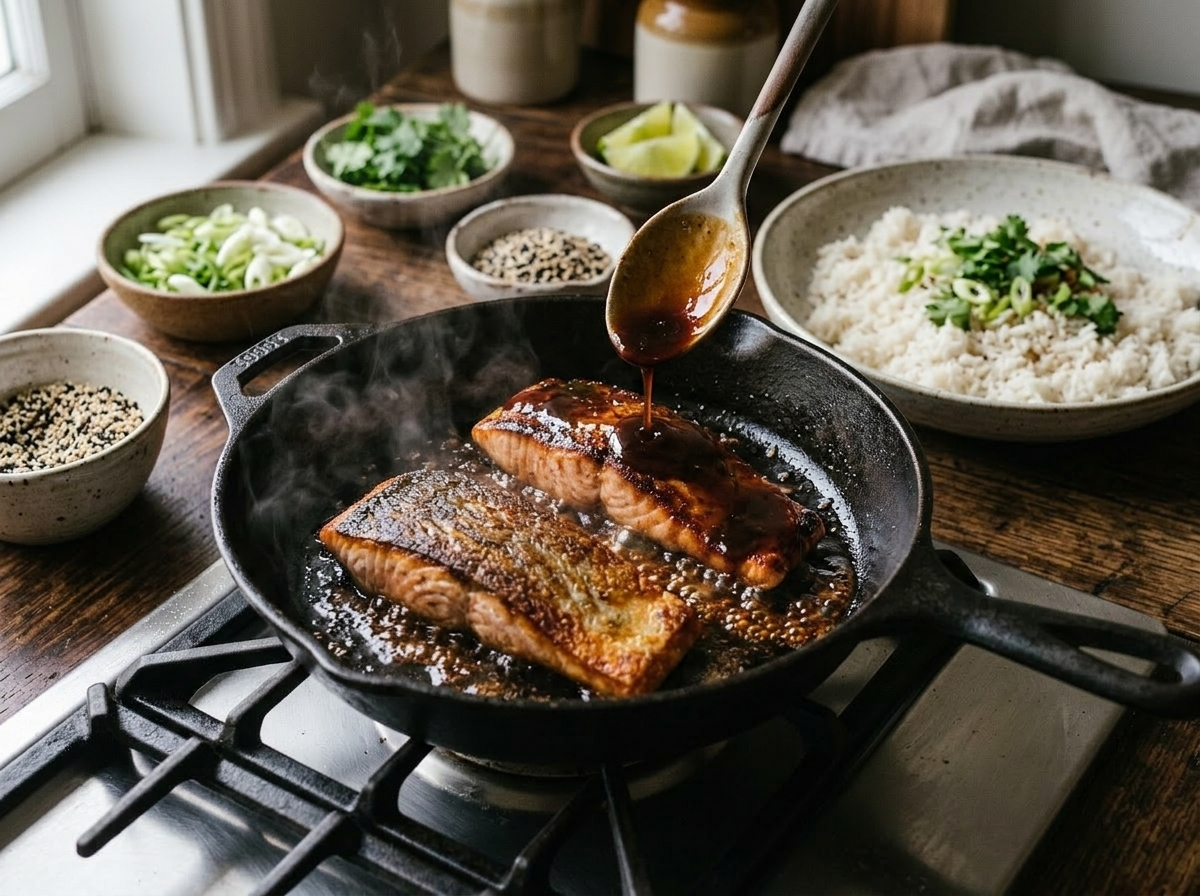
- Place the salmon fillets skin-side down in the skillet. Press gently with a spatula for the first 30 seconds to prevent curling. Cook undisturbed for 4-5 minutes until the skin is golden and crisp and the flesh has turned opaque two-thirds of the way up the sides.
- Flip the fillets and cook on the flesh side for 1 minute.
- Reduce heat to medium. Spoon or brush the tamarind glaze generously over the top of each fillet. Cook for 1-2 more minutes until the glaze bubbles and darkens slightly. Internal temperature should read 52-55 C (125-130 F) for moist results.
- Remove the pan from heat and rest the salmon in the pan for 1 minute so the glaze sets.
- Spoon a mound of coconut rice onto each plate. Place one salmon fillet on top or alongside the rice, skin-side up to keep it crisp.
- Scatter fresh cilantro, sliced scallions, and sesame seeds over the top. Serve with lime wedges on the side.
Notes
Tips for Success
- Pat the salmon fillets completely dry before glazing – moisture prevents caramelization and causes the glaze to steam instead of char.
- Start the coconut rice first – it takes about 18 minutes and can rest covered off the heat while you cook the salmon.
- Cook the salmon skin-side down first over medium-high heat and don’t move it for the first 4 minutes so the skin crisps before you flip.
- Apply the glaze in the final 2-3 minutes of cooking, not the beginning – tamarind and sugar burn quickly over high heat.
- Let the cooked salmon rest in the pan off the heat for 1 minute before plating so the glaze sets and doesn’t run.
Variations
- Swap salmon for firm tofu slabs: press dry, glaze the same way, and bake at 200 C for 20 minutes.
- Add 1 tsp of sambal oelek or chili flakes to the glaze for a heat-forward version with more bite.
- Stir a handful of baby spinach or frozen peas into the coconut rice in the last 2 minutes for added color and nutrition.
Storage and Reheating
Store leftover salmon and coconut rice separately in airtight containers in the refrigerator for up to 2 days. The glaze firms up when cold but loosens again with heat.
To reheat the salmon, place it in a covered skillet over low heat with a splash of water for 3-4 minutes. Avoid the microwave if you can – it tends to dry out the fish and make the glaze rubbery.
The coconut rice reheats well in the microwave with a tablespoon of water added and a damp paper towel over the bowl. Give it 90 seconds at medium power and fluff with a fork before serving.
Serving Suggestions
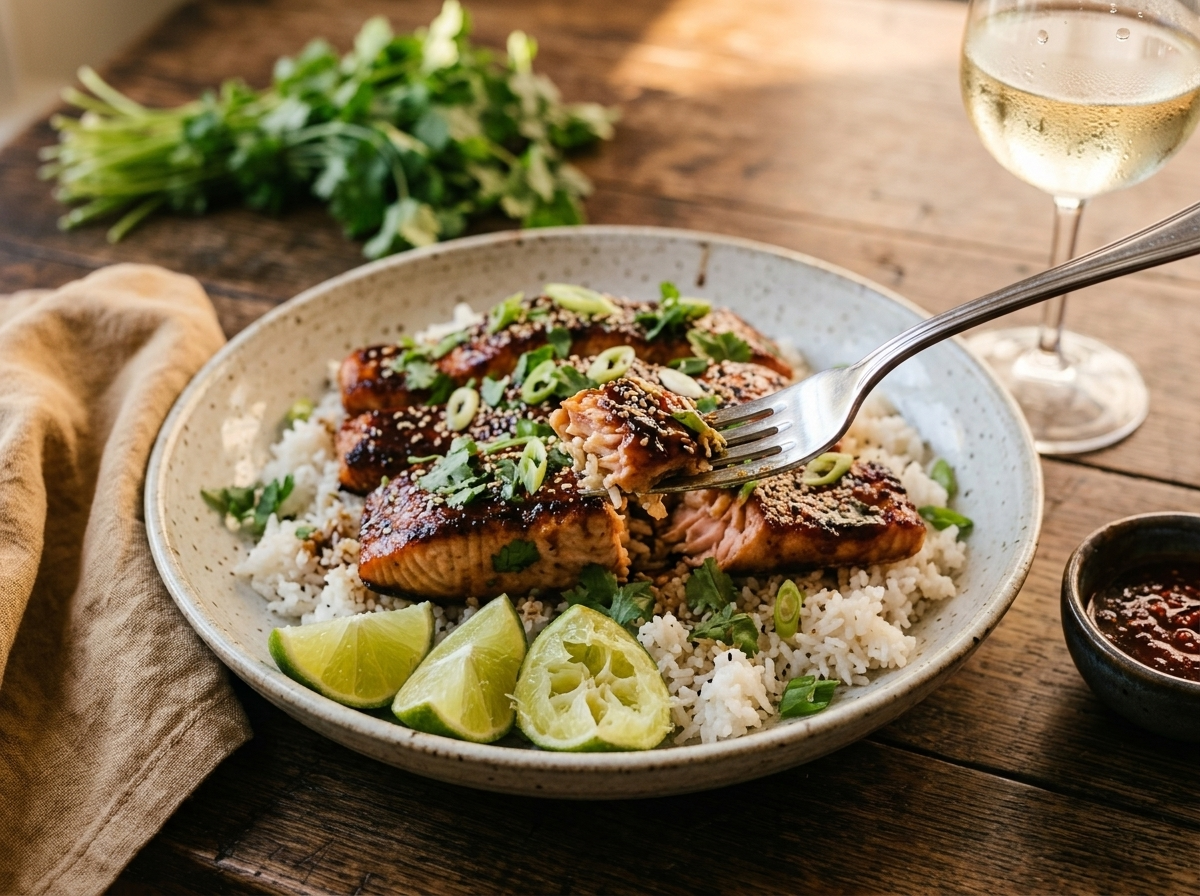
Serve the salmon over a mound of coconut rice with lime wedges on the side. A handful of fresh cilantro and thinly sliced scallions on top add color and a sharp contrast to the sweet glaze.
A simple cucumber salad dressed with rice vinegar, sesame oil, and a pinch of sugar works well alongside this, or try a miso carrot noodle salad with sesame ginger for something more substantial – the cool crunch offsets the warm, sticky fish. Pickled red onion or a quick mango slaw are equally good here.
For a more composed plate, add a few steamed or blanched broccolini spears and a drizzle of chili oil, or swap in a charred broccoli almond salad on the side. The plate eats like a full meal on its own, but it also stretches well as part of a spread with a light roasted garlic white bean broth.
FAQ
Why is my tamarind glaze burning before the salmon is cooked through?
The sugar in tamarind glaze burns fast over high heat, so you should only brush it on in the last 2-3 minutes of cooking, not at the start. Lower the heat to medium before adding the glaze and watch it closely – it should bubble and darken but not blacken.
Can I use tamarind paste from a block instead of concentrate for this glaze?
Yes, block tamarind actually gives a slightly fruitier, less processed flavor. Soak about 25 g of tamarind pulp in 3 tbsp of warm water, mash it with a fork, then press it through a fine-mesh sieve before using the liquid in the glaze.
Can I freeze the tamarind glazed salmon after cooking?
Cooked salmon freezes poorly – the texture gets watery and flaky after thawing. You can freeze the uncooked, marinated fillets for up to 1 month, then thaw overnight in the fridge and cook fresh.
What sauce or condiment pairs best with tamarind glazed salmon?
A simple sriracha-lime mayo or a thin nuoc cham dipping sauce both complement the tamarind glaze without competing with it. Avoid heavy cream-based sauces – they clash with the tartness.
Is this tamarind salmon recipe gluten-free?
It can be made gluten-free by swapping regular soy sauce for tamari or a certified gluten-free soy sauce, and checking that your tamarind concentrate has no added wheat. All other ingredients in the recipe are naturally gluten-free.
How do I know when the salmon is cooked through without cutting into it?
Press the thickest part of the fillet gently with a finger – it should feel firm but still have a slight give, not springy. An instant-read thermometer inserted into the center should read 52-55 C (125-130 F) for a moist, just-cooked result.
About The Author

John
John Watson is the passionate food enthusiast behind MePlusFood.com. With a deep love for exploring culinary delights, he shares honest restaurant reviews, mouthwatering recipes, and culinary adventures. Join John on his flavorful journey to savor the world one bite at a time.