Greek-Style Cinnamon-Spiced Lamb and Aubergine Moussaka
Jump to Recipe
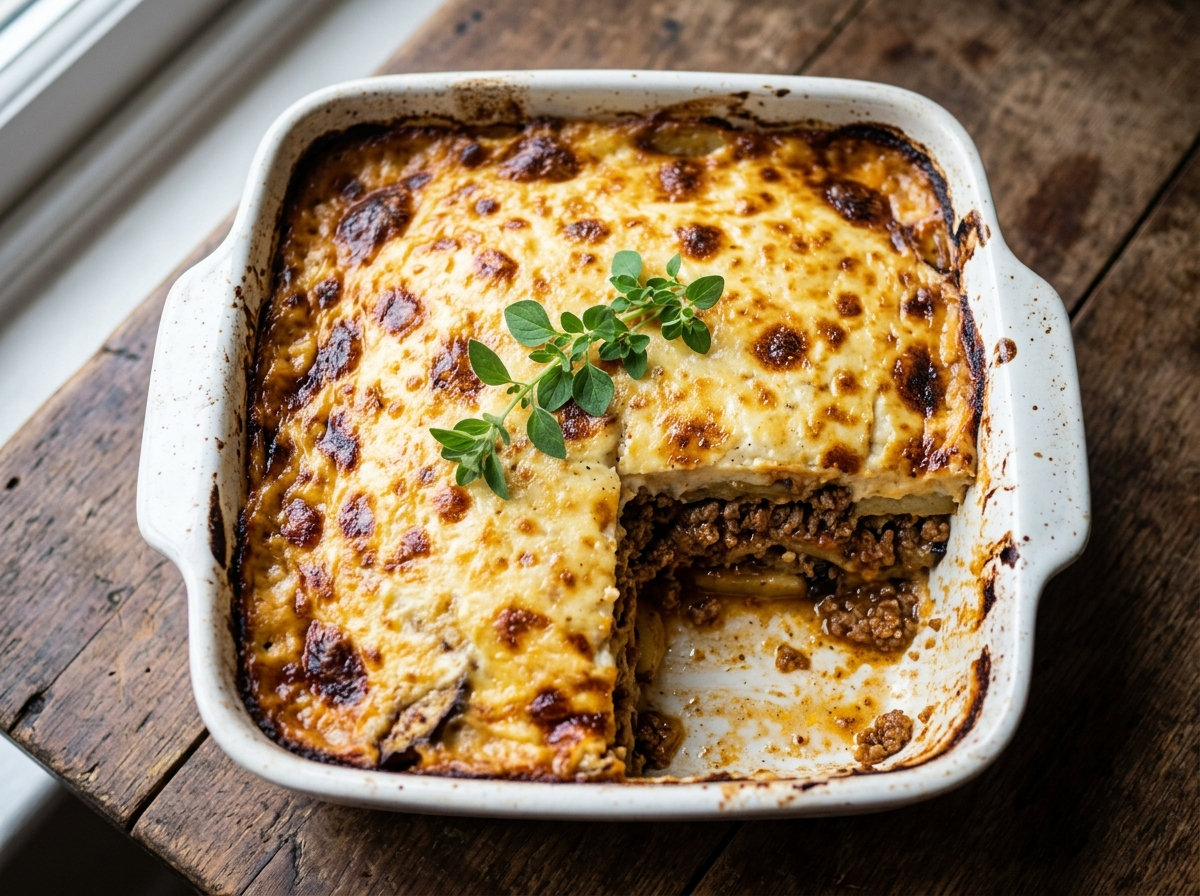
Spiced lamb and aubergine moussaka is a Greek-style baked casserole built from three layers: a cinnamon and cumin-spiced ground lamb ragu, roasted aubergine slices, and a nutmeg-scented bechamel that bakes to a deep golden crust. It takes about two hours from start to finish, most of it hands-off oven time.
I roast the aubergine instead of frying it, which cuts the oil by half and still gives you soft, slightly caramelized slices. The lamb gets warmed through with cinnamon, allspice, and a spoon of tomato paste, so it tastes closer to a spiced lamb stew than a plain bolognese.
The bechamel is the part people mess up. Pour it in too thin and it slides off the layers instead of setting into a crust. I whisk in two egg yolks near the end, which thickens it enough to hold its shape when you cut into squares.
This one serves 6 and holds up well as leftovers, which matters more than most recipes admit.
Why You’ll Love This Recipe
- Roasted aubergine cuts the oil without losing the soft texture
- Warm spices make the lamb taste layered, not flat
- Egg yolk bechamel sets into clean-cut squares
- Feeds 6 and reheats well for meal prep
Ingredient Notes
- Aubergine (eggplant): Salt the slices for 15 minutes and pat them dry before roasting, or they turn soggy under the bechamel.
- Ground lamb: Use 80/20 ground lamb for a moist ragu. Swap in ground beef if lamb tastes too gamey for your taste.
- Cinnamon and allspice: These two carry the Greek spice profile here. Ground clove works as a substitute for allspice in a pinch.
- Crushed tomatoes: Canned crushed tomatoes keep the sauce smooth. Hand-crush whole peeled tomatoes if you want a chunkier ragu.
- Whole milk: Whole milk gives the richest bechamel. 2% works but the sauce will be noticeably thinner.
- Kefalotyri or parmesan: A salty aged cheese stirred into the bechamel and sprinkled on top helps the crust brown.
- Egg yolks: Whisked into the cooled bechamel, the yolks help it set into a sliceable layer instead of staying runny.
Greek-Style Cinnamon-Spiced Lamb and Aubergine Moussaka
Ingredients
Method
- Heat oven to 200 C / 400 F. Lay aubergine slices on a tray, salt both sides, and let sit 15 minutes, then pat dry.
- Brush slices with olive oil on both sides and arrange on 2 baking sheets.
- Roast 20 minutes, flipping halfway, until soft and lightly browned at the edges.
- Heat olive oil in a large skillet over medium heat. Add onion and cook 5 minutes until soft.
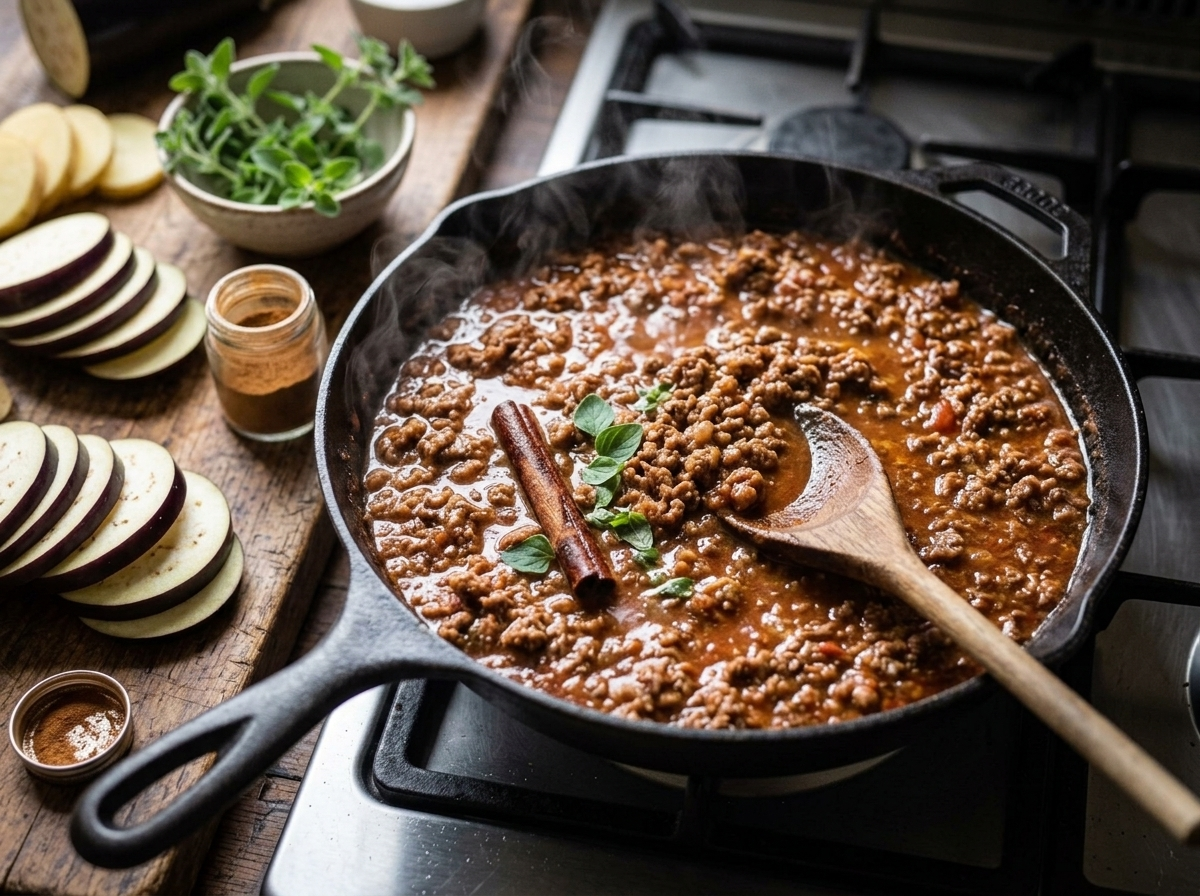
- Add garlic, cinnamon, allspice, cumin, and oregano. Cook 30 seconds until fragrant.
- Add lamb, breaking it up with a spoon, and cook 8 minutes until browned and no longer pink, reaching 160 F / 71 C.
- Stir in tomato paste and cook 1 minute, then add crushed tomatoes, wine, bay leaf, salt, and pepper.
- Simmer uncovered 20 minutes, stirring occasionally, until the sauce is thick and holds its shape on a spoon. Remove the bay leaf.
- Melt butter in a saucepan over medium heat. Whisk in flour and cook 1 to 2 minutes until pale and bubbling.
- Gradually whisk in warm milk, a little at a time, until smooth.
- Cook 5 to 6 minutes, whisking constantly, until thick enough to coat the back of a spoon.
- Remove from heat, stir in nutmeg, salt, and half the cheese. Cool 5 minutes, then whisk in egg yolks.
- Reduce oven to 180 C / 350 F. Spread half the roasted aubergine in a 9x13-inch baking dish.
- Spoon the lamb ragu over the aubergine and spread evenly. Layer the remaining aubergine on top.
- Pour the bechamel over the top, spreading to the edges. Sprinkle with remaining cheese.
- Bake 35 to 40 minutes until the top is deep golden and bubbling at the edges.
- Rest 15 minutes before cutting into squares.
Notes
- Reduce the lamb ragu until nearly dry, wet sauce makes the bake watery.
- Salt and pat dry aubergine slices before roasting to avoid sogginess.
- Cool bechamel slightly before whisking in egg yolks to avoid scrambling them.
- Rest the baked moussaka 15 minutes before cutting for clean squares.
Tips for Success
- Salt aubergine slices for 15 minutes and pat dry, or roasted slices turn soggy under the bechamel.
- Cook the lamb sauce until nearly dry before layering, wet ragu makes the moussaka slide apart when sliced.
- Whisk bechamel constantly over low heat to avoid lumps, and pull it off heat before adding egg yolks.
- Let the baked moussaka rest 15 minutes before cutting, so the layers set and squares hold together.
- Toast the cinnamon and cumin with the onions for 30 seconds to wake up their flavor before adding the lamb.
Variations
- Swap ground lamb for ground beef or a lamb-beef blend if you want a milder, less gamey ragu.
- Layer sliced potatoes under the aubergine for a heartier, more traditional Greek moussaka base.
- Make it gluten-free by swapping the bechamel flour for a 1:1 gluten-free blend or a cornstarch slurry.
Storage and Reheating
Store leftover moussaka in an airtight container in the fridge for up to 4 days. The flavor actually improves after a day as the spices settle into the sauce.
Reheat individual portions covered in a 160 C / 325 F oven for 20 minutes, or microwave a single square for 2 to 3 minutes until hot through. Covering it keeps the bechamel from drying out.
Freeze the fully baked and cooled moussaka in portions for up to 3 months. Thaw overnight in the fridge before reheating in the oven, uncovered for the last 5 minutes to re-crisp the top.
Serving Suggestions
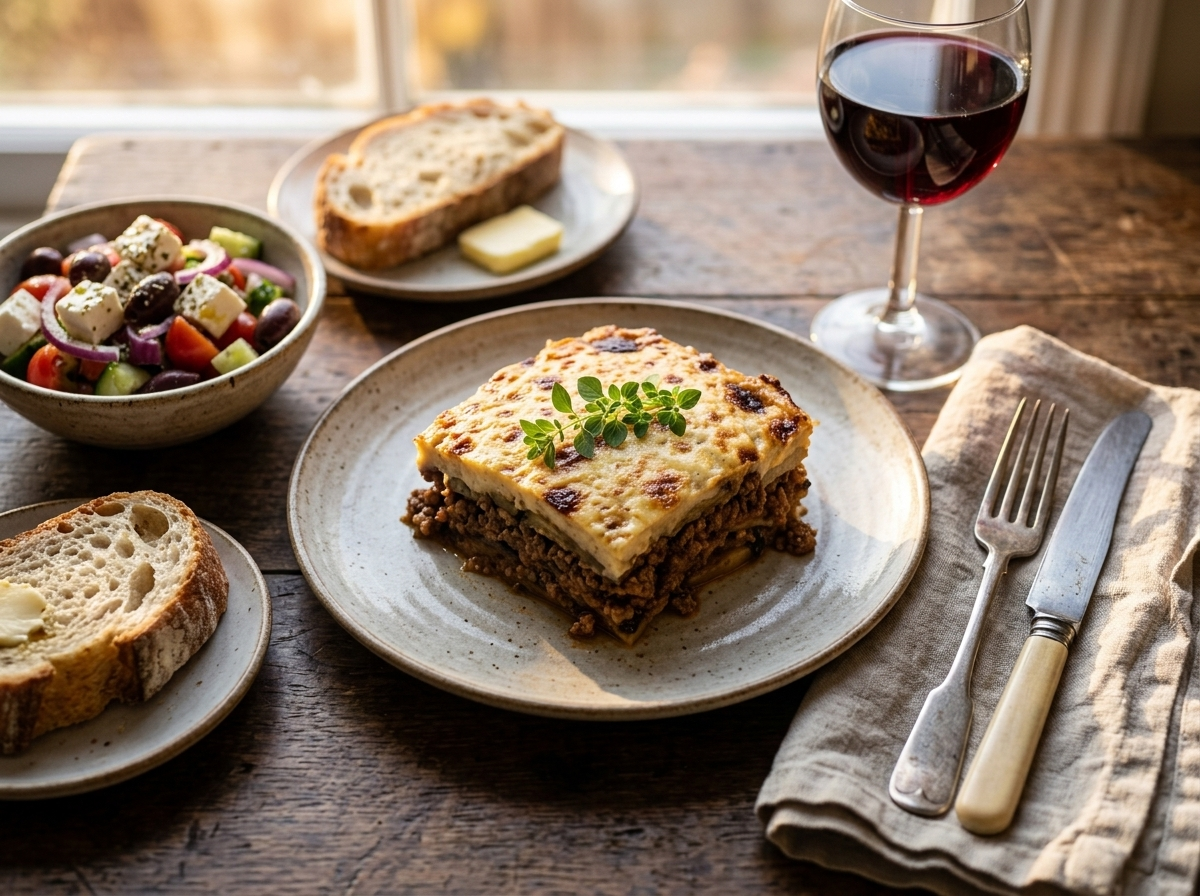
Serve moussaka with a simple Greek salad of tomato, cucumber, red onion, and feta, dressed with olive oil and lemon. The acidity cuts through the rich bechamel.
A side of lemony sauteed greens or garlicky yogurt sauce works well too. Crusty bread is good for mopping up the sauce that pools at the edges of the dish.
A medium-bodied red wine, like a Greek Agiorgitiko or a light Cabernet Franc, holds up to the cinnamon and lamb without overpowering them.
FAQ
Why is my lamb and aubergine moussaka watery instead of set?
Watery moussaka usually means the lamb sauce wasn’t reduced enough before layering, or the aubergine wasn’t salted and roasted long enough to release moisture. Simmer the ragu until it holds its shape on a spoon, not runny, and make sure the bechamel is thick enough to coat the back of a spoon before pouring it on.
Can I use zucchini instead of aubergine in this moussaka?
Yes, zucchini works as a swap, though it releases more water than aubergine. Salt and roast the zucchini slices for slightly less time, around 12 to 15 minutes, and pat them dry well before layering to avoid a soggy middle.
Can I assemble this spiced lamb moussaka ahead of time?
Yes, assemble the layers up to a day ahead and refrigerate the unbaked dish, then bake straight from the fridge, adding about 10 extra minutes. You can also freeze it fully baked and cooled for up to 3 months and reheat from thawed.
What goes well with spiced lamb and aubergine moussaka?
A cold Greek salad with tomato, cucumber, and feta balances the rich bechamel, and crusty bread is useful for the sauce that pools at the edges. A medium-bodied red wine, like an Agiorgitiko, pairs well with the cinnamon and lamb.
Is this lamb and aubergine moussaka gluten-free?
Not as written, since the bechamel uses regular flour as a thickener. Swap in a 1:1 gluten-free flour blend or a cornstarch slurry (whisked into the warm milk) to make it gluten-free without changing the texture much.
What’s the difference between this version and traditional Greek moussaka?
Traditional Greek moussaka often includes a layer of fried or roasted potato under the aubergine and uses a lighter hand with spice. This version leans harder into cinnamon and allspice in the lamb, giving it a warmer, more pronounced spiced flavor.
More from the kitchen
About The Author

John
John Watson is the passionate food enthusiast behind MePlusFood.com. With a deep love for exploring culinary delights, he shares honest restaurant reviews, mouthwatering recipes, and culinary adventures. Join John on his flavorful journey to savor the world one bite at a time.