Roasted Beetroot Hummus with Crunchy Dukkah Topping
Jump to Recipe
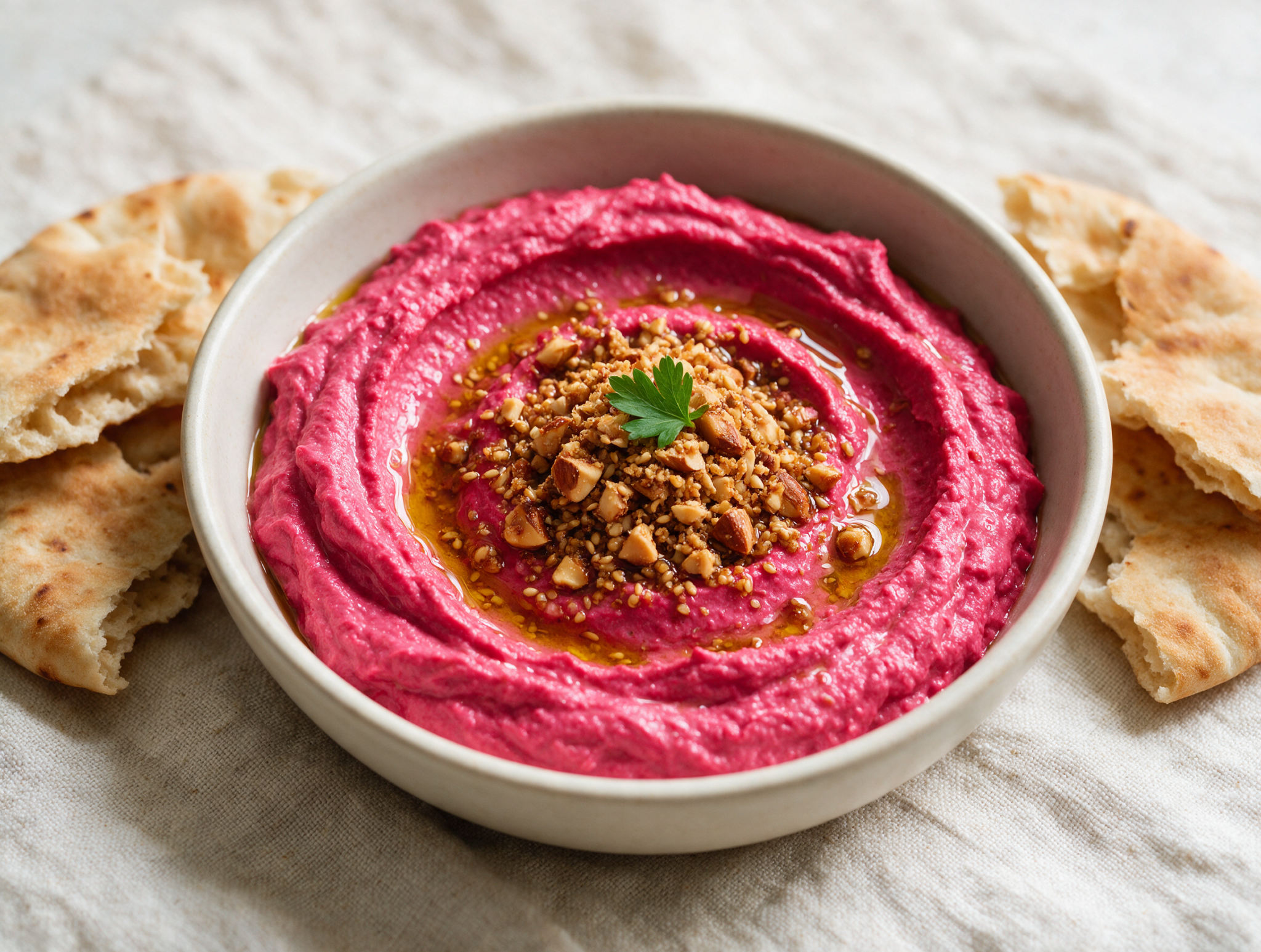
Roasted beetroot hummus with dukkah is a rosy, earthy twist on classic hummus, made by roasting beets until caramelized, then blending them with tahini, chickpeas, and lemon into a smooth, magenta dip. The dukkah, a toasted mix of nuts, seeds, and spices, adds crunch and warmth on top.
I roast the beets whole in foil rather than boiling them. Boiling waters down the flavor and turns the color muddy instead of vivid pink.
This comes together in about an hour, most of it hands-off roasting time. You’ll pulse the beets and chickpeas in a food processor until smooth, then finish with a swirl of olive oil and a spoonful of dukkah.
It eats like a full meal with warm pita and crunchy vegetables, or works as a bright side for a mezze spread.
Why You’ll Love This Recipe
- Gets its color and sweetness from real roasted beets, not food dye
- Comes together in about an hour with mostly hands-off roasting time
- Dukkah adds crunch and keeps leftovers interesting through the week
- Naturally vegan and gluten-free, no dairy needed
Ingredient Notes
- beets: Choose beets about the size of a tennis ball so they roast evenly; smaller beets cook faster and need less time.
- tahini: Use a runny, well-stirred tahini. A stiff or separated paste can make the hummus grainy no matter how long you blend.
- chickpeas: Canned works fine here. Drain and rinse well, and peel the skins off if you want an extra-smooth texture.
- garlic: Raw garlic gives a sharper bite. Wrap a clove in with the beets to roast it for a mellower, sweeter flavor instead.
- lemon juice: Use fresh juice only. Bottled lemon juice tastes flat against the earthy sweetness of the beets.
- almonds and sesame seeds: Toast them separately since they brown at different rates, then chop coarsely so the dukkah keeps its crunch.
Roasted Beetroot Hummus with Crunchy Dukkah Topping
Ingredients
Method
- Heat the oven to 200 C / 400 F. Wrap each beet individually in foil with a drizzle of olive oil.
- Place the wrapped beets on a 33 x 46 cm / 13 x 18 inch sheet pan and roast for 45 to 55 minutes, until a knife slides in with no resistance.
- Unwrap and let cool for 10 minutes, then peel the skins off under running water while still warm. Cut into rough chunks.
- While the beets roast, toast the almonds in a dry 10-inch / 26 cm skillet over medium heat for 3 to 4 minutes, shaking often, until golden and fragrant. Remove and let cool.
- In the same skillet, toast the sesame seeds, cumin seeds, and coriander seeds for 1 to 2 minutes, shaking constantly, until the sesame turns golden. Remove immediately so they don't burn.
- Coarsely chop or pulse the cooled almonds. Combine with the toasted seeds, salt, and pepper. Keep it coarse rather than grinding it into a paste.
- In a food processor, blend the tahini, lemon juice, garlic, cumin, and salt for 1 minute until pale and creamy.
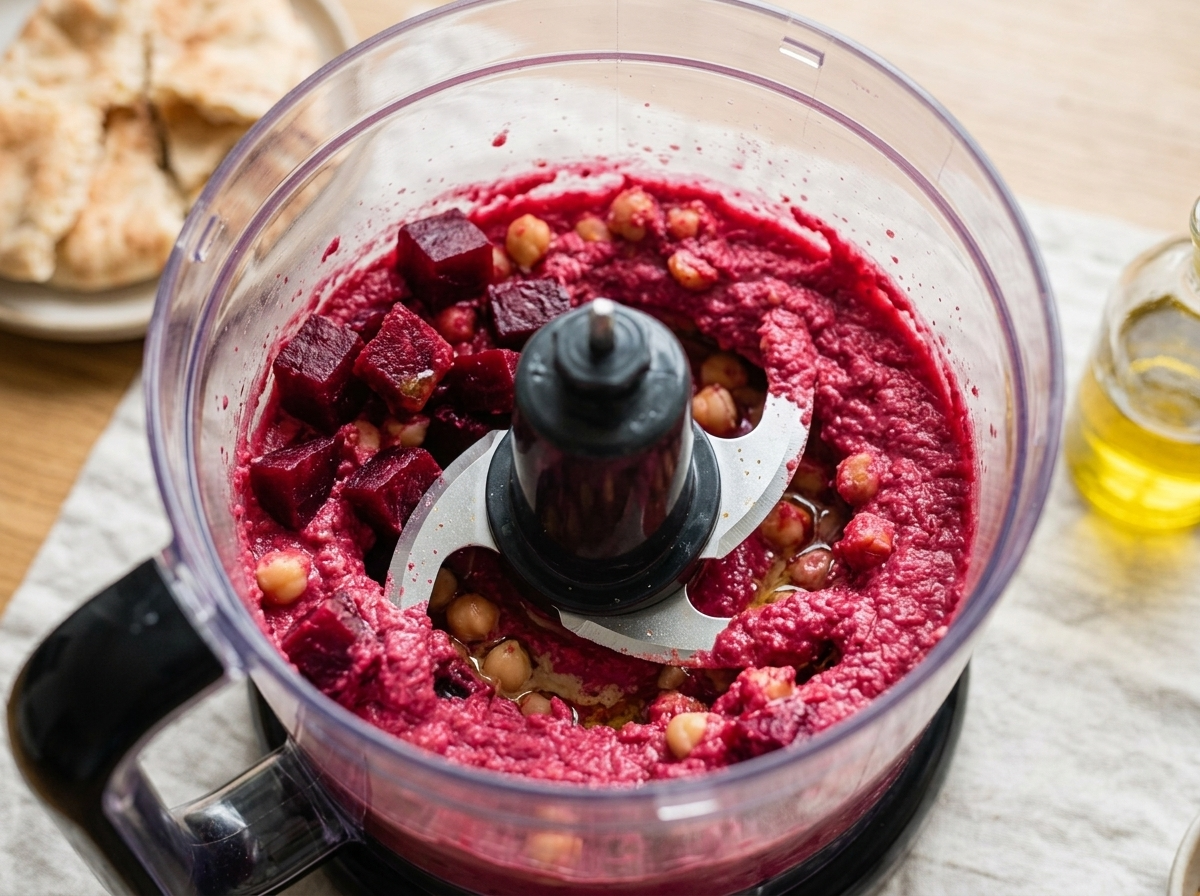
- Add the roasted beets and chickpeas. Process for 1 to 2 minutes, scraping down the sides, until mostly smooth.
- With the processor running, drizzle in 2 tbsp olive oil, then add cold water a tablespoon at a time until the hummus is smooth and holds a soft peak on a spoon. Taste and adjust salt or lemon.
- Spread the hummus onto a plate or shallow bowl and swirl with the back of a spoon. Drizzle with the remaining 1 tbsp olive oil.
- Scatter 2 to 3 tbsp of dukkah over the top just before serving, saving the rest for later. Serve with warm pita or raw vegetables.
Notes
- Roast beets in foil, not boiled, to keep the color vivid and flavor concentrated.
- Peel warm beets under running water to avoid staining your cutting board.
- Toast dukkah seeds separately from nuts since they brown at different speeds.
- Chill hummus at least 30 minutes before serving for best flavor and color.
Tips for Success
- Roast beets wrapped in foil at 200 C / 400 F for 45 to 55 minutes until a knife slides in with no resistance.
- Peel warm beets under running water so the skins slip off in seconds without staining your cutting board.
- Blend the tahini and lemon juice together for a full minute before adding beets for a lighter, smoother hummus.
- Toast dukkah nuts and seeds in a dry skillet over medium heat, shaking often, until fragrant, about 3 to 4 minutes.
- Chill the finished hummus for at least 30 minutes before serving so the flavor and color deepen.
Variations
- Swap walnuts for almonds in the dukkah for a deeper, slightly bitter crunch that pairs well with beets.
- Add a spoonful of harissa paste to the hummus for smoky heat alongside the natural sweetness of the beets.
- Use roasted golden beets instead of red ones for a milder flavor and a warm amber color.
Storage and Reheating
Store the hummus in an airtight container in the fridge for 4 to 5 days. The color deepens and the flavor rounds out after the first day.
Keep the dukkah in a separate sealed jar at room temperature for up to 2 weeks so it stays crunchy instead of going soft in the fridge.
Serve the hummus cold or bring it to room temperature for about 20 minutes before eating. There’s no need to reheat it, and warming it actually dulls the beet flavor.
Serving Suggestions
Spread a thick layer on a plate, drizzle with olive oil, and scatter dukkah over the top with warm pita or flatbread for scooping.
Pair it with crunchy raw vegetables like cucumber spears, radishes, and carrot sticks for texture contrast.
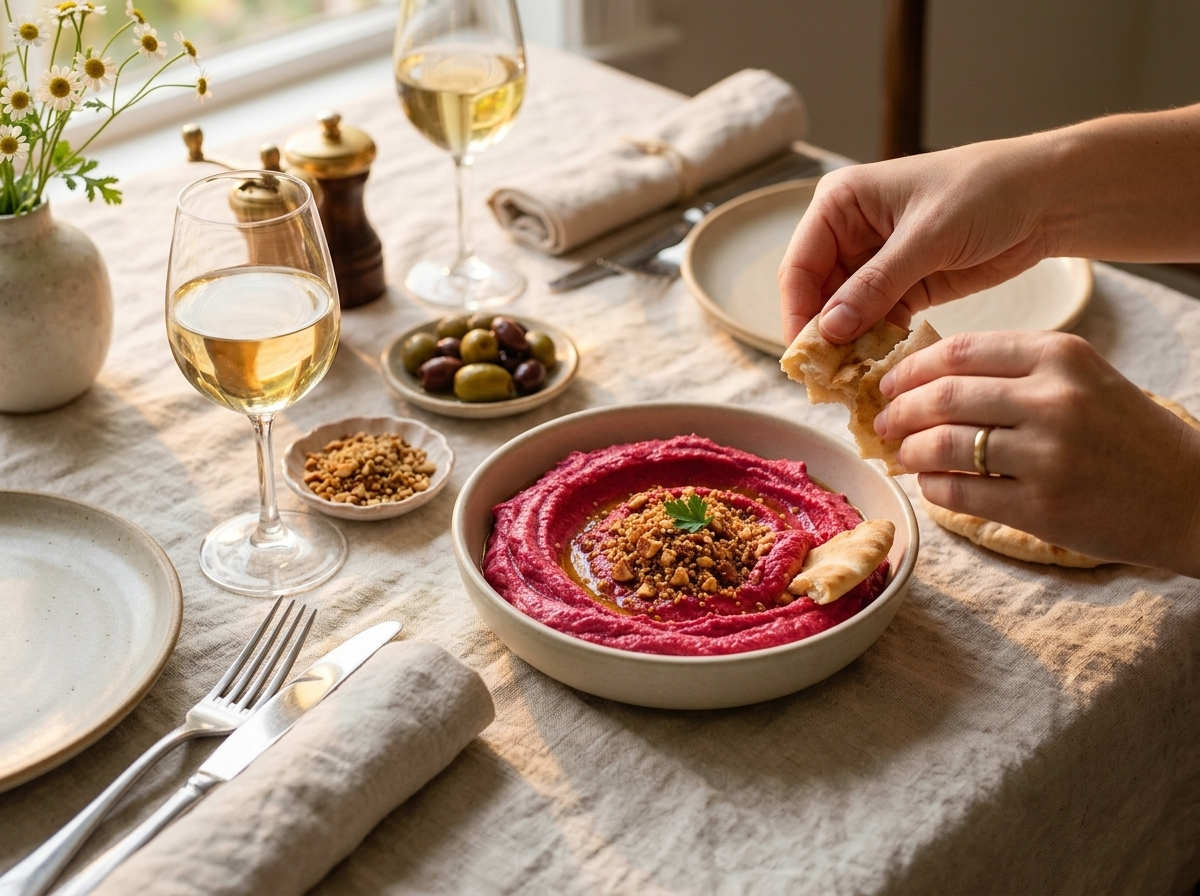
Set it out as part of a mezze spread with olives, labneh, and grilled halloumi for a light lunch or appetizer board.
FAQ
Why is my roasted beetroot hummus grainy instead of smooth?
Grainy hummus usually means the beets weren’t fully tender or the tahini seized before you added liquid. Roast beets until a knife slides in with no resistance, and blend the tahini with lemon juice for a full minute before adding beets and chickpeas. Add water a tablespoon at a time while the processor runs to smooth it out.
Can I use vacuum-packed cooked beets instead of roasting them myself?
Yes, vacuum-packed beets work in a pinch and cut the prep time. Roasting your own beets in foil concentrates their sweetness and dries out extra moisture, giving the hummus a thicker texture and deeper flavor than pre-cooked beets, which tend to taste flatter and wetter.
Can I make the dukkah for this beetroot hummus ahead of time?
Yes, dukkah is one of the best make-ahead parts of this recipe. Toast a double batch and store it in an airtight jar at room temperature for up to 2 weeks, then sprinkle it over hummus, roasted vegetables, or eggs whenever you want extra crunch.
What goes well with roasted beetroot hummus besides pita?
Raw vegetables like cucumber spears, radishes, and carrot sticks work well since their crunch contrasts the smooth hummus. Crackers, toasted flatbread, or roasted baby potatoes are good too, and it fits naturally into a mezze spread with olives, labneh, or grilled halloumi.
Is roasted beetroot hummus with dukkah gluten-free?
Yes, both the hummus and the dukkah are naturally gluten-free on their own. The only thing to check is what you serve it with, so swap regular pita for gluten-free crackers or raw vegetables to keep the whole plate gluten-free.
What’s the difference between dukkah and za’atar?
Dukkah is a coarse, toasted mix of nuts, seeds, and spices meant to be dipped in olive oil or scattered over food for crunch, while za’atar is a drier, herb-forward blend of thyme, sumac, and sesame used more like a seasoning. They taste and behave differently on a plate.
More from the kitchen
About The Author

John
John Watson is the passionate food enthusiast behind MePlusFood.com. With a deep love for exploring culinary delights, he shares honest restaurant reviews, mouthwatering recipes, and culinary adventures. Join John on his flavorful journey to savor the world one bite at a time.