Silky Wild Garlic Pesto Linguine with Toasted Pine Nuts
Jump to Recipe
Wild garlic pesto linguine is a spring pasta where a raw pesto made from ramson leaves, pine nuts, garlic, and Parmesan gets tossed with hot linguine cooked al dente, still slightly firm at the center. The whole dish comes together in about 30 minutes.
Wild garlic, also called ramsons or bear’s garlic, grows in shady patches through March and April and tastes milder and greener than a garlic clove, closer to chives with a garlic edge. If you forage it yourself, rinse the leaves twice, grit hides in the folds.
I blend the pesto in short pulses instead of running the processor nonstop. Wild garlic bruises fast under heat and friction, and a pesto that gets too warm turns dull olive-brown instead of staying bright.
A cup of reserved pasta water is what makes this sauce cling to the linguine instead of sitting in an oily puddle at the bottom of the bowl. Don’t skip it.
Why You’ll Love This Recipe
- Ready in about 30 minutes start to finish
- Raw pesto keeps the wild garlic flavor sharp and grassy
- Uses one food processor and one pot, minimal cleanup
- Easy to scale up for a batch of pesto to freeze
Ingredient Notes
- Wild garlic: Also called ramsons or bear’s garlic, found at farmers markets in early spring. Baby spinach with an extra garlic clove is the closest stand-in if you can’t find it.
- Pine nuts: Toast them in a dry skillet for 2 to 3 minutes until golden, they burn fast once they start to color. Walnuts or blanched almonds work if pine nuts are pricey.
- Parmesan: Grate it yourself off the block, pre-shredded bags don’t melt into the sauce the same way. Pecorino Romano gives a saltier, sharper result.
- Linguine: Fettuccine or tagliatelle both hold the pesto well if that’s what’s in the pantry. Look for a pasta with some surface texture so the sauce grips it.
- Lemon juice: A small squeeze keeps the wild garlic tasting fresh rather than flat. Add it right before serving, not while blending.
- Olive oil: Use a decent extra virgin oil since it’s uncooked and its flavor carries the whole sauce.
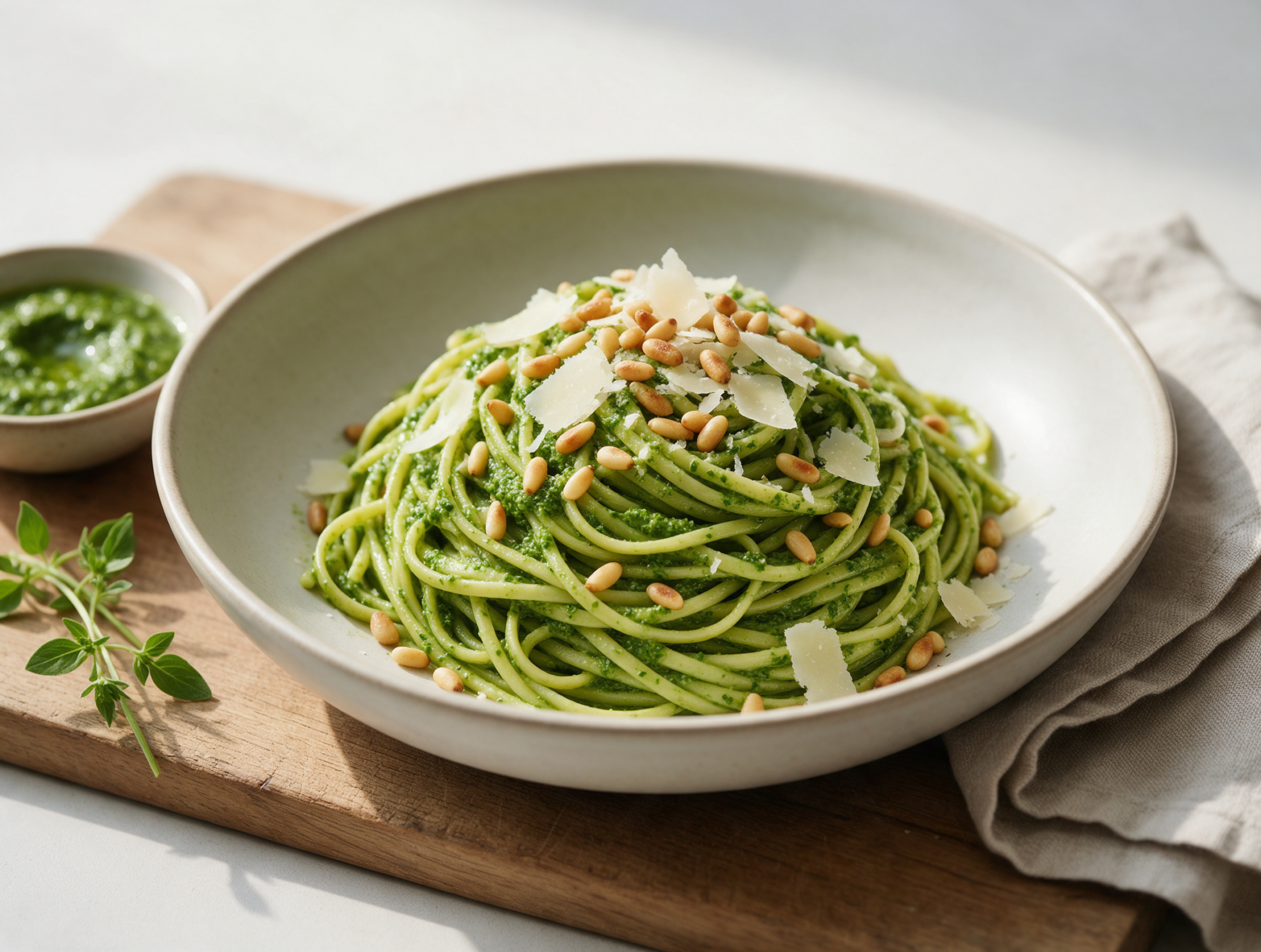
Silky Wild Garlic Pesto Linguine with Toasted Pine Nuts
Ingredients
Method
- Bring a 6-quart / 5.7 L pot of water to a boil and salt it generously with 1 tbsp salt.
- Toast the pine nuts in a dry skillet over medium heat for 2 to 3 minutes, shaking often, until golden. Set half aside for garnish.
- In a food processor, combine the wild garlic, half the toasted pine nuts, garlic clove, and Parmesan. Pulse in short bursts until finely chopped.
- With the processor running, drizzle in the olive oil in a thin stream until the pesto is loose and spoonable but still flecked, not fully smooth.
- Scrape the pesto into a bowl and stir in the lemon juice, salt, and black pepper. Taste and adjust salt.
- Add the linguine to the boiling water and cook for 9 to 10 minutes, or per package instructions, until al dente, still slightly firm at the center.
- Just before draining, scoop out 1 cup / 240 ml of the pasta water and set aside.
- Drain the linguine and return it to the empty pot, off the heat.
- Add the pesto to the hot pasta and toss with tongs, adding splashes of the reserved pasta water a little at a time, until the sauce clings to every strand and looks glossy, not oily.
- Divide among 4 bowls, top with the remaining toasted pine nuts and extra Parmesan, and serve right away.
Notes
- Pulse the pesto rather than blending continuously to keep it bright green
- Reserve 1 cup pasta water before draining, don't skip it
- Toast pine nuts just until golden, they burn within a minute of coloring
- Toss pasta with pesto off the heat, not over the burner
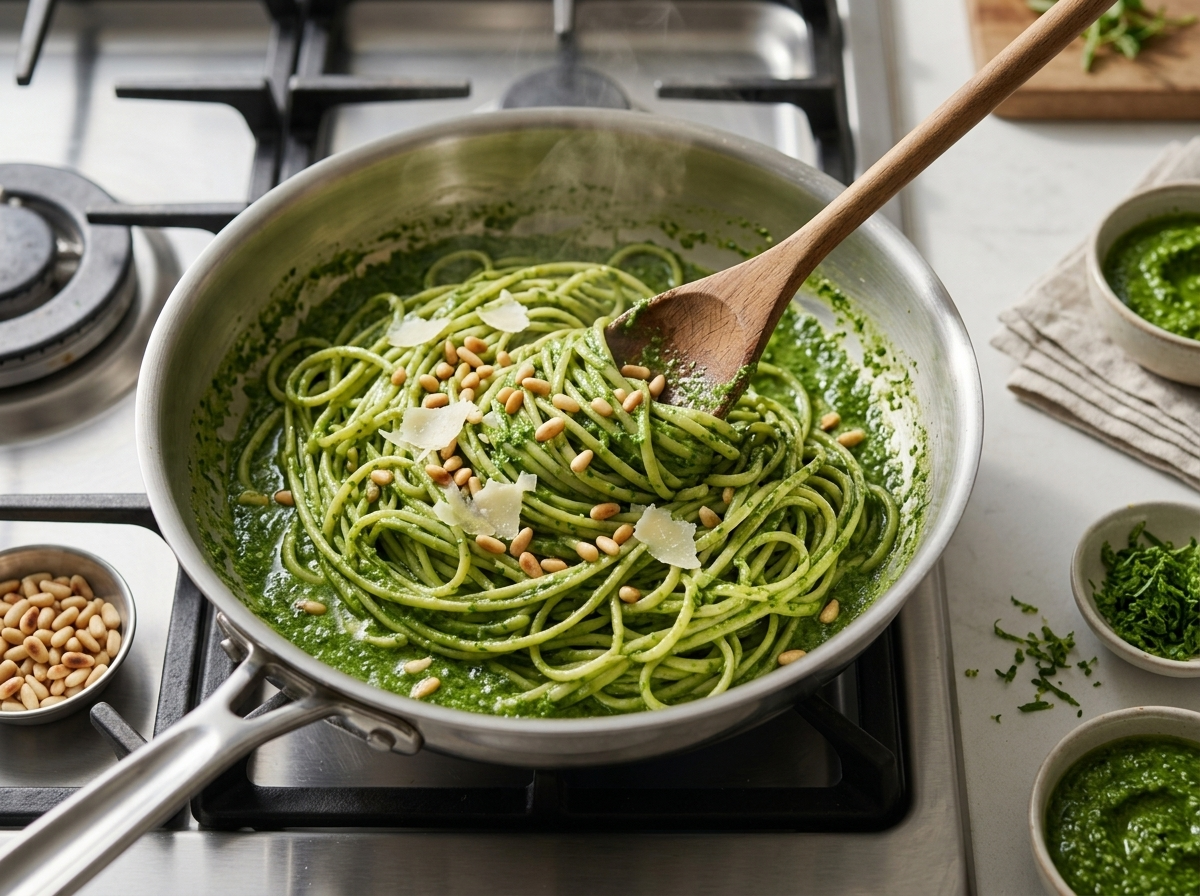
Tips for Success
- Toast pine nuts in a dry skillet over medium heat for 2 to 3 minutes until golden, watching closely since they scorch fast.
- Pulse the pesto in short bursts rather than running the processor continuously to keep the wild garlic bright green.
- Reserve at least 1 cup of starchy pasta water before draining, it’s what makes the sauce cling instead of pooling.
- Rinse wild garlic leaves in cold water twice, grit hides in the folds and ruins the texture of the pesto.
- Toss the pasta with pesto off the heat, direct heat scorches the garlic and turns the sauce a dull gray-green.
Variations
- Swap half the pine nuts for walnuts or almonds for a deeper, earthier pesto that stands up to bold cheese.
- Add a handful of baby spinach or arugula to stretch the wild garlic if your bunch turns out small.
- Stir a spoonful of ricotta into the finished pasta for a creamier, milder sauce that coats the linguine more heavily.
Storage and Reheating
Wild garlic pesto linguine keeps in an airtight container in the fridge for 2 to 3 days. Press a piece of plastic wrap directly onto the surface before sealing, exposure to air darkens the pesto fast.
Reheat gently in a skillet over low heat with a splash of water or olive oil, stirring for 2 to 3 minutes until warmed through. A microwave works too, in 30-second bursts stirring between each, about 60 to 90 seconds total.
If you want to make the pesto ahead, freeze it on its own in an ice cube tray before adding cheese, it holds well for up to 3 months. Stir in the Parmesan after thawing and toss with freshly cooked pasta.
Serving Suggestions
Wild garlic pesto linguine eats like a full meal on its own, but a simple arugula salad with lemon vinaigrette on the side cuts through the richness of the pesto.
Grilled asparagus or roasted cherry tomatoes make a good vegetable side if you’re feeding a crowd and want to stretch the meal further.
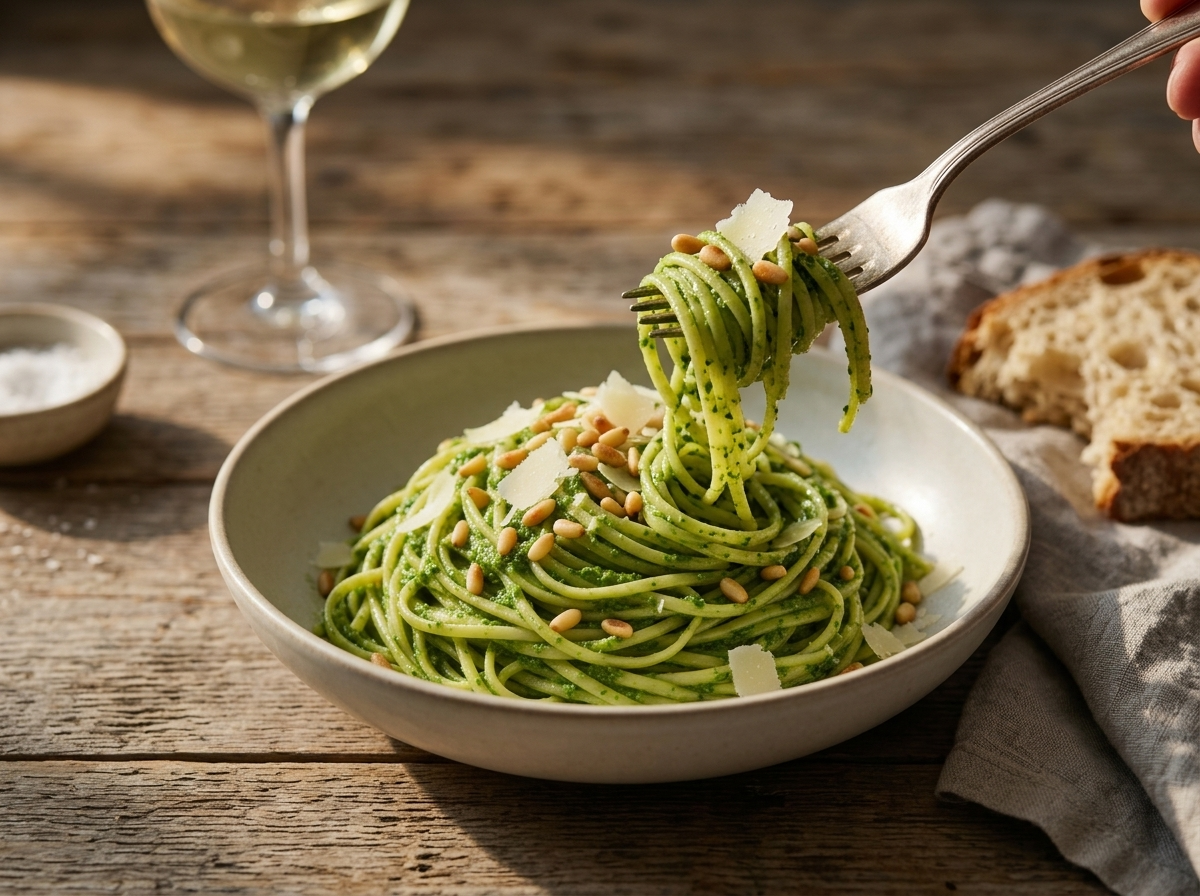
Pour a crisp Vermentino or Sauvignon Blanc alongside it, the acidity matches the sharp, grassy edge of the wild garlic.
FAQ
Why did my wild garlic pesto turn brown instead of staying green?
It likely overheated in the food processor or sat exposed to air too long. Pulse the pesto in short bursts instead of blending continuously, and add the lemon juice right at the end, both help keep the color bright and prevent it from oxidizing before it hits the pasta.
Can I use regular garlic and spinach instead of wild garlic?
Yes, use 2 cups baby spinach plus one extra minced garlic clove in place of the wild garlic leaves. The flavor turns milder and less grassy, but the texture and richness of the pesto stay close to the original.
Can I make wild garlic pesto linguine ahead and freeze the pesto?
Freeze the pesto without the Parmesan in an ice cube tray for up to 3 months, then stir in the cheese after thawing. Fully assembled pasta keeps in the fridge for 2 to 3 days but doesn’t freeze well since the linguine turns mushy.
What goes with wild garlic pesto linguine besides more Parmesan?
A lemony arugula salad or roasted cherry tomatoes both balance the richness of the pesto without competing with the wild garlic. Grilled asparagus is another good match since its bitterness plays well against the sauce.
Is wild garlic pesto linguine vegetarian, and can I make it vegan?
It’s vegetarian as written since the Parmesan is a dairy cheese, but not vegan. Swap in a vegan hard cheese alternative or nutritional yeast in the same amount and the pesto still blends smooth and holds its flavor.
What’s the difference between wild garlic pesto and classic basil pesto?
Wild garlic pesto uses ramson leaves instead of basil, giving a grassier, more peppery flavor with a milder garlic bite than a basil-and-clove pesto. The technique and ratios of pine nuts, cheese, and oil stay nearly identical between the two.
You might also like
About The Author

John
John Watson is the passionate food enthusiast behind MePlusFood.com. With a deep love for exploring culinary delights, he shares honest restaurant reviews, mouthwatering recipes, and culinary adventures. Join John on his flavorful journey to savor the world one bite at a time.