Easy Crispy Polenta Squares with Roasted Ratatouille
Jump to Recipe
Crispy polenta with roasted ratatouille is a vegan dinner built from firm polenta rectangles and a sheet pan of eggplant, zucchini, peppers and tomatoes, both roasted at 220 C / 425 F. The polenta gets a brittle, golden crust while the inside stays soft. The vegetables caramelize at the edges instead of stewing, which is the main difference from the stovetop version.
I make the polenta a day ahead. It needs at least 2 hours in the fridge, and that’s the one step you can’t rush. Cut it while the center is still faintly warm and the pieces tear when you flip them, leaving a patchy crust.
On the day you serve it, the work is chopping vegetables and watching the oven, about 50 minutes. It eats like a full meal, and the leftovers hold up well for lunches.
Why You’ll Love This Recipe
- Polenta chills ahead, so weeknight cooking is just the oven
- Roasting browns the vegetables instead of stewing them
- Vegan and gluten-free with no specialty ingredients
- Eats like a full meal on a modest grocery bill
Ingredient Notes
- coarse or medium polenta: Stone-ground polenta gives the firmest set and crispest edges. Instant polenta works in a pinch, but it sets softer and the crust is thinner.
- nutritional yeast: It adds a savory, cheesy note and keeps the dish vegan. Swap 30 g grated Parmesan or Pecorino if you eat dairy, and check for animal rennet if you keep it vegetarian.
- eggplant: No salting needed, because the high oven heat softens it without bitterness. Swap 250 g cremini mushrooms, halved, if eggplant isn’t your thing.
- red wine vinegar: A splash at the end brightens the roasted vegetables. Balsamic gives a sweeter finish, and lemon juice works too.
- cherry tomatoes: Swap 2 plum tomatoes, quartered, and add them at the same 20-minute mark.
- tomato paste: It coats the vegetables and deepens the savory flavor as it browns. Skip it if you must, but the ratatouille will taste lighter.
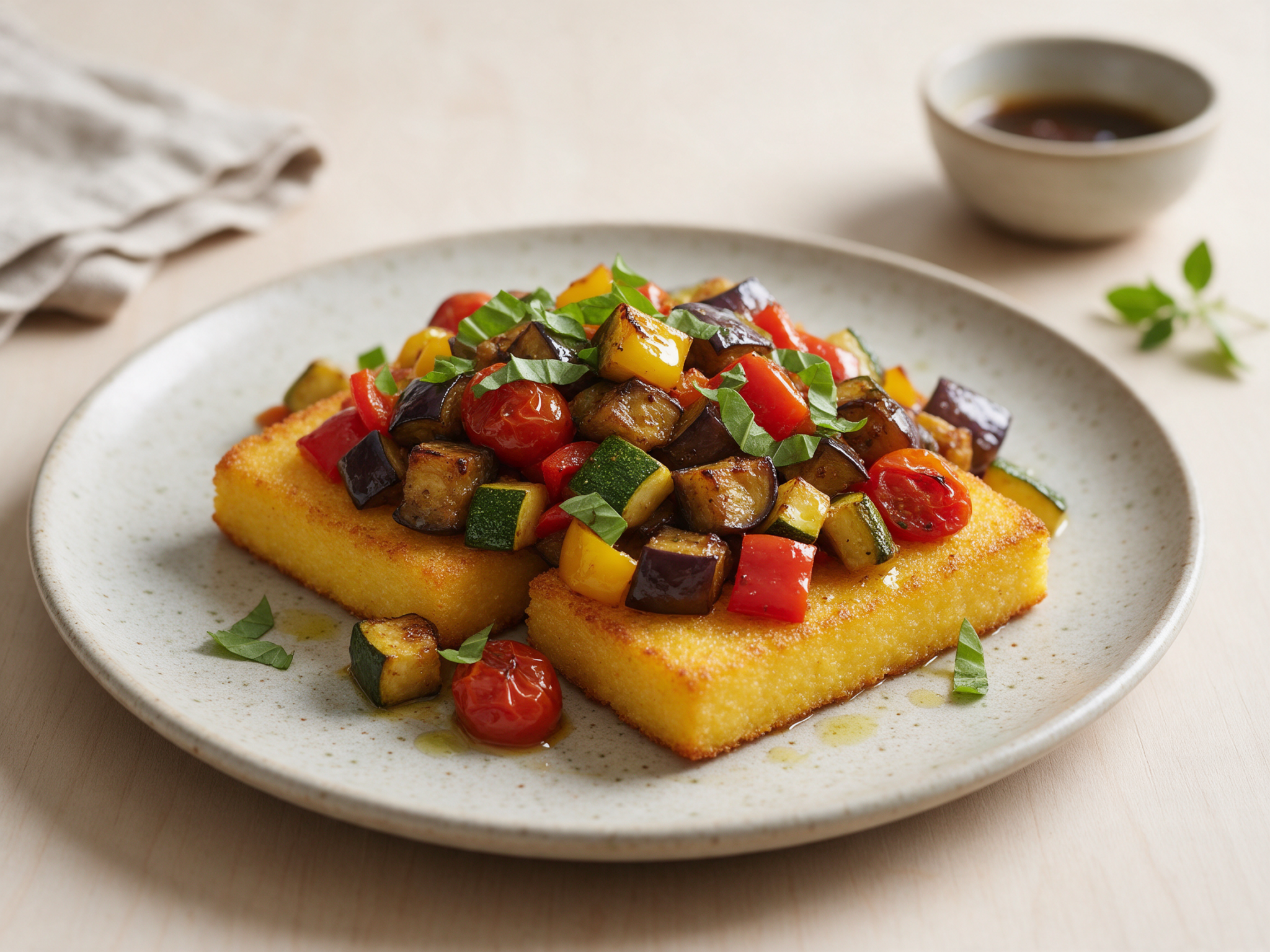
Easy Crispy Polenta Squares with Roasted Ratatouille
Ingredients
Method
- Brush a 20 cm / 8-inch square baking dish with 1 tsp olive oil. Bring the water and 1 1/4 tsp salt to a boil in a 3-quart / 2.8 L heavy saucepan, then pour in the polenta in a thin stream while whisking constantly.
- Reduce the heat to low and cook for 25 minutes, stirring with a wooden spoon every 3 to 4 minutes, until the polenta is thick, pulls away from the sides of the pan and tastes tender with no grit. Stir in 1 tbsp olive oil, the nutritional yeast and 1/4 tsp pepper.
- Scrape the polenta into the dish and smooth it to an even 2.5 cm / 1-inch layer. Cool uncovered for 15 minutes, then refrigerate until cold and fully firm, at least 2 hours in total. If holding it longer, cover it once cold and keep it up to 3 days.
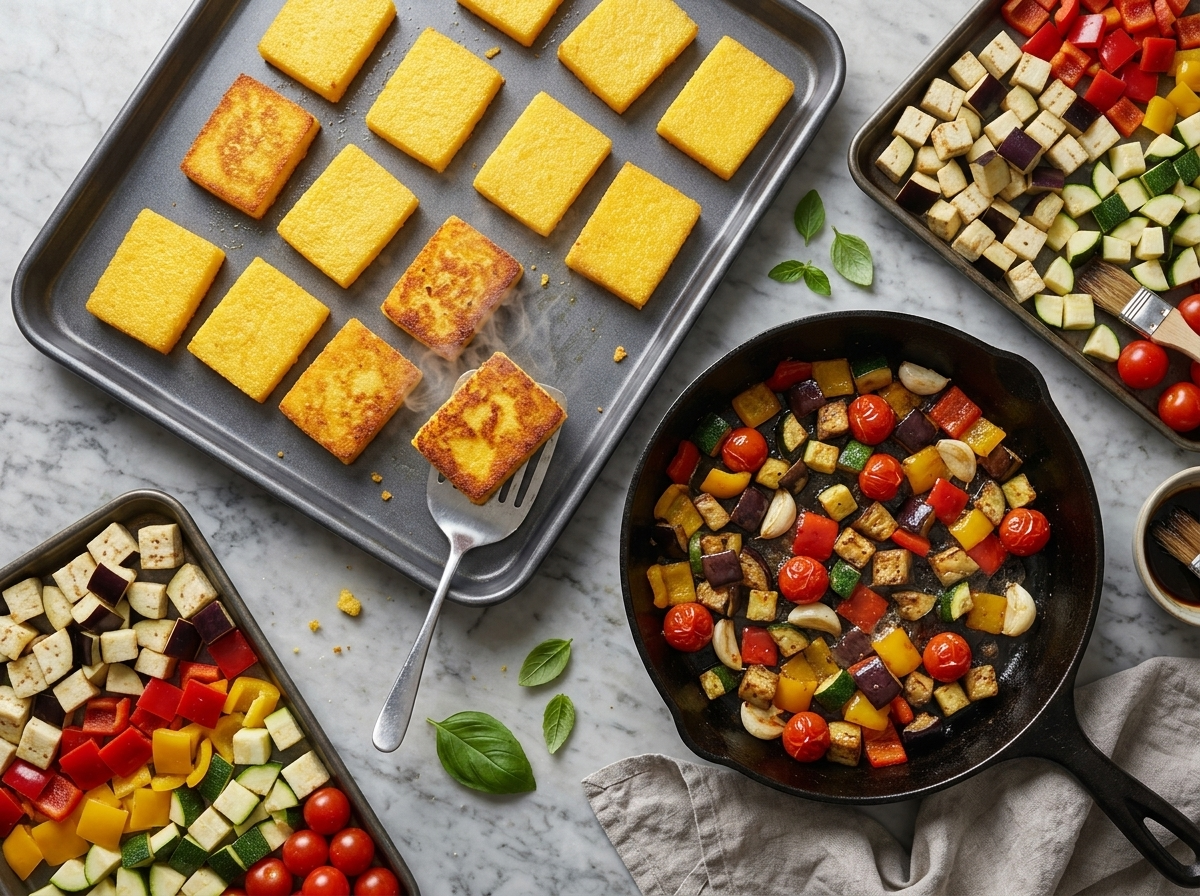
- Heat the oven to 220 C / 425 F with racks in the upper and lower thirds. Cut the eggplant, zucchini, peppers and onion. On a 33 x 46 cm / 13 x 18-inch sheet pan, whisk the tomato paste with 3 tbsp olive oil, the thyme, 3/4 tsp salt and 1/2 tsp pepper, then toss in the vegetables and garlic. Spread everything in a single layer and keep the cherry tomatoes aside.
- Turn the cold polenta out onto a cutting board and cut it into 8 rectangles, about 10 x 5 cm / 4 x 2 inches. Brush a second 33 x 46 cm / 13 x 18-inch sheet pan with 1 tbsp olive oil, arrange the pieces with space between them, and brush the tops with the remaining 1 tbsp oil.
- Roast the vegetables on the upper rack and the polenta on the lower rack for 20 minutes. Pull both pans out, flip the polenta with a thin metal spatula once the bottoms release easily, stir the vegetables and scatter the cherry tomatoes over them.
- Roast for 15 minutes more, until the polenta is deep golden with crisp edges and the vegetables are browned at the edges and tender when pierced. Mash the roasted garlic into the vegetables, then toss with the vinegar and basil. Taste, add a pinch of salt if needed, and serve over two polenta rectangles per plate within 10 minutes.
Notes
- Chill the polenta at least 2 hours before cutting, or up to 3 days ahead.
- Use coarse or medium polenta, not instant, for the firmest set.
- Serve within 10 minutes of leaving the oven while the crust is crisp.
- Taste after the vinegar and add a pinch of salt if the vegetables taste flat.
Tips for Success
- Whisk the polenta into briskly boiling water in a thin stream, since adding it all at once makes lumps that never smooth out.
- Cut the vegetables to roughly 2.5 cm / 1 inch so the eggplant and zucchini finish at the same time.
- Spread the vegetables in a single layer across the full sheet pan so the edges brown rather than steam.
- Slide a thin metal spatula under each polenta piece at the 20-minute flip and wait until the bottom releases easily.
- Toss the vinegar and basil with the vegetables after roasting, since the acid brightens them and basil turns dark in a hot oven.
Variations
- Scatter 400 g / 14 oz drained cannellini beans onto the vegetable pan for the last 15 minutes for extra protein.
- Pan-fry the cold polenta pieces in olive oil in a 26 cm / 10-inch nonstick skillet, 4 minutes per side, for a thicker crust.
- Top each plate with a spoonful of basil pesto or crumbled goat cheese to keep it vegetarian and add richness.
Storage and Reheating
Roasted ratatouille and crisped polenta keep in separate airtight containers in the fridge for 3 to 4 days. Store them apart so the polenta doesn’t absorb moisture from the vegetables. Freezing isn’t worth it, since thawed eggplant and zucchini turn watery.
To reheat, lay the polenta on a sheet pan and bake at 220 C / 425 F for 10 to 12 minutes until the edges crisp again. Warm the ratatouille in a 26 cm / 10-inch skillet over medium heat for 4 to 5 minutes, or microwave it for 90 seconds.
The uncooked polenta block is the best make-ahead piece. Keep it covered in its dish for up to 3 days and roast it straight from cold.
Serving Suggestions
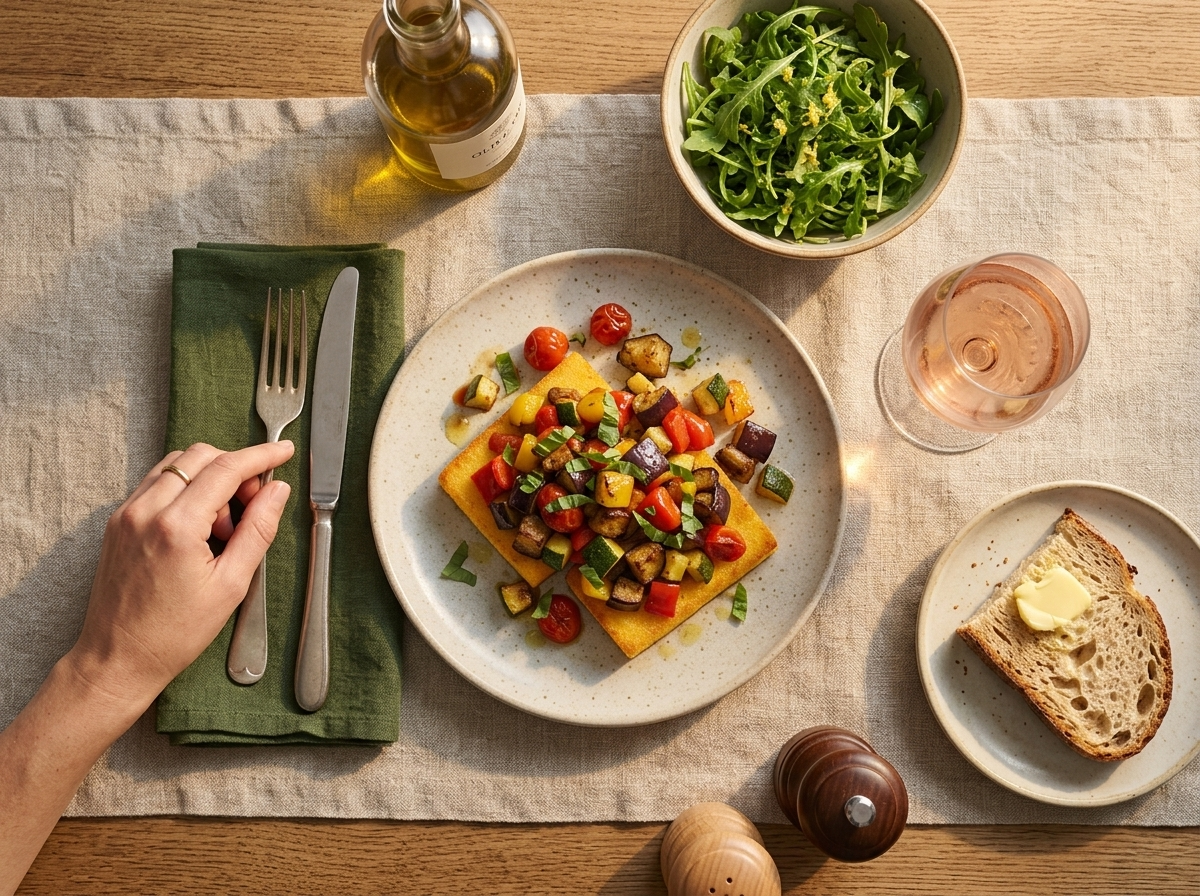
Set two polenta rectangles on each plate and spoon the ratatouille over and beside them, including the soft roasted garlic. Serve within 10 minutes of leaving the oven, while the crust still crackles.
A handful of arugula dressed with lemon and olive oil adds a peppery contrast. A bowl of warm white beans on the side makes it more filling, and a poached egg on top works if you aren’t keeping it vegan.
A dry rosé or a chilled Vermentino suits the roasted peppers and tomatoes. For a lighter plate, serve one polenta piece per person alongside a green salad.
FAQ
Why does my polenta stick or fall apart when I flip it?
Usually the polenta wasn’t fully chilled or the crust hadn’t set yet. Chill it at least 2 hours until it’s cold and firm all the way through, brush oil on the pan and the tops, and wait the full 20 minutes before flipping. If the spatula meets resistance, give it 3 more minutes.
Can I use instant polenta or fine cornmeal instead of coarse polenta?
Yes, but expect a thinner crust. Instant polenta cooks in about 5 minutes and sets softer, while fine cornmeal gives a denser, pastier crumb. Follow the package ratio, stir in the oil, and chill it for the same 2 hours until it slices cleanly. Coarse or medium polenta gives the crispest edges.
How far ahead can I make the polenta before crisping it?
You can make the polenta block up to 3 days ahead. Once it’s cold, cover the dish with foil or a lid and keep it in the fridge. Cut and roast it straight from cold, which helps the pieces hold their shape, and roast the vegetables the day you serve.
What goes well with crispy polenta and roasted ratatouille?
Arugula dressed with lemon and olive oil is the easiest side, and a bowl of white beans makes the meal higher in protein. A poached egg on top works if you aren’t keeping it vegan. For a drink, a dry rosé or a chilled Vermentino suits the roasted peppers and tomatoes.
Is crispy polenta with roasted ratatouille gluten free and vegan?
Yes, as written. Polenta is ground corn, and the olive oil, vegetables and nutritional yeast contain no gluten or animal products. If you have celiac disease, check the polenta label for a gluten-free statement, since some corn products are packed in facilities that also process wheat.
What is the difference between roasted ratatouille and classic ratatouille?
Classic ratatouille simmers the vegetables in their own juices and tomato until soft and saucy. Roasted ratatouille cooks them in a dry 220 C / 425 F oven, so the edges brown and moisture evaporates. That drier texture matters here, because a wet topping softens the polenta crust within minutes.
Loved this? Try these next
About The Author

John
John Watson is the passionate food enthusiast behind MePlusFood.com. With a deep love for exploring culinary delights, he shares honest restaurant reviews, mouthwatering recipes, and culinary adventures. Join John on his flavorful journey to savor the world one bite at a time.