Wild Rice Stuffed Acorn Squash: A Cozy Fall Recipe
I love how a single wild rice stuffed acorn squash can turn a weeknight into a little celebration—its caramelized edges smell like fall, and the filling sings with mushrooms, herbs, and toasted nuts.
Select a fruit that feels heavy, with a dark green rind and a small orange patch; the right pick will roast sweet and tender. I cut mine with a sharp chef’s knife and steady hands so the halves don’t wobble while they caramelize at 425°F.
The filling cooks on the stove for about 45 minutes, until the grains are fluffy and separate. Then, I nestle it into the shells and bake for just 8–10 minutes to heat through. You’ll get a showstopping dinner that looks like a centerpiece and feeds a crowd without fuss.
Key Takeaways
- Choose heavy, dark green produce with a small orange patch for the best roasting results.
- Roast at 425°F for deep caramelization and tender flesh.
- Simmer the grain blend undisturbed for ~45 minutes to achieve separate, fluffy grains.
- Assemble and bake 8–10 minutes to warm the filling without soggy flesh.
- Simple swaps and make-ahead tips keep this recipe flexible for any dinner.
Why this Wild Rice Stuffed Acorn Squash Belongs on Your Fall Table
I reach for this seasonal bowl when I want an easy showstopper that feels festive but cooks like a weeknight meal. The roasted flesh caramelizes, bringing a sweet note, while a hearty pilaf adds savory balance and texture.
This dish is built for flexibility. Keep it vegetarian by folding in sausage or turkey, or make vegan swaps. Both parts can be prepped ahead, so holiday timing is calm and dependable.
- The combo of caramelized flesh and a savory rice pilaf hits fall flavors—sweet, nutty, and herb-scented in one bite.
- Presentation is ready-made: each half becomes an edible bowl, perfect as a main course or an elegant side dish for a crowd.
- It scales easily, reheats well, and actually tastes better the next day as flavors meld.
- Tools and pantry staples do the work—no specialty gear is needed, just solid technique: high-heat roasting and undisturbed grain cooking.
Pair this recipe with simple proteins or a green salad, and you’ve got a straightforward, impressive fall menu that still feels like home.
Ingredients That Build Cozy Flavor
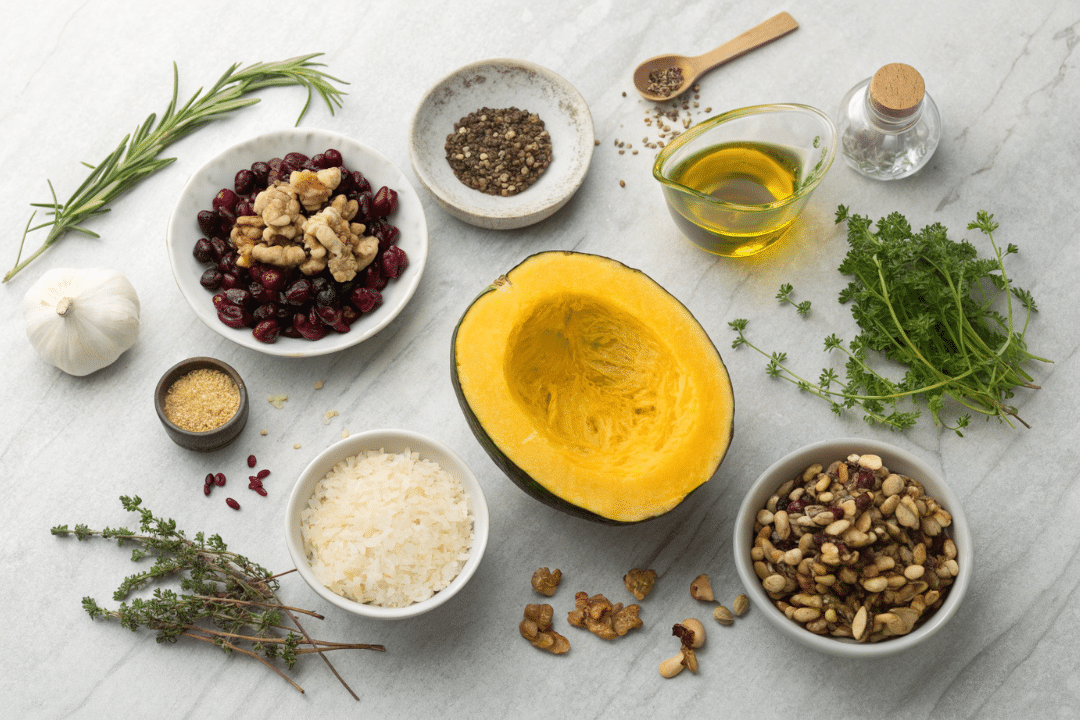
Good ingredients make this dish effortless; choose the right produce and the rest clicks into place. I select small-to-medium specimens for single portions—they are heavy for their size and have a dull, dark-green rind with a hint of orange.
Plan one whole for a main, or half per person as a side. Shiny or overly yellow skins usually mean overripe fruit, so pass on those.
Grain Choices and Cooking Notes
Pure wild rice is chewier and costs more. A wild rice blend cooks in about 45 minutes, yielding a balanced texture. I use a rice blend to save time and keep grains fluffy.
Aromatics, Herbs, and Pantry Must-Haves
Start the filling with yellow onion and garlic in a splash of olive oil. Use vegetable broth to infuse savory depth and control salt with low-sodium stock. Add thyme and rosemary for a woodsy aroma.
Mix-Ins that add Texture and Color
- Mushrooms (baby bella or cremini) for umami and moisture.
- Dried cranberries for sweet-tart pops of color.
- Chopped walnuts or sliced almonds for crunch.
- Fresh parsley to brighten the filling just before serving.
- A pat of butter or a drizzle of olive oil to carry herbs; Gruyère or Parmesan for a golden top.
Essential Tools and Quick Prep Notes
Before you fire up the oven, gather a few reliable tools so prep moves smoothly and safely. A little setup saves time and keeps things calm when you’re juggling pans and hot halves.
Cutting and Stabilizing
I use a sharp chef’s knife or a santoku, along with a sturdy wooden cutting board. Sharp blades are safer because they don’t skid. Trim the stem and shave a small, flat spot on the bottom so that each squash sits steadily before you halve it.
Roasting and Pans
Line a rimmed sheet pan with parchment to prevent sticking and simplify cleanup under oven heat. Use oven mitts and clear counter space to transfer hot pans without rush.
Stove Gear and Small Prep Tips
Use a 3.5–4-quart nonstick pot for the rice, allowing it to simmer without scorching. A large skillet gives you room to brown onions, garlic, and mushrooms without steaming them. Preheat the pans briefly, then add oil to achieve a good color.
- Keep a sturdy spoon, ice cream scoop, or melon baller to scoop seeds quickly.
- Measure a precise cup of broth to control the texture of the rice.
- Have salt, pepper, herbs, and measuring spoons within reach to season in layers.
Choose, Cut, and Prep the Acorn Squash Like a Pro
Pick a firm, hefty acorn squash, and you already win half the battle—its weight and dull green skin tell you it will roast well. I look for a small orange spot; that little patch often means sweeter flesh later.
How to Pick a Ripe One at the Store
I hold each for heft. Choose specimens that feel dense and heavy for their size. Avoid shiny or soft skins; a matte rind signals good flavor.
Safe Cutting Method
At home, I wash and dry the top so the knife won’t slip. Trim the stem down with a chef’s knife or sturdy shears so it won’t fight the blade.
To halve and stabilize the fruit, shave a tiny flat surface on the bottom. Set it steady, insert the tip at the top, then rock the knife through with constant pressure. Short, controlled motions always outperform brute force.
Scooping Seeds and Leveling Halves
Use a spoon, melon baller, or an ice cream scoop to scoop seeds and stringy bits; I keep an old tablespoon handy. Save those seeds to roast later with oil and salt.
If a squash half wobbles, shave a paper-thin sliver off the bottom so each squash half sits flat. Keep fingers tucked and go slow—care here prevents slips.
- I always prep an extra onion nearby for the filling—one small bit makes a big flavor difference.
| Cut Style | Look | Best For |
|---|---|---|
| Lengthwise | Classic boat | Holds filling well |
| Horizontal | Flower or bowl | Pretty for plating |
| Flat base shave | Stable | Safer roasting |
Roast the Squash to Tender, Caramelized Perfection
A hot oven and a light brush of oil are all you need to coax golden edges and tender flesh from each half. I keep instructions simple so your roast comes out consistent every time.
Temperature, Oil, and Seasoning
Preheat the oven to 425°F so the squash is exposed to hot air and begins to caramelize immediately. Brush the cut interiors with a thin, even coat of oil and sprinkle a pinch of salt and pepper. That little layer helps the edges brown without drying the center.
Cut-Side Up vs. Cut-Side Down
For deep browning and a tender, steam-cooked center, roast cut-side down on a lined sheet. The cavity traps steam while the rim crisps and glazes.
For a drier interior with a cheesy top, roast the cut-side up and baste once or twice during baking.
Doneness Signs and Timing
Roast 30–40 minutes, depending on size. I start checking at 25 minutes, so smaller halves don’t overcook. A fork should pierce the flesh easily, and the edges should show light golden brown.
- Rotate the sheet once for even color if your oven has hot spots.
- If a half tip is used, tuck a small foil coil under the edge to level it.
- Let the halves rest for 10–15 minutes before filling—this keeps the flesh intact and makes it easier to handle.
- Taste a tiny bite and adjust salt now; it’s your last chance before you fill and bake again.
Make the Wild Rice Pilaf Filling
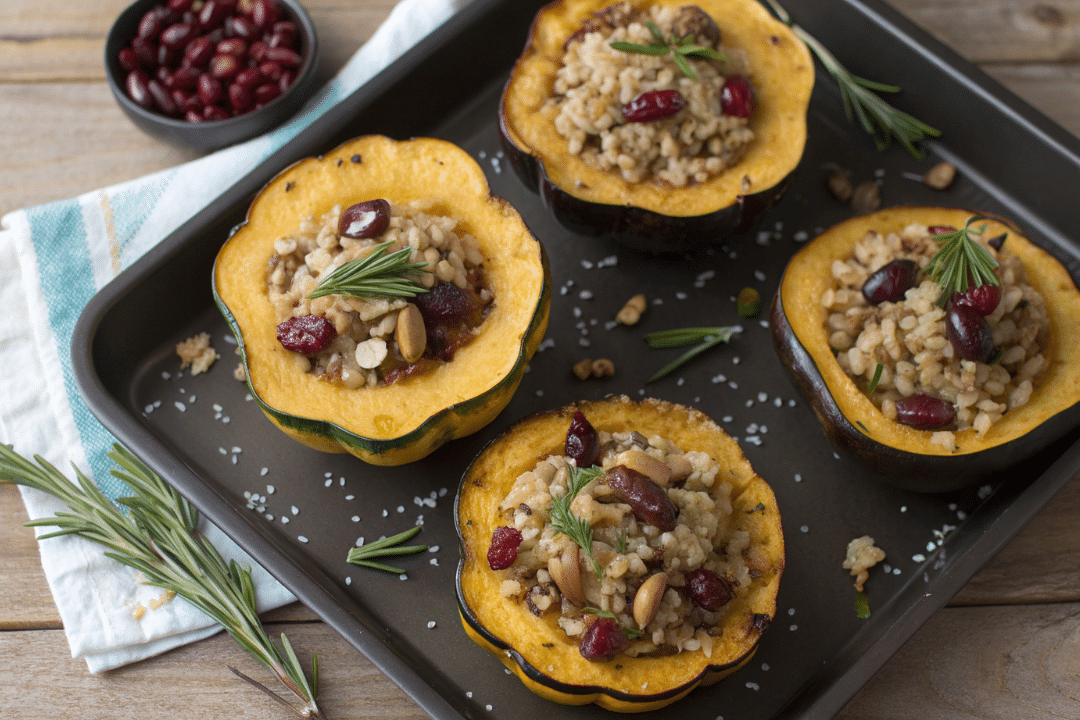
Start the pilaf on the stove while the oven hums—this is where texture and layered flavor come together. A little attention now means an easy finish later.
Prep, Rinse, and Toast
Rinse the wild rice under cool running water until the water runs clear; drain well. In a dry skillet, toast the blend or grains for 2–3 minutes, until fragrant—this enhances the nutty notes and helps keep the grains separate.
Sauté Aromatics and Mushrooms
In a pot, heat olive oil and a knob of butter. Sauté one diced onion until translucent, then add garlic and mushrooms. Cook until the mushrooms brown and their moisture has mostly evaporated.
Layer Flavor, Simmer, and Rest
Stir the toasted rice into the pan, splash in a little white wine, and reduce the heat. Add one cup of vegetable broth, season lightly, and bring to a gentle simmer. Cover, lower the heat, and cook undisturbed about 45 minutes. Let the pot rest off the heat for 10 minutes before fluffing.
- Fold in chopped nuts and dried cranberries for texture.
- Finish with chopped parsley and a drizzle of olive oil to brighten the dish.
- Taste and adjust salt; add a splash of broth if the pilaf seems tight.
| Step | Action | Time |
|---|---|---|
| Toast grains | Dry pan, stir until nutty | 2–3 minutes |
| Simmer | Cover and cook undisturbed | 45 minutes |
| Rest | Off heat, then fluff | 10 minutes |
Wild Rice Stuffed Acorn Squash: Assemble and Bake
When it’s time to assemble, I treat each half like a little bowl, styling and savoring it. Spoon the pilaf into the cavity, packing it lightly, and aim for a generous mound to achieve an intentional presentation.
Portioning and Mounding for a Plentiful Look
I aim for about a cup of filling per medium half; adjust if your shells are larger or smaller. Set each squash half on the sheet so they sit snug and won’t tip when you spoon in the pilaf.
- Spoon in the pilaf, packing gently—too tight makes the texture dense.
- If using cheese, sprinkle it on top now so it melts during the final bake.
- If the mix seems dry, drizzle a teaspoon of warm broth over each mound before baking.
Final Bake Time and Garnishes that Add Color and Crunch
Slide the pan into a hot oven and bake 8–10 minutes, just to meld and reheat the filling without drying it. Take a quick taste from a loose grain on top and adjust salt or pepper at the last minute.
- Finish with chopped parsley and a few toasted nuts for crunch.
- Serve straight from the sheet or lift each squash half with a wide spatula to a platter.
| Step | Action | Why it helps |
|---|---|---|
| Portion | Aim for ~1 cup per half | Consistent portions, restaurant look |
| Top | Add cheese or nuts before bake | Melts or toasts for color and texture |
| Finish | Garnish with parsley | Brightens appearance and aroma |
Smart Swaps and Seasonal Variations
Small changes—like a different grain or a handful of nuts—can shift the whole character of this autumn dish. I’ll show simple swaps that keep the method the same but change texture and flavor fast. These ideas make the recipe work for any dinner plan.
Protein Options
For a heartier filling, fold in cooked Italian sausage, ground turkey, or shredded rotisserie chicken just before filling the shells. Crumbled beef or plant-based sausage also works well.
Keep it meatless by boosting mushrooms and adding chickpeas or lentils for extra protein and texture.
Grain Alternatives
Try quinoa or farro for quicker cooking and a toastier profile, or use pure wild rice for a more chewy texture and a nuttier note. A rice blend shortens cooking time—follow the package instructions, as brands vary.
Dairy, Nuts, Seeds, and Fruit
Finish with butter for richness, or use olive oil to keep it vegan. Alternatively, shave Gruyère, Parmesan, or crumbled feta for a salty, melty finish. Nuts alter the mood: walnuts lend earthiness, almonds add light crunch, pecans bring sweetness, and pepitas give a toasty pop. Toss in diced apples, pears, pomegranate seeds, dried cranberries, or raisins for bright contrast.
- Make it a complete dinner: add cooked sausage or shredded chicken.
- Turn it into a side: use smaller shells or serve the pilaf alongside roasted wedges.
- Spice tips: a pinch of chili flakes or a whisper of cinnamon pairs nicely with apple or pear additions.
| Swap | Result | Timing impact | Best use |
|---|---|---|---|
| Italian sausage or turkey | Heartier, savory | Quick if pre-cooked | Main course |
| Quinoa or farro | Toasty, quicker or chewier | Quinoa cooks fast; farro moderate | Weeknight meals |
| Gruyère/Parmesan or olive oil | Melty saltiness or vegan finish | No extra cook time | Finishing touch |
| Walnuts, pepitas, fruit | Crunch and brightness | Add at assembly | Texture contrast |
Make-Ahead, Reheating, and Storage (Holiday-Friendly)
A few smart steps the day before will save you time and keep textures exactly how you want them. I like to split the work so the final bake feels quick and confident.
Prep Ahead and What to Roast the Same Day
Cook the rice pilaf up to 2 days ahead. Cool it fully, then store covered in the fridge.
Cut and seed the squash up to 3 days ahead. Wrap the halves and keep them chilled, but roast them the day you serve to avoid sogginess.
Reheat and Finish for the Best Texture
Assemble just before serving and give the dish a short final bake. Reheat stuffed halves on a sheet at 375°F for 15–20 minutes until hot in the center.
If you’re reheating assembled leftovers, add a teaspoon of broth to each filling mound. Brush the cavity with a little oil to refresh the gloss and prevent drying.
- Keep roasted shells and pilaf separate when prepping a day ahead to prevent steam buildup.
- Store leftovers in airtight containers for 2–3 days; oven reheating preserves texture best.
- Avoid microwaving whole halves—microwaves steam the skin and soften the edge.
- For big gatherings, roast in batches and hold warm in a low oven while finishing the filling.
| Task | How long | Why |
|---|---|---|
| Cook pilaf ahead | Up to 2 days | Flavors meld, saves last-minute time |
| Cut & prep shells | Up to 3 days | Speeds service; roast same day |
| Reheat assembled | 15–20 minutes | Restores warmth without a soggy texture |
Nutrition Notes and Dietary Tweaks
I’d like to provide a quick nutrition snapshot so you can decide whether this makes a main course or a shared side. The base is vegetarian and naturally gluten-free, featuring grains and roasted cavity vegetables that provide fiber and micronutrients.
Use the pilaf as written with wild rice for chew and contrast. Swap to a shorter-cook grain if you need speed. To make this vegan, skip the butter and cheese and use olive oil—its flavor stays rich.
- Watch salt: choose low-sodium broth and season at the end to taste.
- Fat rises with cheese or sausage—trim portions if you want a lighter plate.
- Nuts add healthy fat and crunch; a small handful boosts texture without overwhelming calories.
- Boost protein with lentils, chickpeas, or edamame for a heartier dish.
- Portion tip: one stuffed half is a filling main; share a half as a side for two.
| Variation | Approx kcal | Notes |
|---|---|---|
| Vegetarian base | ~200–300 kcal | Low low-sodium option lowers salt |
| With cheese | ~300–450 kcal | More fat and calories |
| With sausage | ~400–550+ kcal | Higher fat; adjust portions |
Always calculate nutrition from your exact brands and amounts—labels vary. I check totals when I plan the week so meals stay balanced and simple.
Serving Ideas: Mains, Sides, and Wine Pairings
For a warm, simple meal, I often set a roasted half as the centerpiece. This squash feels hearty enough to stand alone, yet it plays nicely with other plates.
Serve it as a main with a crisp green salad and a citrus vinaigrette. The contrast brightens the rich filling and keeps dinner light.
- As a side, pair this dish with roasted chicken, pork chops, or a seared salmon fillet for easy weeknight wins.
- Add a soup course—think butternut squash and apple soup—for a layered fall menu that tastes like comfort.
- Keep garnishes fresh: sprinkle chopped parsley and a few thyme leaves just before serving to lift flavors.
- Warm plates in a low oven so the squash stays hot at the table and the filling feels cozy.
- Offer a bright condiment like pomegranate arils or a lemony yogurt drizzle for a tart counterpoint.
- Wine pairing is simple: pour the same style you used in the pilaf — pinot grigio or sauvignon blanc — or try a light pinot noir for red.
- Family-style works beautifully; set the platter center and let everyone pick their favorite half. If you run a buffet, label meatless and sausage versions so guests choose quickly.
| Serving Style | Best Pairings | Why it works |
|---|---|---|
| Main | Crisp green salad, citrus vinaigrette | Brightens richness and balances texture |
| Side | Roasted chicken, pork chops, seared salmon | Simple proteins that match oven-roasted flavors |
| Course Add | Butternut squash & apple soup | Seasonal continuity and cozy layers |
| Garnish & Wine | Parsley, thyme; pinot grigio/sauvignon blanc or pinot noir | Herbs lift aroma; wines echo the pilaf and herbs |
Conclusion
A few straightforward steps—roast, simmer, assemble—deliver a memorable recipe without fuss. I count on a hot oven (425°F), a pilaf that cooks about 45 minutes undisturbed, and a quick 8–10 minute finish to pull it all together.
Use the timing as your plan: 30–40 minutes for the roasted acorn squash, 45 minutes for the wild rice pilaf, then a short bake so textures stay distinct. Prep components ahead to save time and calm the kitchen.
Lean into herbs, mushrooms, fruit, or a favorite cheese to make this stuffed acorn your own. When it’s done, grab a spoon, taste, and tweak—the best meals follow your instincts. Enjoy it often; it really does invite everyone to the table.
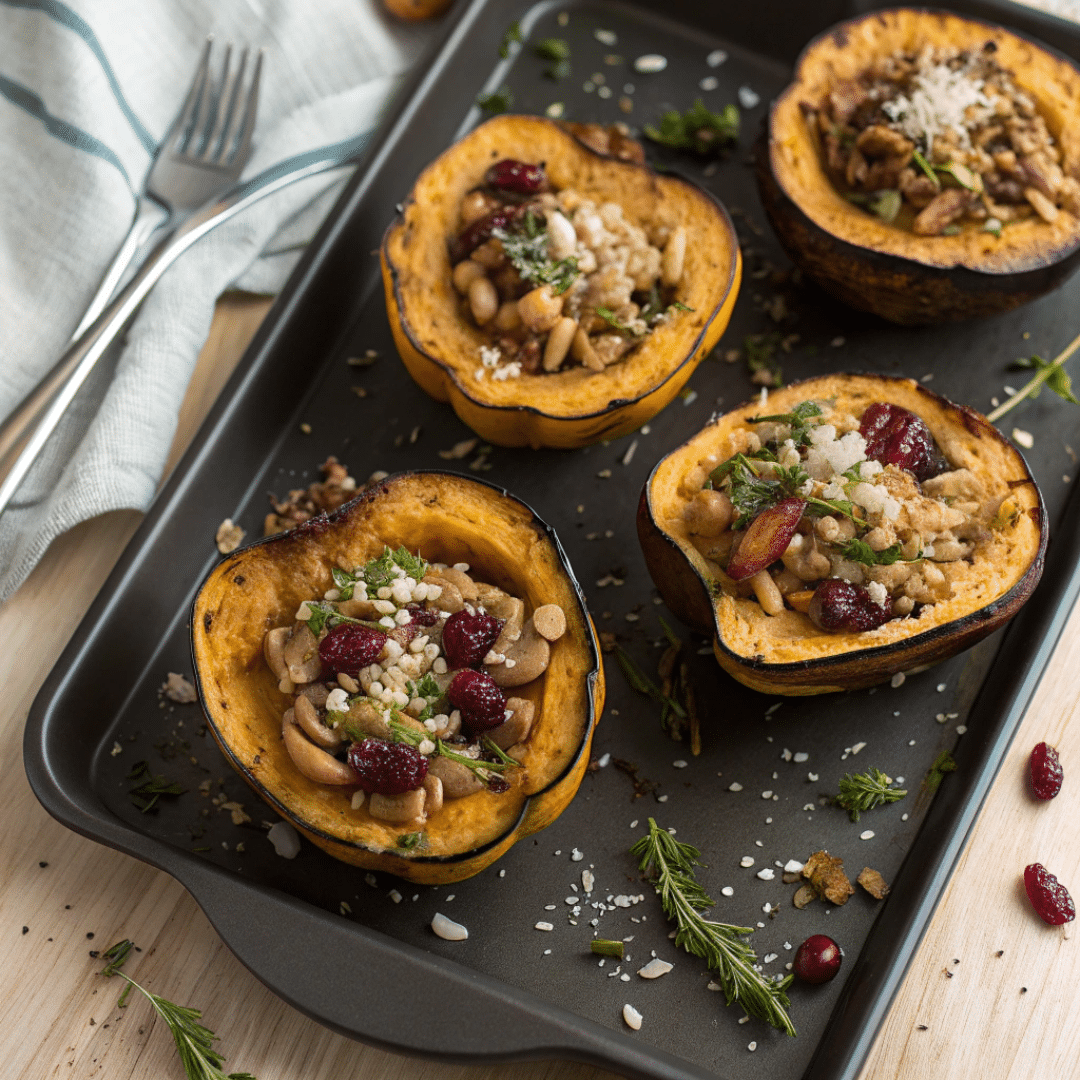
Rice Stuffed Acorn Squash
Ingredients
Method
- Preheat the oven to 425°F (220°C).
- Brush squash cavities lightly with olive oil and season with salt and pepper.
- Place squash halves cut-side down on a parchment-lined baking sheet.
- Roast squash for 30–40 minutes until tender and lightly caramelized.
- Rinse the wild rice under cool water until the water runs clear.
- Toast the rice in a dry skillet for 2–3 minutes until aromatic.
- Heat olive oil and butter in a pot and sauté diced onion until translucent.
- Add minced garlic and mushrooms and cook until moisture evaporates.
- Stir in toasted rice and splash with a little white wine to deepen flavor.
- Pour in vegetable broth, add herbs, and bring to a gentle simmer.
- Cover and cook undisturbed for 45 minutes until rice is tender.
- Rest rice off heat for 10 minutes and fluff with a fork.
- Fold in dried cranberries, chopped nuts, and chopped parsley.
- Flip roasted squash halves cut-side up and taste for final salt adjustment.
- Spoon the wild rice pilaf into squash cavities, mounding gently.
- Top with cheese if using for a golden finish.
- Return stuffed squash to the oven for 8–10 minutes to meld and heat through.
- Garnish with fresh parsley and extra nuts before serving.
Notes
FAQ
How many squash should I buy per person?
Can I use a wild rice blend instead of pure grain?
Do I need to pre-cook the grain before mixing with the filling?
What broth should I use for best flavor?
How do I prevent the squash halves from tipping on the sheet pan?
Should I roast cut-side up or down?
Can I make the filling ahead of time?
How long do stuffed squash keep in the fridge?
What add-ins brighten the filling without extra fat?
Any tips for safe cutting and removing seeds?
About The Author

John
John Watson is the passionate food enthusiast behind MePlusFood.com. With a deep love for exploring culinary delights, he shares honest restaurant reviews, mouthwatering recipes, and culinary adventures. Join John on his flavorful journey to savor the world one bite at a time.