Beet and Orange Soup: A Winter Recipe to Warm You Up
The first time I ladled this beet and orange soup, the bowl felt like a small sun in my hands—bright, warm, and oddly comforting on a gray day.
I cook low and slow to build depth: soften onion, garlic, and thyme, then splash in a little balsamic before adding zest and juice for lift. Boiled roots take about 45–60 minutes until fork-tender; roasting at 400°F for roughly 40 minutes deepens the sweetness when I want extra caramel notes.
I usually purée about three-quarters of the pot for a silky body while leaving bits for texture. Finish with a cool dollop of yogurt and chives or a frozen chive-yogurt cube for a neat touch. Store leftovers up to a week in the fridge; the greens are edible, so save them for salads to stretch your ingredients and nutrients.
Key Takeaways
- Layer aromatics first: sauté onion, garlic, and thyme to build flavor.
- Choose boil for speed (45–60 minutes) or roast at 400°F for deeper sweetness.
- Blend three-quarters for a silky yet textured bowl.
- Finish with yogurt and chives or frozen garnish for contrast.
- Keep soup refrigerated up to one week; save greens for salads.
Why This Beet and Orange Soup Belongs in Your Winter Rotation
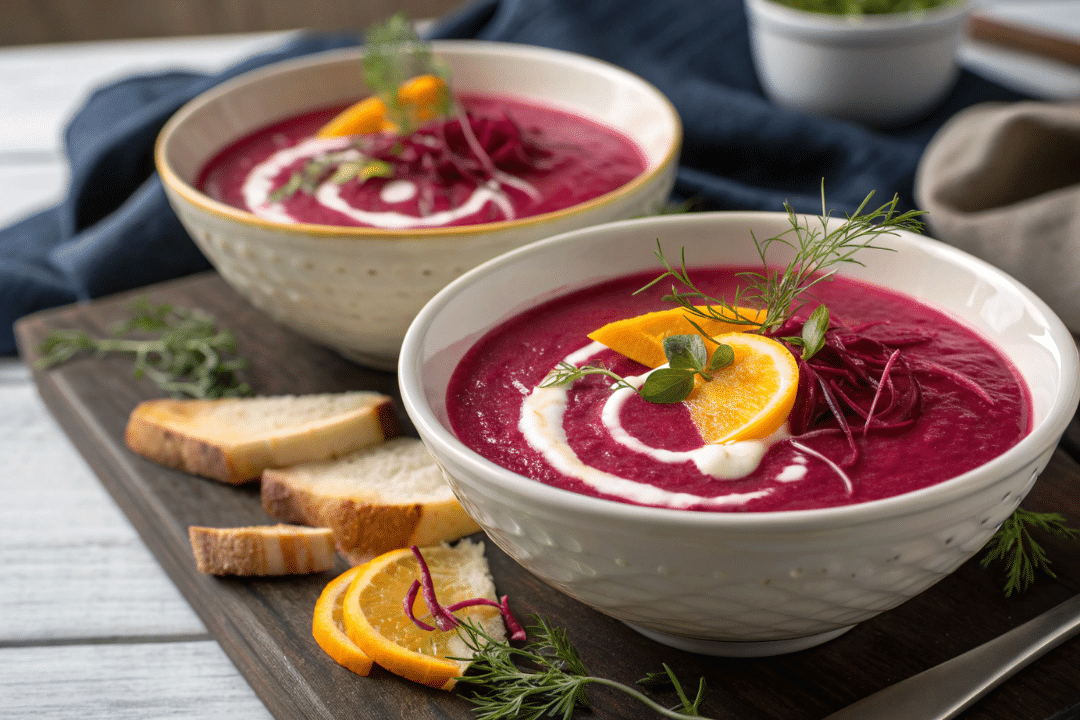
On cold nights, I reach for this bowl because it snaps me awake with citrus brightness while feeling like a warm hug. It works as weekday comfort and company-worthy fare. The prep fits a relaxed hour on the stove.
Bright Flavor Meets Deep Nourishment
Roots deliver real nutrition: vitamin C from the roots, vitamin A in the greens, plus fiber, potassium, calcium, and antioxidants. I sauté onion and garlic in oil with thyme to build savory depth before I add a splash of balsamic, zest, and juice for lift.
How the Flavors Balance
Earthy-sweet roots pair with citrus notes to keep the bowl lively, while balsamic adds gentle tang. A crack of black pepper at service height lifts aroma and gives the finish a peppery bite.
Tools, Time, and Technique
All you need is a good pot and a blender. Simmering takes about an hour; roasting at 400°F for roughly 40 minutes deepens the sweetness if I have the time. Steady medium heat prevents scorching and keeps flavors clean.
| Method | Time | Texture | Flavor |
|---|---|---|---|
| Stovetop simmer | 45–60 min | Plush, slightly textured | Bright, lighter sweetness |
| Roast first | ~40 min at 400°F | Silky, concentrated | Deep, caramel notes |
| Make-ahead | Store up to 1 week | Maintains creaminess | Flavors meld over time |
Beet and Orange Soup: Ingredients, Steps, and Chef-Tested Tips
A quick roast or a long simmer—either way, this bowl rewards the extra minutes in the kitchen.
What You Need
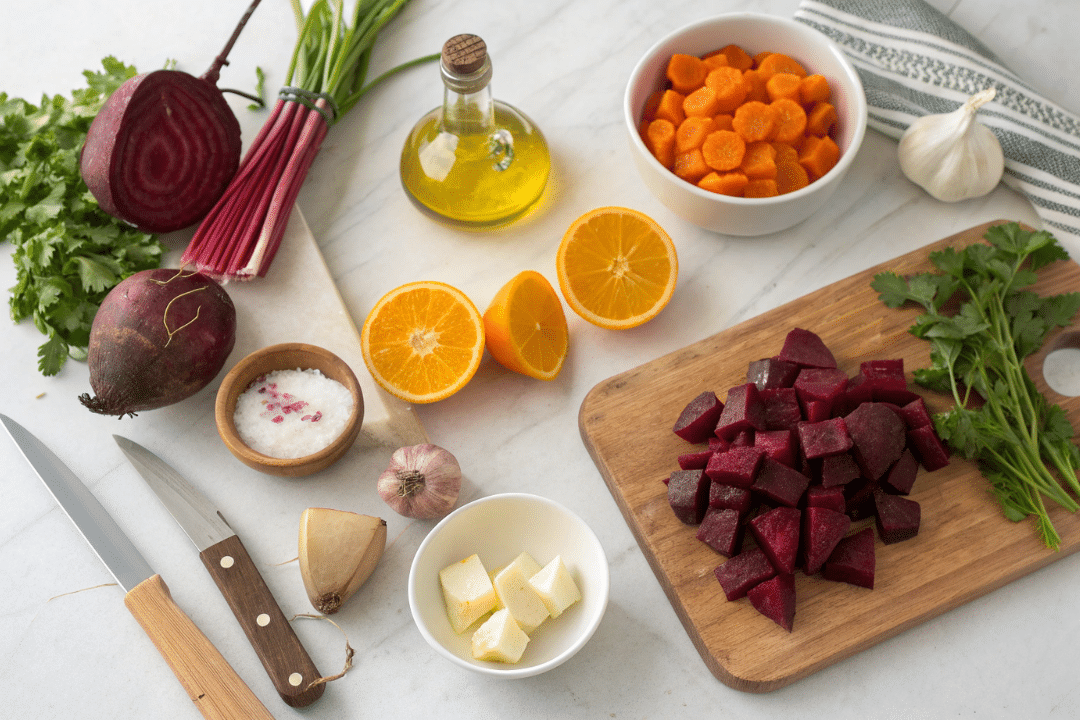
Firm beets, a juicy orange for both zest and juice, an onion, garlic, olive oil, vegetable stock, sea salt, and black pepper. I keep thyme or crushed fennel seed handy for nuance. Reserve any tender greens for salads.
Prep Without Chaos
- Trim and scrub roots; work on parchment to catch stains.
- Simmer whole for 45–60 minutes until a fork slides in, or roast at 400°F for about 40 minutes to deepen sweetness.
- Peel with gloved hands or rub with a paper towel to avoid pink hands.
Stovetop and Roast Methods
Warm olive oil over medium heat. Soften the onion and garlic for about 10 minutes. Add chopped beets, a spoonful of balsamic, orange juice, zest, and stock. Let it burble for 10 minutes so flavors marry.
For roast-first: roast at 400°F until tender, peel, then proceed with the same sauté and simmer step for a richer finish.
Texture, Blending, and Finish
Purée about three-quarters for silk with bits left. Use an immersion blender for rustic control or a countertop blender for ultra-smooth gloss—vent the lid and work in batches. Keep a measured cup of stock or water to loosen if needed.
Season in layers: a pinch of salt with aromatics, more after blending, and finish with fresh pepper. Top each bowl with a dollop of plain yogurt or a dairy-free swap and snipped chives for contrast.
Variations, Swaps, and Smart Serving Ideas
Simple swaps keep this winter bowl fresh. I often change texture, fat, or herb notes to match the meal or mood.
Dairy-Free and Vegan Twists
For vegan richness, I trade yogurt for a tahini drizzle or cashew cream. Both add silk and play well with citrus brightness.
To boost body without dairy, blend an extra cup of stock or add a few tablespoons of soaked cashews in the blender step. If you prefer a nutty lift, toast a handful of pine nuts first.
Fennel Seed, Thyme, and Small Flavor Moves
Toast a pinch of fennel seed and bloom it with onion and garlic for a subtle anise note. It makes the orange zest pop.
Prefer thyme? Stir a teaspoon of fresh leaves into the aromatics for woodsy balance that never overwhelms.
- Chilled dairy-free version: roast beets at 400°F for about 40 minutes, blend with lemon juice, a whole orange, water, a handful of nuts, and garlic; chill 2–3 hours, finish with citrus zest.
- Serve small cups as a starter, top with toasted seeds and a thread of olive oil, or add herbed cashew cream for a composed dish.
- Make-ahead tip: cool quickly, seal, and refrigerate up to one week. Reheat gently over low heat; thin with a splash of water and recheck salt.
| Method | Time | Result |
|---|---|---|
| Roast first | ~40 minutes at 400°F | Concentrated, sweeter finish |
| Stovetop simmer | 45–60 minutes | Brighter, more textured |
| Chilled blend | Chill 2–3 hours | Refreshing, picnic-ready |
If you want more ideas, I also link related comfort-spiced lentil and turnip recipe that pairs well with hearty bowls. Small tweaks make this dish endlessly useful.
Conclusion
This bowl proves that simple turns special. A single pot, a short list of ingredients, and an hour yield a bright, warming result I reach for again and again.
I start by warming garlic in olive oil to build depth. Then I layer citrus, a splash of acid, and controlled blending for texture that sings.
The recipe is flexible. Swap dairy, roast first, or simmer—your food stays vibrant and full of color.
Try it this week. It cooks in about an hour and rewards small effort with restaurant-level flavor at home.
Beet and Orange Soup
Ingredients
Method
- Simmer whole beets in water for 45–60 minutes until fork-tender, or roast at 400°F for about 40 minutes for deeper sweetness.
- Cool slightly, peel beets using paper towels or gloves, then chop into chunks.
- Heat olive oil in a heavy pot over medium heat and sauté onion and garlic until soft and fragrant, about 8–10 minutes.
- Add chopped beets, orange zest, orange juice, balsamic vinegar, thyme or fennel seed, and vegetable stock.
- Simmer gently for 10–15 minutes so flavors meld and brighten.
- Blend soup until mostly smooth, leaving a little texture if desired, adding extra stock or water to adjust thickness.
- Season with salt and black pepper, taste, and adjust acidity or salt as needed.
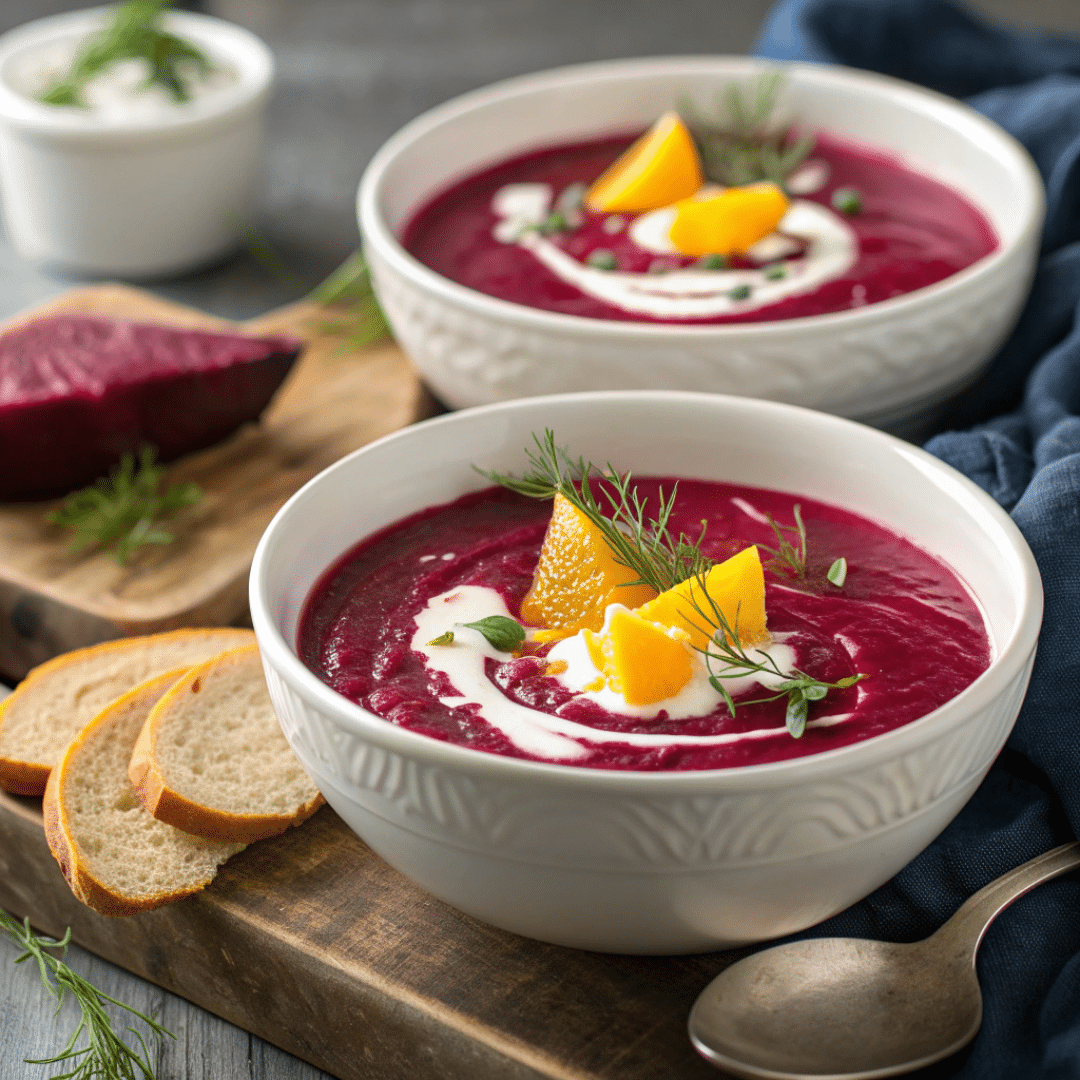
- Serve warm, topped with yogurt or a dairy-free alternative and fresh herbs if desired.
Notes
FAQ
What ingredients do I need for this winter root and citrus recipe?
How long does it take from start to table?
Should I roast or simmer the roots for better flavor?
What’s the easiest way to peel and prep without a mess?
Which blender should I use for the smoothest texture?
How do I balance sweetness and acidity?
Can I make this ahead and how should I store it?
Any suggestions for garnishes and serving ideas?
How can I make a dairy-free version that’s still creamy?
Are there spice or herb swaps that work well?
About The Author

John
John Watson is the passionate food enthusiast behind MePlusFood.com. With a deep love for exploring culinary delights, he shares honest restaurant reviews, mouthwatering recipes, and culinary adventures. Join John on his flavorful journey to savor the world one bite at a time.