Charred Cabbage Bowl with White Miso Dressing
The charred cabbage miso bowl pairs smoky, deeply browned wedges with a creamy, nutty white sauce for a clear contrast of flavor and texture.
Expect crisp, caramelized edges and a tender core when you roast at 375°F or sear then steam in a skillet. The dressing is whisked smooth — miso diluted with water, a splash of cream and soy — so it tastes nutty, salty‑sweet, and umami-forward without weighing the vegetables down.
This is written in a bowl format: base, cabbage, sauce, and toppings, but the same elements work well as a plated vegetable side. Choose the sheet‑pan route for hands‑off cooking and even browning, or use a hot skillet to get quick sear marks and finish with a splash of water to steam and keep the core juicy.
Optional mushrooms deepen savoriness; add a grain or a simple protein to make it a full meal. I’ll show where the char comes from, how to avoid drying the wedges, and how to keep the dressing glossy and lump-free.
Key Takeaways
- Smoke and caramel come from high, dry heat; roast at 375°F or sear, then steam for a tender center.
- Whisk miso with water first, then add cream and soy to keep the sauce smooth.
- Use the bowl format for bowls or serve as a composed vegetable side for a larger plate.
- Add mushrooms, grains, or simple proteins to make it a complete meal.
- Leftovers often taste better after resting overnight; flavors meld and deepen.
Why Charred Cabbage Tastes So Good in a Bowl
High, dry heat transforms a simple wedge into browned edges and a tender, almost-steamed center. Surface moisture evaporates first, so the tips can brown while the core softens. That contrast—crisp, toasty margins and a yielding heart—is what makes this vegetable behave like a main component instead of a filler.
Caramelized Edges + Tender Center: What High Heat Does
As water leaves the surface, sugars concentrate and begin to caramelize. Browning adds lightly bitter, toasted notes that sit beside gentle sweetness. In practice, roast or sear until the edges turn deep gold; the result tastes fuller and more complex.
How White or Yellow Miso Builds a Deep, Savory Umami Dressing
Fermented soybean paste brings salt, nuttiness, and umami that read as completeness in a simple sauce. White or yellow varieties have subtle sweetness and lower saltiness, so the sauce complements the sear without overpowering the vegetable.
Making Vegetables Feel Like the Main Dish
A composed dish relies on contrast: sauce clings to leaves, grains soak up juices, and crunchy toppings add bite. This structure gives each forkful purpose.
- Cabbage supplies low-cost fiber and vitamin C, plus antioxidants, making it a sensible base for a side or main.
Ingredients that Make this Dish Work
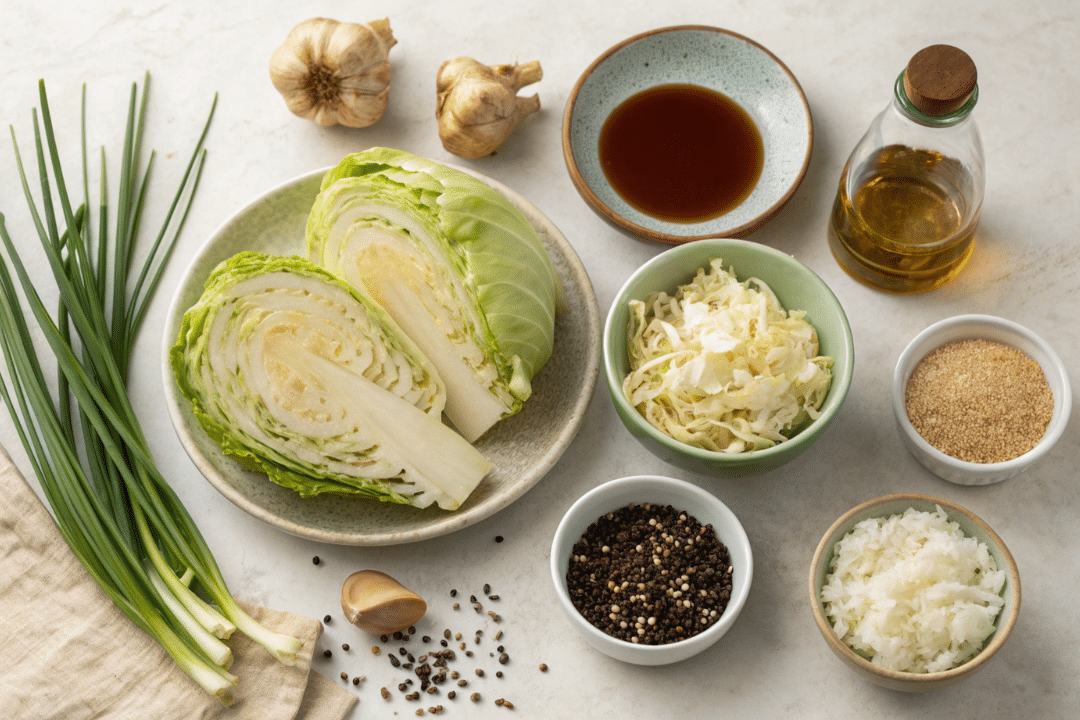
Start with a solid shopping list: a firm head, a suitable miso paste, and a few pantry staples that boost savoriness. Pick ingredients that give structure so the wedges roast evenly and the sauce clings without overpowering the vegetables.
Choosing the Right Head
Look for a medium, more spherical green cabbage with tight leaves and weight for its size. That shape yields even cabbage wedges that won’t topple on a sheet pan.
When you cut cabbage, slice through the core. The core keeps the leaves clipped together so each wedge holds its shape while you roast or sear in a skillet.
White vs Yellow Miso Paste
| Type | Flavor | How to use |
|---|---|---|
| White miso | Milder, sweeter | Use as written; dilute gently for a creamy dressing |
| Yellow miso | Stronger, slightly saltier | Thin more and cut back on added soy |
| Swap | Tamari | Gluten-free alternative to soy sauce |
Core Flavor Builders and Add-Ins
Garlic brings aroma; butter or plant-based butter adds richness. A splash of soy sauce or tamari sharpens savory notes. Oil helps promote browning and prevents the wedges from drying out in the oven.
Make it a full meal with rice as a sauce-catching base, edamame for protein, and sesame or chives for texture and freshness. For mushrooms, mix types—shiitake with oyster or shimeji—so you get contrast in both flavor and bite.
Charred Cabbage Miso Bowl Method: How to Get Real Char Without Drying It Out
Get real, dark browning on wedges without drying the interior by balancing direct heat and trapped steam. Choose an oven when you want hands-off, even baking. Pick the skillet for faster, deeper sear marks and precise control.
Cutting and Why the Core Matters
Slice through the core so each wedge keeps a sturdy handle. That core holds leaves together and prevents outer pieces from burning before the center cooks.
Oven: Sheet Pan Roasting at 375°F
Arrange wedges on a sheet pan with space between them. Coat cut faces with oil and roast 25–30 minutes, flipping once. Look for dark brown patches on edges but not full black—knife tip should meet the core with little resistance.
Skillet Sear + Short Steam
Sear cut sides in a hot skillet with oil, add about 1/4 cup water, cover 4–5 minutes to steam the thick center, then uncover and brown. This drives off surface water so you get stronger heat contact in minutes.
Salt, Mushrooms, and Quick Tips
Salt wedges early for seasoning and texture. Hold salt on mushrooms until after they brown to avoid weeping. Roast mushrooms about 20 minutes, single layer, toss once midway.
| Method | Temp / Heat | Timing (minutes) | Key move |
|---|---|---|---|
| Oven sheet pan | 375°F | 25–30 | Space wedges; flip once; oil cut sides |
| Skillet sear + steam | High stovetop | 4–5 steam; plus sear time | Sear cut faces, add 1/4 cup water, cover, then uncover |
| Mushrooms | 400°F roast or high pan | ~20 | Single layer; salt after browning; toss once |
If edges brown too fast, lower the rack or tent with foil. If pale, increase contact with the pan or finish with a short broil. For more recipe ideas, see my cabbage steak tacos recipe.
White Miso Dressing, Done Right: Creamy, Bright, and Balanced
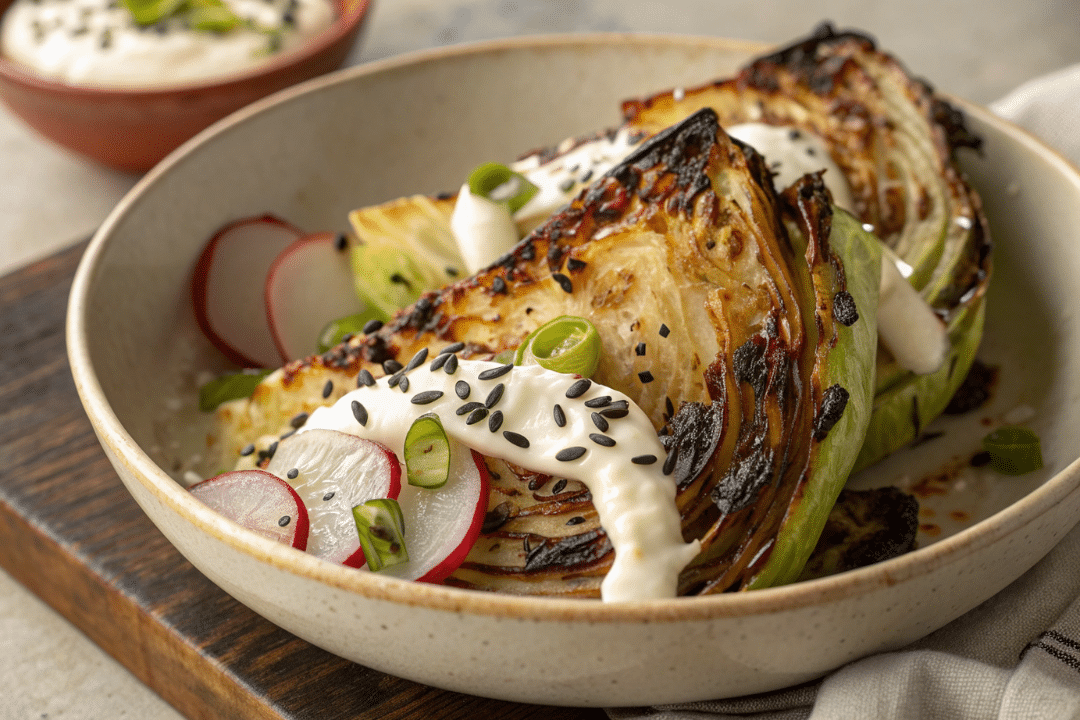
A well-made white miso dressing balances salt, fat, acid, and a touch of sweetness so the sauce lifts roasted vegetables without masking them.
The Classic Creamy Version
Sauté minced garlic in butter until fragrant. Whisk a measured spoon of miso paste into a small cup of warm water until fully dissolved.
Stir the dissolved paste into the pan, add a splash of cream and a small dash of soy sauce, and simmer gently. Keep heat low to avoid boiling hard; rapid boiling can dull flavor and make the texture grainy.
Dairy-Free Swaps that Still Taste Rich
Use plant butter for the initial sauté and an unsweetened high-fat plant milk—oat or soy—where the cream would go. These keep the mouthfeel and help the sauce cling.
For gluten-free kitchens, swap soy sauce for tamari and double-check miso labeling for barley or wheat.
Orange Miso Twist for a Sweeter, Citrusy Sauce
Add finely grated orange zest and a tablespoon of juice to the warmed sauce. Balance the tartness with a teaspoon of maple or a pinch of sugar. If you need a thicker sauce for rice or wedges, whisk a teaspoon of cornstarch into 1–2 tablespoons of cold water and stir in until glossy.
- Core technique: dissolve the paste in water first, then add fat and heat gently.
- Ratio logic: paste = umami, water thins, cream adds body, soy sauce sharpens.
- Quick tip: miso butter or plant butter rounds saltiness; garlic adds warm, savory notes.
Build the Bowl: Layering Cabbage, Sauce, and Toppings for the Best Bite
Assemble the plate so every forkful balances warm grains, tender wedges, and a glossy sauce. Start with heat: a hot base helps the sauce loosen and coat each spoonful so nothing tastes dry.
Best Bases
Use steamed white rice or short-grain brown rice to catch the sauce. Other hearty grains—barley or farro—work if you want more chew.
Easy Protein Pairings
Keep proteins simple. Thawed edamame, pan-seared tofu slabs, tempeh, chickpeas, or leftover fish or meat slot in with minimal effort. Add one protein to make a complete meal.
Finishing Touches
Finish with sesame seeds for crunch and a nutty note. Scatter scallions or chives for sharpness. A handful of arugula adds peppery contrast when the sauce is rich.
- Place wedges cut side up to catch sauce, or angle them to keep more char exposed.
- Serve as a main or bring the dish to the table as one of several sides; the method doesn’t change.
| Element | Effect on bite | Quick swap |
|---|---|---|
| Hot rice | Loosens sauce; binds ingredients | Farro or barley |
| Protein | Adds weight and satiety | Edamame or tofu |
| Toppings | Crunch, color, freshness | Sesame, chives, arugula |
Variations, Serving Ideas, and Smart Prep for Busy Weeknights
Small technique shifts let the same wedges serve as either a pared-back side or a satisfying vegetarian main. For a main, add a grain and a protein; for a side, cut portions smaller and finish with a simple pat of miso butter or a sprinkle of seeds.
Braised-Style Variation for Colder Nights
Sear wedges in a hot pan to secure browned faces. Combine butter, shallots, dissolved paste, rice vinegar, sake, and a little water, then transfer to the oven at 375°F and bake for about 1 hour until jammy and tender. Swap sake for a dry white wine if you prefer; both add acidity that softens the core while keeping the edges flavorful.
Seasonal Swaps and An Orange Shortcut
Use purple heads for a dramatic look; they hold up longer in the oven and need a touch more cook time. Savoy cooks faster and may brown sooner, so watch the rack. If fresh citrus is out of season, bottled orange juice works—add a teaspoon of zest when possible for brightness.
Make-Ahead and Reheating Strategy
Cook the wedges and mushrooms ahead, and slightly undercook the cabbage if you plan to reheat. Store sauce separately for up to 4 days. Reheat wedges in the oven to revive browned edges and warm the sauce gently on low so it stays glossy. Finish assembly just before serving.
Storage Rules and a Simple Finishing Trick
Keep the cooked wedges and the dressing in separate containers to avoid sogginess. Reheat the vegetables dry in the oven; warm the sauce on low and whisk before using. For a quick side-dish finish, melt a small pat of miso butter over hot wedges instead of using a full dressing.
| Need | Technique | Why it helps |
|---|---|---|
| Vegetarian main | Add grains + protein | Increases satiety and absorbs sauce |
| Braised texture | Sear, then bake with vinegar + sake/wine | Softens core while preserving browned faces |
| Make-ahead | Cook early; store sauce separately | Protects texture; quick assembly at service |
| Reheat | Oven for wedges; low heat for sauce | Revives edges; keeps sauce smooth |
Conclusion
Two precise moves—deep sear and a balanced dressing—are what make this plate sing. One drives flavor on the surface; the other keeps the sauce bright and silky.
Keep the core attached when you cut wedges so they stay intact from pan to plate. Choose the oven for steady, hands-off results or the skillet when you want faster, darker color in small batches.
Remember mushrooms: wait to salt until after they develop color. Try simple variations—an orange-miso twist, a braise with vinegar and sake, or swapping in grains and a protein—to keep the dish fresh.
Store dressing separately and reheat vegetables dry. Flavors often deepen after a night in the fridge, so assemble just before serving for best texture.
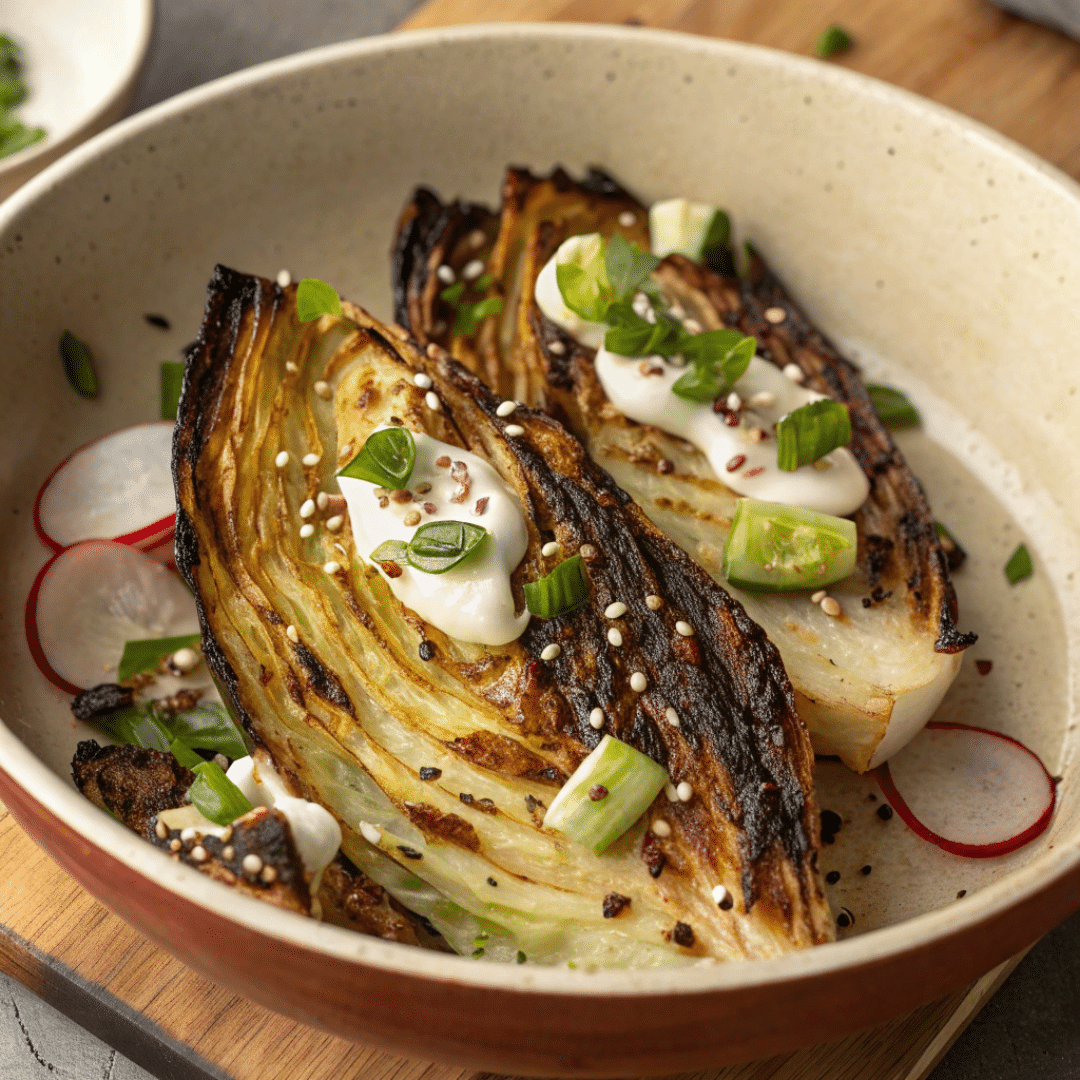
Charred Cabbage Bowl with White Miso Dressing
Ingredients
Method
- Preheat the oven to 375°F (190°C) or heat a skillet over high heat.
- Cut the cabbage into wedges, leaving the core intact to hold the leaves together.
- Brush the cut sides of the cabbage wedges with olive oil and season with salt and pepper.
- Roast on a sheet pan for 25–30 minutes, flipping once halfway, until the edges are deeply browned and tender.
- While the cabbage roasts, heat butter or plant-based butter in a small pan and sauté minced garlic until fragrant.
- Dissolve miso paste in warm water, then add it to the pan with soy sauce and rice vinegar.
- Simmer gently on low heat, whisking until the dressing becomes smooth and creamy.
- Arrange rice or grains in bowls, place the charred cabbage wedges on top, and drizzle generously with the miso dressing.
- Add edamame or tofu for protein if desired.
- Finish with sesame seeds and chopped scallions.
Notes
FAQ
How do I choose the best green head for sturdy wedges?
Should I use white miso paste or yellow miso paste for the dressing?
How do I cut wedges so the leaves stay together?
Oven roasting at what temperature gives good browning without drying the vegetable?
When is a stovetop skillet sear better than the oven?
How do I avoid soggy mushrooms when adding them to the bowl?
What are simple, balanced proportions for a creamy white miso dressing?
How can I make the dressing dairy-free but still rich?
What are good grain bases that hold sauce without getting mushy?
Which proteins pair best with this dish for a satisfying main course?
Can I prepare elements ahead for busy weeknights?
How should I store leftovers so the wedges stay tender and the sauce stays smooth?
What small seasoning moves make the biggest difference in flavor?
Is there an easy orange miso variation for a sweeter, citrusy sauce?
About The Author

John
John Watson is the passionate food enthusiast behind MePlusFood.com. With a deep love for exploring culinary delights, he shares honest restaurant reviews, mouthwatering recipes, and culinary adventures. Join John on his flavorful journey to savor the world one bite at a time.