Citrus-Marinated Olive Farro Salad
The citrus-marinated olive farro salad centers on chewy grain, briny fruit, and a bright dressing that soaks in but never overwhelms.
This format works hot or cold and holds up for make-ahead lunch or potluck service. Cook the farro until tender with a slight bite, fold in olives and herbs at the end, and let the dressing sit long enough to mellow the acid.
Expect a nutty base, juicy lemon notes, salty olive bites, and fresh herbs that keep the top notes lively. Key choices—whole lemon versus juice, warm vinaigrette versus a cold whisked dressing, and whether to add greens or roasted vegetables—shape the final dish.
This recipe is for cooks who care about technique: avoid overcooking the grain, soften raw shallot with a pinch of salt or a quick rinse, and balance oil so the dressing never feels greasy. Follow those small steps and the flavors stay clean and balanced.
Key Takeaways
- Texture is everything: aim for tender farro with a bit of chew.
- Bright dressing should mellow; give it time to rest with the grain.
- Fold herbs in last to preserve freshness and color.
- Choose whole lemon or juice based on the intensity you prefer.
- Good make-ahead food: serves well at room temperature for meals or sides.
What You’ll Need for Citrus-Marinated Olive Farro Salad
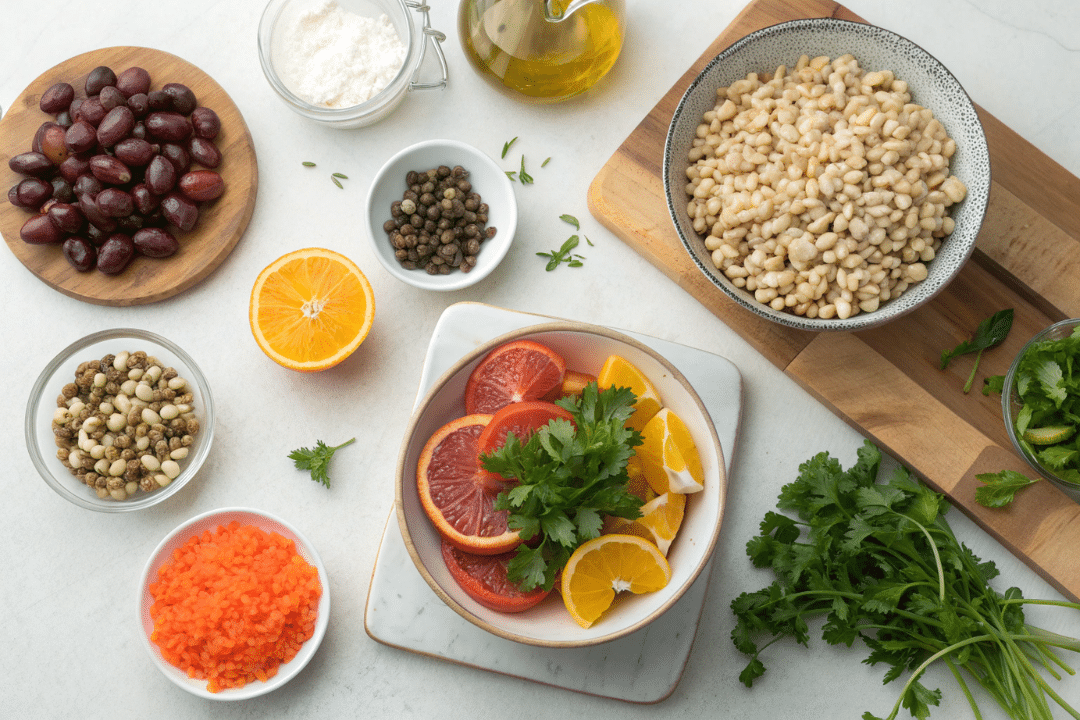
A few clear choices—grain type, olives, and dressing fats—shape the final dish.
Farro Basics and Shopping Notes
Emmer farro gives the best chew; quick-cook versions save time but soften faster. Check labels: pearled, semi-pearled, or whole affect cook time and water absorption.
Always cook according to package directions for a predictable texture. That prevents a mushy base and keeps the chewy bite you want.
Picking and Prepping Olives
Choose buttery, low-brine options such as Cerignola or Castelvetrano. Crush an olive gently with the flat of a chef’s knife to expose more surface for the dressing to cling to.
To pit safely: crush, split, pull out the pit, then rough-chop into large pieces so the fruit reads in the bowl.
Citrus, Alliums, Herbs, Oil, and Seasoning
Use a whole lemon (peel and flesh) when you want aroma and slight bitterness, or build a vinaigrette with about 1/4 cup lemon juice and a splash of orange juice for cleaner acidity.
Shallots give bite without harshness. Fold parsley, mint, or cilantro in last to keep brightness. For oil, pick extra-virgin olive oil for classic flavor or rice bran oil for neutral warmth.
Season in stages: olives add saltiness, so add salt and fresh black pepper to taste as you finish.
- Optional add-ins: feta (creaminess), chickpeas (protein), cucumber (crunch), cherry tomatoes (juiciness), arugula/spinach (peppery greens).
| Ingredient | Role | Recommended amount |
|---|---|---|
| Emmer farro | Chewy base | 1–2 cups cooked |
| Cerignola or Castelvetrano | Briny, buttery pieces | 1 cup, crushed & chopped |
| Oil choice | Flavor carrier | 2–4 tablespoons |
Cook the Farro So It Stays Chewy, Not Mushy
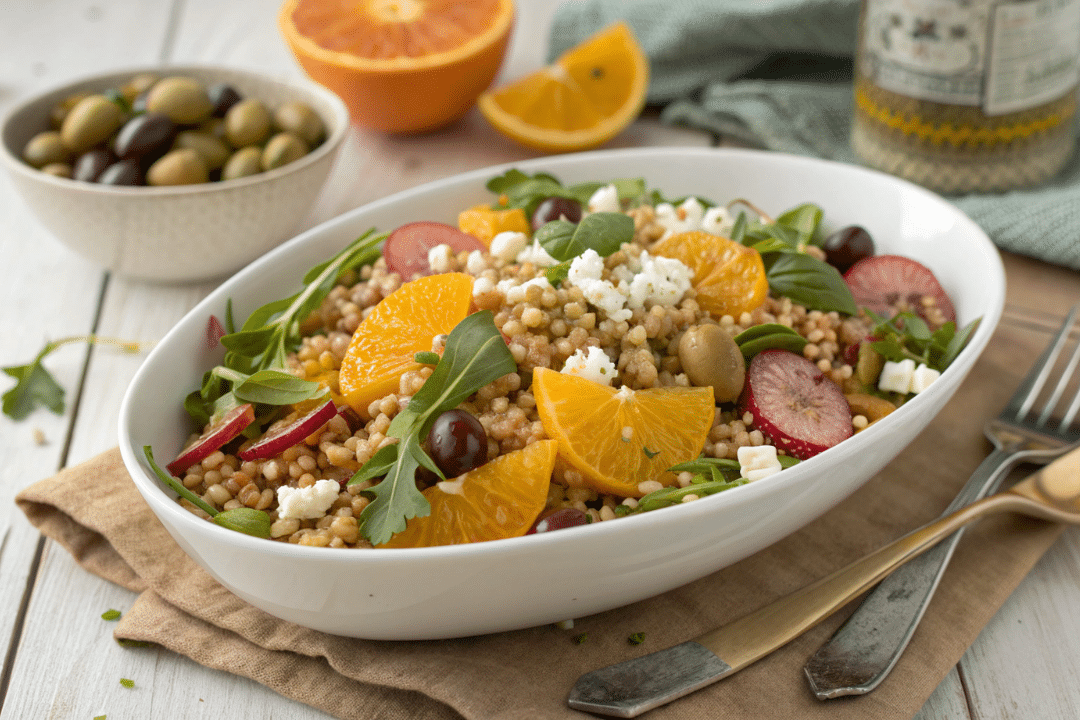
Start by treating the grain like a component, not a filler: toast and time it for texture. A quick toast builds flavor and helps each kernel hold shape once dressed.
Toasting the Grain First for Nutty Flavor and Better Texture
Use a wide, dry pot over medium heat and stir for about 3–4 minutes until the color lightens and a popcorn-like aroma appears. That step drives off surface moisture and deepens the nutty note so the base reads clearly in the bowl.
Simmer Time Cues: Tender with Bite in About 25–30 Minutes
Start with the water ratio on the package, then taste early and often. Many whole emmer types take roughly 25–30 minutes; pearled versions will cook faster. Salt the cooking water so the grain seasons through; add a twist of pepper at the end if you like.
Cooling Strategy: Warm vs. Room Temp vs. Cold for Best Texture
Drain and spread the hot grain across a sheet pan to release steam quickly, then move to a bowl once steaming slows. Warm grain soaks dressing fast, room temperature gives even uptake, and cold needs a looser dressing because oil firms up.
- Tip: measure about 1–2 cups cooked as a starting ratio for a composed salad portion.
- Next, let the base rest at the right temperature—dressing acts like a marinade, so this step controls flavor uptake.
For another grain-focused idea, try this chicken and mushroom farro recipe to see a similar technique applied to warm food bowls.
Build the Citrus-Olive “Marinade” and Toss the Salad
Start the finishing stage by softening shallots in lemon, then decide on a warm or whisked dressing. Quick-pickling takes about 5 minutes: toss thin shallot slices with lemon juice so the edge softens while you prep the bowl and other ingredients.
Warm Vinaigrette Method
Gently heat 2–4 tablespoons oil until it shimmers but does not smoke. Add olives, lemon peel, and the quick-pickled shallots and warm for about 4 minutes to coax flavor from the peel and calm the alliums.
Scrape the warm mixture directly into the cooked grain. The heat helps the bowl absorb flavors faster; you are warming, not frying, so keep the time short for quality and safety.
Whisked Vinaigrette Option
For a cleaner citrus pop, whisk 1 teaspoon lemon zest with about 1/4 cup lemon juice and 1/4 cup olive oil. Finish with salt and pepper to taste. This version keeps acidity bright and immediate.
Assembly and Make-Ahead
Use a large bowl: farro first, then add olives and dressing so everything coats evenly, then gently fold in herbs. Add feta once the grain has cooled enough so it stays in distinct crumbles.
Chill at least 1 hour; the dish keeps up to 2 days. Before serving cold, refresh with a small splash of lemon juice or a drizzle of olive oil to restore texture and taste.
| Technique | Why it matters | Timing |
|---|---|---|
| Quick-pickle shallots | Softens bite, adds bright acid | ~5 minutes |
| Warm vinaigrette | Rounds flavors, pulls aroma from peel | ~4 minutes |
| Whisked vinaigrette | Clean, sharp citrus note | Immediate |
| Make-ahead chill | Allows flavors to meld; re-season as needed | At least 1 hour, up to 48 hours |
Conclusion
Nail the texture of the cooked farro and the balance of the dressing, and this becomes a repeatable, reliable dish.
Focus on two technique pillars: cook the grain to “tender with bite” and choose either a warmed dressing to deepen flavor or a whisked dressing for bright lift. Those moves determine how the bowl reads.
When you finish, adjust in order: a touch more acidity, then salt, then oil. That sequence keeps the final plate from tasting flat or greasy.
Serve warm or let it rest—it’s often better after an hour and holds well up to two days refrigerated. Add greens for volume, chickpeas for protein, or feta for creaminess to vary meals without relearning the method.
Once you control grain texture and dressing balance, the technique adapts easily to other grains and recipes, and the result feels consistently reliable.
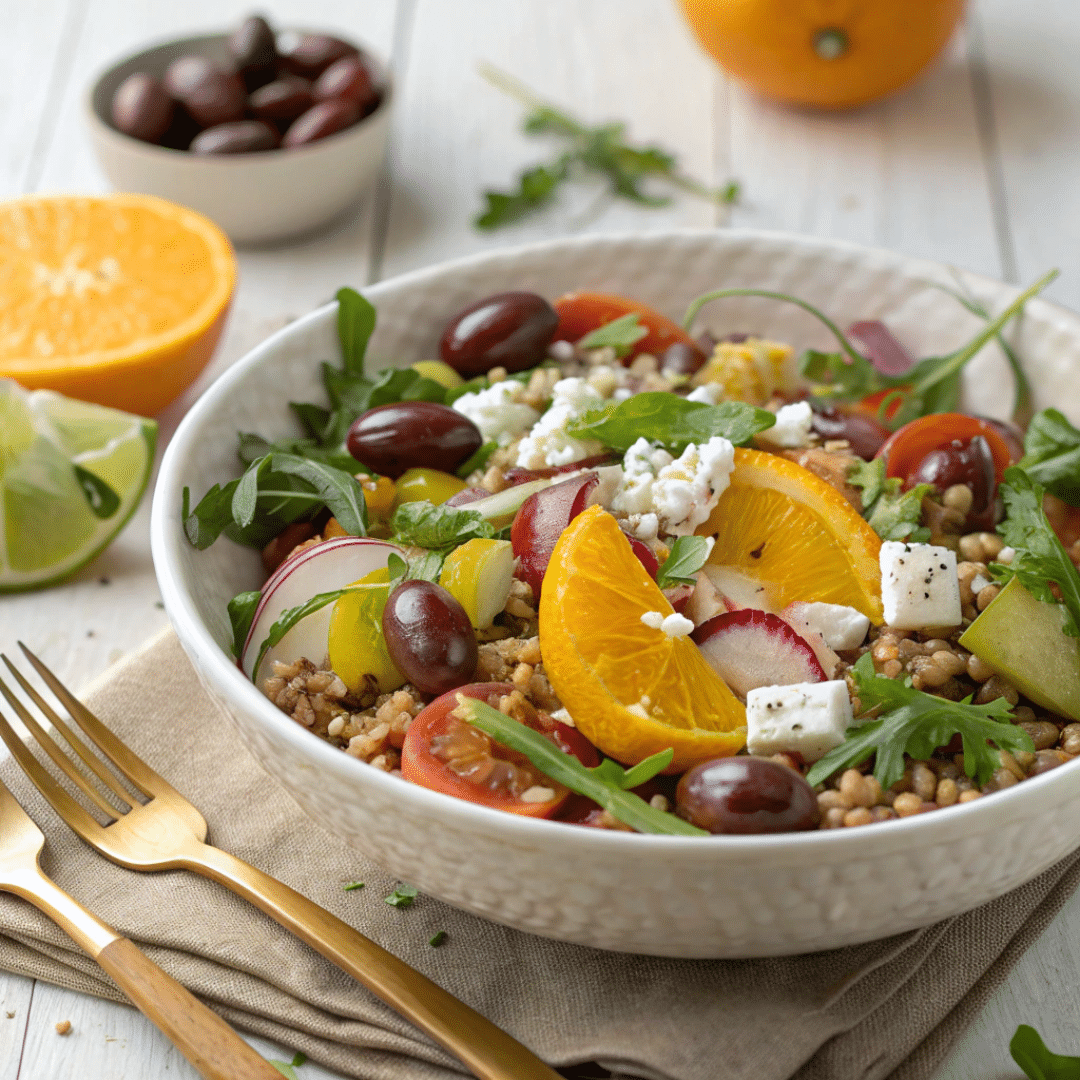
Citrus-Marinated Olive Farro Salad
Ingredients
Method
- Toast the dry emmer farro in a wide, dry saucepan over medium heat for 3–4 minutes, stirring occasionally, until the grains lightly color and release a nutty, popcorn-like aroma.
- Add water according to package instructions and simmer until the farro is tender with a slight chew, about 25–30 minutes for whole emmer or less for pearled varieties.
- Salt the cooking water and finish with a twist of pepper if desired.
- Drain and spread the hot farro on a sheet pan to release steam, then transfer to a bowl once cooled slightly.
- Toss thinly sliced shallots with lemon juice and let sit for about 5 minutes to soften the bite while prepping other ingredients.
- For the warm vinaigrette, gently heat oil until it shimmers but does not smoke, then add olives, lemon peel, and quick-pickled shallots, warming for about 4 minutes.
- Scrape the warm mixture directly into the cooked farro to help the grains absorb the flavors quickly.
- For a whisked vinaigrette option, combine lemon zest, lemon juice, and olive oil, seasoning with salt and pepper, and pour over the cooked farro for a bright, clean flavor.
- Fold fresh herbs gently into the farro and vinaigrette mixture.
- Add optional ingredients like feta, chickpeas, cucumber, cherry tomatoes, or greens once the grain has cooled enough to maintain distinct textures.
- Chill the salad for at least 1 hour before serving, or serve warm if preferred.
- Before serving cold, refresh the salad with a small splash of lemon juice or drizzle of olive oil to restore brightness and texture.
Notes
FAQ
What is the difference between pearled, semi-pearled, and whole emmer farro?
Which olives work best and how should I prepare them?
Should I use whole lemon, lemon juice, or add orange juice?
How do I prevent shallots or other alliums from tasting sharp in the salad?
What oil should I use for the dressing and why?
Can I add protein or other mix-ins to make the salad more substantial?
Is toasting farro necessary and how do I do it?
How long should I simmer farro so it stays chewy?
Should the farro be warm, room temperature, or cold when I assemble the salad?
What is the warm vinaigrette method and when should I use it?
How do I make a simple whisked vinaigrette for this salad?
What assembly order gives the best texture and flavor?
Can I make this salad ahead and how long will it keep?
About The Author

John
John Watson is the passionate food enthusiast behind MePlusFood.com. With a deep love for exploring culinary delights, he shares honest restaurant reviews, mouthwatering recipes, and culinary adventures. Join John on his flavorful journey to savor the world one bite at a time.