Couscous Salad with Mint and Feta: Simple, Fresh, and Delicious
I love how a bright bowl of couscous salad with mint and feta can taste like a small celebration—lemon zest, warm toasted pearls, and tangy cheese hitting every bite.
Here I’ll walk you through the essentials: which type of couscous to pick, how to cook the grains so they stay tender and separate, and a quick lemon-Dijon dressing that clings to each morsel.
Toss the warm grains with the dressing, let them rest for five to ten minutes so the flavor can sink in, then add crisp vegetables and herbs for contrast. This keeps the texture lively and prevents sogginess, which is crucial for a reliable summer meal that can be made ahead.
Key Takeaways
- Pick Israeli (pearl) or whole wheat pearls for a nuttier texture and more fiber.
- Toss warm grains with dressing so they absorb more flavor before cooling.
- Use lemon zest and juice, plus smoked paprika, for a bright, smoky lift.
- Cool 5–10 minutes before adding vegetables to keep them crisp.
- Store leftovers up to five days; freeze cooked grains for up to three months.
Why this Couscous Salad Belongs in Your Regular Rotation
If you’re looking for a no-fuss summer dish that travels well and tastes great, this is it. I make it often because the flavor stays bright even after a night in the fridge.
Israeli couscous cooks differently from the tiny grain. The pearls are boiled, so they come out tender yet springy. That texture helps them absorb dressing and retain their shape.
Whole wheat Israeli couscous provides approximately 6g of fiber and 7g of protein per serving. Compared to regular grains, it keeps you fuller, which is excellent when you need a quick meal or a hearty side.
- Works as a side or a one-bowl meal—add chickpeas or tuna for extra protein without extra time.
- Budget-friendly, pantry-stable ingredients make this a weeknight win.
- Lemon, creamy feta, and fresh mint elevate the overall flavor, making small portions feel satisfying.
| Feature | Israeli Pearls | Regular Grain |
|---|---|---|
| Texture | Tender, springy pearls that hold dressing | Finer, softer crumb that can get mushy |
| Nutrition | Whole wheat option: ~6g fiber, 7g protein | Typical: ~2g fiber, lower protein |
| Best use | Make-ahead bowls, potlucks, room-temp plates | Hot side dishes or quick mixes |
What You’ll Need for the Best Flavor and Texture
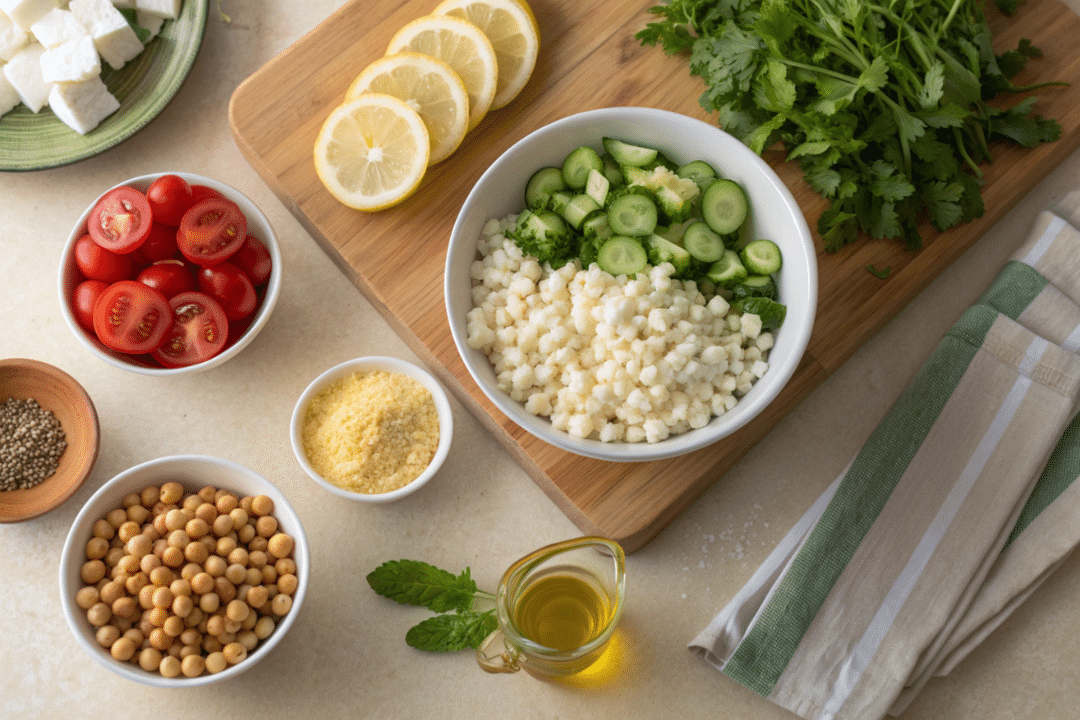
Start by gathering the right ingredients—those choices set the tone for every bite. Select items that add contrast, such as tender grains, bright citrus, peppery greens, salty cheese, and crunchy add-ins.
The Core: Couscous, Fresh Mint, and Creamy Feta
I use Israeli couscous or pearl couscous for a rounded, chewy bite. Traditional couscous works if you need a faster finish.
Fresh mint wakes the bowl up. Crumbled feta cheese adds a creamy, salty element that balances the lemon and herbs.
Lemon Juice, Zest, and Dijon for a Bright, Tangy Dressing
The dressing base consists of lemon zest, lemon juice, extra-virgin olive oil, Dijon mustard, smoked paprika, kosher salt, and black pepper. Use a good olive oil—it makes a simple dressing sing.
Choose Your Grain: Traditional vs. Israeli
- Traditional cooks often use steaming to cook quickly; it’s great when time is tight.
- Israeli couscous requires about 20 minutes of boiling, resulting in a firmer texture.
- Whole wheat Israeli pearls add fiber and protein for fuller meals.
Fresh Crunch: Arugula, Cucumber, and Tomatoes
Arugula gives a peppery lift. Cucumber brings cool crunch. Cherry tomatoes add sweet acidity and color.
Smart Add-Ins: Chickpeas, Smoked Paprika, Herbs, and Nuts or Seeds
- Fold in chickpeas for protein.
- Sprinkle pistachios or roasted sunflower seeds for texture.
- A tiny pinch of smoked paprika adds a warm, savory note.
| Type | Cook Time | Best Use |
|---|---|---|
| Traditional | Quick steam | Fast weeknights |
| Israeli | Boil ~20 minutes | Make-ahead bowls |
| Whole wheat pearls | Boil ~20 minutes | Higher fiber, more filling |
How to Make Couscous Salad with Mint and Feta
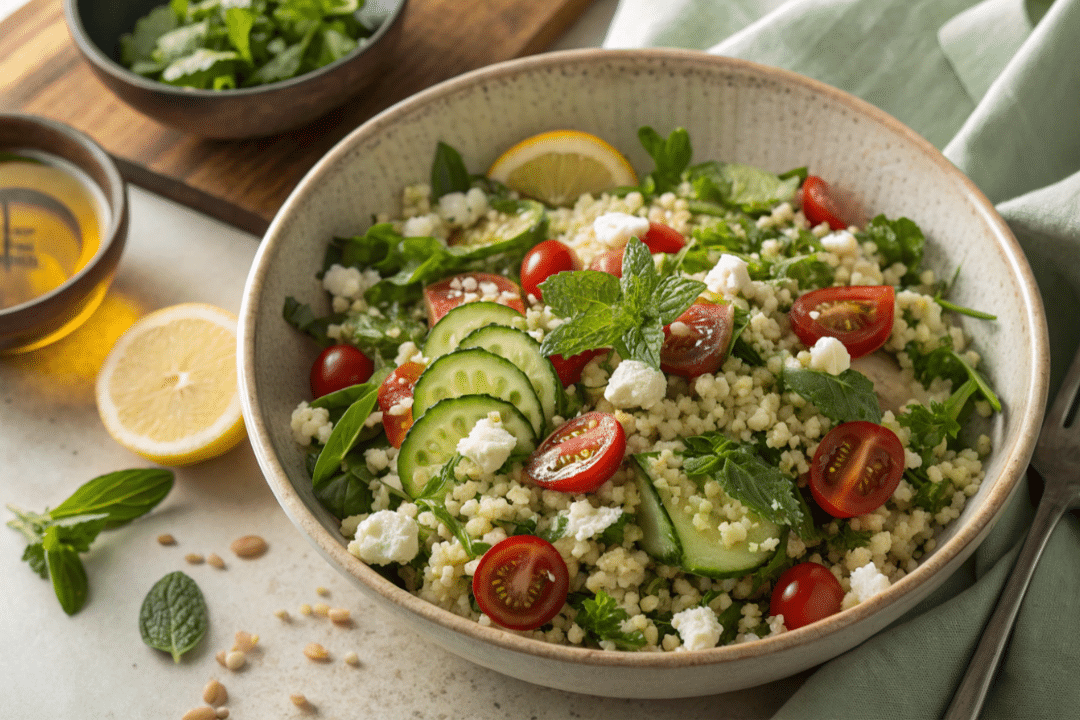
I’ll guide you through each step at the stove so your grains turn out tender and flavorful every time. The goal is a light, separate texture and a dressing that clings to every bite.
Cook the Couscous Right: Boil, Simmer, and Fluff
Bring 1 1/4 cups of water to a boil for every 1 cup of Israeli couscous. Stir in the pearls, cover, reduce the heat, and simmer until the liquid is absorbed—about 20 minutes.
Remove from the heat and fluff with a fork. If the bite feels tight, splash a spoonful of water over it, cover briefly, and then fluff it again.
Whisk Together a Zesty Lemon-Dijon Olive Oil Dressing
In a large bowl, whisk together the lemon zest, lemon juice, extra-virgin olive oil, Dijon mustard, smoked paprika, salt, and black pepper until the mixture is glossy and emulsified. This dressing will coat the hot grains and soak in.
Toss While Warm, Cool Briefly, then Fold in Veggies, Feta, and Mint
- Toss the warm, cooked couscous with the dressing so the flavors can sink in.
- Chill 5–10 minutes, then fold in arugula, tomatoes, cucumber, small crumbles of feta, and torn mint leaves to keep greens crisp.
- Taste and adjust with a pinch more salt or a squeeze of lemon. Serve cold or at room temperature.
| Step | Key cue | Timing |
|---|---|---|
| Boil water, add Israeli couscous | Rolling boil before adding grains | Immediate, then reduce heat |
| Simmer covered | Liquid absorbed, pearls tender | About 20 minutes |
| Toss warm, rest, fold in greens | Dressing absorbed, greens stay crisp | Chill 5–10 minutes |
Lemon-Dijon Dressing that Ties Everything Together
A glossy, balanced dressing is the secret that makes each bite sing. I keep mine simple so you can repeat the same result every time.
Balance Your Acidity, Salt, and Sweetness for Peak Flavor
Start by whisking lemon zest, freshly squeezed lemon juice, Dijon mustard, smoked paprika, kosher salt, and ground black pepper in a bowl. Whisk those first, then stream in extra-virgin olive oil so the dressing turns glossy and emulsified.
I aim for a 2:1 ratio of lemon juice to oil because the grains absorb acid quickly. Taste a spoonful of the dressed couscous salad before adding more seasoning—this helps you salt to taste, not by the bowl.
- Dijon helps the vinaigrette cling, so it coats every pearl.
- A pinch of smoked paprika brings warm depth that pairs well with mint and feta.
- If lemon feels sharp, soften it with a drop of maple syrup or a splash more oil.
- Scaling up? Shake the mix in a jar—no whisk needed.
| Action | Why | Quick tip |
|---|---|---|
| Whisk juice, mustard, spices | Creates base | Use fresh lemon |
| Stream in oil | Forms a stable emulsion | Slow stream, steady whisk |
| Taste on grains | True seasoning | Adjust salt and pepper sparingly |
Serve it Your Way: Sides, Mains, and Easy Variations
Make this one-bowl recipe your go-to: it adapts to pantry finds and busy schedules. I keep it flexible so you can turn it into a full meal or a bright side dish in minutes.
I often add a can of chickpeas or flaked tuna to good-quality tuna to make a hearty meal. Both play nicely with lemon and hold up well if you pack lunch. Serve warm or cold; warm brings out lemon aroma and softens the cheese.
Perfect Pairings
This is a great side for grilled salmon, chicken, or halloumi. It also shines on a brunch spread alongside eggs and fresh fruit. Keep tomatoes at room temperature before mixing to boost sweetness and juiciness.
Smart Swaps
If you’re out of Israeli couscous, try quinoa, bulgur, rice, or orzo. Prefer extra greens? Pile the mix over arugula or spinach and let the dressing do double duty. I finish most bowls with a sprinkle of feta cheese and torn mint for a fresh top note.
| Option | How to use | Best served |
|---|---|---|
| Chickpeas | Toss in for protein | Cold or room temp |
| Canned tuna | Flake on top | Warm or chilled |
| Quinoa / Orzo | Sub for pearl couscous | Make-ahead bowls |
Make-ahead, storage, and meal-prep tips that actually work
Prep once, eat well: small tricks keep textures bright and flavors lively for days. I rely on a few routines to keep weekday meals fast and fresh.
Chill the dressed grains for 5–10 minutes in a large bowl before adding the greens. That quick cool locks the texture and keeps arugula and other leaves crisp for up to five days.
- Layer jar meals with dressing at the bottom, then add cooked couscous and chickpeas, followed by veggies. Top with cheese and nuts so nothing wilts.
- Store the finished mix airtight in the fridge; it keeps up to 5 days. Please give it a quick toss before serving to redistribute the dressing.
- If grains feel tight after a few days, loosen with a splash of water and a drizzle of olive oil, then warm briefly if you like.
- Freeze cooked couscous flat in a freezer bag for up to 3 months. Thaw overnight, then fluff with a fork and refresh with lemon and oil.
- Add fresh mint at serving time to keep it bright and fragrant; the acid will darken chopped leaves over time.
| Prep method | Best use | Storage |
|---|---|---|
| Mason-jar layering | Work lunches, grab-and-go servings | Up to 4 days upright in fridge |
| Make-ahead bowl | Family dinners, potlucks | Tightly covered, up to 5 days |
| Freeze cooked grains | Batch-cooking for future bowls | Freeze 3 months, thaw overnight |
| Quick refresh | Revive texture before serving | Use water, olive oil, or a quick heat |
Batch-cook 1–2 cup portions of Israeli couscous on the weekend and keep a small jar of lemon-Dijon dressing ready. A minute of whisking now saves ten minutes later—trust me, it makes weekly meals calmer and tastier.
Conclusion
A quick, tasty dish that comes together in minutes and feels like more than the sum of its parts. I use bright lemon juice, olive oil, Dijon, and smoked paprika to make a dressing that clings to warm pearls. Boil Israeli pearls for about 20 minutes, then rest briefly before folding in greens and herbs to keep them crisp.
You’ve got a dependable couscous salad blueprint: lemon, creamy feta, and mint for lift, all in one happy bowl. Set a timer, whisk the dressing, and let the grains soak up flavor while you chop. A couple of cups of cooked grains plus crunchy veg make a complete serving.
Make it often. Tweak lemon or salt at the end, taste as you go, then share. That’s how a simple recipe becomes your favorite weeknight dish.
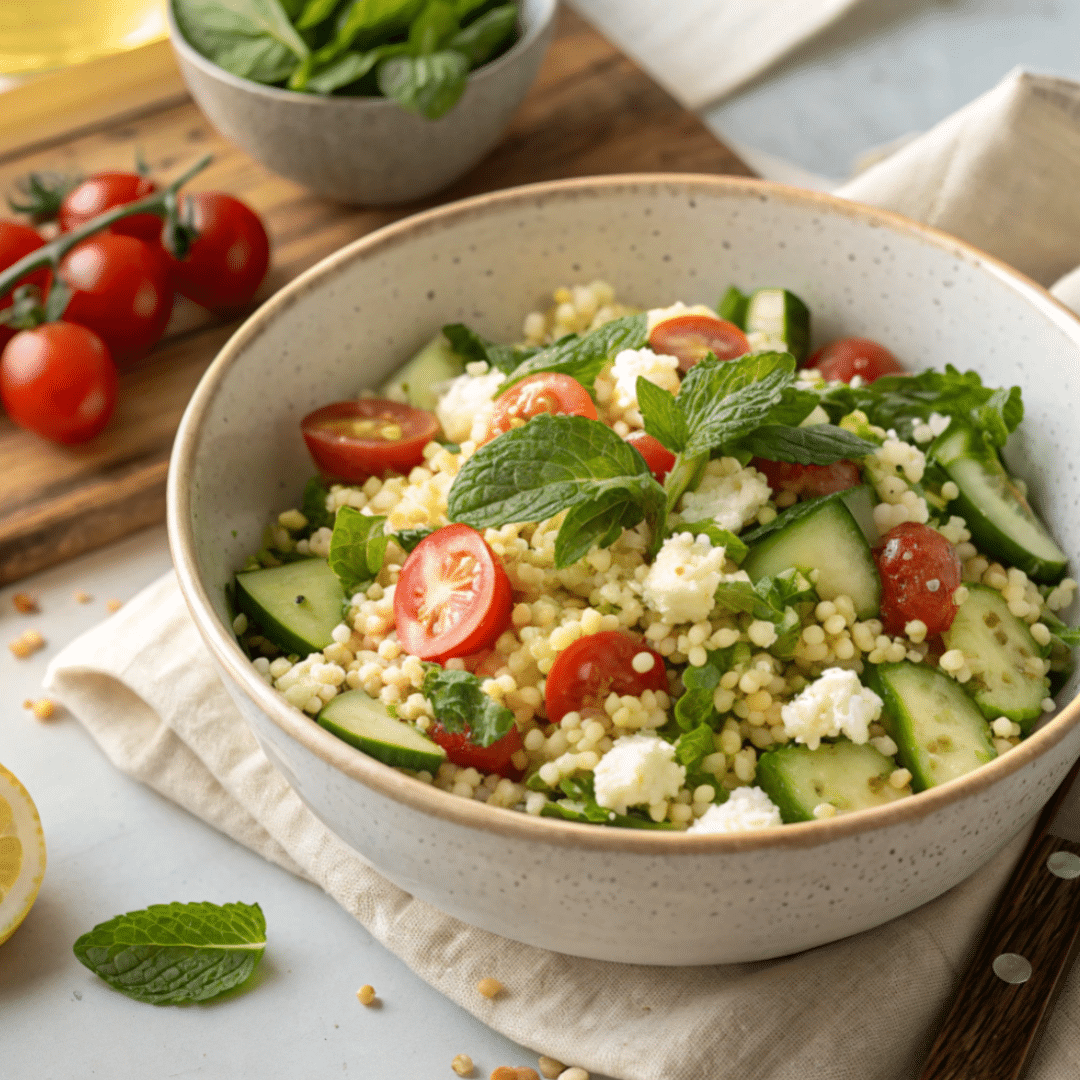
Couscous Salad with Mint and Feta
Ingredients
Method
- Bring water to a boil, add Israeli couscous, reduce heat, cover, and simmer until tender.
- Remove from heat and fluff grains with a fork; loosen with a splash of water if needed.
- Whisk lemon zest, lemon juice, Dijon, paprika, salt, and pepper, then stream in olive oil until glossy.
- Toss warm couscous with the dressing so it absorbs flavor evenly.
- Let the couscous cool for 5–10 minutes before folding in arugula, tomatoes, cucumber, mint, and feta.
- Taste and adjust with extra salt, lemon, or oil as needed.
- Serve chilled or at room temperature.
Notes
FAQ
How long does the dish keep in the fridge?
Can I make this ahead for a picnic or potluck?
Which type of grain should I choose — traditional or Israeli (pearl)?
How do I prevent the grain from becoming mushy?
Any tips for balancing the lemon-Dijon dressing?
Can I swap the cheese or make this dairy-free?
What proteins pair best if I want to turn it into a meal?
How do I keep the greens from wilting when mixed in?
Is there a good gluten-free swap?
Any suggestions for extra crunch or color?
Can I freeze leftovers?
What’s the best way to reheat a portion?
About The Author

John
John Watson is the passionate food enthusiast behind MePlusFood.com. With a deep love for exploring culinary delights, he shares honest restaurant reviews, mouthwatering recipes, and culinary adventures. Join John on his flavorful journey to savor the world one bite at a time.