Crispy Pork Belly with Apple Slaw
Jump to Recipe
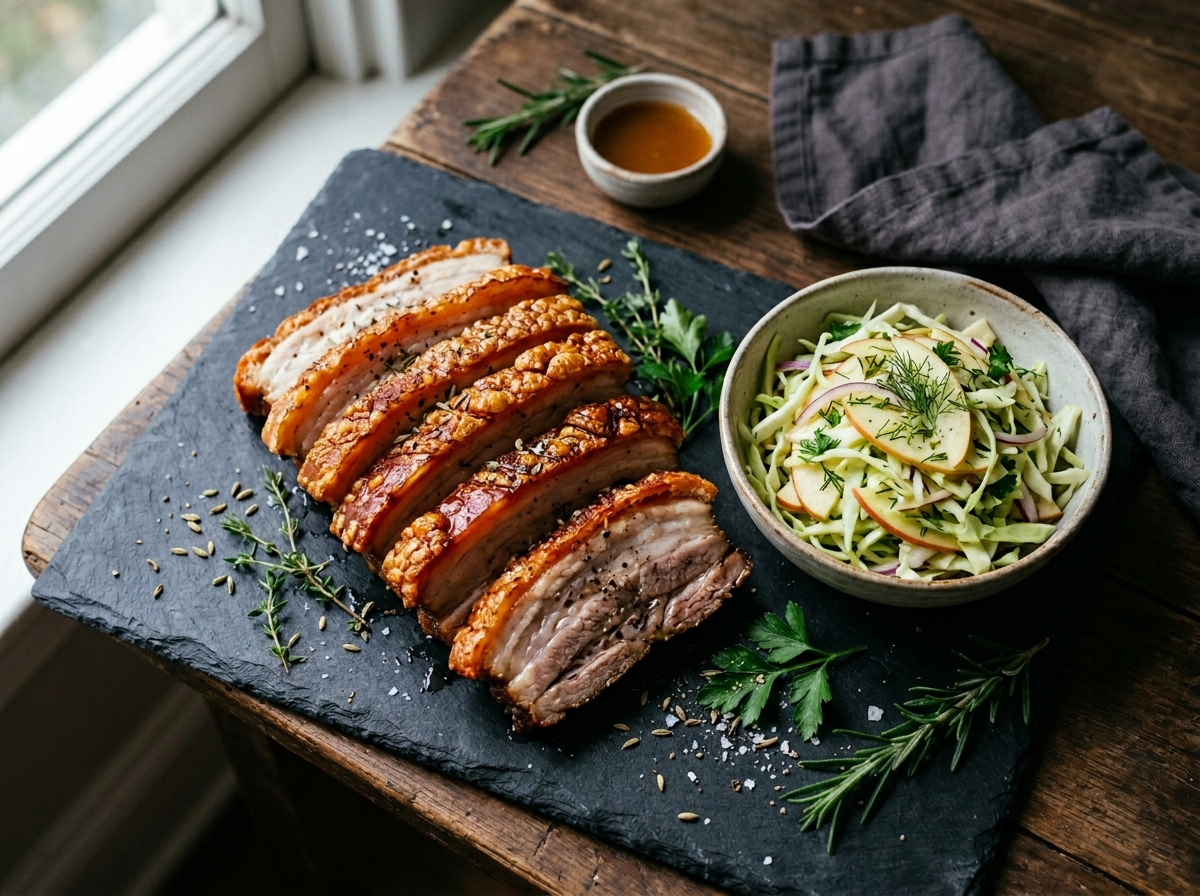
Pork belly gets a bad reputation for being tricky, but the method here is straightforward — much like the approach behind a maple bourbon glazed pork belly: score the skin well, dry it out, blast it with high heat, then lower the oven and let the fat render slowly. You end up with crackling that shatters and meat that’s tender all the way through.
The apple slaw is not an afterthought. It’s there to do real work, providing brightness and crunch that balances every bite of fatty pork. A simple cider vinegar dressing keeps it sharp without drowning the cabbage.
This comes together in about two hours total, most of which is hands-off oven time. The slaw can be made while the pork rests, which keeps timing simple.
Why You’ll Love This Recipe
- Crackling skin achieved with a reliable two-stage oven method
- Apple slaw stays crunchy and cuts through the richness
- Most of the cook time is completely hands-off oven roasting
- Slaw doubles as a side that works with other proteins too
Ingredient Notes
- pork belly: Look for a piece with an even fat cap, ideally 3 to 4 cm thick. Ask your butcher to score the skin if you don’t have a sharp box cutter – shallow scores won’t render properly.
- Granny Smith apple: Granny Smith holds its texture and provides the tartness needed to balance the pork. Honeycrisp works if you want slightly less acidity.
- green cabbage: Slice as thinly as you can manage, around 2 to 3 mm. Red cabbage works and adds color, though it will slightly bleed into the dressing.
- apple cider vinegar: This gives the slaw its sharpness. White wine vinegar is a usable substitute, but it lacks the faint apple note that ties the dish together.
- fennel seeds: Rubbed into the scored skin before roasting, they add a subtle anise note that works well with pork. Caraway seeds are a close substitute.
- Dijon mustard: Used in the slaw dressing for binding and a mild heat. Whole grain mustard gives a slightly coarser texture if you prefer.
Crispy Pork Belly with Apple Slaw
Ingredients
Method
- Pat the pork belly skin completely dry with paper towels.
- Using a sharp box cutter or the tip of a chef's knife, score the skin in parallel lines 1 cm apart, cutting through the skin and into the fat layer but stopping before the meat. Turn the piece 90 degrees and score again to create a crosshatch if you prefer.
- Rub 1.5 tsp of salt, the fennel seeds, black pepper, and garlic powder directly into the scored skin and all over the meat side. Rub the olive oil into the meat side only.
- Place the pork belly skin-side up on a wire rack set over a tray. Leave uncovered in the fridge for at least 2 hours, or overnight for best results.
- Remove the pork from the fridge 30 minutes before cooking to take the chill off.
- Heat the oven to 240 C / 465 F (fan 220 C).
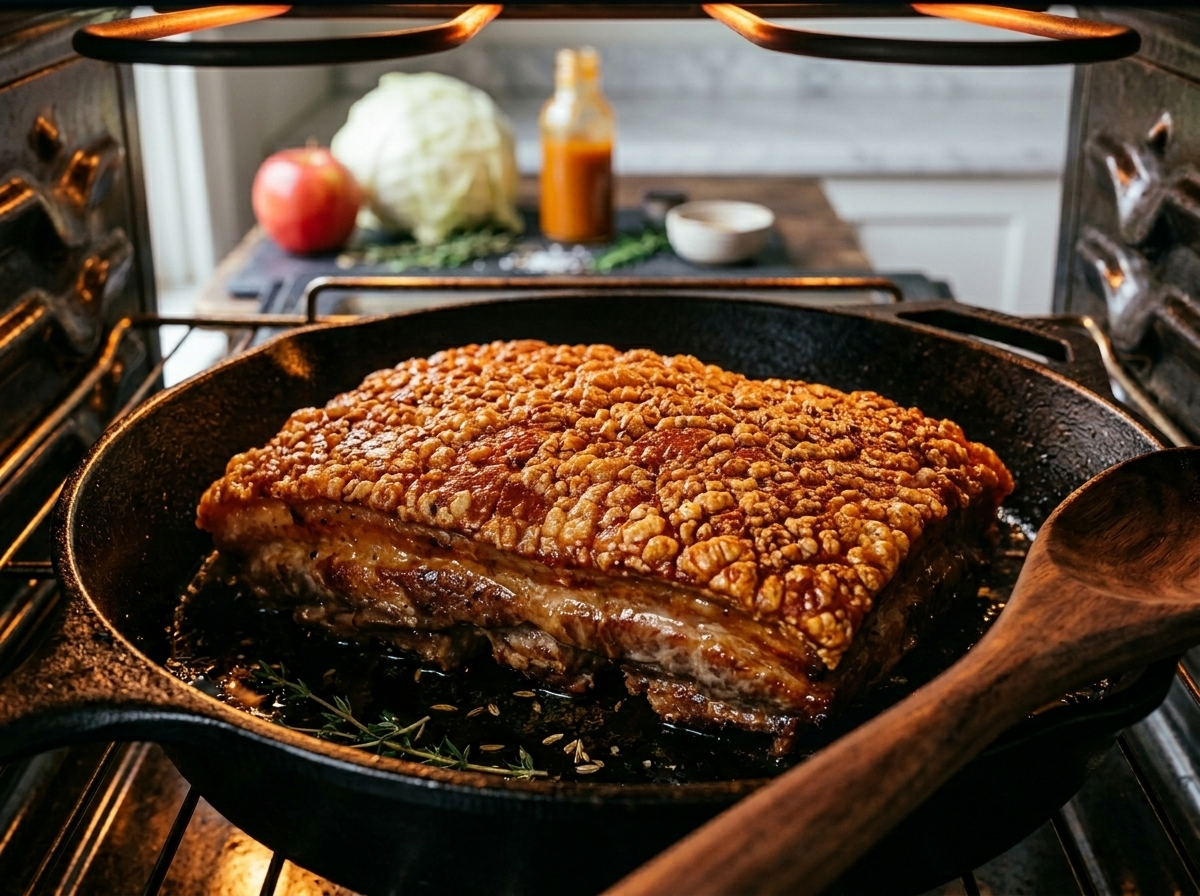
- Place the pork belly skin-side up on the wire rack over the roasting pan. Roast at 240 C for 25 minutes until the skin blisters and starts to crackle audibly.
- Without opening the oven door during that initial blast, lower the temperature to 160 C / 320 F. Continue roasting for 60 to 70 minutes until the meat is tender and an instant-read thermometer reads at least 70 C / 160 F in the thickest part.
- If the crackling isn't fully blistered after the lower-heat stage, switch to broil / grill for 3 to 5 minutes, watching closely to avoid burning.
- Transfer the pork to a cutting board and rest uncovered for 15 minutes before slicing.
- While the pork rests, combine the sliced cabbage, julienned apple, grated carrot, and spring onions in a large mixing bowl.
- In a small bowl, whisk together the apple cider vinegar, Dijon mustard, honey, neutral oil, salt, and pepper until emulsified.
- Pour the dressing over the slaw and toss thoroughly. Taste and adjust salt. The slaw should be sharp and lightly coated, not wet.
- Slice the rested pork belly into 1 to 2 cm thick portions using a sharp chef's knife. Each slice should have a layer of crackling, fat, and meat.
- Serve immediately over or alongside the apple slaw. Spoon any pan drippings over the pork slices before plating.
Notes
Tips for Success
- Score the pork skin at 1 cm intervals, cutting through skin and into fat but not into the meat.
- Pat the skin completely dry with paper towels, then leave it uncovered in the fridge overnight for best crackling.
- Start the oven at 240 C / 465 F for the first 25 minutes to blister the skin, then drop to 160 C / 320 F for the remaining cook time.
- Rest the pork belly for at least 15 minutes before slicing so the juices redistribute and the crackling firms up.
- Dress the slaw no more than 10 minutes before serving so the cabbage keeps its crunch rather than softening in the acid.
Variations
- Swap apple slaw for a pickled cucumber and chili salad for a Southeast Asian-leaning plate.
- Add a tablespoon of Chinese five spice to the dry rub for a deeper, more aromatic crust on the pork.
- Use kohlrabi in place of cabbage in the slaw for a nuttier crunch and slightly different texture.
Storage and Reheating
Leftover pork belly keeps in an airtight container in the fridge for up to 3 days. Store the slaw separately, undressed if possible, and dress just before eating.
To reheat the pork and revive the crackling, place slices skin-side up on a wire rack over a sheet pan and bake at 200 C / 390 F for 12 to 15 minutes. Microwaving will soften the skin and is not recommended.
The pork belly can also be frozen for up to 2 months. Thaw overnight in the fridge before reheating. The slaw does not freeze well.
Serving Suggestions
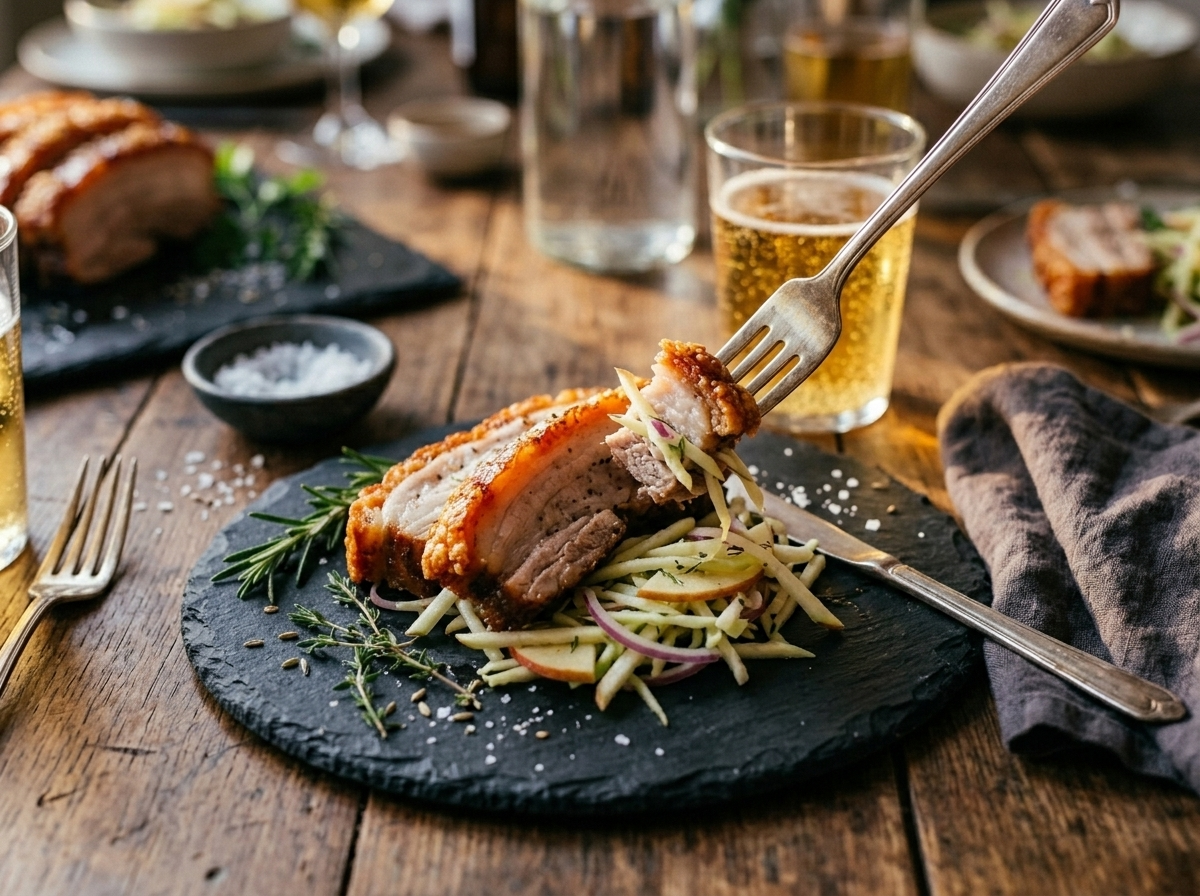
Serve the pork belly sliced into thick portions directly over a mound of apple slaw, letting the pork juices soak slightly into the cabbage. A drizzle of the pan drippings over the meat adds extra depth.
For a more complete meal, add roasted new potatoes or a simple grain like farro alongside. The acidity in the slaw does the work of a sauce, so you don’t need a separate gravy.
For a pub-style plate, serve alongside a beer-braised pork and onion spread or simply with a cold lager or a dry cider. The carbonation and apple notes in both drinks echo the slaw and cut through the fat effectively.
FAQ
Why is my pork belly skin chewy instead of crispy?
The most common reason is moisture. The skin needs to be completely dry before it goes into the oven, so pat it well and ideally leave it uncovered in the fridge for several hours or overnight. If the skin still didn’t crackle, your initial oven temperature may not have been high enough to blister it.
Can I use red cabbage instead of green cabbage in the apple slaw?
Yes, red cabbage works fine and adds a deep purple color to the slaw. Keep in mind it will tint the dressing slightly, and it has a marginally firmer texture that holds up even better when dressed.
How do I know when the pork belly is fully cooked through?
An instant-read thermometer inserted into the thickest part of the meat should read at least 70 C / 160 F. The meat should also feel tender when pressed with tongs and the fat layer should look translucent rather than white and waxy.
Can I make the apple slaw the night before serving?
You can shred the cabbage and apple and store them together in the fridge for up to 12 hours. Hold the dressing separately and toss everything together within 10 minutes of serving to keep the texture crisp.
What’s the difference between this style of pork belly and Chinese-style crispy pork belly?
Chinese-style crispy pork belly, often called siu yuk, uses a very thin layer of maltose or vinegar on the skin and typically includes five spice in the marinade — similar to how five spice works on duck breast — giving it a lacquered look and sweeter flavor profile. This recipe uses a simpler dry rub with fennel and salt, producing a more rustic European-style crackling without the glaze.
Is crispy pork belly with apple slaw gluten-free?
This recipe as written contains no gluten-containing ingredients. Just double-check your mustard and any spice blends, as some brands add starch. If you’re cooking for someone with celiac disease, verify all labels.
About The Author

John
John Watson is the passionate food enthusiast behind MePlusFood.com. With a deep love for exploring culinary delights, he shares honest restaurant reviews, mouthwatering recipes, and culinary adventures. Join John on his flavorful journey to savor the world one bite at a time.