Easy Mason Jar Soba Noodle Salad for a Quick Lunch
I love the mason jar soba noodle salad because it turns chaotic afternoons into calm, colorful lunches you can grab in minutes. The chewy, nutty noodles pair perfectly with bright veggies and warm chicken, and the jars keep everything crisp for days when layered correctly.
I’ll walk you through the exact order I use—dressing, chicken, veggies, noodles, and garnishes—so nothing goes soggy. You can use a rotisserie chicken or tofu, and the noodles cook al dente in just 3–5 minutes. I always rinse them with cold water to stop the cooking and retain that pleasant bite.
This is a real meal prep hack that saves time and taste. I share three simple dressings in a small cup, along with storage tips, so your lunches last 4–5 days. By the end, you’ll have a flexible recipe that fits your week and your appetite.
Key Takeaways
- Layer jars to keep ingredients fresh: start with the dressing, then add protein, veggies, noodles, and garnishes.
- Noodles cook fast—3–5 minutes—and should be rinsed in cold water to preserve texture.
- Use a rotisserie chicken or tofu; the chicken can be frozen for up to 3 months for meal prep.
- Jars stored upright stay fresh 4–5 days when assembled correctly.
- Three pantry-friendly dressings mean big flavor with minimal effort.
Why this Cold Noodle Salad Belongs in Your Meal Prep Rotation
This cold noodle salad is my go-to when I need a quick, tasty lunch that actually stays fresh all week. It comes together in minutes, fits into a tight morning routine, and retains its crunch when layered correctly.
Fast, Fresh, and Balanced for Busy Weekdays
The noodles cook in just 3–5 minutes, then I rinse cold water to stop cooking and keep that pleasant bite. Toss in protein and crunchy veggies and you have carbs, protein, and fiber in one meal.
Dressing goes on at serving if you plan to toss, which prevents soggy strands. Stored upright, jars last 4–5 days when layered: dressing, protein, veggies, noodles, garnishes.
How it Fits into Grab-and-Go Lunches in the U.S. Right Now
Portability matters—this recipe travels well and is budget-friendly. Use pantry staples like rice vinegar and soy sauce, or grab a slaw mix for instant crunch.
- Prep once, eat all week—twist the lid, shake with dressing, and you’re eating in minutes.
- Flexible for dietary needs: gluten-aware noodle choices and vegan dressings work fine.
| Feature | Why it matters | Action |
|---|---|---|
| Prep time | Quick assembly saves mornings | Cook noodles 3–5 minutes, rinse cold water |
| Fridge life | Keeps lunches ready for the week | Layer and store upright, 4–5 days |
| Dressing | Prevents soggy texture | Add at serving or keep separate |
What You’ll Need for a Flavorful Mason Jar Soba Noodle Salad
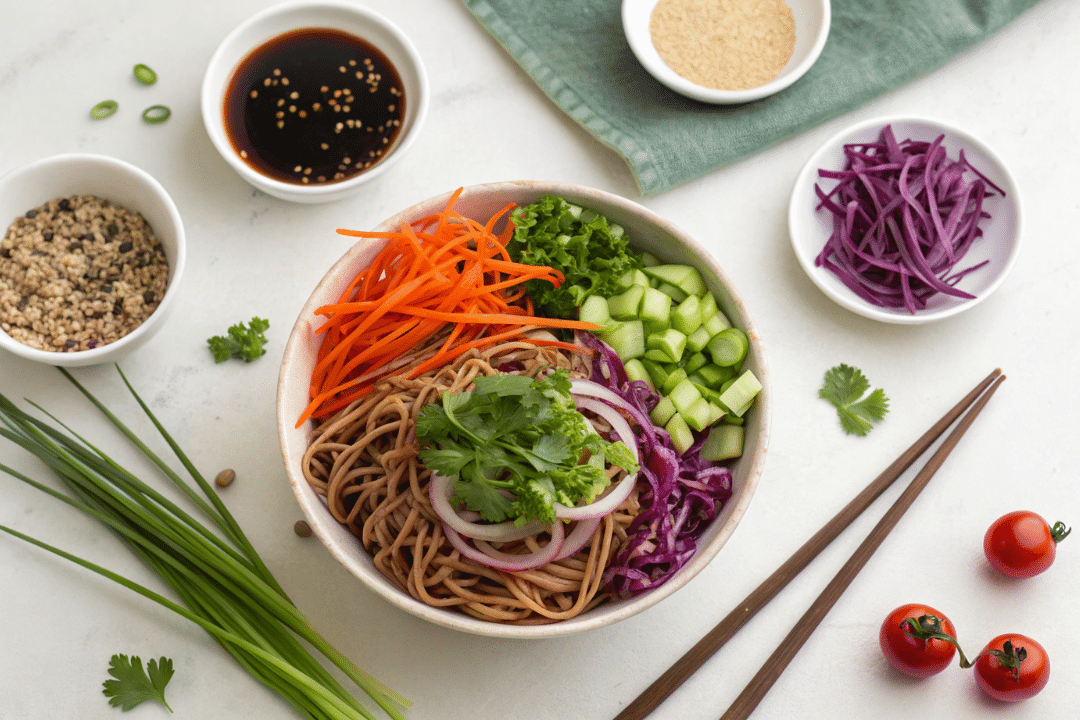
Start with simple, pantry-friendly ingredients and you’ll have a craveable lunch in minutes. I keep a short shopping list so assembly is fast and predictable.
Core Ingredients
I reach for soba noodles with a nutty bite and firm chew; they make the base satisfying but light. For crisp texture, grab red cabbage, carrots, bell pepper, cucumbers, and scallions—these veggies hold up well in a package and stay crunchy for days.
Pantry Staples
Pantry items do the heavy lifting: soy sauce or tamari, rice vinegar, sesame oil, and fresh ginger. A touch of honey or sugar balances the tang. If you need gluten-free, look for brands like Lotus Foods for soba options without wheat.
Garnishes and Swaps
Finish with scallions, sesame seeds, crushed peanuts, or roasted seaweed for texture and umami. Short on time? A bag of broccoli slaw is an easy swap for hand-cut veggies.
- Fresh herbs: cilantro, basil, or mint brighten each bite.
- Balance dressings: salty, tangy, and a hint of sweet so flavors pop.
- Smaller noodle bundles make cooking exact portions in minutes easy.
| Ingredient | Why I use it | Smart swap | Taste note |
|---|---|---|---|
| Soba noodles | Nutty flavor and firm chew | Gluten-free rice noodle | Earthy, satisfying |
| Rice vinegar | Brightens the dressing | Apple cider vinegar (light) | Tangy, clean |
| Sesame oil & soy | Deep umami and aroma | Tamari for less wheat | Toasty, savory |
Cook Soba Noodles Right: According to Package Directions and Rinse With Cold Water
A confident short boil and a cold rinse are all you need for springy, non-sticky strands. I’ll give precise steps so you nail texture every time.
Timing Matters: 3–5 Minutes, No Salt in the Water
Bring a large pot to a rolling boil with plenty of water. I don’t add salt—the dressing and toppings handle seasoning later.
- I drop the bundles in, set a timer, and start tasting at 3 minutes.
- Most types finish between 3–5 minutes; if the package gives a range, I follow the low end.
- If you cook several bundles, use more water so the temperature doesn’t fall and extend the time.
Rinse in Cold Water to Stop Cooking and Keep that Chewy Bite
The instant the strands are al dente, drain and rinse cold water until cool. That quick chill halts carryover cooking and removes surface starch.
- Gently swish with your hands while you rinse to separate strands without breaking them.
- For make-ahead, toss with a tiny splash of sesame oil so the noodles stay loose before layering.
- Keep an eye on time—one extra minute changes texture more than you’d expect.
| Step | Why it matters | Quick tip |
|---|---|---|
| Boil with lots of water | Prevents clumping and temperature drop | Use a big pot, no salt |
| Cook 3–5 minutes | Keeps a firm, chewy bite | Start tasting at 3 |
| Rinse cold water | Stops cooking and removes starch | Swish gently until cool |
Layering Like a Pro: Build Jars that Stay Crisp for Days
Layering the components correctly is the single best trick for keeping lunches crisp all week. I walk you through the proven order so each bite stays fresh and crunchy.
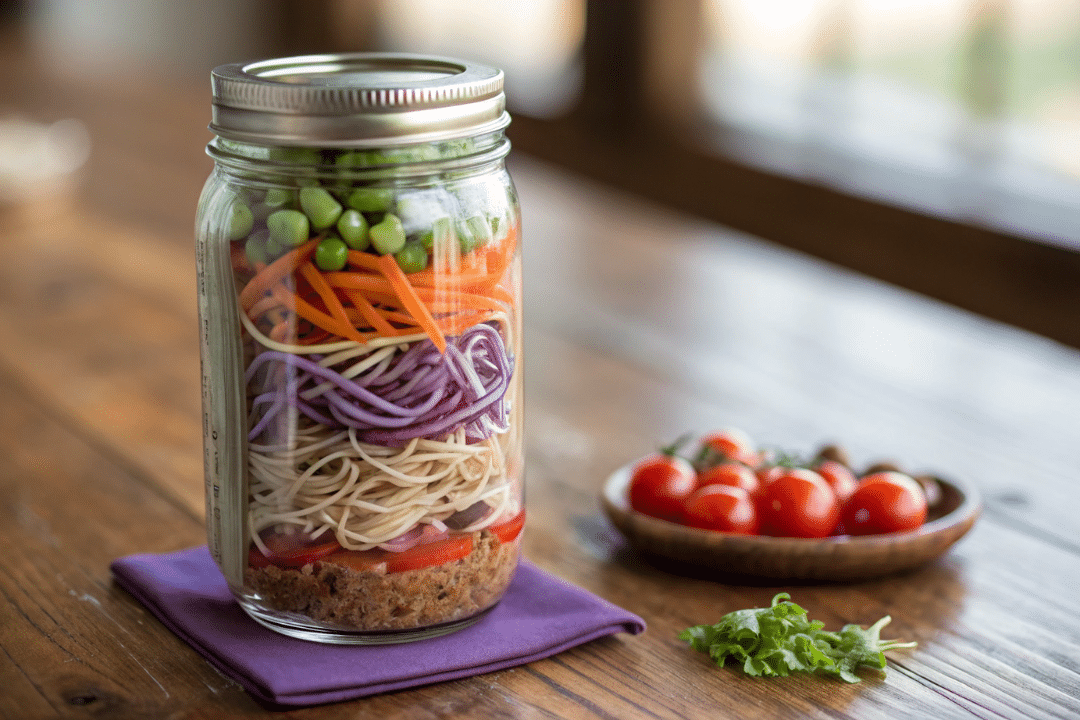
The Proven Order
Follow this sequence every time: dressing → protein → veggies → noodles → garnishes. The dressing sits at the bottom so moisture never reaches the strands until you shake to serve.
- I put sauce or dressing first so it can’t seep up into the noodles.
- Next comes protein—chicken, tofu, or shrimp—so it can pick up flavor without wilting the vegetables.
- Then I pack sturdy veg like red cabbage, carrots, and bell pepper to form a barrier against moisture.
- The cooled noodles go above the veg; that keeps them separated and springy.
- Top with scallions, sesame, peanuts, or herbs so those touches stay crunchy and bright.
Portioning for Pint vs. Quart Jars
For a pint jar, aim for a side or light lunch—less noodles, more veg. For a quart, add extra noodles and protein for a full meal. I make sure noodles are fully cool before layering; warm strands create steam and soggy results.
| Jar size | Use | Portion cue |
|---|---|---|
| Pint | Light lunch/side | 1 handful cooked noodles, more veg |
| Quart | Full meal | 2–3 handfuls cooked noodles, extra protein |
| Tips | Storage | Keep upright 4–5 days; shake and pour into a bowl to serve |
Dressings that Make it Sing: Three Options With Soy, Sesame, and Tangy Zip
A quick shake of a homemade sauce gives every bite vivid flavor and keeps textures clean. Below are three easy mix-and-go options that I make in a cup and portion into containers. Each one brings a different mood—bright, creamy, or savory—so you can match it to your week.
Ginger-Soy Vinaigrette
I combine rice vinegar, a neutral oil, a kiss of sesame oil, soy sauce, honey (or sugar), and grated ginger. It’s bright, savory, and slightly sweet. Shake or whisk until blended—about two minutes—and it pours right over noodles and veggies.
Creamy Satay-Style
This one uses full-fat coconut milk, peanut butter, soy sauce, rice vinegar, sesame oil, and ginger. It’s lush and clingy—great when you want a sauce that hugs every strand. Swap almond or sunflower seed butter for allergies.
Tahini-Miso Dressing
For a vegan, umami-packed twist, mix tahini, white miso, rice vinegar, tamari, sesame oil, and ginger. Thin with water until it pours slowly. It’s rich but bright, and I keep it slightly thick when packing so it loosens in minutes at serving.
- Taste and tweak: add more vinegar for zip or a touch more honey for balance.
- Low-sodium? Use reduced-sodium soy sauce or tamari and add extra rice vinegar to lift flavor.
- Creamy sauces cling more; vinaigrettes feel lighter—pair creamy with crisp veggies for contrast.
| Dressings | Main character | Best match |
|---|---|---|
| Ginger-soy vinaigrette | Bright, tangy | Light lunches, spring veggies |
| Creamy satay-style | Rich, clingy | Hearty proteins, cold noodles |
| Tahini-miso | Umami, silky | Vegan bowls, roasted veggies |
Protein Add-Ins to Make It a Meal
A simple protein swap turns this into a filling meal for busy weekdays. I keep quick options on hand so assembly takes just minutes and the flavors stay bright.
Quick Wins
Rotisserie chicken is my fastest move. I shred it, cool it completely, and layer it over the dressing so it soaks flavor without wilting. Cooked chicken freezes well up to 3 months; thaw overnight in the fridge before use.
For a vegetarian shortcut, pre-marinated tofu works great. Pat it dry, cube it, and pack it cold so it holds texture against the noodles.
Meal-Prep Friendly Choices
- Grilled salmon — cool and flake so pieces stay intact when you shake.
- Thin-sliced steak or chili-lime shrimp — quick sears add bold flavor fast.
- Keep seasoning light; the sauce carries most of the taste and prevents overwhelm.
| Protein | Prep shortcut | Best pairing |
|---|---|---|
| Rotisserie chicken | Shred, cool, freeze portions | Satay or ginger-soy sauce |
| Pre-marinated tofu | Pat dry, cube | Creamy or tahini-based sauce |
| Grilled salmon/shrimp/steak | Grill, cool, flake, or slice | Ginger-soy or chili-lime |
Veggie Combinations that Stay Crunchy
Choose veggies that hold their snap, and your make-ahead lunches will feel freshly tossed all week. I focus on texture first—color is a bonus.
Red Cabbage, Carrots, Bell Pepper, Snap Peas, Cucumbers
I slice red cabbage thin so it stays crisp and colorful all week. Carrots—matchsticks or grated—bring sweetness and crunch that play well with chewy noodles.
Bell peppers add a juicy snap; I rotate colors for a brighter mix. Snap peas and cucumbers keep the bowl ultra-refreshing, especially on warm days.
Broccoli Slaw or Coleslaw Mix When You’re Short on Time
When I’m short on time, a bag of broccoli slaw or coleslaw mix is my no-chop hero. It stays crunchy and saves minutes during hectic prep.
- I tuck scallions near the top and add roasted seaweed at serving for a clean crunch.
- Firm, watery veg like cucumbers sit above the dressing to avoid getting soggy in the jar.
- I choose sturdy greens like kale for extra volume; a quick massage softens them without losing texture.
- If you love heat, a few thin jalapeño rings perk up the whole noodle salad.
This mix holds up in a cold noodle salad, keeping every bite lively from day one to day four. For more veggie-forward ideas, see my guide to satisfying plant bowls at vegan salads that satisfy.
Smart Prep Timeline and Storage Tips
A small plan up front saves hours later—here’s a simple timeline to keep lunches bright and safe. I share clear steps so you trust the process and get consistent results.
Fridge Life: 4–5 Days When Layered Correctly
I plan jars for 4–5 days max; that’s the sweet spot for freshness and crunch. Keep containers upright so the dressing stays at the bottom and doesn’t reach the noodles or veggies.
Freezer note: Cook and Freeze Chicken Up to 3 Months
Cook extra chicken on prep day, cool it quickly, and freeze portions for up to three months. Thaw in the fridge overnight; if you want warm protein, heat separately and add to the bowl at serving.
When to Add Dressing if You’re Tossing Instead of Shaking
If you plan to toss in a bowl, add dressing right before you eat, not earlier. That avoids soggy strands and keeps textures lively. If the dressing thickens from cold, loosen with a teaspoon of water when serving.
- Make sure noodles are fully cool and surface-dry before layering to prevent steam build-up.
- Keep crunchy garnishes separate and sprinkle them at serving for extra texture.
- Label lids with the date so you rotate meals and eat the oldest first.
| Storage | Time | Tip |
|---|---|---|
| Refrigerator | 4–5 days | Store upright; add dressing at serving if tossing |
| Freezer (protein) | Up to 3 months | Freeze cooked chicken in portions; thaw overnight |
| Serving | Immediate | Tip into a bowl and loosen with a splash of water if needed |
Nutrition Notes: Calories, Sodium, and Gluten Considerations
A few label checks and ingredient swaps help you cut sodium and balance fat while keeping the lunch flavorful. I keep this quick so you can pick the best options at the store.
Buckwheat vs. Wheat: What to Watch for On the Label
Many packages say soba noodles but list a blend of buckwheat and wheat—often 80/20. If you need to avoid wheat, look for 100% buckwheat or certified gluten-free options.
Whole-buckwheat noodles are firmer and more flavorful. They add fiber and a distinct bite that I like for make-ahead dishes.
Simple Swaps for Lower Sodium and Balanced Fat
If you’re watching sodium, use low-sodium soy and add more rice vinegar and fresh ginger or garlic for lift. Tiny changes there cut a lot of salt without losing taste.
For fat balance, I use a neutral oil with a small drizzle of sesame oil for aroma. Cut back on creamy dressings or heavy peanuts to lower calories and fat.
- Check labels for wheat content and pick 100% buckwheat if needed.
- Reduce sodium by swapping to low-sodium soy and adding vinegar and herbs.
- Watch calories—creamy sauces and nuts add richness, so portion them.
- Add cabbage, carrots, kale, or edamame for volume, vitamins, and fiber.
| Concern | Quick fix | Impact |
|---|---|---|
| Sodium | Low-sodium soy, more vinegar, fresh aromatics | Lower salt without losing flavor |
| Fat & Calories | Neutral oil + small sesame drizzle; portion peanuts/creamy dressing | Better fat balance, fewer calories per serving |
| Wheat/gluten | Choose 100% buckwheat or certified gluten-free noodles | Avoids wheat for sensitive eaters |
| Micronutrients | Add kale or edamame | More vitamins and fiber |
Troubleshooting Common Noodle Salad Pitfalls
Small mistakes in timing or packing can make a bright lunch soggy. I’ll give quick fixes you can use right away. These work whether you packed a light lunch or a full meal.
If the noodle tastes soft, you probably overcooked it. Test doneness at 3–4 minutes next time. Follow package directions, but err on the low end. Don’t add salt to the boiling water—season later with the dressing.
Always rinse cold water until the strands feel cool, then drain well. If the noodles clump, loosen them with a teaspoon of water and a quick toss before packing. Keep noodles fully cooled so steam doesn’t make the layers wet.
Soggy jars mostly come from warm noodles or wet veggies. Keep dressing at the bottom and noodles toward the top in the jar. Pat or spin-dry vegetables before packing, and add dressing right before you toss them in a bowl.
| Issue | Likely cause | Quick fix |
|---|---|---|
| Too soft noodles | Overcooked | Start tasting at 3 minutes; follow package directions but choose lower time |
| Soggy container | Warm noodles or wet veg | Cool noodles fully; dry veggies; keep dressing at bottom |
| Clumpy strands | Starch or tight packing | Rinse cold water, drain, toss with a splash of oil or a teaspoon of water |
Serving Ideas: Shake-and-Serve or Bowl It Up
When it’s time to eat, a quick shake or a gentle toss turns prepped ingredients into something joyful and bright.
Finishing Touches: Herbs, Sesame Seeds, and Roasted Seaweed
Scatter fresh herbs and sesame seeds for aroma and crunch. Snip roasted seaweed over the top for a salty pop.
A squeeze of lime wakes the mix. If the sauce thickens in the fridge, loosen it with a splash of water before you toss.
Great as a Side or a Full Meal with Your Favorite Protein
On busy days, I shake the container hard and eat—zero fuss, all flavor.
For the best coating, tip everything into a bowl and toss until each strand shines. Add salmon, steak, shrimp, or tofu to make it a full meal.
- I pack garnishes separately for office lunches so they stay crisp.
- Keep chopsticks handy—twirling makes it more fun.
- Serve as a bright side for grilled meats or scale up for a picnic spread.
| Serving style | Speed | Best for |
|---|---|---|
| Shake-and-serve | Fast | Solo lunches, busy mornings |
| Bowl and toss | Moderate | Even coating, more elegant plating |
| Plated side | Flexible | Serves with grilled protein for dinner |
Conclusion
You can prepare a week’s worth of fresh lunches with a bit of preparation and the right ingredients. Cook soba noodles 3–5 minutes according to the package directions, then rinse with cold water and let them cool completely.
Layer dressing, protein, veggies, noodles, and garnishes so a mason jar stays crisp for 4–5 days. Pick a dressing you love—ginger-soy, creamy satay with coconut milk, or tahini-miso—and use simple ingredients like rice vinegar, neutral oil, a touch of sugar, and fresh ginger.
If you’re short on time, consider grabbing a rotisserie chicken or a bag of coleslaw. Freeze extra chicken in portions so future meals come together fast. Now pack one up and enjoy a reliable, bright soba noodle salad all week.
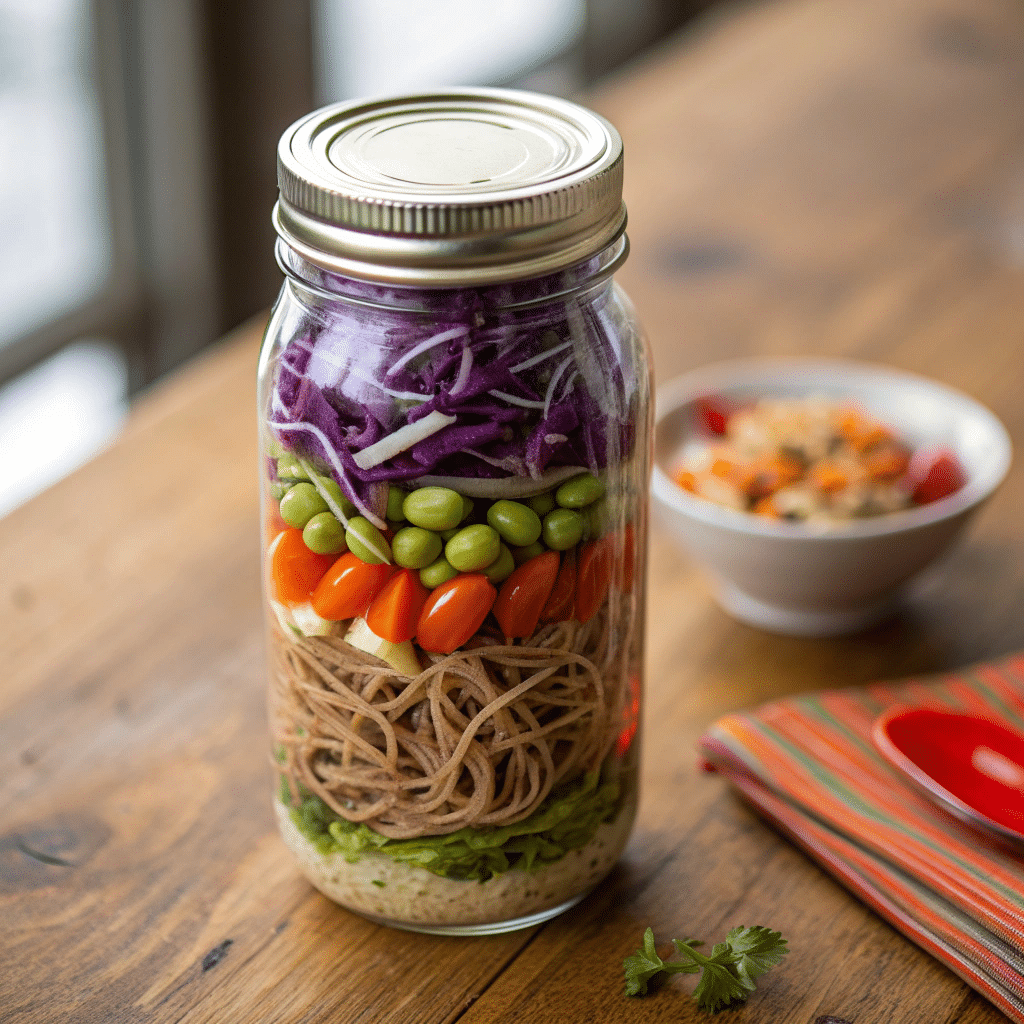
Mason Jar Soba Noodle Salad
Ingredients
Method
- Cook soba noodles for 3–5 minutes and rinse with cold water until completely chilled.
- Toss noodles lightly with a tiny splash of sesame oil to prevent sticking.
- Whisk soy sauce, rice vinegar, sesame oil, ginger, and honey together to make dressing.
- Add dressing to the bottom of each mason jar.
- Layer cooked chicken or tofu over the dressing.
- Add sturdy vegetables: red cabbage, carrots, and bell peppers.
- Add cucumbers above the vegetables to prevent moisture sinking.
- Place cooled soba noodles on top of the veggies.
- Finish with scallions and sesame seeds as crunchy garnishes.
- Seal jars, store upright in the fridge for up to 4–5 days, shake before serving, and pour into a bowl.
Notes
FAQ
How long should I cook the soba noodles according to package directions?
Do I need to add salt to the cooking water?
How do I prevent the salad from getting soggy in a jar?
How long will a prepared jar stay good in the fridge?
Can I use regular wheat noodles instead of buckwheat?
What’s the best dressing to add for meal prep?
Which proteins hold up best in this make-ahead recipe?
Any quick tips for crunchy vegetables that last?
How much dressing should I put in each pint or quart jar?
Can I make a creamy peanut or tahini dressing ahead of time?
How do I reduce sodium and fat without losing flavor?
What causes overly soft noodles and how do I fix it?
Is rinsing with cold water really necessary?
Can I use this as a side dish at a barbecue or potluck?
About The Author

John
John Watson is the passionate food enthusiast behind MePlusFood.com. With a deep love for exploring culinary delights, he shares honest restaurant reviews, mouthwatering recipes, and culinary adventures. Join John on his flavorful journey to savor the world one bite at a time.