Fermented Mango Hot Sauce with Tangy Heat
Making homemade fermented mango hot sauce is pure culinary magic. Ripe habanero peppers meet sweet mangoes through lacto-fermentation. This creates complex, layered flavors that store-bought sauces can’t match.
Every batch of craft hot sauce tells its own unique story. Mine started in my small kitchen with simple fermentation experiments. This fermented mango hot sauce is more than a condiment—it’s a delicious way to learn traditional preservation.
Key Takeaways
- Fermentation creates deeper, more complex flavor profiles
- Homemade fermented hot sauce offers superior taste compared to commercial versions
- Habanero and mango create a perfect sweet-heat balance
- Lacto-fermentation adds probiotic health benefits
- DIY craft hot sauce is easier to make than most people realize
Why Fermented Mango Hot Sauce Delivers Unmatched Flavor and Health Benefits
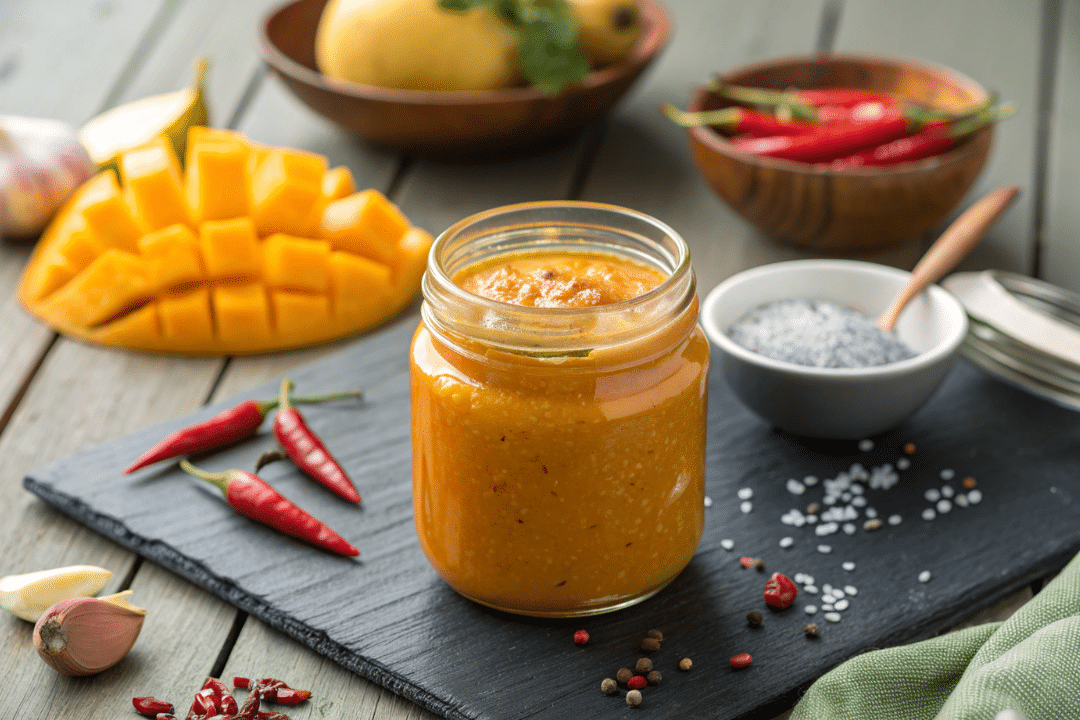
Crafting a tropical fermented condiment is an art form. It transforms ordinary ingredients into extraordinary culinary experiences. Lacto-fermented fruit sauce elevates flavor, nutrition, and preservation in powerful ways.
The magic of fermentation lies in beneficial bacteria. These tiny culinary alchemists transform ingredients. They create depth and complexity that tantalizes the taste buds.
The Science Behind Lacto-Fermentation and Flavor Development
Lacto-fermentation is a natural preservation process. It unlocks hidden flavor potentials. Salt meets fresh ingredients and creates an environment where good bacteria thrive.
These microorganisms break down sugars and generate lactic acid that:
- Develops complex flavor profiles
- Enhances nutrient availability
- Creates natural food preservation
How Fermentation Mellows Habanero Heat While Amplifying Complexity
In a probiotic hot sauce recipe, habanero mango fermentation works culinary magic. The process softens the pepper’s intense heat. It reveals nuanced flavor notes that raw habaneros cannot deliver.
Fermentation creates a symphony of flavors. Heat becomes a backdrop to fruity and floral undertones. The mango’s sweetness integrates with the heat, creating something truly extraordinary.
Probiotic Benefits That Set Fermented Sauces Apart
Fermented versions offer additional health advantages. The live cultures present in these sauces provide potential digestive support. They also deliver nutritional benefits that vinegar-based sauces cannot match.
| Fermented Hot Sauce | Vinegar-Based Hot Sauce |
|---|---|
| Live Probiotic Cultures | No Live Cultures |
| Natural Preservation | Chemical Preservation |
| Enhanced Nutrient Absorption | Limited Nutrient Benefits |
Your journey into fermented hot sauces promises exciting discoveries. A world of flavor, nutrition, and culinary creativity awaits exploration.
How to Make Fermented Mango Hot Sauce at Home with Simple Ingredients
Creating your own spicy mango sauce is easier than you might think. Fresh ingredients transform into a vibrant, complex condiment right in your kitchen.
Before you begin, gather these essential ingredients:
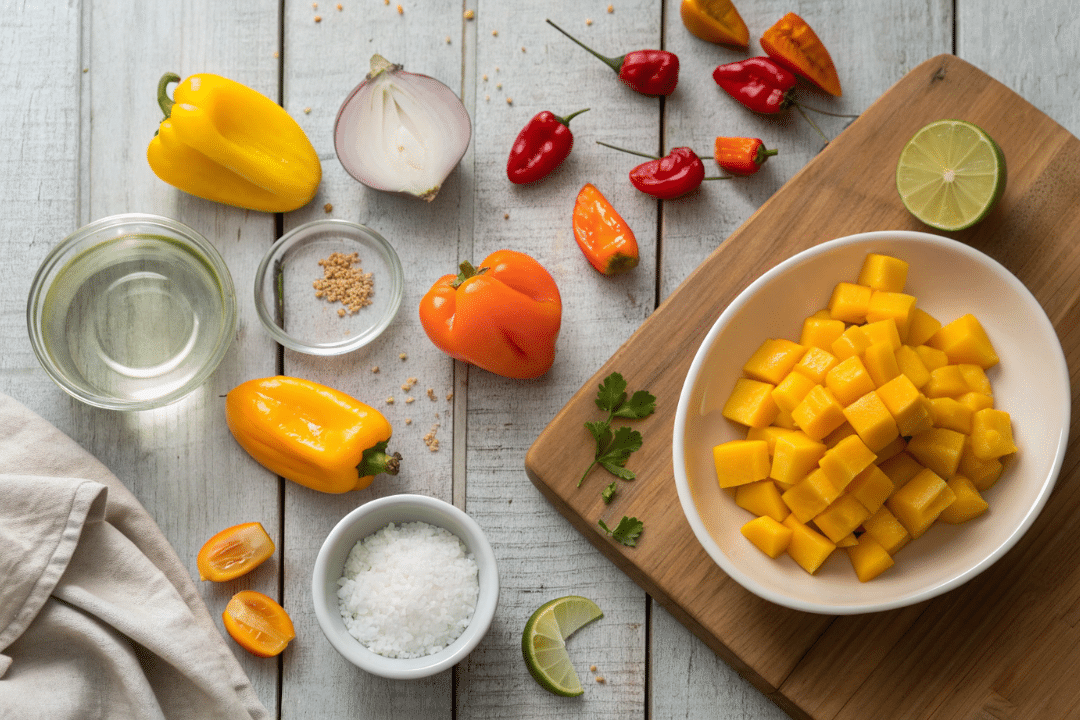
- 2 ripe red mangoes
- 12 habanero peppers
- 2 red bell peppers
- Fresh ginger
- White onion
- Garlic cloves
- Sea salt
- Water
Your fermentation setup requires minimal equipment—a clean mason jar, fermentation weights, and patience. Start by dicing your mangoes and peppers with precision.
The key to an exceptional spicy mango sauce is balancing heat with sweetness.
Prepare your brine by dissolving sea salt in water. Layer your chopped ingredients in the jar, ensuring everything stays submerged. This process kickstarts the mango habanero ferment, allowing beneficial bacteria to work their magic.
Fermentation typically takes 7-21 days. Keep your jar at room temperature—around 70°F works best. Watch for small bubbles and slight color changes.
Once fermented, blend your ingredients, strain for smoothness, and store in the refrigerator. Your homemade spicy mango sauce will keep for months. Each drop delivers a burst of tangy, fiery flavor.
Bringing Your Fermented Hot Sauce Journey Full Circle
Your homemade fermented mango hot sauce represents more than just a condiment. It’s a culinary adventure you’ve crafted with patience and creativity. Each batch tells a unique story.
This craft hot sauce transforms from bright, punchy flavors to a complex, mellowed experience. It develops depth over weeks and months.
The beauty of this fermented mango hot sauce lies in its continuous evolution. Beneficial bacteria work their magic, developing subtle flavor nuances. Each spoonful becomes a discovery.
I love drizzling this sauce over crispy chicken wings. Stirring a bit into mayo creates an incredible spread. It elevates simple dishes with tropical heat and tangy complexity.
Experimenting with your homemade fermented hot sauce is part of the joy. Try swapping mangoes for seasonal fruits like peaches. Add pineapple for extra tropical sweetness.
Different pepper combinations can adjust heat levels from mild to fiery. This gives you complete control over your craft hot sauce creation. Each batch is a learning experience, bringing you closer to perfection.
Your fermentation journey doesn’t end here. As you become more confident, explore other fermented foods like salsa or kimchi. This sauce is just the beginning of a delicious adventure.
It connects you to ancient culinary traditions while allowing endless personal creativity. Trust the process and embrace the unexpected. Savor every tangy, spicy drop of your homemade masterpiece.
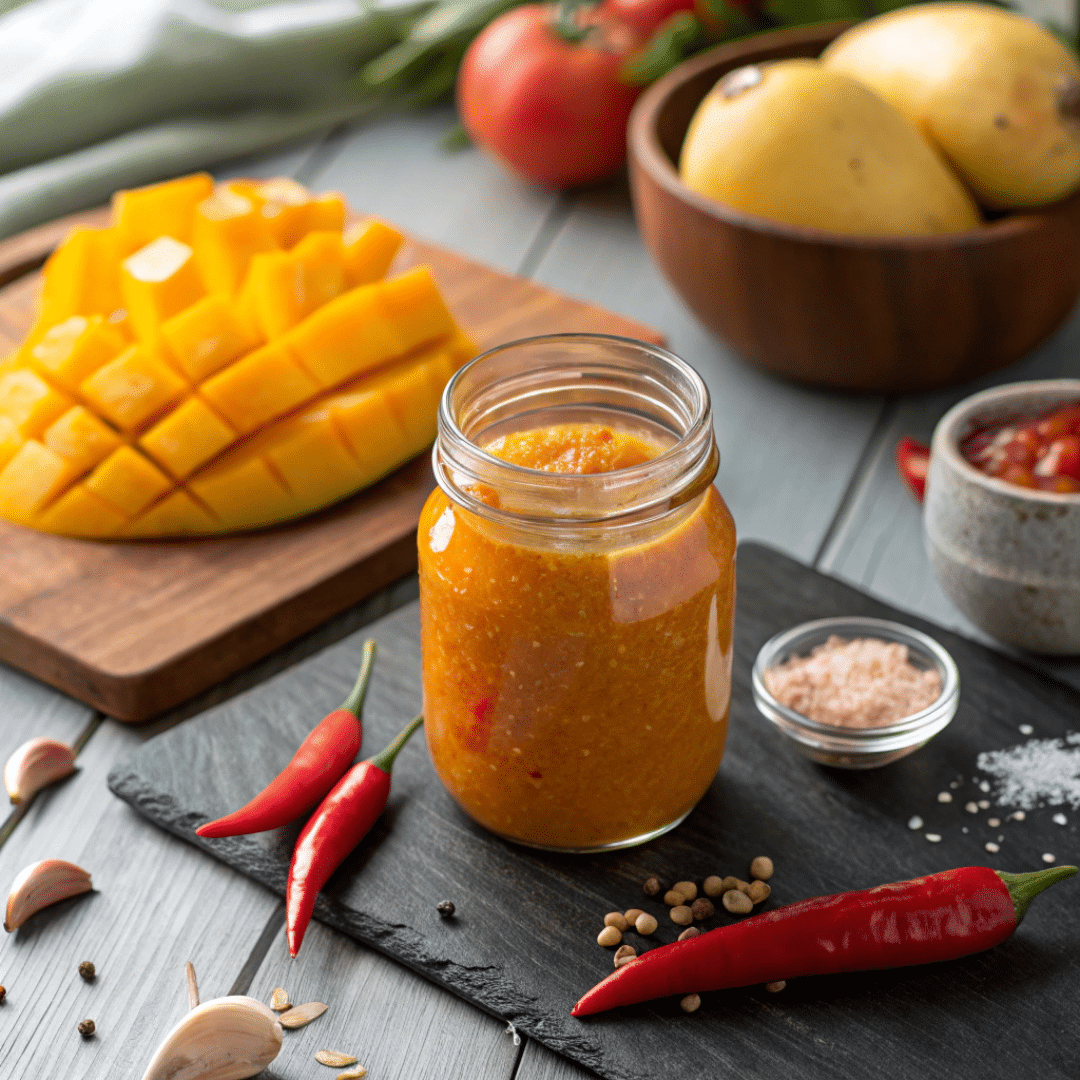
Fermented Mango Hot Sauce
Ingredients
Method
- Dice mangoes, habaneros, bell peppers, onion, garlic, and ginger evenly.
- Dissolve sea salt in water to make the brine.
- Layer ingredients into a clean mason jar, ensuring all pieces stay submerged under the brine.
- Place a fermentation weight or small clean object on top to keep ingredients submerged.
- Seal loosely to allow gases to escape or use an airlock lid. Keep jar at room temperature (~70°F).
- Ferment for 7–21 days, checking daily for bubbles and subtle color changes. Taste periodically to monitor flavor development.
- Once desired flavor is achieved, blend the mixture until smooth. Strain if you prefer a silky texture.
- Store the hot sauce in the refrigerator. Use within 3–6 months for best flavor.
Notes
FAQ
How long does it take to make fermented mango hot sauce?
Do I need any special equipment to make this fermented hot sauce?
How spicy will this mango habanero ferment be?
How long can I store the fermented mango hot sauce?
Is this really a probiotic hot sauce recipe?
Can I modify the recipe for different heat levels?
What if I see white film during fermentation?
Can I use unripe mangoes for this tropical fermented condiment?
About The Author

John
John Watson is the passionate food enthusiast behind MePlusFood.com. With a deep love for exploring culinary delights, he shares honest restaurant reviews, mouthwatering recipes, and culinary adventures. Join John on his flavorful journey to savor the world one bite at a time.