Lemon Poppy Seed Ricotta Breakfast Bake
The lemon poppy seed ricotta bake wakes the kitchen with bright zest and a soft, sliceable crumb that suits morning coffee.
This breakfast-friendly cake stays lightly sweet and offers a tender interior set by whole milk ricotta. Expect a subtle crunch from tiny seeds and a fresh citrus aroma that lifts each bite.
Key technique: rub citrus zest into sugar to release oils before adding liquids. That little step perfumes the batter and deepens flavor without extra work.
Timing is honest: about 15 minutes prep, roughly 35 minutes baking at 350°F in a 9×9 pan, plus 10 minutes cooling—about 60 minutes total from start to table.
The simple glaze is optional, but it sharpens the citrus note and makes slices more lively. Use fresh zest and recently toasted seeds for the best results; stored ingredients fade fast.
I’ll show pan choices and make-ahead tips later so you can fit this cake into a weekday or weekend routine with confidence and clear information.
Key Takeaways
- This recipe yields a sliceable, not overly sweet breakfast cake.
- Whole milk ricotta keeps the crumb moist without heaviness.
- Rubbing zest into sugar perfumes the batter—don’t skip it.
- Plan about 60 minutes total: prep, 35 minutes baking, and cooling.
- Glaze is optional but brightens flavor and texture.
- Use fresh citrus and seeds for the best aroma and crunch.
What Makes this Bake So Moist, Bright, and Light Fluffy
A soft, airy crumb and bright citrus notes are the result of technique as much as ingredients.
Whole Milk Ricotta Cheese for a Tender, Cake-Like Crumb
Using whole milk dairy adds moisture and soft proteins that hold air and give a tender structure. In practice, thicker ricotta yields fewer gummy pockets and better sliceability.
Check texture: spoon a bit—if it holds shape slightly, it will give structure without dry patches.
Lemon Zest vs. Lemon Juice for Punchy Citrus Flavor
Zest is the top-note aroma. It perfumes the batter without thinning it. Juice adds acidity and brightens the crumb, but can pull moisture if overused.
Use zest for scent and a touch of juice for balance. A pinch of salt makes the citrus read cleaner, not salty.
Poppy Seeds for Crunch, and What “Fresh” Should Smell Like
Fresh poppy seeds should smell neutral and faintly nutty, not bitter or oily. If they smell sharp, toss them.
- Storage tip: freeze seeds to slow rancidity.
- Texture tip: proper creaming and gentle folding produce a light, fluffy crumb.
- Flavor aim: keep the profile balanced so lemon poppy works at breakfast or as dessert.
For a savory contrast idea, see my herbed ricotta toast recipe.
Ingredients that Deliver Peak Lemon Poppy Seed Flavor
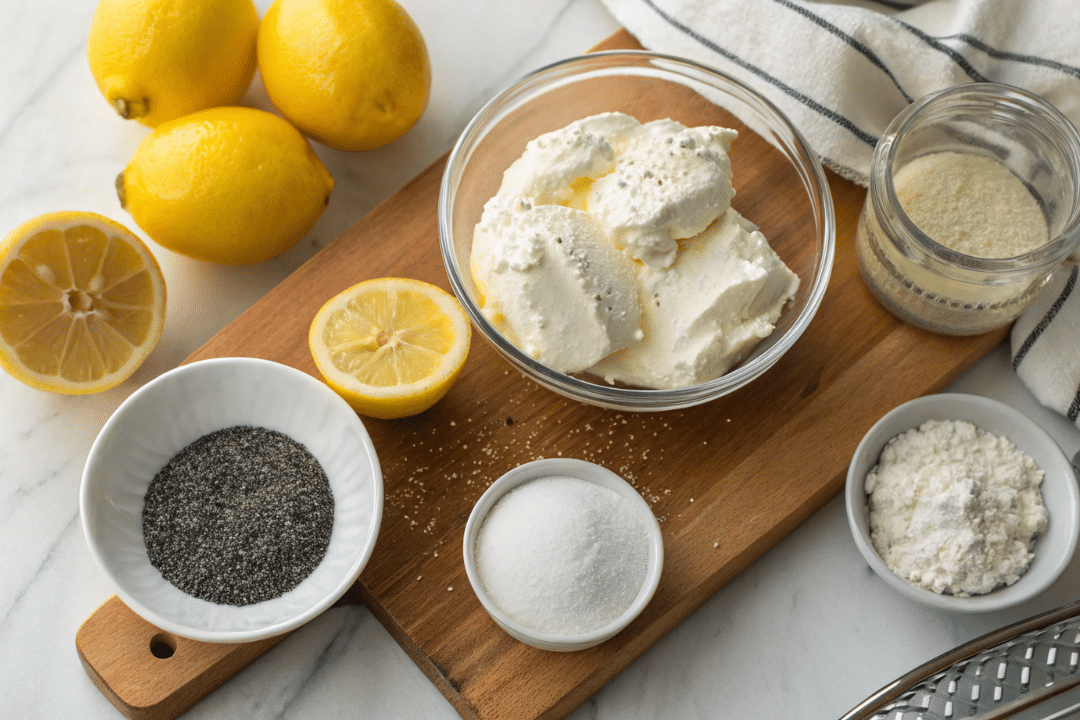
Start with confident pantry picks and the right citrus-scented sugar to lift flavor without weight.
Building Lemon Sugar for an Aromatic Lift
Rub fresh lemon zest into sugar with your fingertips until the sugar turns moist and pale yellow. That color means the oils are dispersed, and the aroma is ready to carry through the batter.
Or pulse granulated sugar and zest briefly in a food processor for a finer mix that still reads as bright in the finished slice.
Pantry Structure and Flavor Notes
- Flour: framework for crumb—measure by level scooping, not packed into the cup.
- Baking powder: the rising agent; use the amount the recipe calls for to avoid collapse.
- Salt: sharpens fruit notes and prevents flatness.
- Vanilla: a quiet background note that rounds citrus without covering it.
Fats, Eggs, Milk, and Ricotta Texture
Butter adds flavor; oil helps the crumb stay soft after chilling. A small mix of both gives balance.
Use room-temperature eggs, so they blend smoothly and make a stable emulsion.
Small amounts of milk loosen batter if needed; add sparingly to avoid drying the cake during baking.
Ricotta draining mini-method: Set a fine-mesh sieve over a bowl and let the cheese sit while you prep other ingredients. Press lightly only if very wet.
| Ingredient | Role | Tip |
|---|---|---|
| Butter | Flavor and structure | Soften, don’t melt; cream for air. |
| Oil | Moisture retention | Use neutral vegetable oil to keep crumbs soft. |
| Flour & Baking powder | Framework and lift | Level the flour in the cup; use fresh baking powder for the best rise. |
| Eggs & Milk | Emulsify and loosen the batter | Room-temp eggs blend faster; add milk sparingly. |
Measure like a baker: level flour, avoid packing cups, and assemble ingredients in a clean bowl to keep mixing predictable and consistent.
How to Make Lemon Poppy Seed Ricotta Bake Without Dry Edges
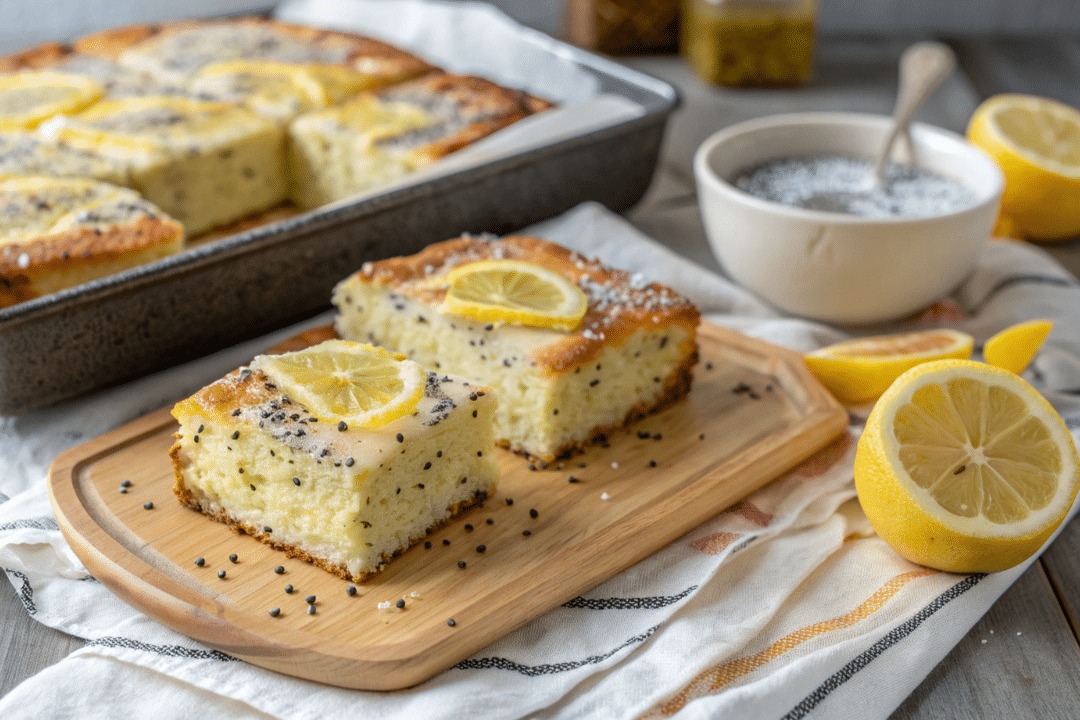
Preheating and careful pan prep make the difference between moist slices and dry edges. Set the oven to 350°F so the heat is stable when the batter goes in. A steady rise matters for a cake that sets gently.
Pan Prep and Why a Parchment Sling Helps
Butter the pan thoroughly, then line two opposite sides with a parchment sling. The butter prevents dry rims, and the sling lets you lift the cake without tugging at the sides.
Creaming Technique and Mixer Timing
Cream the lemon-scented sugar with butter and a bit of oil in the mixer until the mixture looks visibly paler and fluffy. This is aeration: aim for about 2–3 minutes on medium. Stop when the bowl shows a lighter color, not when the fat becomes greasy.
Eggs at Room Temp and How to Add Them
Use room-temperature eggs so they blend without curdling. Add one egg at a time, mix briefly, scrape the bowl, then add the next. That rhythm builds a stable emulsion and keeps the batter smooth.
Adding Flour and the Low-Speed Rule
Fold sifted flour and baking powder in on low speed or by hand. Stop mixing when the flour just disappears; finish with a few gentle turns to avoid tough crumbs or tunnels.
Baking Cues, Minutes, and Cooling
Bake about 35 minutes. Look for a pale-golden top that springs back slightly. A toothpick should show moist crumbs, not wet batter. Let the cake cool on a rack so steam escapes and any glaze will set cleanly.
- Preheat oven to 350°F for even rise.
- Butter the pan and use a parchment sling to prevent dry edges.
- Cream until pale, add eggs one at a time, then fold in flour low.
- Bake ~35 minutes; test with a toothpick for moist crumbs.
Glaze and Finishing Touches that Make Every Bite Sing
The right finishing choices control aroma, sweetness, and texture on top. A simple glaze smooths the surface and lets small contrasts—bright citrus and tiny crunches—read clearly in each bite.
Glaze Ratios and How to Judge Pourability
Use 1 cup of powdered sugar mixed with 2–3 tablespoons of lemon juice for a starting glaze. Two tablespoons give a thicker, spreadable glaze; three yields a thin, pourable coat that soaks slightly into crumbs.
Add juice a teaspoon at a time to reach the flow you want. If the glaze is too thin, add a tablespoon of sugar and stir. If it’s too thick, thin with a teaspoon of juice until it moves smoothly.
Finishing with Extra Zest and Poppy Seeds for Aroma and Crunch
Stir a tiny pinch of salt into the glaze to sharpen flavor and temper sweetness. While the glaze is wet, sprinkle the reserved zest and poppy seeds on the top so they stick and smell vivid.
The sensory payoff is immediate: a bright citrus hit on the first bite and a gentle crunch from the seeds on the top. Skip the glaze if serving with yogurt or fruit; the cake holds up well on its own.
- Glaze ratio: 1 cup sugar: 2–3 Tbsp lemon juice.
- Too thin? Add sugar. Too thick? Add juice, a teaspoon at a time.
- Finish wet with zest and seeds for best adhesion and aroma.
- Serve with berries or sliced stone fruit for a fresh contrast.
Pan sizes, Bake Times, and Make-Ahead Planning for Busy Mornings
Knowing how depth and surface area affect heat helps you pick a pan and set a realistic baking time. Different shapes change how the cake cooks: shallow pans brown faster, deep pans need more minutes for the center to set.
Pan Flexibility Guide
- 9-inch square: ~35 minutes — even rise, good for everyday serving.
- 9-inch round or 9-inch springform: 35–40 minutes — slightly longer for center set.
- 8-inch square: 40–45 minutes — deeper batter; expect more edge crust.
- 9×5 loaf: 45–55 minutes — shape concentrates heat; test near the low end.
- Muffins/cupcakes: 18–22 minutes — use extra batter for about 6–8 cups.
Overfilling and Muffin Cue
Rule of thumb: fill pans two-thirds full. That limit prevents spillover and uneven cooking. If you have extra batter, spoon it into lined muffin cups and reduce the minutes as above.
For cupcakes, pull when tops spring back, and a tester shows moist crumbs, not raw batter.
Make-Ahead and Storage
This cake often tastes better the next day: flavors meld, and the crumb relaxes. The glaze may lose sheen, but it becomes more citrus-forward after resting.
Room temperature: keep covered up to 24 hours, then move to the fridge for up to 5 days in a tight container. Freeze unglazed, fully cooled, wrapped well for up to 3 months. Thaw in the fridge and apply glaze or a light honey drizzle before serving.
| Pan Type | Typical Minutes | Why time differs | Serving tip |
|---|---|---|---|
| 9″ square | ~35 | Shallow depth, even heat | Slice warm or chilled |
| 9″ round/springform | 35–40 | Wider surface, slightly deeper center | Cool 10 min before unmolding |
| 9×5 loaf | 45–55 | Deep, longer center bake time | Slice thin; warm briefly to serve |
| Muffins/cupcakes | 18–22 | Small volume, quick heat penetration | Use extra batter; test with spring-back cue |
Conclusion
Good texture begins and ends with small, deliberate steps: scented sugar, careful creaming, and a low-speed fold. Finish by baking to moist crumbs rather than the clock; an oven check tells you more than minutes alone.
The payoff is a tender, sliceable breakfast cake that keeps well. Zest gives the aroma; juice mostly brightens the glaze. Use the pan guide and doneness cues to pick the right timing for your chosen pan.
Next: choose a pan, drain the cheese if needed, and set a parchment sling before you mix. Serve slices with fresh berries or a drizzle of honey, or try a chocolate contrast later in the week. For more soft, cheese-forward ideas, see my soft ricotta pancakes.
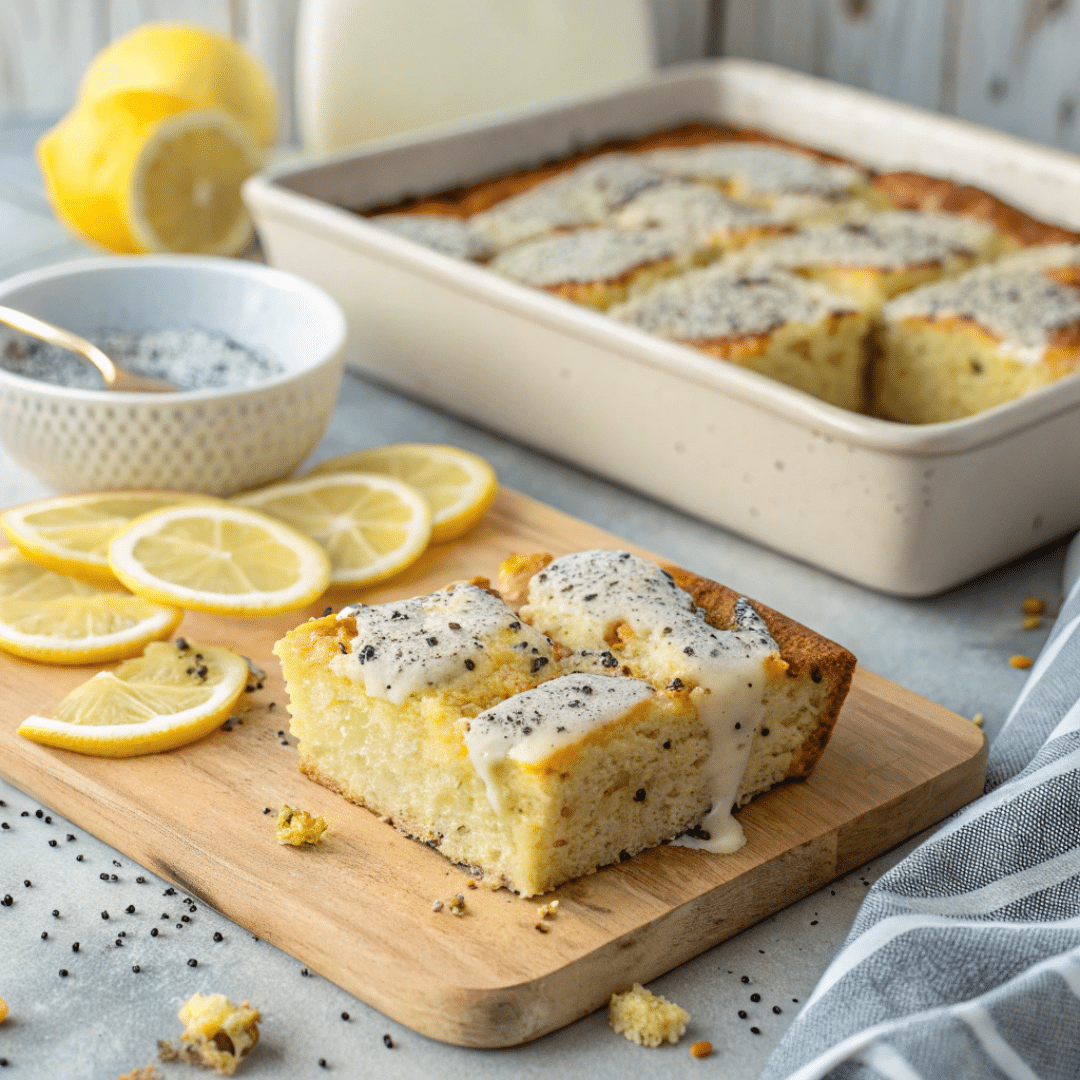
Lemon Poppy Seed Ricotta Breakfast Bake
Ingredients
Method
- Preheat oven to 350°F (175°C). Butter the pan and line two opposite sides with parchment for easy lifting.
- Cream butter, oil, and lemon-zested sugar until pale and fluffy (~2–3 minutes).
- Add eggs one at a time, mixing briefly after each and scraping the bowl.
- Fold in sifted flour, baking powder, salt, and poppy seeds on low speed or by hand. Stop mixing when just combined.
- Gently fold in ricotta until uniform; avoid overmixing.
- Pour batter into prepared pan; smooth the top with a spatula.
- Bake 35 minutes for a 9-inch square pan, 35–40 minutes for a 9-inch round, 45–55 minutes for a 9×5 loaf. Check doneness with a toothpick: it should come out with moist crumbs.
- Cool on a wire rack for at least 10 minutes before glazing.
- Mix powdered sugar with 2–3 tbsp lemon juice until desired consistency is reached. Add a pinch of salt to brighten flavor.
- Pour over slightly cooled bake and sprinkle with extra zest and poppy seeds if desired.
- Serve warm or at room temperature; pairs beautifully with fresh berries or stone fruit.
Notes
FAQ
What makes this ricotta breakfast bake moist, bright, and light?
Why use whole milk cheese instead of low-fat or drained varieties?
When should I use zest versus juice for citrus flavor?
How can I tell if poppy seeds are fresh and will add crunch?
What pantry staples matter most for peak flavor and structure?
How do I create “citrus sugar” for extra aroma?
Which fats and liquids keep the batter soft without greasiness?
How should I prepare very wet cheese before mixing?
What pan prep prevents dry edges?
How long should I cream butter and sugar for a lighter crumb?
Why do eggs need to be at room temperature and how do I blend them in?
How do I add flour and leavening without developing gluten?
What are reliable baking cues for doneness?
Should I cool the cake in the pan or on a rack?
What ratio makes a good finishing glaze?
How should I finish and decorate for extra aroma and texture?
Which pan shapes work and how do bake times change?
How can I avoid overfilling pans and use extra batter for cupcakes?
Why does the bake taste better the next day and how should I store it?
Is this recipe freezer-friendly and how do I reheat slices?
About The Author

John
John Watson is the passionate food enthusiast behind MePlusFood.com. With a deep love for exploring culinary delights, he shares honest restaurant reviews, mouthwatering recipes, and culinary adventures. Join John on his flavorful journey to savor the world one bite at a time.