Make Mouthwatering Chicken with Lemon Caper Quinoa Tonight
I love a dinner that feels a little special but doesn’t eat up your evening—this chicken with lemon caper quinoa delivers bright, bold flavor and comfort on the same plate.
I’ll walk you through pounding breasts to about 1/4-inch, heating a hot skillet for golden edges, and stirring a quick pan sauce deglazed with low-sodium broth and a splash of citrus, finished with butter for sheen.
It comes together in roughly 30 minutes, stores well for 3–4 days, and reheats easily in a 350°F oven or on the stove so weeknight leftovers stay juicy.
You’ll get clear cues—how the meat should look before flipping, what a gentle simmer sounds like, and when quinoa shows those little white tails—so you can cook confidently and tweak as you go.
Key Takeaways
- Fast, weeknight-friendly recipe that looks and tastes restaurant-quality.
- Pound to 1/4-inch, sear until golden, then finish in a glossy pan sauce.
- Hands-on time is about 30 minutes; stores 3–4 days in the fridge.
- Quinoa offers complete protein and keeps fluffy when timed right.
- Smart swaps—thighs, tenders, or gluten-free dredge—make this flexible.
Why This Skillet Recipe Hits all the Weeknight Must-Haves
When time is short but expectations are high, a hot pan and simple ingredients win every time. Thin, even pieces sear fast, so you spend only a few minutes per side and not much hands-on time.
The skillet method keeps cleanup easy while still building real flavor. Browning creates fond; deglazing with low-sodium broth tames briny capers and makes a silky sauce in minutes.
Quinoa cooks covered for 20–30 minutes, so it simmers while the sauce reduces. It adds lasting protein and fills plates without fuss.
- Use olive oil for a hot sear and steady heat control.
- Add juice late to preserve brightness and avoid bitterness.
- Finish with a sprinkle of parmesan to add savory oomph without extra fat.
- Swap in tenders or bite-size pieces if you need faster cooking or easier portioning.
| Benefit | Why it matters | Quick tip |
|---|---|---|
| Speed | Thin meat cooks in minutes | Pound to even thickness before searing |
| Flavor | Browning + deglaze = depth | Use low-sodium broth to balance caper salt |
| Flexibility | Works with various cuts and pantry staples | Stir spinach, parsley, and cheese in off heat |
Chicken with Lemon Caper Quinoa: The Recipe
Fast sears and a simple sauce make this an easy, flavorful main any night you need dinner to be quick and good.
Ingredients You’ll Need
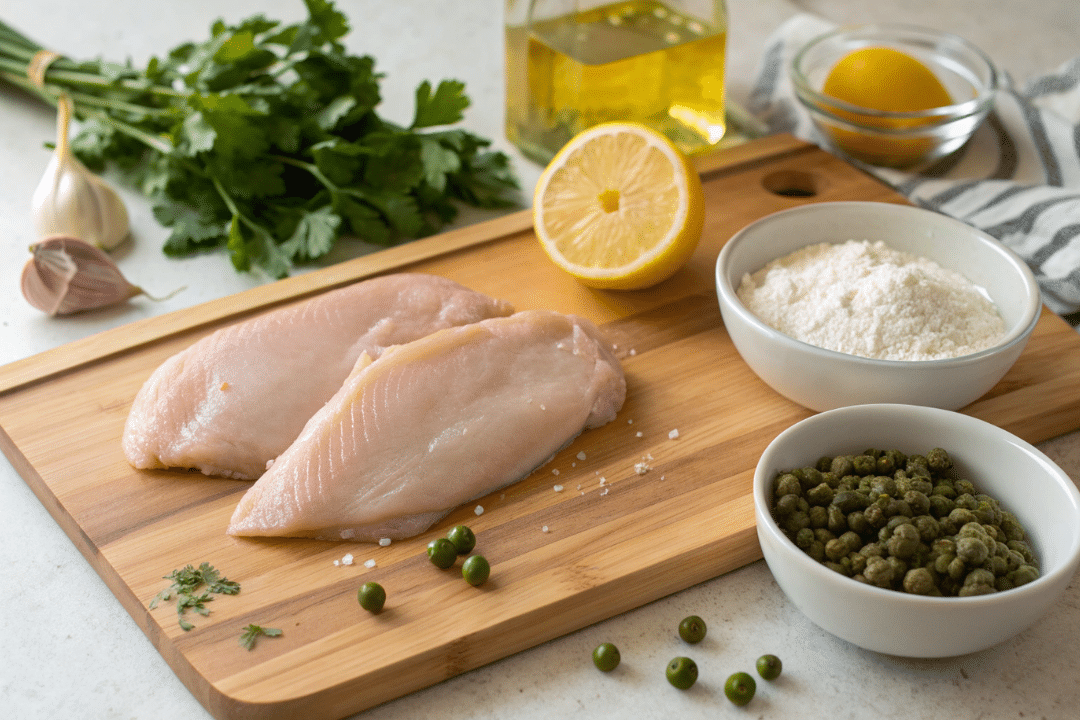
I plan for 1.5-pound chicken breasts; pound them between plastic wrap to about 1/4-inch, then season with salt and pepper. For the dredge, use 5 tablespoons of cornstarch or flour.
- 3 tablespoons olive oil and 3 tablespoons butter for searing and finishing.
- 1 cup low-sodium chicken broth and 3 tablespoons lemon juice to build the pan sauce.
- 2 tablespoons capers (rinsed), 1 clove garlic (minced), and a handful of parsley.
- 1 cup rinsed quinoa; optional: a few tablespoons of parmesan stirred in off heat.
Equipment check
Have a large skillet, a meat mallet, measuring cups and tablespoons, and a microplane ready. I keep a small bowl for the dredge and a spoon for tasting the sauce.
| Item | Role | Quick tip |
|---|---|---|
| Pound (meat mallet) | Even thickness | Use plastic wrap to avoid tears |
| Skillet | Sear and sauce | Preheat until hot, then add olive oil |
| Microplane | Zest and finish | Grate zest over parsley for brightness |
Step-by-Step: Cook Chicken, Build the Lemon-Caper Sauce, and Finish with Quinoa
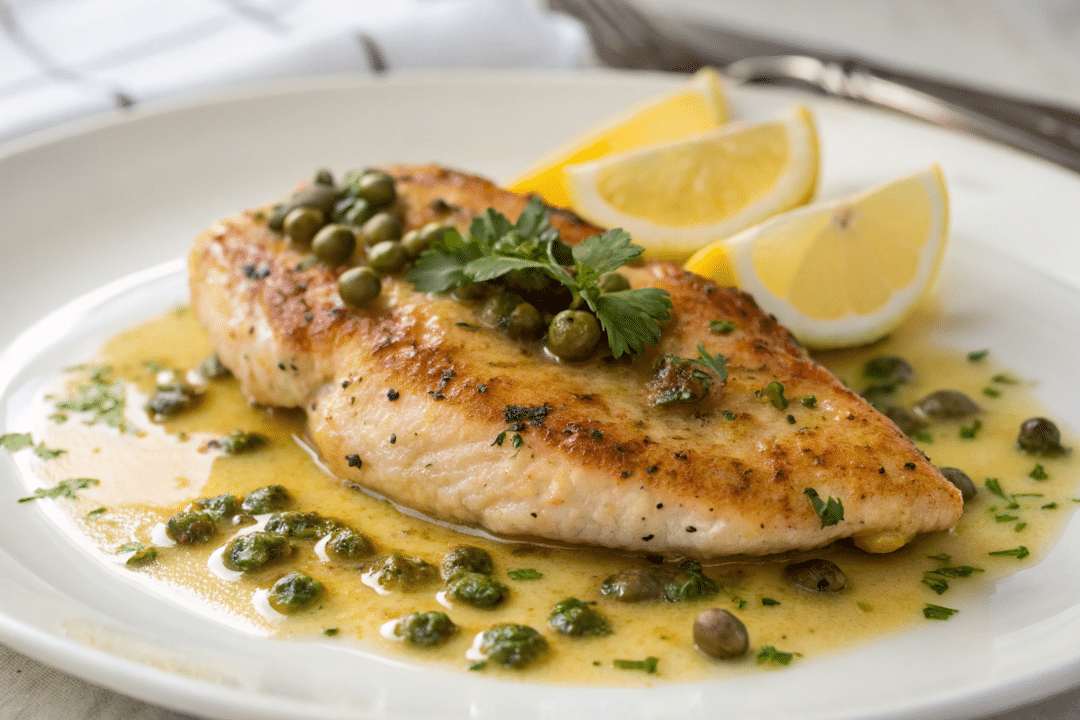
I’ll guide you through each stage so searing and saucing feel effortless. Follow the sensory cues—sizzle, color, and those little grain tails—and you’ll finish confidently.
Pound, Season, and Sear
Pound chicken to about 1/4-inch so pieces cook evenly and stay juicy. Season, dredge lightly, and shake off excess.
Preheat a large skillet until a drop of water sizzles. Add a thin film of olive oil and heat until it shimmers.
Sear the cutlets about 3–4 minutes, then flip for 1–2 minutes. You want a deep golden crust and a steady sizzle, not smoke. Transfer the meat to a plate and drain excess fat.
Deglaze, Simmer, and Finish the Sauce
Sauté minced garlic until fragrant, about 30 seconds. Pour in chicken broth and scrape the browned bits to release flavor.
Let the liquid simmer gently for 8 minutes. Stir in lemon juice and capers and cook 5 more minutes so the sauce mellows and reduces.
When the sauce coats a spoon, swirl in a knob of butter for sheen. Add chicken back to the pan and spoon sauce over so it absorbs the flavors. Rest a minute before plating.
Quinoa Timing and Texture
If you cook the grains in the same pan, add rinsed quinoa and enough broth to cover, then bring to a gentle simmer. Cover and cook 20–30 minutes until the little tails appear and the grains are fluffy.
Or simmer separately and fold the grains into the sauce before serving. The visual cue of separated, tender grains tells you they’re done.
- Pound chicken to even thickness.
- Preheat skillet, sear per timing above.
- Deglaze, simmer, add lemon juice and capers, finish with butter, then return the meat.
| Step | Cue | Timing |
|---|---|---|
| Sear | Golden crust, steady sizzle | 3–4 / 1–2 minutes |
| Reduce sauce | Liquid coats spoon | 8 + 5 minutes |
| Grains | Small tails, fluffy | 20–30 minutes |
Smart Swaps and Add-Ins for Flavor and Dietary Needs
Small swaps can solve big problems—here’s how to adapt the recipe to your pantry and plate. I explain what I swap, why it works, and when to use each option so you can tailor the dish for allergies, budget, or time.
Cornstarch, Broth, and Gluten-Free Tips
I use cornstarch instead of flour to keep the dredge gluten-free. It browns nicely and gives a light, crisp crust.
Choose low-sodium broth. Capers are briny, so less salt in the stock helps you control seasoning.
Cheese, Greens, and Finishing Touches
Parmesan-Asiago or Parmesan adds rich, savory depth. A light dusting of grated Parmesan at the end lifts the sauce without weighing it down.
Stir spinach and parsley off the heat to keep color and fresh herb aroma.
Choosing the Right Cut
Boneless, skinless chicken thighs bring juiciness. Tenders or bite-sized breast pieces cook faster and stay tender—great if you’re short on time.
- Rinse capers to avoid excess salt.
- If dairy-free, skip cheese and finish with olive oil.
- Use table salt sparingly; taste after reduction.
- Add a pinch of red pepper flakes for gentle heat.
| Swap | Why it works | When to use |
|---|---|---|
| Cornstarch for dredge | Gluten-free, crisp crust | Gluten-free diets or lighter coating |
| Low-sodium broth | Controls overall salt | When using briny capers or canned stock |
| Parmesan-Asiago | Deeper savory punch | When you want big flavor with less cheese |
| Boneless thighs / tenders | Juicier or faster-cooking pieces | Budget swaps or quicker meals |
Quinoa Know-How: Protein, Texture, and Cooking Cues
Treat the grains right, and the rest of the plate falls into place. I keep the method simple: rinse, measure, simmer, and check the cues.
Rinse, Ratio, and Minutes on the Stove for Tender, Fluffy Grains
I always rinse in a fine-mesh strainer to wash away saponins, which can have a bitter taste. Then I use a 1:2 ratio—one cup grain to two cups liquid—for reliably fluffy results.
Bring to a gentle boil, then reduce to a steady simmer. Cover and let cook for about 20–30 minutes. At the 20-minute mark, I peek: look for tiny white “tails” and no pooled liquid.
- If it looks dry but feels firm, add a splash of broth and give it a few more minutes.
- For serving, plan about 1/2 cup cooked per person alongside the main protein and sauce.
- A little lemon juice stirred in at the end brightens the grains; fold parmesan in off heat so it melts gently.
Why This Grain’s Complete Protein and Fiber Matter
It’s a complete protein, so it helps the meal feel satisfying without extra fat. You also get fiber and minerals like magnesium and folate—small nutrition wins that stretch a weeknight dish.
| Cue | What to look for | Timing |
|---|---|---|
| Visual tails | Small white rings on grains | About 20 minutes |
| Moisture check | No pooled liquid at bottom | 20–30 minutes |
| Finish | Add lemon juice or parmesan off heat | After resting 5 minutes |
Pro Tips for Golden Chicken and a Silky Sauce
Nailing color and gloss comes from a few practical moves I use every night. Keep steps small and focused so the sear and sauce finish together.
Don’t Overcrowd the Pan; Manage Medium-High Heat
Sear in batches so each piece gets full contact with the pan. If you crowd the surface, food steams and never browns.
Keep the skillet at a lively medium-high. If the oil starts to smoke, pull the pan off briefly and let it cool a touch. Then return it and keep going.
Use Lemon Zest for Brightness; Finish with a Knob of Butter
Zest directly into the pan off heat to capture aromatic oils without bitterness. A hint of citrus adds a bright lift to the sauce and the plate.
Swirl in a small knob of butter at the end for sheen. It rounds out the acid and makes the sauce silky.
- I cook in batches so the pieces brown, not steam.
- Pat surfaces dry before dredging; dry browns better.
- If the sauce reduces too fast, add a splash of broth to loosen it.
- Use a thin turner to slip under cutlets without tearing the crust.
- Pre-warm plates; they keep the sauce fluid and the flavor lively.
| Cue | What to watch | Quick fix |
|---|---|---|
| Sear | Deep golden color, steady sizzle | Batch cook; keep heat medium-high |
| Sauce | Coats spoon, glossy | Add butter off heat |
| Salt | Bright, not flat | Taste and add a micro-pinch at the end |
Nutrition Snapshot and Serving Ideas for the United States Home Cook
I’ll keep this short: portion cues, lighter swaps, and easy sides so the whole meal feels balanced and doable. A typical plate of sautéed lemon chicken and 1/2 cup of quinoa, plus broccoli, lands around 330–410 calories, depending on the amount of fat used.
Protein-Forward, Lower-Fat Swaps, and Veggie Sides
I aim for a protein-forward plate. Plan on 1/2 cup cooked quinoa per person and a generous spoonful of sauce so the meal feels satisfying.
- Keep fat in check by searing in a thin film of oil and finishing with one to two tablespoons of butter for the body.
- If you want leaner, skip extra butter and add a squeeze of lemon to keep brightness.
- Roast broccoli, asparagus, or green beans—these sides soak up sauce and add fiber.
- For a quick salad, toss parsley, lemon juice, olive oil, and a pinch of salt and pepper.
- For dairy-light needs, skip cheese; for extra comfort, finish with a light dusting of parmesan.
- Use breasts for leaner protein or thighs if you prefer a richer flavor.
- If you’re feeding kids, slice the chicken thinly and spoon extra sauce over to keep pieces moist.
- Leftovers reheat well—add a splash of low-sodium broth when warming to revive the sauce.
| Portion | Estimated calories | Quick tip |
|---|---|---|
| 1/2 cup quinoa + protein | 330–410 | Sear in a thin oil layer; finish with 1–2 tablespoons butter |
| Veggie side | 30–80 | Roast or sauté to soak up the sauce |
| Optional finish | adds ~20–40 | Sprinkle parmesan or toss parsley salad |
Make Ahead, Storing, and Reheating Without Drying Out
A little prep changes how leftovers taste—here’s how to keep texture and brightness. I’ll give exact windows and simple reheating steps so you can grab dinner fast and enjoy it like new.
I store the cooked chicken and grains in separate containers. That keeps the grains fluffy and the sauce silky.
Fridge and Freezer Guidelines
- Refrigerate for 3–4 days; freeze up to 3 months. Thaw overnight in the fridge.
- Slice larger breasts before storing so pieces reheat evenly and stay tender.
- For make-ahead, cook the grains and prep the sauce base. Sear and finish the meat closer to mealtime.
Best Reheating Methods
- Oven: preheat to 350°F, add a splash of broth, cover with foil, and warm until just heated through.
- Stovetop: warm gently over low heat with a spoon or two of broth and a drizzle of olive oil to revive sheen.
- Microwave: cover and reheat in short bursts, stirring once to avoid hot spots.
If the sauce seems flat after reheating, a quick squeeze of lemon wakes it up. Taste and add a light sprinkle of salt and pepper at the end. Finish leftovers with a pinch of parmesan and fresh herbs to make the meal feel fresh again.
| Method | Temp / Setting | Moisture tip |
|---|---|---|
| Oven | 350°F, covered | Add 1–2 tbsp broth; cover with foil |
| Stovetop | Low, gentle heat | Splash broth + drizzle olive oil while stirring |
| Microwave | Medium, short bursts | Cover and stir once to prevent drying |
Troubleshooting Common Issues
Don’t toss the skillet yet—most problems are fixable in a few clear steps. Below I give quick causes and fixes so you can correct course fast and learn for next time.
Fast Fixes that Really Help
- Rubbery meat: That usually means pieces were uneven or cooked a few chicken minutes too long. Pound to even thickness and pull at 165°F. If it’s overdone, slice thin and spoon sauce over to hide dryness.
- Thin sauce: Simmer a few more cooking minutes to reduce. For a quick body, whisk a small cornstarch slurry into simmering sauce and heat until thickened.
- Too salty: Add a splash of low-sodium broth and a squeeze of lemon juice, then simmer briefly. If capers pushed salt over the edge, rinse them longer next time.
- Sticking grains: Lower the heat, add a bit more broth, and stir once or twice while it simmers so quinoa cooks evenly.
- Pan scorch or bitter bits: Move everything to a clean skillet and continue gently; discard heavily burnt fond to avoid off flavors.
- Flat flavor: Bloom garlic in a little fat, deglaze, finish with fresh lemon and a pinch of pepper, and grate a touch of parmesan off heat.
| Issue | Quick fix | Why it works |
|---|---|---|
| Rubbery chicken breast | Pound even, pull at 165°F | Prevents overcooking and evens the heat |
| Thin sauce | Reduce or add cornstarch slurry | Concentrates flavor, adds body |
| Quinoa sticking | Lower the heat, add broth, stir | Keeps grains hydrated and separate |
Conclusion
In about 30 minutes, you can serve a bright, savory meal that feels like more than weeknight food.
This recipe is reliable: pound to even thickness, sear hot, deglaze with broth, and finish the sauce. A few tablespoons of butter, capers, and a sprinkle of Parmesan lift the plate.
Fold in a cooked grain for a balanced base—chicken quinoa pairs well with parsley and extra citrus. If you want extra pop, add lemon right at the end.
Swap cuts, go gluten-free, or lean into parmesan. Store smart and reheat gently; this becomes a make-ahead winner. Plate it, taste, tweak, and enjoy—you’ve earned it.
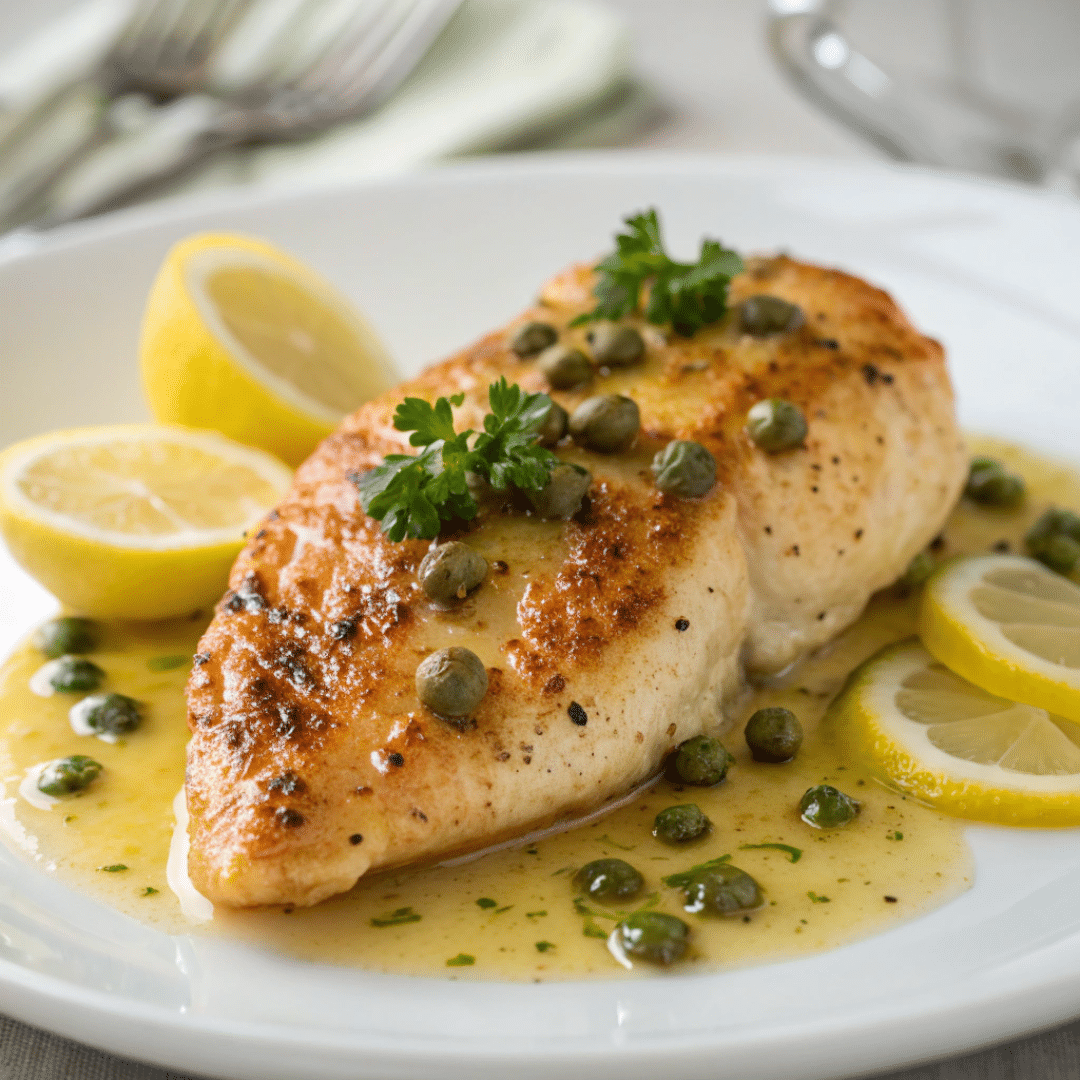
Chicken with Lemon Caper Quinoa
Ingredients
Method
- Pound chicken breasts evenly between plastic wrap to 1/4-inch thickness.
- Season with salt and pepper, then dredge lightly in cornstarch or flour.
- Preheat a large skillet over medium-high heat until a drop of water sizzles.
- Add olive oil and heat until shimmering.
- Sear chicken cutlets 3–4 minutes on the first side, then 1–2 minutes on the other until golden brown.
- Transfer chicken to a plate and drain excess fat.
- Sauté minced garlic in the skillet for ~30 seconds until fragrant.
- Pour in chicken broth, scraping the browned bits to deglaze the pan.
- Simmer sauce gently for 8 minutes.
- Stir in lemon juice and capers; cook an additional 5 minutes to mellow and reduce.
- Swirl in a knob of butter for sheen.
- Return chicken to the pan and spoon sauce over to absorb flavors. Rest 1 minute.
- Meanwhile, cook quinoa: add rinsed quinoa to enough broth to cover; bring to a gentle simmer, cover, and cook 20–30 minutes until tails appear and grains are fluffy.
- Optional: stir Parmesan and fresh parsley into quinoa off heat.
- Plate chicken over quinoa, drizzle with sauce, and garnish with additional parsley or lemon zest if desired.
Notes
FAQ
How do I keep the meat juicy when I pound and sear skinless chicken breasts?
When should I add quinoa so it stays fluffy and not mushy?
Can I swap cornstarch for flour to thicken the lemon-caper sauce?
What’s the best chicken cut for this skillet method—breasts, thighs, or tenders?
How much lemon juice and zest should I use for bright but balanced flavor?
Should I use low-sodium chicken broth and why?
Can I add greens like spinach or parsley, and when is best to add them?
How do I prevent the sauce from becoming too salty from the capers and Parmesan?
What are reliable make-ahead and storage tips so leftovers stay moist?
How do I reheat without drying out the protein—oven or microwave?
My sauce turned out thin—how can I thicken it quickly?
Why did my breasts turn rubbery, and how do I avoid that next time?
What equipment do I really need to make this in one skillet?
How can I boost protein or make this dish more filling without changing the method?
About The Author

John
John Watson is the passionate food enthusiast behind MePlusFood.com. With a deep love for exploring culinary delights, he shares honest restaurant reviews, mouthwatering recipes, and culinary adventures. Join John on his flavorful journey to savor the world one bite at a time.