Maple Glazed Ham Hock with White Beans
Jump to Recipe
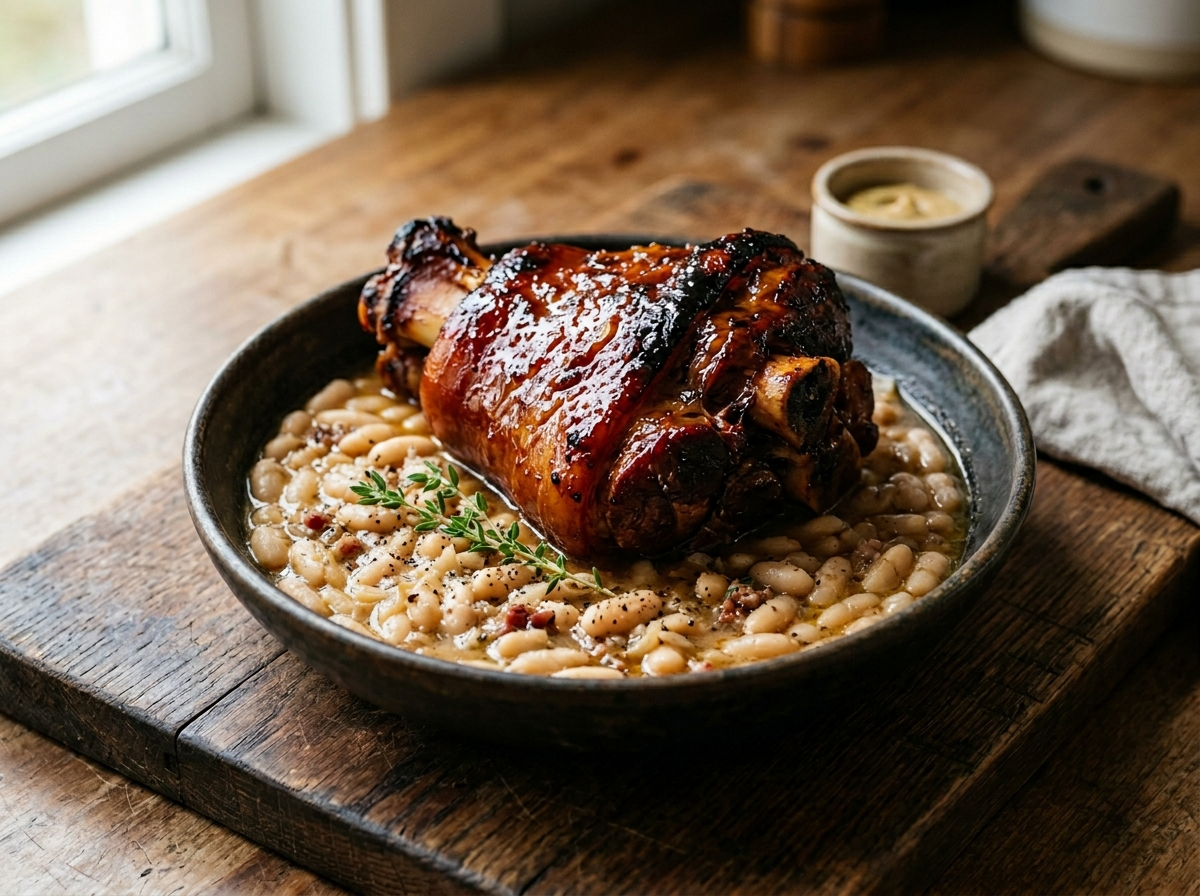
Ham hocks are one of the most underused cuts at the butcher counter. They’re cheap, they braise low and slow into something genuinely sticky and rich — much like a slow-braised beef short rib — and they make the liquid around them taste like it cooked for days.
The maple glaze here isn’t just a last-minute brush-on, and it shares that same low-and-slow logic as a maple bourbon glazed pork belly. It goes into the pot early so the sugars have time to reduce and cling to the pork. By the time the hock comes out of the oven, the beans have absorbed all of that smoky, sweet braising liquid.
This is the kind of dish that looks effortful but mostly just needs time. Prep takes about 15 minutes. The oven handles the rest.
It eats like a full meal straight from the pot with crusty bread, or you can pull the meat and serve it over the beans like a proper plated dish.
Why You’ll Love This Recipe
- Fall-apart pork with barely 15 minutes of hands-on work
- Maple glaze reduces into the beans for built-in sauce
- One pot means minimal cleanup after a long braise
- Budget-friendly cut that feeds four generously
Ingredient Notes
- Ham hock: Look for smoked ham hocks at a butcher or well-stocked supermarket. Fresh (unsmoked) hocks work but add 1 tsp smoked paprika to compensate for depth.
- Pure maple syrup: Use Grade A dark or Grade B if you can find it – stronger maple flavor holds up better in a long braise. Honey works as a substitute but the flavor is milder.
- Dried white beans (cannellini or Great Northern): Soak overnight and drain before using. Canned beans work in a pinch – add them in the last 45 minutes only or they’ll turn to mush.
- Chicken stock: Low-sodium stock lets you control saltiness, since ham hocks can be quite salty on their own. Vegetable stock works but produces a lighter-bodied braise.
- Dijon mustard: Whisked into the glaze, it cuts through the sweetness and keeps the sauce from tasting one-dimensional. Whole-grain mustard is a good swap.
- Fresh thyme: Adds an herbal backbone that dried thyme can’t quite replicate in a long braise. Use 4 sprigs dried as a substitute if needed.
Maple Glazed Ham Hock with White Beans
Ingredients
Method
- Heat the oven to 160 C / 320 F. Pat the ham hocks dry with paper towels and score the skin in a crosshatch pattern about 1 cm deep.
- Whisk together the maple syrup, Dijon mustard, apple cider vinegar, smoked paprika, and garlic powder in a small bowl until smooth. Set the glaze aside.
- Heat a 5 to 6 quart Dutch oven over medium-high heat with a thin film of oil. Sear the ham hocks for 3 to 4 minutes per side until lightly browned. Remove and set aside.
- In the same pot over medium heat, cook the onion for 4 to 5 minutes until softened and translucent. Add the smashed garlic and cook for 1 more minute until fragrant.
- Add the drained soaked cannellini beans, chicken stock, thyme sprigs, bay leaves, and black pepper. Stir to combine.
- Nestle the seared ham hocks into the pot. Spoon half the maple glaze over the hocks. Bring to a simmer on the stovetop over medium heat.
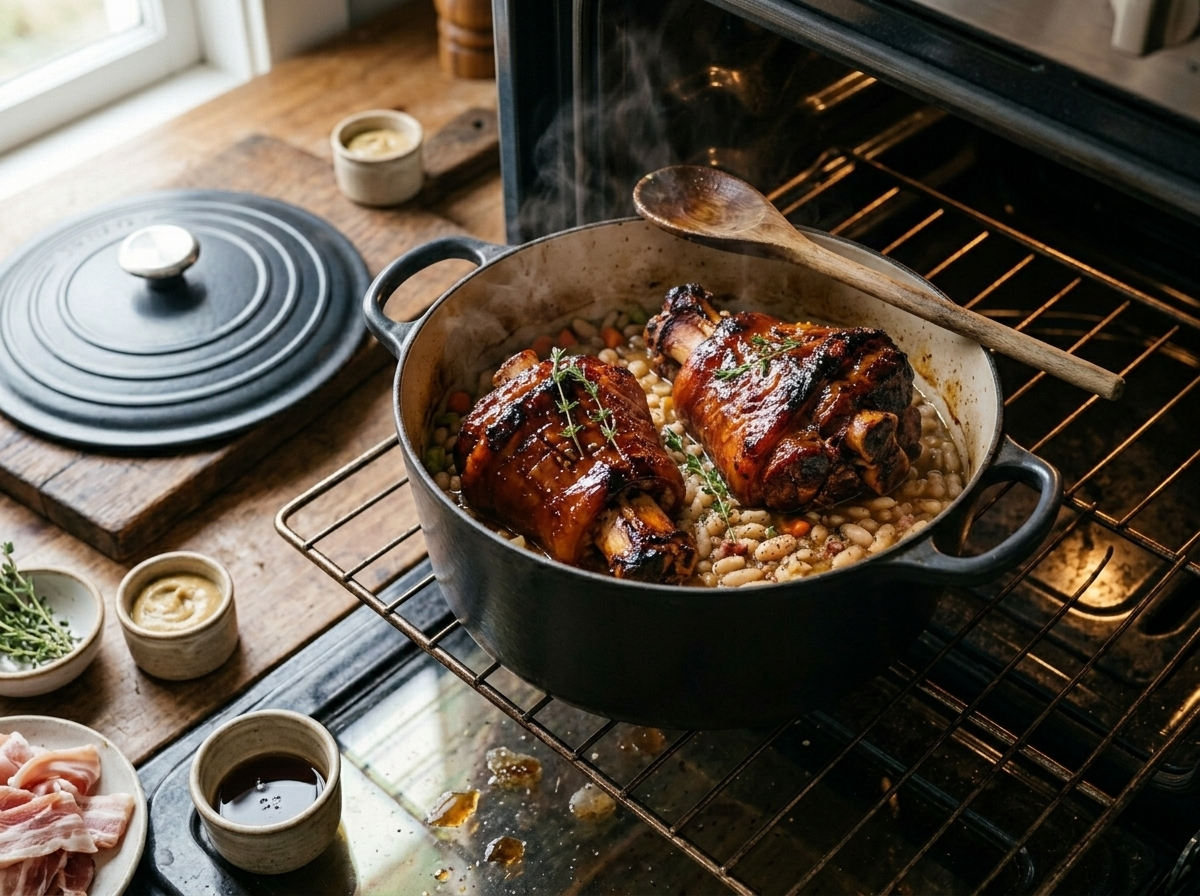
- Cover the pot with a tight-fitting lid and transfer to the oven. Braise for 2 hours.
- Remove the lid and spoon the remaining maple glaze over the ham hocks. Return to the oven uncovered for 20 to 25 minutes until the glaze is caramelized and the hock skin is glossy and sticky.
- Check that the beans are fully tender by pressing one against the side of the pot - it should crush without any resistance. If not, cover and cook for another 20 minutes.
- Remove the pot from the oven. Discard the thyme sprigs and bay leaves. Rest the hocks uncovered for 10 minutes before serving so the glaze sets.
- Taste the beans and season with salt only if needed, keeping in mind the hock will have contributed significant saltiness to the braising liquid.
Notes
Tips for Success
- Score the skin of the ham hock in a crosshatch pattern before braising so the glaze penetrates into the meat.
- Bring the braising liquid to a simmer on the stovetop before covering and transferring to the oven – it cuts total cook time.
- Remove the lid for the last 20 minutes of cooking to concentrate the glaze and get visible caramelization on the hock.
- Check bean tenderness at the 90-minute mark by pressing one against the side of the pot – it should crush without resistance.
- Rest the hock uncovered for 10 minutes after pulling it from the oven so the glaze sets and doesn’t slide off when you plate.
Variations
- Swap maple syrup for molasses and add a pinch of cayenne for a Southern-style smoked hock with a spicy edge.
- Use butter beans instead of cannellini and stir in kale for the last 15 minutes for added texture and color.
- Add 1 cup diced tomatoes and a bay leaf for a more rustic, Italian-leaning braise with deeper acidity.
Storage and Reheating
Store leftover ham hock and beans together in an airtight container in the fridge for up to 4 days. The beans absorb more liquid as they sit, so they’ll taste even more seasoned the next day.
To reheat, add a splash of stock or water to loosen the beans and warm over medium-low heat in a covered saucepan for about 10 minutes, stirring occasionally. Avoid high heat – the beans will break down.
This dish freezes well. Portion into freezer-safe containers and freeze for up to 3 months. Thaw overnight in the fridge before reheating.
Serving Suggestions
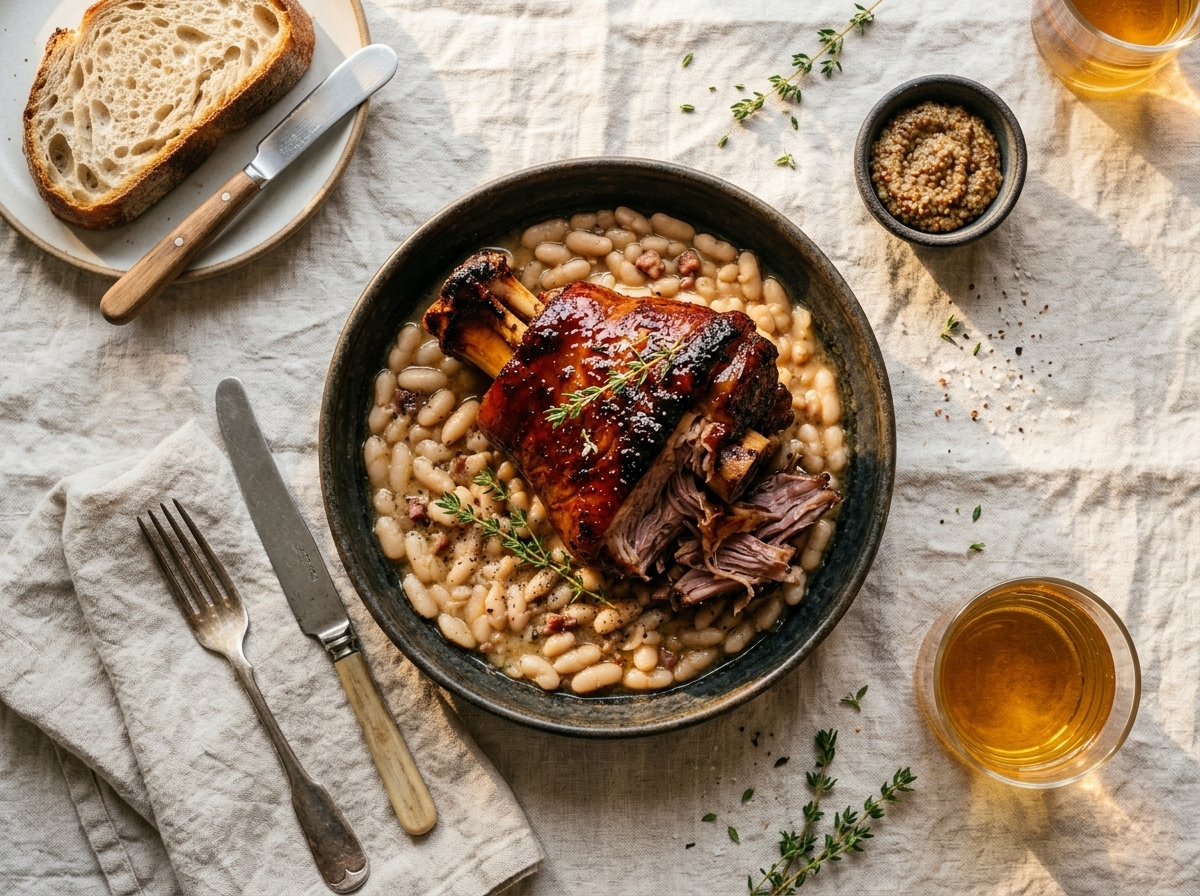
Serve the hock whole on top of a deep bowl of beans with some of the braising liquid spooned over. A piece of thick sourdough or crusty white bread is the right call here – you’ll want something to catch the sauce.
For a more composed plate, pull the pork from the bone in large pieces and lay it over the beans, finished with a spoonful of whole-grain mustard the way you might plate a crispy pork schnitzel with sauce. A spoonful of whole-grain mustard on the side and some fresh flat-leaf parsley brightens the plate without competing with the glaze.
This pairs well with a simple green salad dressed with cider vinegar, or roasted root vegetables if you want to stretch the meal further. A glass of dry cider or a light-bodied red like Pinot Noir holds up nicely against the smoky pork.
FAQ
Why is my maple glaze on the ham hock burning before the meat is tender?
The glaze burns if the oven runs too hot or the lid is off too early. Keep the pot covered for the first 2 hours and only uncover it in the final 20 minutes. If you notice heavy darkening, add a splash of stock and re-cover.
Can I use canned white beans instead of dried in this ham hock recipe?
Yes, but add them much later – about 45 minutes before the end of cooking. Canned beans are already soft and will disintegrate if they braise for the full 2.5 hours alongside the hock.
Can I make this maple glazed ham hock in a slow cooker?
It works well on low for 7 to 8 hours. The glaze won’t caramelize in the slow cooker, so transfer the hock to a lined baking sheet and broil for 5 to 6 minutes at the end to get that sticky surface.
What goes well alongside braised ham hock and white beans for a full dinner spread?
Pickled red cabbage or a sharp coleslaw cuts through the richness well. Roasted carrots or parsnips round it out without doubling the starchy elements already in the pot.
Is maple glazed ham hock gluten-free?
The recipe as written is gluten-free – maple syrup, beans, stock, and mustard are all naturally gluten-free. Check your stock label if using store-bought, as some brands contain wheat starch.
How do I know when the ham hock is done braising?
The meat should pull away from the bone easily when prodded with a fork, and the skin should be soft with a glossy, sticky surface. If there’s any resistance near the bone, cover and braise for another 20 minutes.
About The Author

John
John Watson is the passionate food enthusiast behind MePlusFood.com. With a deep love for exploring culinary delights, he shares honest restaurant reviews, mouthwatering recipes, and culinary adventures. Join John on his flavorful journey to savor the world one bite at a time.