My Favorite Green Garlic Pesto Recipe from Last Spring
I fell for green garlic pesto the first time I spooned it over hot penne after a long workday—the bright, mild flavor felt like spring on a plate and turned a simple meal into comfort. The scent is green and herbaceous, the texture is silky when you stream in good olive oil, and it’s one of those recipes I made again and again last season.
At farmers’ markets, you’ll spot long, fresh stalks that tell you the season has shifted. I buy tender bunches, use the whole plant—stalks and greens—and store them in foil in the crisper so they last a week or more.
In this short guide, I’ll share practical tips for shopping, quick prep steps for young garlic, and the easy method I use so dinner comes together fast and glossy, never clumpy.
Key Takeaways
- Green garlic pesto offers a milder, sweeter flavor than mature garlic—perfect for weeknights.
- Buy firm, unruly-free stalks at farmers’ markets and use them within a week for the best taste.
- Use the whole plant to cut waste; tender greens blend smoothly into the sauce.
- Slowly drizzling extra virgin olive oil into the processor makes a silky texture.
- Toss with hot pasta right away for glossy, non-clumpy results.
Why Green Garlic Shines in Spring Cooking
When the market fills with long, tender stalks each spring, I reach for them—those mild stems change how I cook. The immature plant is softer than mature garlic and brings a bright, sweet flavor without the sharp bite of regular garlic.
What It is and How it Differs
Green garlic is harvested before bulbs form. You can eat leaves, pale stalks, and the tiny roots. The younger the plant, the more tender the greens, and the more it blends in a food processor without any harshness.
Shopping Smart at Farmers Markets
Shop early in the day during peak season for the best pick. Look for vibrant produce with no limp spots or browning. I avoid thick, woody stalks—those are moving toward mature garlic or garlic green in flavor.
Storing Young Garlic So It Stays Crisp
I wrap bunches in foil and tuck them in the crisper. Humidity helps; spritz with water every few days if you won’t use them within a week. If I prep ahead, a quick trim and pat dry takes minutes and makes tossing into the processor faster.
- Trim, rinse, dry: saves time on busy nights.
- A light film of oil on cut ends can slow drying.
- Season with pepper and salt later, so the plant’s flavor leads.
| Stage | Texture | Best use |
|---|---|---|
| Immature (young) | Tender stalks and leaves | Raw sauces, quick sautés |
| Mature | Firm bulbs, sharper bite | Roasts, bold sauces |
The Green Garlic Pesto Recipe
A little prep and a food processor turn fresh stalks and herbs into a silky, snap-ready sauce in minutes. Start by trimming the stems and chopping a cup of tender greens so they feed evenly into the blades.
Ingredients: Greens, Nuts, Cheese, and the Right Olive Oil
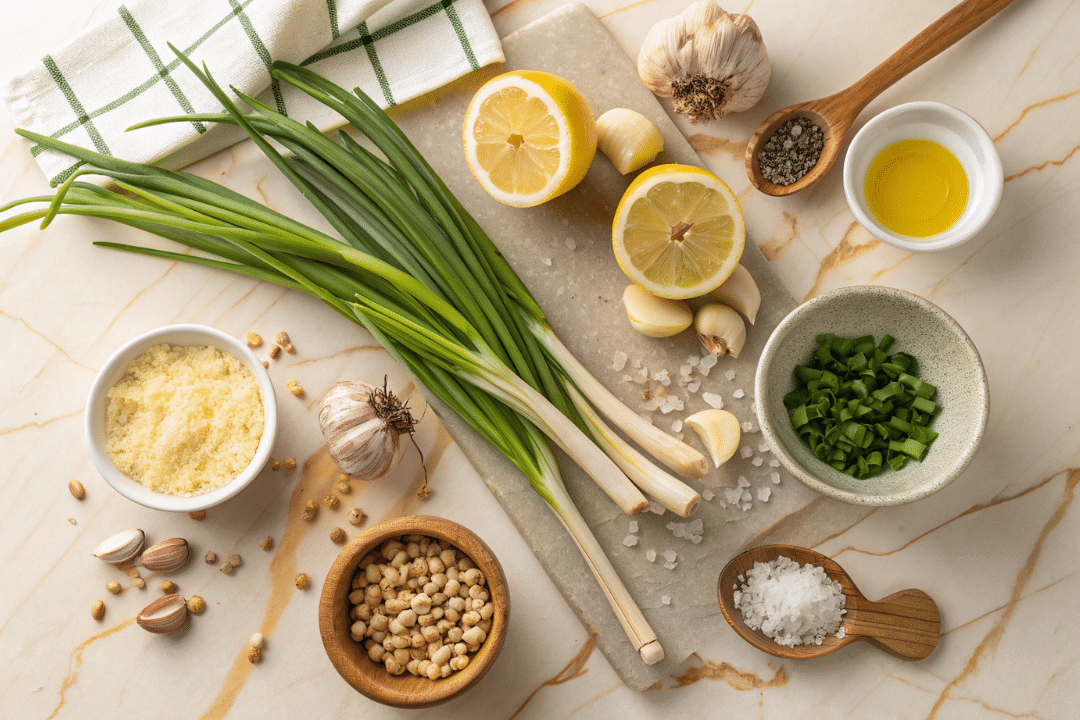
Combine chopped stalks and parsley with a sprinkle of grated cheese, a small cup of pine nuts or walnuts, a pinch of salt, and fresh-cracked black pepper. Pulse the processor 10–15 times, scraping the sides so everything breaks down evenly.
Easy Substitutions
Walnuts are an excellent substitute for pine nuts; Pecorino can be used in place of Parmesan. Add a cup of spinach to soften sharpness and keep color lively.
Step-by-step method
- Pulse greens, nuts, cheese, salt, and black pepper 10–15 times.
- With the processor running, slowly drizzle in olive oil until the mixture is smooth and cohesive.
- If needed, add a tablespoon of water or a squeeze of lemon to tune the texture and brightness.
| Component | Swap | Texture note | Suggested amount |
|---|---|---|---|
| Nuts | Pine nuts or walnuts | Rich, slightly creamy | 1/3 cup |
| Cheese | Parmesan or Pecorino | Salty, savory lift | 1/3 cup grated |
| Greens | Parsley, spinach, or scapes | Tender, bright color | 1 cup |
Let the mix rest in a bowl while pasta cooks so the flavors meld. For serving ideas and more pasta tips see easy pasta recipes.
Serving Ideas that Let the Garlic Flavor Lead
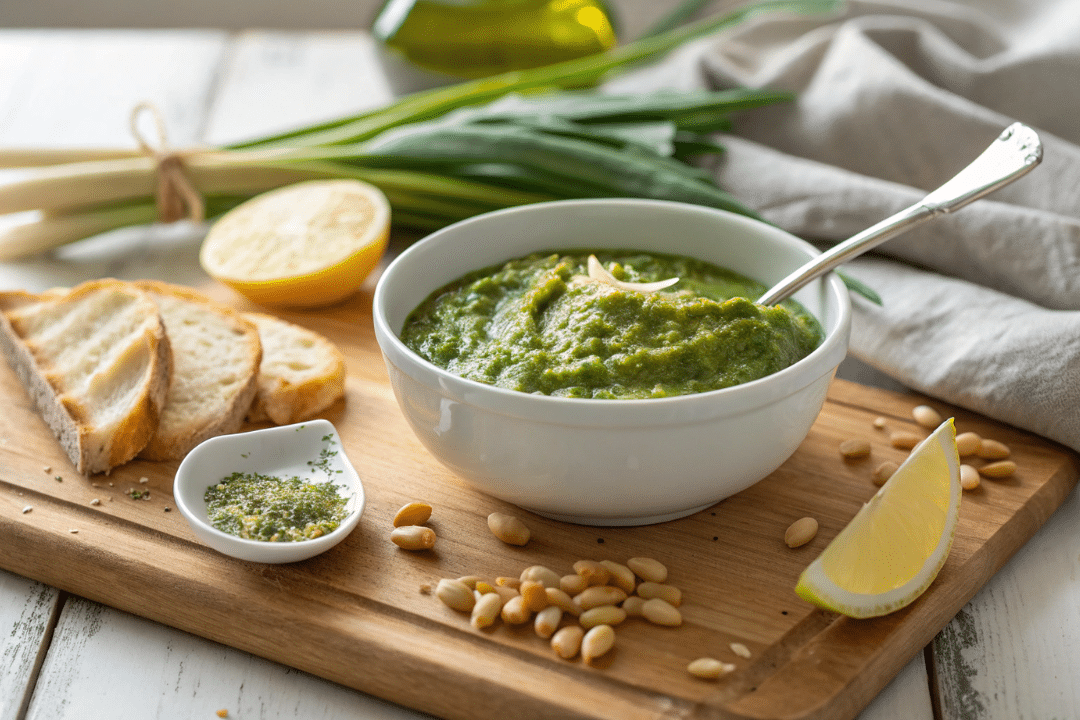
To keep flavors vivid, I dress pasta just off the boil with a spoon of fresh sauce and a splash of cooking water. That quick step loosens the mix so it clings in a glossy coat and the garlic flavor stays bright instead of fading with heat.
I finish each plate with a thin thread of olive oil and a twist of pepper. I also put out a small cup of grated cheese so folks can season at the table. Little steps like these make a simple pasta feel like dinner out.
Pasta and Pizza: How to Sauce, Loosen, and Finish
- Thin sauce with reserved hot pasta water, one tablespoon at a time, until it coats each noodle.
- For pizza, spread a light layer under the cheese and bake hot; add a spoonful of fresh sauce after baking so the greens stay vibrant.
- Finish both with a drizzle of olive and a final crack of pepper to lift the flavors.
Beyond Pasta: Sandwiches, Dips, and Quick Spring Sides
Smear a thin coat on toasted bread, layer roasted vegetables or sliced chicken, and the sauce’s fat carries flavor without making it greasy. For a snack, stir a spoonful into Greek yogurt, thin with water or lemon, and serve with crisp vegetables.
For a fast side, toss a spoonful with blanched greens and peas. If scapes are in season, blend them half-and-half with the sauce for a gentle snap. The key is timing—dress hot food off the heat and serve right away so the sauce stays silky.
| Use | Method | Finish |
|---|---|---|
| Pasta | Toss hot penne off the boil with sauce and 1–2 tbsp reserved water | Drizzle olive oil, twist of pepper, optional grated cheese |
| Pizza | Thin layer under cheese; add fresh spoonful after baking | Light olive oil and fresh greens on top |
| Dip / Sandwich | Stir into yogurt or spread thin on toast | Lemon or water to adjust texture; add extra cheese if desired |
Make-Ahead Tips, Storage, and Freezing for Peak Flavor All Week
I like to make a jar or two on Sunday so dinner feels effortless all week. A small bit of prep saves time and keeps the sauce bright for several meals.
Fridge and Freezer: Olive Oil Seal, Portions, and Time Guidelines
Right after blending, spoon the mix into airtight jars. Level the top and drizzle olive oil to form a thin seal that keeps air out and color fresh.
In the fridge it will hold well for about two weeks, and often up to a month if the seal stays intact. For more extended storage, portion into ice cube trays, freeze, then bag the cubes for up to six months.
Thaw cubes in minutes by stirring into hot pasta water, or let a small cube sit at room temperature. When thawed, stir in a touch of extra virgin olive to refresh the sheen and taste, then adjust salt.
If the Sauce Tastes Too Spicy: Mellowing with Spinach or Extra Cheese
If the raw bite seems sharp, blend in a handful of spinach or another cup extra of tender greens. A little extra cheese—Pecorino or Parmesan—also rounds the edges fast.
- Portion into small jars or ice cube trays for quick thawing and less waste.
- Label each container with the date so you rotate stock and avoid surprise spoilage.
- Keep a back-up cup of frozen cubes for busy nights—few cubes whisked into hot pasta water make dinner in minutes.
| Storage | Method | Time |
|---|---|---|
| Fridge | Airtight jar with an oil seal | 2 weeks — sometimes up to 1 month |
| Freezer | Ice cube trays, then bag | Up to 6 months |
| Quick use | Drop frozen cube into hot pasta water | Thaws in minutes |
Conclusion
One jar of bright sauce changes weeknight pasta from ordinary to something worth smiling about. This green garlic pesto comes together in minutes and makes plain noodles shine with little fat and lots of flavor.
Remember the basics: buy crisp green garlic, blend gently, and stream in oil for a silky finish. Toss with hot pasta and a splash of cooking water so the sauce clings glossy to each bite.
Keep a jar in the fridge with an oil seal or freeze cubes for quick meals. Swap walnuts, Pecorino, or add spinach. Try garlic scapes or scapes when they arrive—same spirit, slightly different texture. I hope you make a batch today, taste, tweak, and serve with a smile.
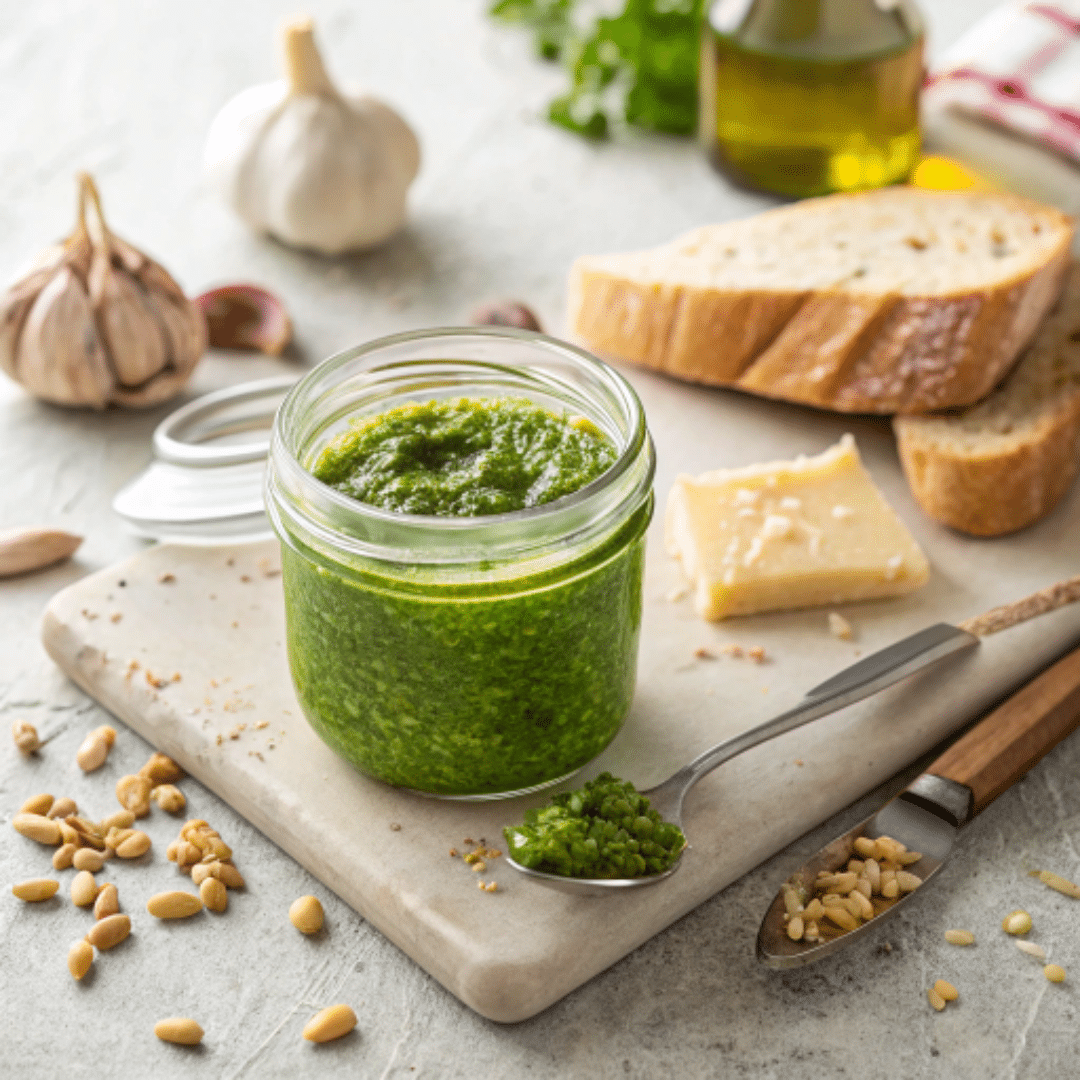
Green Garlic Pesto
Ingredients
Method
- In a food processor, combine chopped greens, nuts, and cheese. Add salt and black pepper. Pulse 10–15 times, scraping sides to ensure even blending.
- With the processor running, slowly drizzle in olive oil until the mixture becomes smooth and cohesive. Adjust thickness with a tablespoon of water or a squeeze of lemon if needed.
- Let the pesto sit in a bowl while you cook pasta or prepare dishes to allow flavors to meld. Taste and adjust salt, pepper, or acidity as needed.
- Use immediately over pasta, pizza, sandwiches, dips, or vegetables. For pasta, toss hot noodles with sauce and 1–2 tablespoons reserved cooking water. For pizza, add fresh pesto after baking.
Notes
FAQ
What makes this recipe my favorite from last spring?
What is young garlic and how is it different from mature bulbs?
How do I shop smart at farmers markets for the best produce?
What’s the best way to store young stalks so they stay crisp and sweet?
What are the core ingredients for this sauce and which olive oil should I use?
Can I swap ingredients like nuts or cheese?
How do I make this in the food processor without over-blending?
How do I control texture and flavor—what about water and lemon?
What’s the best way to sauce pasta or finish pizza with this topping?
What other ways can I use the sauce beyond pasta?
How should I store the sauce for the week and what about freezing?
My batch is too spicy—how do I mellow it?
About The Author

John
John Watson is the passionate food enthusiast behind MePlusFood.com. With a deep love for exploring culinary delights, he shares honest restaurant reviews, mouthwatering recipes, and culinary adventures. Join John on his flavorful journey to savor the world one bite at a time.