My Favorite Sunchoke and Garlic Soup for Cozy Nights
I reach for this cozy bowl when the air gets sharp; roasted at 320°F (fan), the tubers turn sweet and nutty while mellowed cloves bring depth.
The flavor sits between earthy and gently sweet, with a silkiness that feels like a warm hug without heaviness. I blend until smooth, then wake the dish with a squeeze of lemon and crispy sage fried just until golden.
There’s a practical side here too: these tubers contain inulin, a prebiotic that feeds good gut bacteria, but a large serving can cause gas for some—mixing in potato or cauliflower tames that. This is a fast weeknight recipe that scales for leftovers and still tastes like you spent hours on it.
Key Takeaways
- Roast at 320°F (fan) to coax out sweet, nutty notes without burning.
- Blend until velvety, then finish with lemon and crisped sage for contrast.
- Inulin is a prebiotic; reduce portions or add a potato if you’re sensitive.
- Simple, fast weeknight recipe that scales well for meal prep.
- Texture is luxurious yet light—comfort without heaviness.
Why this Cozy Bowl Hits the Spot on Cold Evenings
A spoonful of this bowl brings roasted depth and a soft, nutty finish that warms me through. The flavor profile blends earthy notes with a quiet sweetness. Each bite feels layered without heaviness.
Raw, the tubers are crisp like water chestnuts. Cooked, they turn silky and slightly sweet. The texture sits between potato and globe artichoke, but cleaner, which keeps the bowl light and bright.
The Flavor Profile: Nutty, Earthy, Gently Sweet
Roasting builds caramelized edges and deepens the taste. Onion and light aromatics set a savory backbone while lemon or herbs lift the finish. The result is vegetable-forward and balanced.
Seasonality and Sourcing Jerusalem Artichokes in the U.S.
- Best in fall and winter—farmers’ markets shine then.
- Choose firm, dry-skinned tubers; small to medium sizes.
- Store cool and dry, or refrigerate for longer life.
| Season | Where to buy | Prep minutes |
|---|---|---|
| Fall–Winter | Farmers’ markets, specialty grocers | 15–25 |
| Off-season | Some grocery chains, online vendors | Extra peeling time |
| Storage | Cool pantry or fridge | Keeps weeks |
Sunchoke and Garlic Soup: the Streamlined Recipe Overview
I favor a clear, fast plan in the kitchen. Roast first, build a simple base, then blend to a silky finish. This section gives the at-a-glance recipe you can trust on busy evenings.
Core Ingredients at a Glance
Use tubers for body, cloves and onion for savory depth, olive oil to roast and sauté, and vegetable or chicken stock to tie it together. A splash of cream or oat milk is optional for extra richness.
- Measure in easy cups and keep salt nearby to season in stages.
- Roast at 320°F (fan) for 35–45 minutes until golden.
- Add warm stock if the texture is too thick after blending.
Equipment You’ll Need
A simple gear does the job. A sheet pan for roasting gives even browning. A heavy pot or Dutch oven handles the simmer without hot spots. Finish in a blender for that smooth, spoon-coating result.
| Purpose | Option A | Option B |
|---|---|---|
| Roast | Sheet pan | Roasting rack |
| Simmer | Dutch oven | Heavy-bottomed pot |
| Finish | Countertop blender | Immersion blender |
Step-by-Step: From Roasted Sunchokes to Velvety Spoonfuls
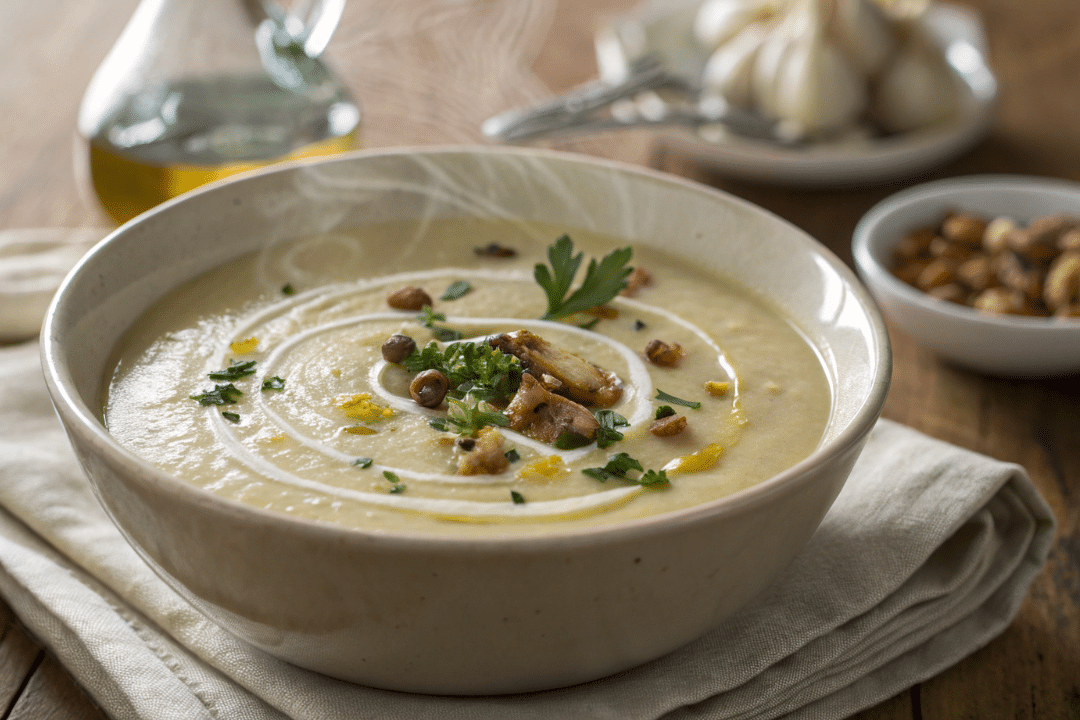
There’s a simple rhythm to this recipe: roast, sauté, simmer, then blend until silky. I keep each move deliberate so the final bowl feels effortless.
Prep and Roast at 320°F fan: Maximizing Sweetness and Flavor
Preheat the oven and chop the tubers. Toss them with a light coating of oil and add whole cloves to roast alongside. Roast for 35–45 minutes; the last 10 minutes are where caramelization deepens and centers become tender to a knife.
Build the Base Over Medium Heat
In a heavy pot over medium heat, warm a tablespoon of oil. Soften the onion until glossy and sweet-smelling. Squeeze roasted cloves from their skins and add them once cool.
Add Stock, Simmer Until Tender, then Blend the Soup Silky-Smooth
Stir in the roasted tubers, pour warm stock, and bring to a gentle simmer. Cook until a knife slips through without resistance—watch the minutes not the clock.
- Blend soup hot in batches, venting the lid carefully.
- Check texture; loosen with stock if needed.
- Optional: pass through a fine-mesh sieve for extra silk.
Finish with Lemon, Herbs, Salt, and Pepper to Taste
Off heat, add lemon, herbs, salt, and pepper to brighten the bowl. Stir in cream only off heat to avoid curdling. Taste again—roasted tubers can be sweet, so small seasoning tweaks make the flavor pop.
| Step | Timing | Doneness signal |
|---|---|---|
| Roast in the oven | 35–45 minutes | Golden edges; knife slips in |
| Sauté base | 3–5 minutes | Onion translucent, fragrant |
| Simmer and blend | 10–15 minutes simmer, then blend | Silky texture; spoon coats bowl |
Ingredient Notes and Smart Swaps
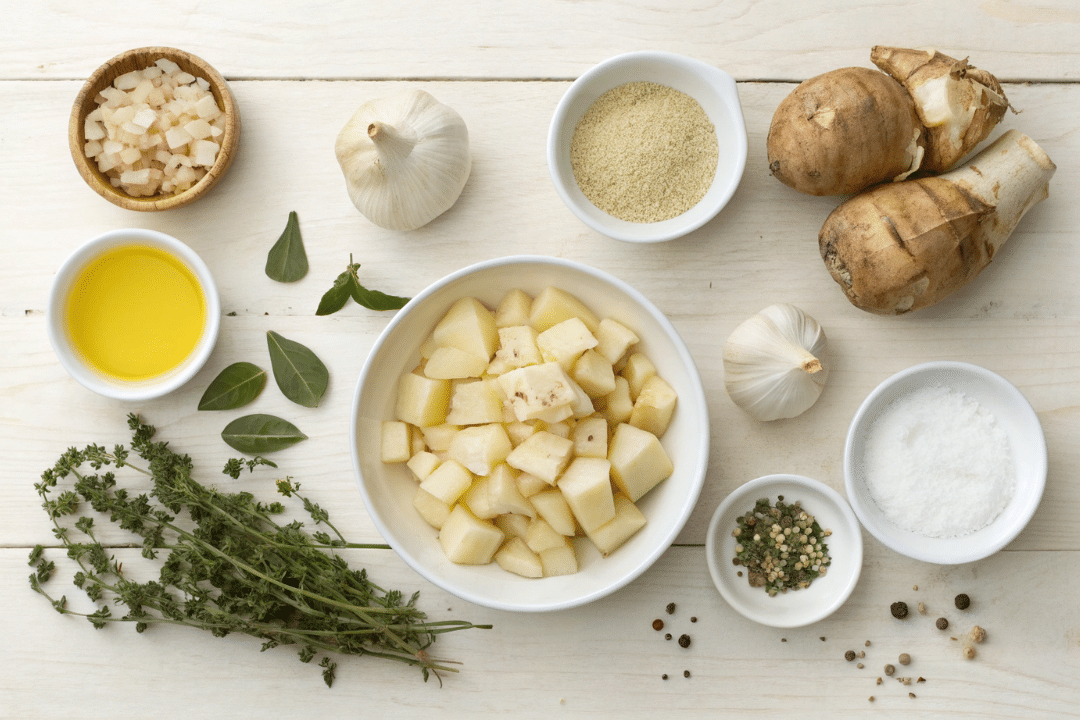
Choosing the right stock or fat turns this dish from simple to memorable. I pick swaps to match mood, pantry, or guests. Small changes shift texture and final flavor quickly.
Stock and Dairy Choices
Use vegetable stock to keep the bowl light and clean. Pick chicken stock when I want gentle roundness and a deeper savory flavor. If the stock tastes salty, I wait to finish seasoning so the taste stays balanced.
Fats and Creamy Finishes
Cream gives that classic richness. Oat milk makes a dairy-free version that is still silky if you mix well. Olive oil is my go-to for roasting and sautéing; butter adds a warm, toasty note. I often mix oil with a bit of butter for the best texture.
- Roasted onion and garlic set the base — don’t skip them.
- A squeeze of lemon brightens sweet roasted sunchokes and cuts richness.
- Want umami? A light dusting of shaved cheese lifts the bowl without weighing it down.
| Swap | Effect | When to use |
|---|---|---|
| Vegetable stock → Chicken stock | More savory, rounded flavor | When not keeping a vegetarian diet |
| Cream → Oat milk | Smooth, dairy-free silk | Vegan or lighter finish |
| Olive oil → Butter | Toasty, nostalgic depth | Special occasions or richer mouthfeel |
Pro Tips for Perfect Texture and Easier Prep
A tiny prep habit saves minutes and keeps the puree glossy every time. I keep tools simple and moves deliberate. These tips protect color, speed prep, and lift final texture.
How I Peel Knobbly Tubers Fast (and When I Skip It)
I use a spoon or a small paring knife to follow curves. It slips into nooks without wasting flesh. For very thin, clean skins, I sometimes leave them; expect a slightly rustic texture if I do.
If a piece is extra knobbly, I slice flatter planes first. That trick saves time and spares fingers.
Preventing Discoloration: the Simple Water Bowl Trick
Keep a bowl of cold water beside your prep station. Drop each peeled chunk straight in. The brief soak stops the quick browning these tubers are prone to.
It’s also known as a tiny habit that makes a big visual difference when you roast or simmer later.
Blending for Ultra-Smooth Results Without a Gummy Texture
Cook until tender—use a knife to check. Undercooked pieces won’t puree smoothly and can dull the taste.
Blend hot on high until steam puffs, then rest and blend again. Use warm stock to thin; cold water breaks the emulsion and hurts texture.
An immersion blender works for fewer dishes, but a countertop blender often gives the glossiest finish. Pass through a fine sieve for a restaurant-level bowl.
- Swap part of the mix with a potato if you want a milder finish and gentler digestion.
- Avoid hard boiling; gentle heat protects flavor and keeps dairy from splitting later.
- Taste the puree before final seasoning—smoothness reveals true balance.
| Step | Tip | Minutes / Note |
|---|---|---|
| Peel | Use spoon for curves; slice knobbly pieces flat first | 2–5 minutes |
| Soak | Cold water bowl to prevent discoloration | Immediate; drain before cooking |
| Cook | Simmer gently until knife meets little resistance | 10–20 minutes depending on size |
| Blend | High speed, rest, blend again; add warm stock to adjust | 2–4 minutes |
Elevate the Bowl: Toppings that Add Crunch and Brightness
The right finishing touches make each spoonful sing with contrast and warmth. A crisp topping and a bright squeeze of lemon turn cozy into memorable. I keep techniques simple so anyone can add flair fast.
Crispy Sage Leaves with a Squeeze of Lemon
I crisp sage in a thin sheen of hot olive oil until the bubbles slow and the leaves turn translucent. Drain on paper towel so they stay snap‑crisp. Finish the bowl with a light squeeze of lemon for a fragrant lift.
Pangrattato: Garlic‑Toasted Crumbs with Parsley and Lemon Zest
Pangrattato is my secret weapon. Toast coarse breadcrumbs in olive oil with a little garlic until golden. Stir in parsley and lemon zest off the heat so the crumbs stay crunchy.
- Add the crumbs at the last second, a little at a time, so they keep their crackle against the warm soup.
- Shaved cheese—Parmesan or Pecorino—adds saline umami that complements the nutty flavor without stealing the show.
- A sprinkle of pepper just before serving wakes the aromatics, especially if the stock leans sweet.
- Extra herbs like chive tips or thyme tips offer a clean, green counterpoint; scatter sparingly to keep the bowl elegant.
- For a minimal finish, a glossy thread of olive oil is perfect—simple, fragrant, and just rich enough.
- If you’d like a side, warm, crusty bread or a small salad with lemon vinaigrette balances richness and rounds the meal.
| Topping | Method | When to add |
|---|---|---|
| Crispy sage | Fry in thin oil, drain | Right before serving |
| Pangrattato | Toast crumbs with garlic, mix parsley & zest | Off heat, add last second |
| Shaved cheese | Thin ribbons of Parmesan or Pecorino | After crumbs, so it melts slightly |
Nourishing Notes: Prebiotic Benefits and Gentle Digestion
This bowl quietly does good work: it comforts the belly while feeding helpful gut bacteria. I keep the notes honest—no hype—just clear facts and easy tweaks that let you enjoy full flavor without discomfort.
Inulin in Jerusalem Artichokes — Why It Matters
These tubers are rich in inulin, a water‑soluble fiber that acts as a prebiotic. It helps feed lactobacilli and bifidobacteria, microbes tied to digestive health and certain vitamin production.
A Friendly Heads‑Up and Simple Ways to Dial It Down
Large portions can cause gas for some people. If you’re new to this ingredient, try a modest serving first. Your gut often adapts over a few meals.
- Swap part of the tubers with potato or cauliflower to soften the effects without losing character.
- Include asparagus, garlic, leeks, or onions across the week to spread prebiotic variety.
- Serve smaller portions more often; pair with a bright, acidic side to lift the bowl.
- Keep the bowl light in kcal by skipping heavy finishes when you want gentler digestion.
| Concern | Simple fix | Result |
|---|---|---|
| Gas when new | Smaller portions | More comfort |
| Strong sweetness | Mix with the potato | Balanced flavor |
| Too rich | Skip cream | Lower kcal, lighter bowl |
Make-Ahead, Storage, and Reheating for Busy Weeks
Cook once, eat well: that’s my goal when I make this puree ahead. A little planning saves time and keeps weekday dinners calm.
Fridge vs Freezer Timing, When to Add Cream, and How to Reheat Evenly
I cool the batch to room temperature, then move portions to airtight containers. In the fridge, they last 2–3 days. In the freeze,r they keep well for about 3 months.
Hold off on adding cream before chilling. Add cream right after reheating so the texture stays smooth and the flavor bright.
Reheat gently over medium heat, stirring every few minutes so the bottom doesn’t scorch. In a microwave, warm in short bursts, stir once at the halfway mark, and check after a minute or two.
Keep Toppings Crisp: Store Crumbs and Herbs Separately
Store pangrattato dry at room temperature. Keep parsley or other herbs wrapped in a damp paper towel in the fridge. Add both at the last second so they stay crunchy and vibrant.
- Batch on weekends: cool, label, and freeze single-serving tubs for quick lunches.
- If thawed thick, loosen with a splash of stock or a few cups of warm water; whisk if potatoes were used for body.
- Add oil-based finishes after reheating; they survive better than dairy during storage.
- Reheat on medium heat for even warmth; small stirring intervals take minutes but make a big difference.
- Taste and adjust seasoning after reheating—heat mutes nuance, so a squeeze of lemon or pinch of salt revives the bowl.
| Storage | Timing | Best use |
|---|---|---|
| Fridge | 2–3 days | Weeknight dinners |
| Freezer | ~3 months | Single servings for quick lunches |
| Room temp (crumbs) | Weeks of dry | Toppings: add at serving |
Conclusion
A little roast, a quick blend, a bright finish—this recipe always rewards the time it asks for. Roasting at 320°F (fan), then blending until glossy, gives a restaurant-quality bowl with balanced flavor and smooth texture.
The finished sunchoke soup shows how Jerusalem artichokes can shine. Finish with lemon and crisp sage, add cream only off heat, and keep pangrattato separate so each bite stays crunchy.
Use the stock you love—vegetable for a lighter dish or chicken for more depth. If you’re sensitive, fold in potatoes and start with smaller portions to ease digestion.
Make it this week. A few minutes of attention at each step, and you’ll have a bowl that feels like care on a cold night—simple, nourishing, and ready to share.
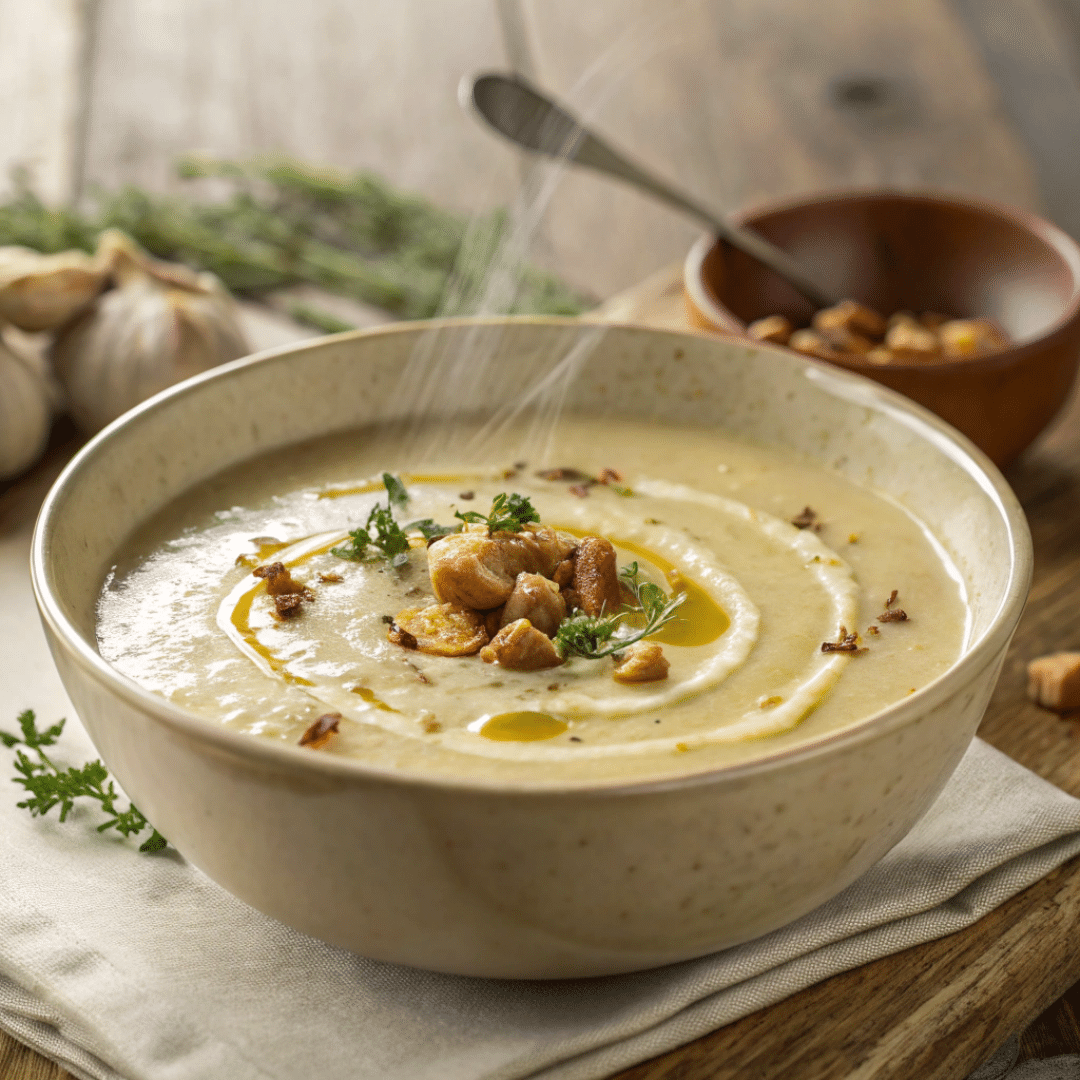
Sunchoke and Garlic Soup
Ingredients
Method
- Preheat oven to 320°F (fan). Toss sunchokes and whole garlic cloves with olive oil. Roast 35–45 minutes until golden and tender.
- In a heavy pot over medium heat, warm oil. Sauté onion until translucent and fragrant. Add roasted garlic (squeezed from skins) and optional potato.
- Pour in stock, bring to a gentle simmer until sunchokes (and potatoes if using) are fully tender.
- Blend in batches using a countertop or immersion blender until silky. Loosen with stock if needed. Optional: pass through a fine-mesh sieve for extra smoothness.
- Off heat, stir in cream or oat milk if using. Season with salt, pepper, and a squeeze of lemon to taste.
- Serve topped with crispy sage, pangrattato, shaved cheese, and herbs as desired.
Notes
FAQ
What makes this cozy bowl perfect for cold evenings?
Where can I find Jerusalem artichokes in the U.S. and when are they best?
What are the core ingredients I should have on hand?
What equipment do I need to make this recipe smoothly?
How should I roast at 320°F fan to maximize sweetness?
How do I build the soup base without overcooking the aromatics?
When should I add stock and how long to simmer?
How do I get a silky texture without a gummy result?
What finishing touches lift the final bowl?
Can I swap vegetable stock for chicken stock or use oat milk instead of cream?
How do I peel knobbly tubers quickly, and can I leave the skins on?
How can I prevent tubers from discoloring after peeling?
What toppings add crunch and brightness?
Are these tubers good for gut health, and should I be cautious?
How long does the soup keep in the fridge and freezer, and when should I add cream?
About The Author

John
John Watson is the passionate food enthusiast behind MePlusFood.com. With a deep love for exploring culinary delights, he shares honest restaurant reviews, mouthwatering recipes, and culinary adventures. Join John on his flavorful journey to savor the world one bite at a time.