My Rutabaga and Apple Soup Recipe for Chilly Days
I reach for this rutabaga and apple soup the moment the air turns crisp; the first spoonful feels like a warm hug.
I start with a quick butter sauté of onions until they turn glossy and sweet. Then tart fruit and dense root meet vegetable or chicken stock. A gentle simmer softens them, and a blender turns the pot into a silky, restaurant-style bowl.
I’ll show how to pick firm roots and tart fruit, how much liquid keeps the texture creamy but never gloopy, and when a splash of cream lifts the finish. I share safe blending tips, pantry swaps like half-and-half or heavy cream, and simple garnishes—roasted seeds, caramelized pieces, or crisp cured meat—for contrast.
This method works through the year, but it truly shines when markets brim with cold-weather produce. Expect clear sensory cues so you can cook with confidence and tweak freely.
Key Takeaways
- Short sauté, gentle simmer, then blend for a velvety finish.
- Choose firm roots and tart fruit for balanced sweetness.
- Use stock and dairy swaps to match pantry needs.
- Watch steam when blending hot liquids; cool slightly first.
- Garnishes add crunch, sweet notes, or savory snap.
- Reliable year-round method that shines in cold months.
Why This Cozy Bowl Works: Sweet-Savory Balance, Fall Aromatics, and Real-World Cooking Tips
This bowl works because it pairs mellow root flavors with bright fruit and clear aromatics. I rely on simple sensory cues instead of exact timers. When the onions turn translucent, the sharp edge is gone, and the pot smells soft and savory.
Rutabaga brings gentle sweetness and earthy depth. Compared with turnips, rutabagas taste rounder and less peppery, so the base purees creamy without feeling starchy. Cut the vegetables into even pieces so they cook at the same rate.
Add apples once the onion has sweated over medium-high heat so the fruit softens and perfumes the stock. A spice sachet with star anise and a cinnamon stick gives a bright aroma; pull it when the scent pleases you. Season in layers—light pepper at the sauté, then final adjustments after blending to keep flavors lively.
| Ingredient | Flavor | Texture when cooked | Best stock pairing |
|---|---|---|---|
| Rutabagas | Sweet, mellow | Silky, creamy | Vegetable or chicken |
| Turnips | Sharper, peppery | Firm unless cooked long | Chicken for balance |
| Apples | Bright, tart | Soft, adds body | Vegetable for lightness |
For make-ahead ideas and friendly batch recipes, check out vegan slow-cooker meals. They show how similar flavor logic stretches across many recipes.
Rutabaga and Apple Soup: the Step-by-Step Recipe
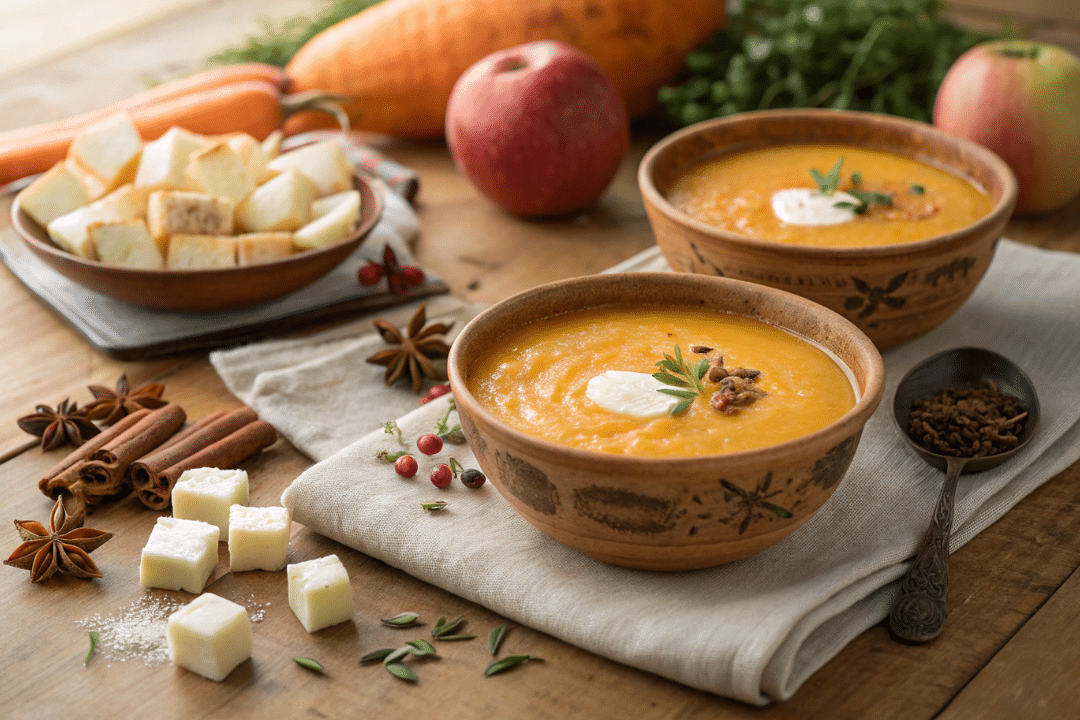
I love recipes that reward a small bit of hands-on time with a big payoff. This section gives a tight, practical walk-through so you can finish a creamy bowl on a weeknight.
What You’ll Need
Gather peeled roots, two tart apple pieces, one yellow onion, a few tablespoons of butter, and your choice of vegetable or chicken stock. A sachet with a star anise and a cinnamon stick is optional but lovely.
Equipment Check
Use a heavy pot so the heat stays even. Have a blender or an immersion tool ready. A ladle and a mesh spoon help when you transfer hot liquid.
Method at a Glance
- Start over medium-high heat: melt butter, add onion first, and cook until onionsare translucent (about 4–6 minutes).
- Add roots and apple; sauté for a few minutes to coat and soften the edges.
- Pour in 1–2 cups of apple juice plus enough stock to cover by an inch. Bring to a simmer, then cook 25–60 minutes until pieces smash with a spoon.
- Off the heat, remove the sachet. Blend in batches in a blender or use an immersion blender until glossy and smooth.
- Finish with a cup of half-and-half or a few tablespoons of cream to taste. Season with salt and pepper, taste, then adjust.
| Stage | Time (minutes) | Texture cue |
|---|---|---|
| Sauté onion | 4–6 | Onions translucent, sweet aroma |
| Simmer vegetables | 25–60 | Pieces smash easily with a spoon |
| Blend & finish | 5–10 | Silky, glossy puree; adjust thickness with extra stock or a splash more cream |
Make it Your Own: Stocks, Creams, Spice Accents, and Garnishes that Elevate
Small tweaks—stock, cream, a single spice—can lift this recipe from cozy to showstopping. I like to start with a clear goal: bright, light, or rich. That choice guides every swap.
Broth Choices and Body
Choose vegetable stock when you want the roots and fruit to sing. Pick chicken stock to add savory depth and roundness. I often use two cups of stock to cover pieces, then add a cup more if I want a looser texture.
| Base | Effect | When to Pick |
|---|---|---|
| Vegetable | Clean, bright | Let vegetables shine |
| Chicken | Savory, fuller | When you want comfort food depth |
| Half-and-half | Light creaminess | Use a small cup to finish |
| Heavy cream | Plush, silky | Use a cup for richness |
Subtle Spice, Big Aroma
Tuck a cinnamon stick and star anise into a sachet. Steep, taste, then pull at the peak aroma. For a soft, sweet note, whisk in a spoon or two of maple syrup at the end.
Texture and Toppings
Contrast matters. I top bowls with roasted pepitas for crunch, caramelized apples for gloss, or crisp pancetta for salty snap. A pinch of cayenne adds a gentle heat without overpowering.
Batching, Storage, and Blender Safety
- Cool quickly in shallow containers; leave headspace if you freeze.
- Avoid freezing dairy-heavy portions for long storage; add cream when reheating.
- Blend in small batches, vent the lid, and use an immersion blender if you prefer.
- Reheat slowly over low heat; whisk if the emulsion looks split. I keep a stick of butter nearby for finishing when needed.
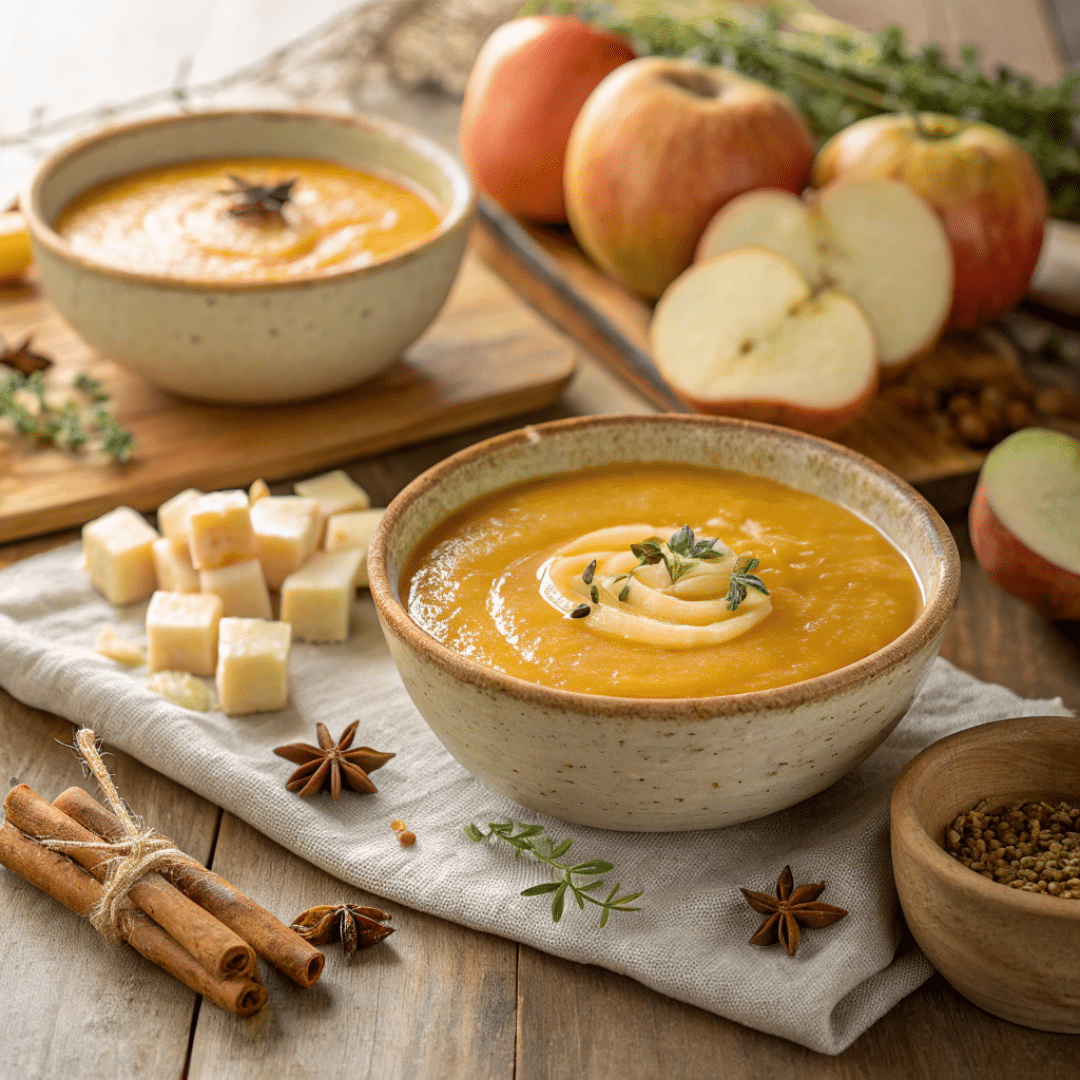
Rutabaga and Apple Soup
Ingredients
Method
- Melt butter in a heavy pot over medium-high heat and sauté onion until translucent and softly aromatic, about 4–6 minutes.
- Add diced rutabaga and apples, stirring to coat and lightly soften the edges for a few minutes.
- Pour in apple juice and enough stock to cover vegetables by about one inch.
- Add cinnamon stick and star anise in a sachet if using, then bring soup to a gentle simmer.
- Simmer uncovered 25–60 minutes until vegetables smash easily with a spoon.
- Remove soup from heat and discard spice sachet.
- Blend soup in batches or with an immersion blender until smooth, glossy, and creamy.
- Stir in half-and-half or cream to desired richness and thickness.
- Season with salt and black pepper, taste, and adjust seasoning as needed.
- Serve hot with optional garnishes for texture and contrast.
Notes
Conclusion
A short hands-on start, a long gentle simmer, and a glossy finish—that’s my kind of comfort. This rutabaga and apple bowl is low-effort but high-return. Most work happens during the simmer minutes, so tidy the counter and relax while the pot does the rest.
Finish each bowl with roasted seeds, caramelized fruit, or crisp cured meat. A final swirl of cream or a small cup of warm stock brings the texture to where you like it. Keep a knob of butter or butter1 handy to restore gloss when reheating.
Make extra for the freezer. These recipes travel well across the year and scale easily for a company or a quiet weeknight. Trust your spoon: when onions are sweet, and the puree is silky, you’re done.
FAQ
What makes this cozy bowl work so well for chilly days?
How does the main root compare to a turnip in texture and taste?
Which apples work best and why?
What are the essential aromatics and when should they be added?
Can I swap vegetable stock for chicken stock?
Do I need cream, or are there lighter ways to enrich the texture?
What equipment is essential for a smooth result?
How long does the whole recipe take from start to finish?
What garnishes elevate the bowl without fuss?
How do I store and reheat leftovers safely?
Any tips for batching or making this ahead for a crowd?
Can I add protein like chicken without losing the cozy balance?
About The Author

John
John Watson is the passionate food enthusiast behind MePlusFood.com. With a deep love for exploring culinary delights, he shares honest restaurant reviews, mouthwatering recipes, and culinary adventures. Join John on his flavorful journey to savor the world one bite at a time.