Peruvian Quinoa Curry Recipe: Simple and Creamy
Jump to Recipe
There’s something about the golden glow of aji amarillo that makes any pot feel special. Its gentle heat, paired with soft onions, garlic, and warm spices, creates instant comfort in every bite.
This creamy, veggie-packed twist on the atamalada style is simple, hearty, and weeknight-ready. Tender grains, a silky finish from evaporated milk and queso fresco, and fresh pops of parsley or tomato make it as bright as it is cozy.
With just a few mindful steps—slowly sautéing aromatics, adding liquid at the right time, and stirring in cheese just before serving—you’ll have a nourishing bowl that’s easy to make and even easier to love.
Key Takeaways
- Comforting, creamy bowl that’s quick enough for weeknights.
- Combines atamalada creaminess with a vegetable stew base.
- Simple steps: sauté aromatics, cook the grain, finish with milk and cheese.
- Good source of protein and flexible for servings and swaps.
- Easy tips for texture and seasoning so the final taste lands right.
A cozy, weeknight-friendly take inspired by Peruvian quinoa stews
Busy evenings call for food that feels homemade but cooks with minimal fuss—this is that dish.
I sauté onion, garlic, and aji amarillo in a bit of oil over medium heat for 3–5 minutes to build quick flavor. That short step keeps the aromatics sweet and prevents scorching, so the final taste stays round and warm.
For a soup-like bowl, I simmer the quinoa right in the pot with about four cups of water and let it go roughly 30 minutes. If you want a firmer grain, cook a separate batch at a 1:2 ratio for about 15 minutes and fold it in later.
Why this creamy bowl works for busy nights
- One-pot cooking means less cleanup and a forgiving timetable.
- Adjust water near the end to choose stew or spoonable soup—reviews often note this tweak.
- Vegetables slot in easily, so the recipe adapts to what you have on hand.
Peruvian quinoa curry: ingredients, steps, and creamy texture
This section walks you through the key ingredients and a simple one-pot method I use to get that silky finish.
I start by sautéing half an onion and one garlic clove with 2 teaspoons aji amarillo paste in 1 tablespoon oil over medium heat for 3–5 minutes. The smell should turn sweet and warm.
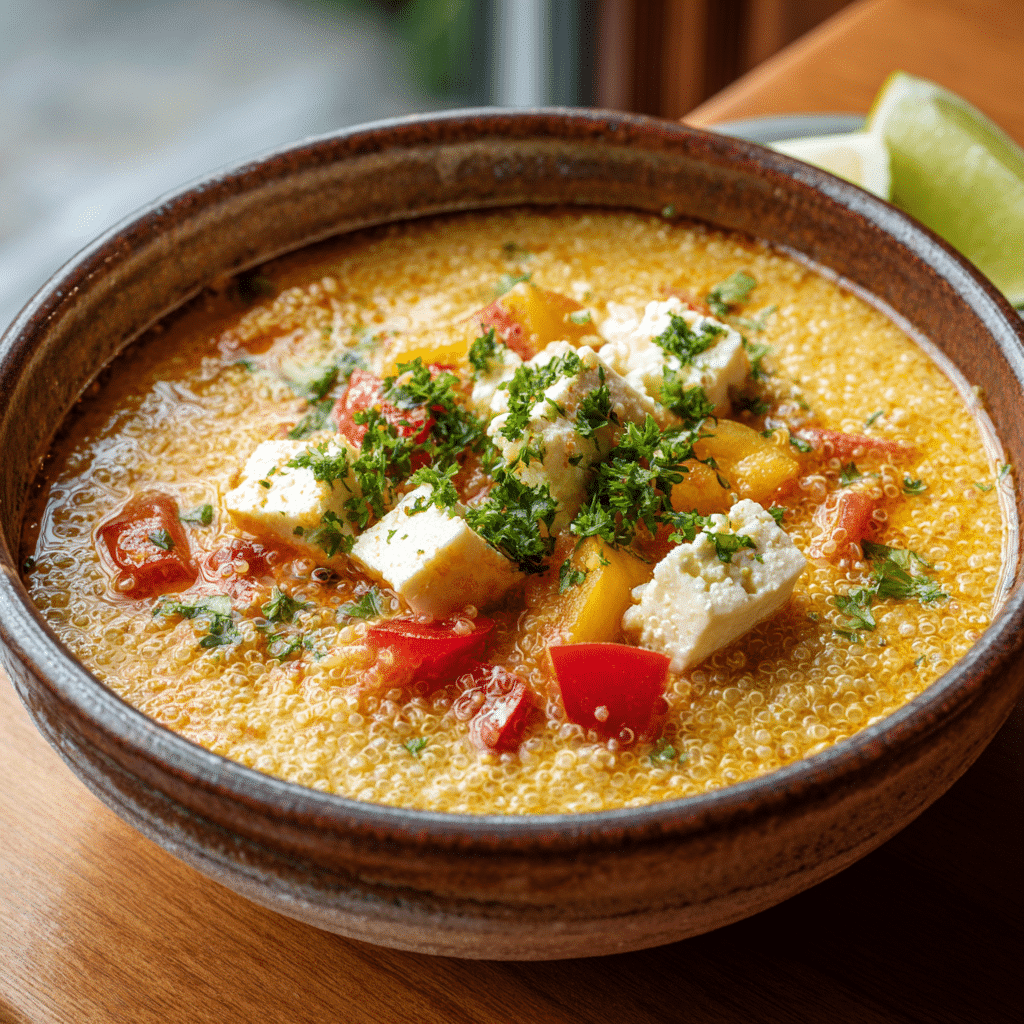
Key ingredients and flavors
- Onion and garlic for a fragrant base.
- Aji amarillo for fruity heat, plus a little salt and pepper to taste.
- Quinoa for protein, tomatoes, bell pepper, and other vegetables for body.
- A splash of evaporated milk and ½ cup queso fresco or grated cheese to finish.
Step-by-step cooking in one pot
After the aromatics go soft, stir in 1 cup quinoa and about 4 cups water. Keep a gentle simmer so the grains bloom without breaking.
Simmer 20–30 minutes, adding water a little at a time if you want a soup, or cook down a bit longer for stew. Finish in the pot with ¼ cup evaporated milk and cubes of queso fresco so the texture stays lush.
Timing, ratios, and pro tips
- For a faster stew method, cook ½ cup quinoa with 1 cup water (~15 minutes) and fold into sautéed vegetables.
- Season in layers, taste as you go, and keep the simmer gentle for a creamy result.
Serving ideas, swaps, and add-ins that honor Peruvian cuisine
Serving this pot is where the dish comes alive—hot, fragrant, and ready to share.
I often set out two options: a bowl with rice on the side, or the pot eaten as a hearty stew. Rice soaks up every drop and feels classic. Skip rice and it becomes a spoonable quinoa stew, more like a cozy soup when you add extra water.
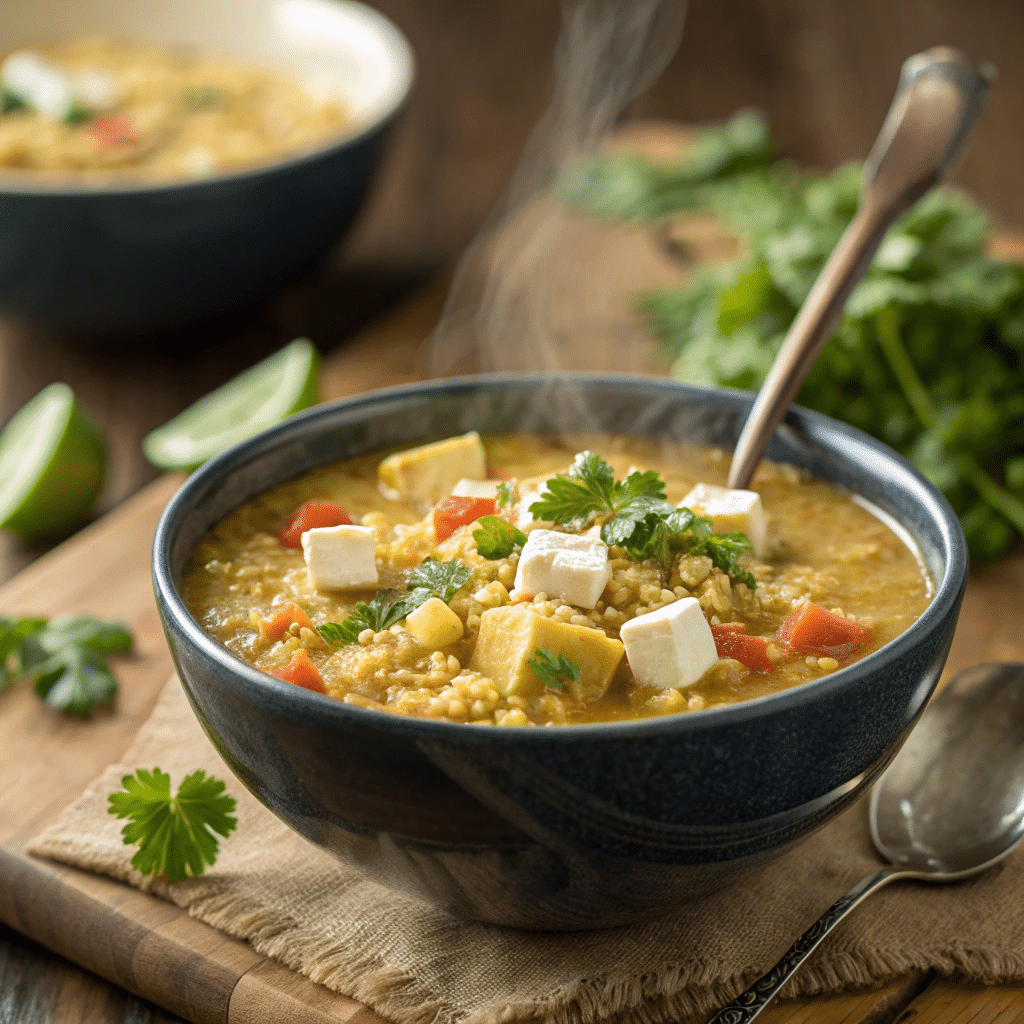
Easy ways to build your bowl
- If you want a true match to atamalada roots, serve with rice—three cups or family-style for extra servings.
- Vegetable swaps: bell pepper for sweetness, tomatoes for body, zucchini or mushrooms for texture.
- Add oregano and a whole chili while cooking, then remove for gentle heat; reviews often praise that trick.
- Cheese finishes: crumble queso fresco or melt a mild cheese on top for extra creaminess.
- Keep it vegetarian or add chickpeas or shredded chicken to fit your diet.
- Finish with a drizzle of oil or a squeeze of lime; tiny tweaks lift the flavor a bit.
Conclusion
A simmer, a splash of evaporated milk, and a crumble of queso make dinner feel like a hug. I like this recipe because it’s flexible and forgiving.
Use the atamalada method for a silky soup-like bowl: 1 cup quinoa with about 4 cups water, simmer ~30 minutes, finish with cheese and aji amarillo. Or cook the grain 1:2 separately for ~15 minutes and fold it into a spiced vegetable base for a thicker quinoa stew.
Taste at the end with salt and pepper, add a whole chili for gentle heat, and serve with rice if you want the classic pairing. Prep, sauté, simmer, finish… that’s the step-by-step that gets you a cozy pot tonight.
How long does this Peruvian quinoa curry take to cook?
What’s the best water-to-grain ratio for a soup versus a stew?
Can I make this in one pot on medium heat?
What heat level should I cook on and when do I adjust it?
How do I add aji amarillo or substitute it?
Can I make this dairy-free or add cheese options?
What vegetables and proteins work best as swaps or add-ins?
How do I adjust salt and spice for different diets?
How many servings does this recipe make and can I scale it?
Any tips for reheating or storing leftovers?
About The Author

John
John Watson is the passionate food enthusiast behind MePlusFood.com. With a deep love for exploring culinary delights, he shares honest restaurant reviews, mouthwatering recipes, and culinary adventures. Join John on his flavorful journey to savor the world one bite at a time.