Pineapple Vinegar from Scraps with Natural Fermentation
Transforming pineapple vinegar from scraps isn’t just a kitchen hack—it’s culinary alchemy. This process turns food waste into liquid gold. Those golden rinds and fibrous cores hold amazing potential.
They wait to be transformed through the ancient art of fermentation. The homemade pineapple vinegar recipe I’m sharing is sustainable. It’s also a delicious journey into traditional Mexican culinary wisdom.
Natural fermentation turns what most people discard into a probiotic-rich condiment. It bursts with complex flavor. By capturing wild yeasts and bacteria, we create something extraordinary.
This comes from what would typically end up in the compost bin. It’s a testament to the creativity hiding in our kitchen scraps.
Key Takeaways:
- Pineapple vinegar transforms food waste into a valuable culinary ingredient
- Natural fermentation creates a probiotic-rich condiment
- The process connects modern kitchens with traditional Mexican techniques
- Only four simple ingredients are required: pineapple scraps, sugar, raw vinegar, and water
- Fermentation takes approximately 3-6 weeks for full development
Why Make Pineapple Vinegar from Scraps
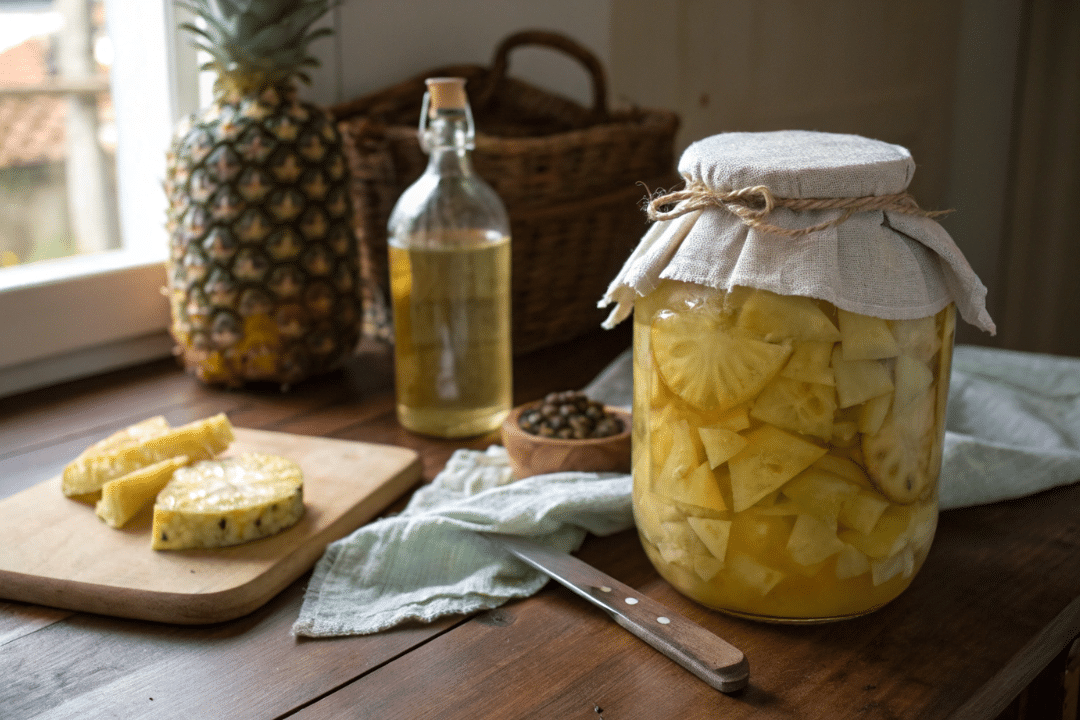
Turning pineapple peels into vinegar is more than a kitchen hack. It’s a culinary adventure that connects us with sustainable cooking practices. These scraps become a powerhouse of flavor through fermentation.
Traditional Roots in Mexican Cuisine
Pineapple vinegar runs deep in Mexican culinary traditions. Regions like Zacatecas and Jalisco have used it for generations. Local cooks ferment pineapple peels to create a versatile condiment.
- Vibrant hot sauces
- Spicy chorizo preparations
- Complex marinades
- Traditional regional dishes
Health Benefits and Probiotic Properties
The magic of pineapple fermented condiment goes beyond taste. Natural fermentation creates a powerful health-boosting vinegar. It offers impressive benefits for your body.
- Improved digestion support
- Reduced inflammation
- Enhanced immune system function
- Better nutrient absorption
Zero Waste Kitchen Philosophy
Creating vinegar from pineapple peels shows respect for ingredients. The rough pineapple skin contains natural microorganisms that start fermentation. Most people consider this trash, but it becomes a culinary treasure.
Fermenting pineapple peels reduces food waste and creates something delicious. It’s a small but meaningful way to transform your cooking approach.
How to Make Pineapple Vinegar from Scraps
Transforming pineapple scraps into delicious DIY pineapple vinegar is easier than you might think. This fruit scrap vinegar method turns kitchen waste into a tangy ingredient. It creates a probiotic-rich addition that’ll revolutionize your cooking.
Ingredients You’ll Need
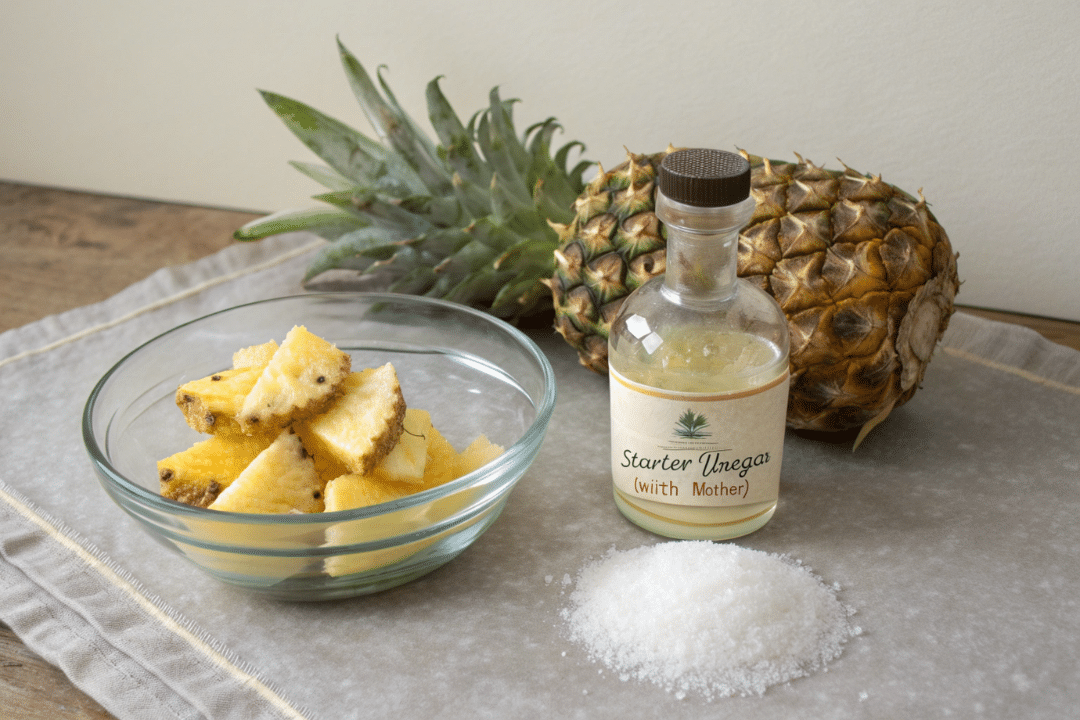
- Organic pineapple rinds and core
- Organic cane sugar (255 grams)
- Non-chlorinated water
- Raw vinegar with the mother
Essential Equipment
- 1-gallon glass jar
- Breathable cloth cover
- Rubber band
- Large spoon
Pineapple skin fermentation begins with selecting a ripe, organic pineapple. Look for a sweet aroma at the stem. Check for a slight give when gently squeezed.
Organic is crucial to avoid potential pesticides. These chemicals could interrupt fermentation.
Step-by-Step Vinegar Making Process
- Wash pineapple rinds thoroughly
- Chop scraps into 1-inch chunks
- Add sugar and pineapple to glass jar
- Fill jar with water, completely covering scraps
- Add raw vinegar with mother as starter culture
- Stir until sugar dissolves completely
Making vinegar with pineapple rinds requires patience. Cover the jar with a breathable cloth secured by a rubber band. This allows oxygen flow—essential for the fermentation process.
Stir the mixture daily for three weeks. Keep it at room temperature in a dark location.
| Fermentation Stage | Duration | What to Expect |
|---|---|---|
| Initial Fermentation | 3 weeks | Bubbling, sweet-sour smell |
| Secondary Fermentation | 6 weeks | Vinegar mother forms, liquid turns tangy |
Watch for bubbling within the first week—this signals active fermentation. After three weeks, strain out pineapple pieces and continue fermenting. A vinegar mother will form on the surface.
You can save this mother for future batches.
Warning: Discard the batch if any mold appears. Your homemade vinegar should smell pleasantly sour and have a clear, vibrant color. Store the finished fruit scrap vinegar in a sealed bottle at room temperature.
Conclusion
Making pineapple vinegar from scraps is a transformative culinary practice. It reconnects us with traditional food preservation methods. You’re creating a delicious ingredient while reducing kitchen waste.
This simple fermentation process opens up a world of culinary creativity. Brighten coleslaw with tropical tang or craft complex salad dressings. Create traditional Mexican sauces with this versatile kitchen staple.
Its mineral-rich profile adds depth to many dishes. Drizzle it over fresh fruit or create oxymels. Use it to make fire cider for added flavor.
The beauty of this process lies in its cyclical nature. Save your vinegar mother to produce batch after batch. Transform kitchen waste into a valuable, flavorful ingredient.
Each fermentation becomes a small act of culinary alchemy. You’re transforming scraps into a gift of hospitality. This connects us to age-old food preservation traditions.
Start your pineapple vinegar journey today. Embrace the patience required for fermentation and experiment with unexpected uses. Discover the joy of creating something extraordinary from what might have been discarded.
Your kitchen will become a space of creativity and sustainability. It will be filled with delicious discoveries.
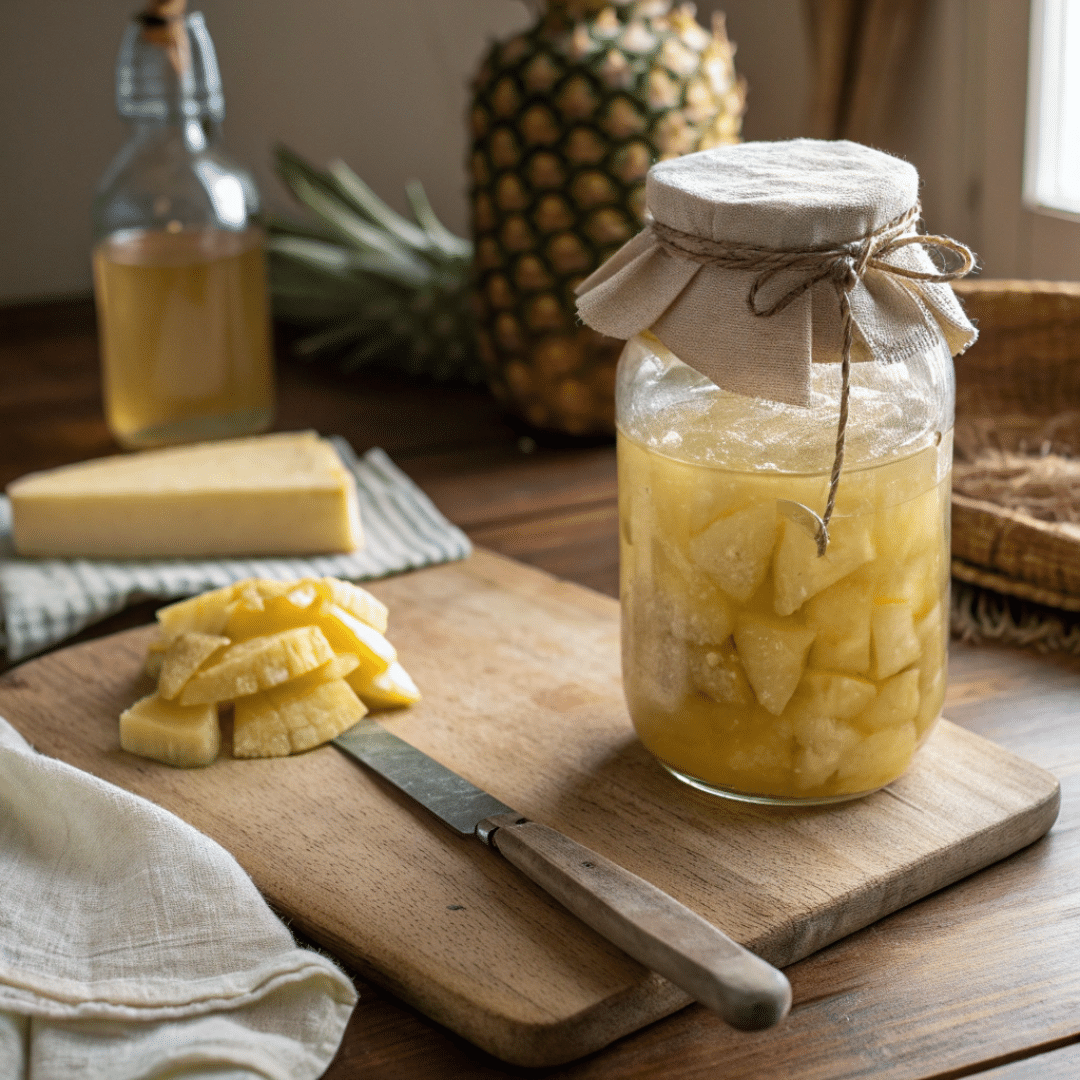
Pineapple Vinegar from Scraps
Ingredients
Method
- Wash pineapple rinds thoroughly and chop into 1-inch chunks.
- Add pineapple scraps and sugar into the glass jar.
- Fill the jar with non-chlorinated water, fully covering the scraps.
- Add raw vinegar with the mother as a starter. Stir until sugar dissolves.
- Cover the jar with a breathable cloth secured with a rubber band.
- Stir daily for 3 weeks, keeping the jar at room temperature in a dark place.
- After 3 weeks, strain out pineapple pieces and continue secondary fermentation for 6 weeks. A vinegar mother will form on the surface.
- Monitor for mold—discard the batch if any appears.
- Transfer finished vinegar to a sealed bottle for storage at room temperature.
Notes
FAQ
What is pineapple vinegar from scraps?
Is it difficult to make pineapple vinegar at home?
How long does it take to make pineapple vinegar?
Why should I use organic pineapple for this recipe?
What are the health benefits of pineapple vinegar?
How do I know if my fermentation is successful?
What can I do with homemade pineapple vinegar?
How should I store my homemade pineapple vinegar?
What if I see mold during fermentation?
Can I make vinegar from other fruit scraps?
About The Author

John
John Watson is the passionate food enthusiast behind MePlusFood.com. With a deep love for exploring culinary delights, he shares honest restaurant reviews, mouthwatering recipes, and culinary adventures. Join John on his flavorful journey to savor the world one bite at a time.