Probiotic Carrot Ginger Kraut with Fresh Bite
Transform humble vegetables into a vibrant probiotic powerhouse that dances with flavor. My probiotic carrot ginger kraut does exactly that. Every time I pull this fermented creation from my refrigerator, I’m reminded how simple ingredients become magical.
Bright orange carrot ribbons mingle with crisp cabbage, infused with warming ginger. This fermentation symphony turns ordinary produce into a gut-healing delicacy.
My journey into homemade sauerkraut began years ago. This particular carrot ginger variation quickly became my absolute favorite. The natural sweetness of carrots perfectly balances the sharp ginger kick.
It creates a probiotic-rich condiment that’s as delicious as it is nutritious.
Key Takeaways
- Fermentation transforms simple vegetables into nutrient-dense foods
- Carrot and ginger create a unique flavor profile in kraut
- Homemade sauerkraut offers superior probiotic benefits
- Simple ingredients can produce complex, healthful results
- Gut health can be deliciously supported through traditional fermentation techniques
Why Probiotic Carrot Ginger Kraut Transforms Your Gut Health
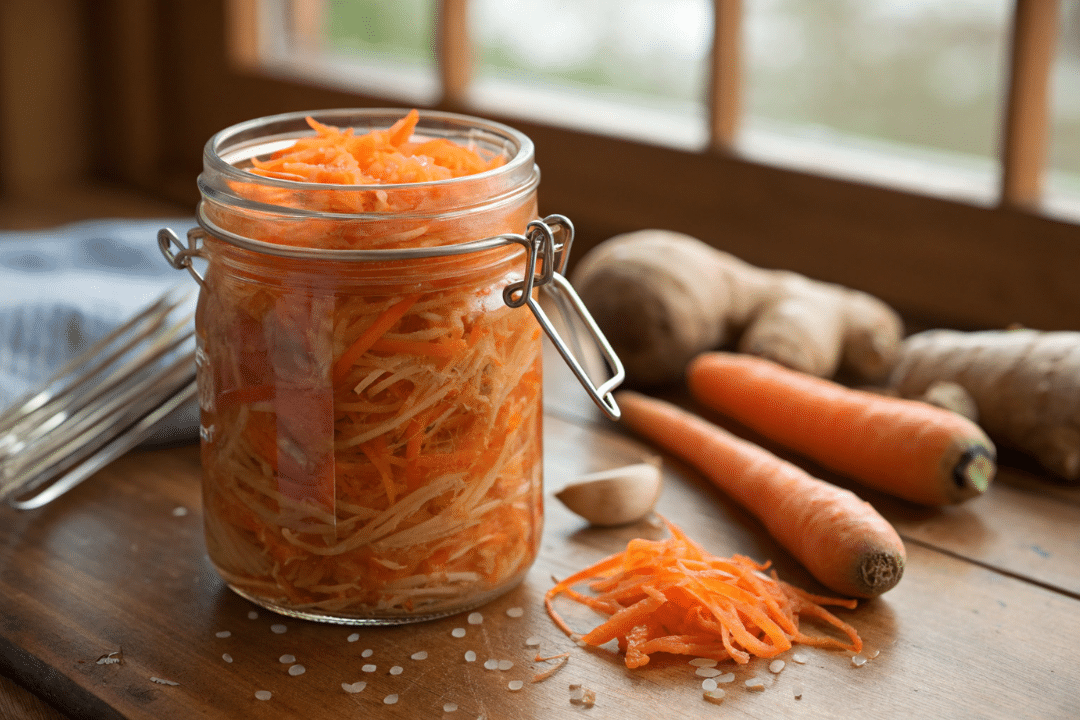
Explore gut health benefits with a powerful fermented food. This is more than just a tasty condiment. Probiotic carrot ginger kraut is a nutritional powerhouse that can revolutionize your digestive wellness.
The Science Behind Lacto-Fermentation and Digestive Wellness
Lacto-fermentation is a natural preservation technique. It transforms ordinary vegetables into nutrient-dense superfoods. Beneficial bacteria break down sugars during this process.
This creates an environment rich in natural probiotics. These microscopic helpers support your digestive health by:
- Introducing live cultures that balance the gut microbiome
- Enhancing nutrient absorption
- Supporting immune system function
- Reducing inflammation in the digestive tract
How Fresh Ginger Boosts Probiotic Activity
Fresh ginger isn’t just a flavor enhancer. It’s a powerful ally in digestive health. This root contains compounds that stimulate probiotic growth.
Gingerols are the active compounds in ginger. They help reduce inflammation. They also support the healthy bacteria in your digestive system.
Carrot’s Natural Sweetness Balances Fermentation Flavors
Carrots bring more than just sweetness to your kraut. They contribute essential nutrients. They provide natural sugars that support the fermentation process.
The result is a delicious, probiotic-rich food. It makes supporting your digestive health enjoyable.
Probiotic carrot ginger kraut offers a natural approach to digestive wellness. It tastes incredible and supports your body’s balance.
How to Make Probiotic Carrot Ginger Kraut at Home
Creating your own probiotic carrot ginger kraut is easier than you might think. This homemade sauerkraut alternative brings vibrant flavors and gut-healing benefits right to your kitchen. I’ll walk you through a simple process that transforms fresh vegetables into a delicious fermented treasure.
Before you begin, gather these essential tools for making fermented vegetables:
- Wide-mouth glass jar (1-quart size)
- Digital kitchen scale
- Sharp knife
- Large mixing bowl
- Grater
- Fermentation weight
Let’s break down the key ingredients for your probiotic carrot ginger kraut:
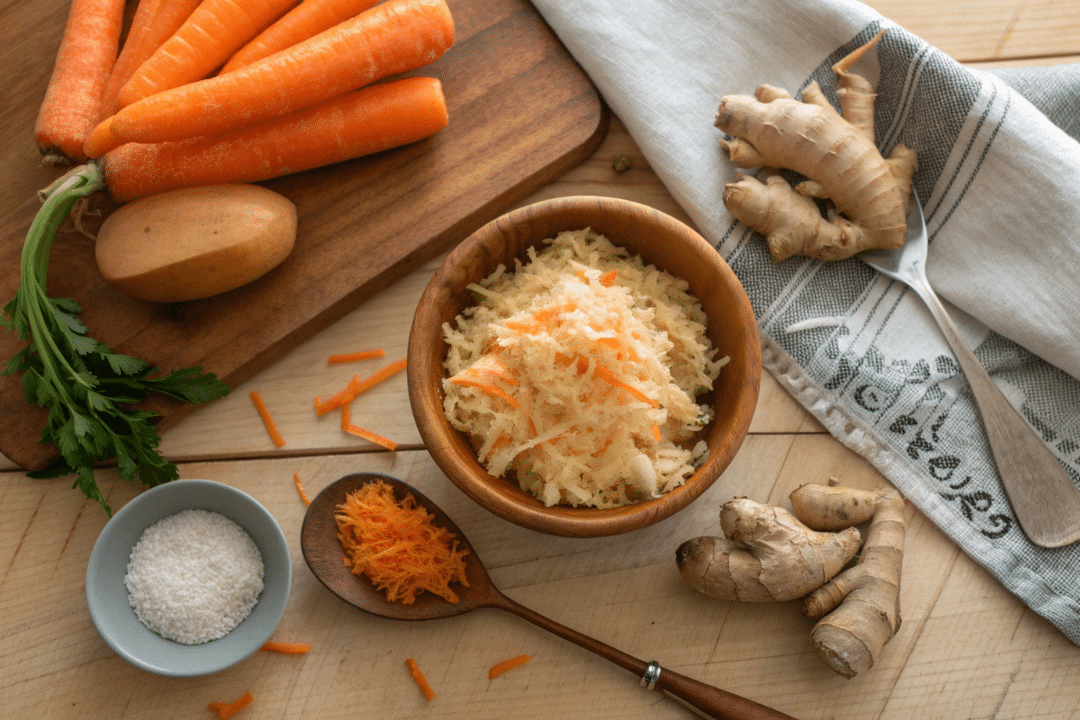
- Fresh carrots (about 500 grams)
- Fresh ginger (2-3 inches)
- Green cabbage (300 grams)
- Sea salt (16 grams)
The fermentation process is magical. Start by grating your carrots and finely chopping the ginger. Slice the cabbage into thin strips.
Sprinkle sea salt over the vegetables and massage thoroughly. You’ll notice liquid beginning to release. This is your natural brine forming.
Pack the mixture tightly into your jar, pressing down to remove air pockets. Leave about an inch of space at the top. Use a fermentation weight to keep everything submerged in the brine.
Cover loosely with a lid. Let nature do its work in a cool, dark spot for 7-14 days.
Temperature plays a crucial role in fermentation. Warmer rooms speed up the process. Cooler spaces slow it down.
Taste your kimchi alternative every few days to find your perfect flavor profile. Once it reaches your desired tanginess, transfer the kraut to the refrigerator. It will keep for several months.
Pro tip: Trust your senses. A slightly sour smell is good. Any hint of mold or off-putting odor means it’s time to start over. Happy fermenting!
Bringing Probiotic Carrot Ginger Kraut to Your Table
Adding probiotic carrot ginger kraut to your daily meals is simple and rewarding. This vibrant fermented food supports your immune system with natural probiotics. I enjoy adding a spoonful to my lunch bowl or sandwich for extra flavor.
Get creative with how you serve this tangy kraut for better gut health. Spoon it over grilled chicken or mix it into rice bowls. Use it as a zesty topping for salads.
The bright ginger and carrot flavors make simple meals taste amazing. They also support your digestive wellness naturally. Store your kraut in the refrigerator to keep it fresh for up to one year.
Eating fermented foods regularly brings the best results for your body. Try to include a small serving each day for natural probiotic support. Probiotic carrot ginger kraut offers a delicious way to nourish your body from within.
Always choose kraut from the refrigerated section for maximum probiotic power. Your gut and taste buds will love this flavorful addition to your meals.
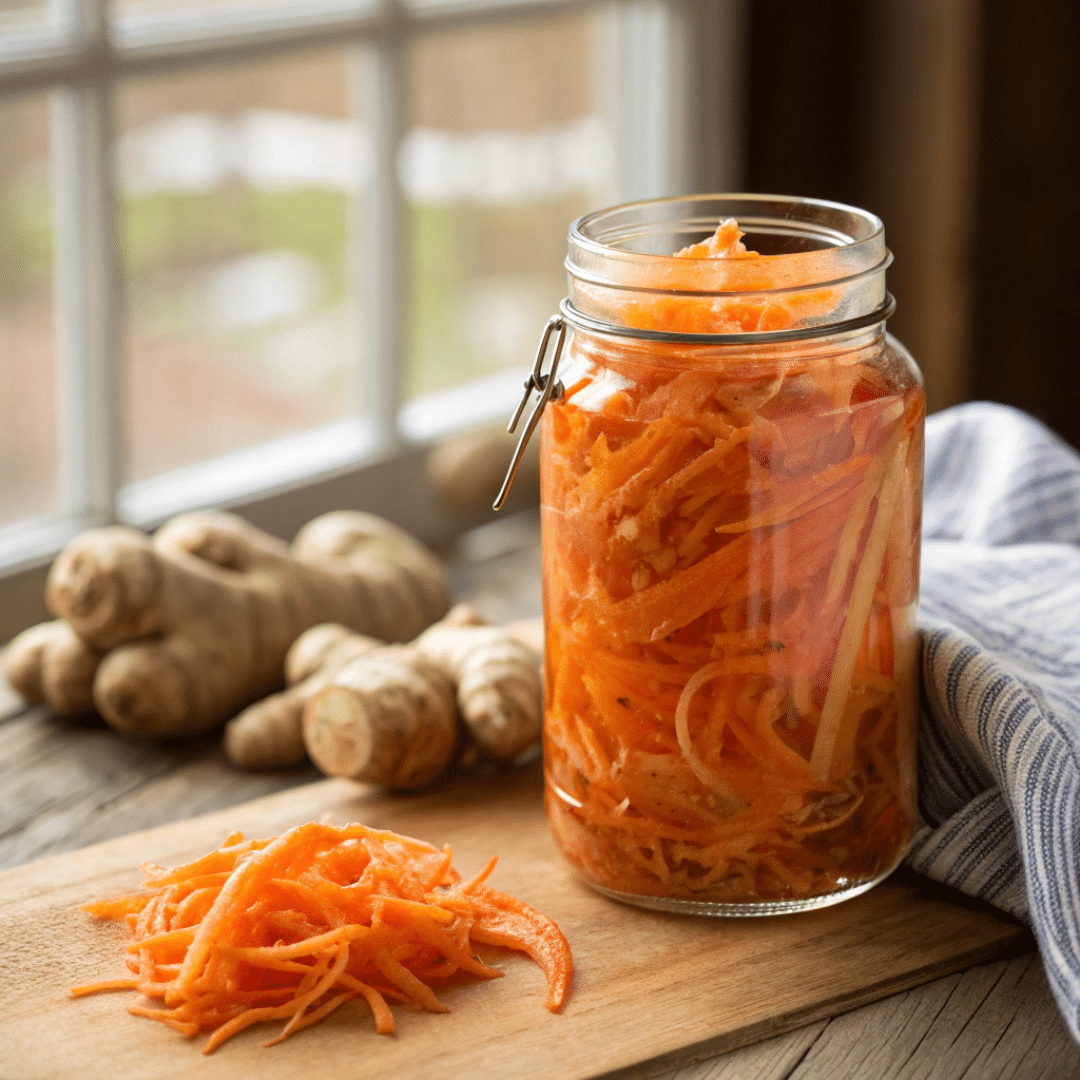
Probiotic Carrot Ginger Kraut
Ingredients
Method
- Prepare a clean wide-mouth 1-quart jar, mixing bowl, knife, and grater.
- Grate the carrots and ginger, then thinly slice the cabbage.
- Add vegetables to a bowl and sprinkle with sea salt.
- Massage well until a natural brine forms.
- Pack the mixture tightly into the jar, removing air pockets.
- Leave 1 inch of space at the top and place a fermentation weight.
- Cover loosely and ferment in a cool, dark place for 7–14 days.
- Taste every few days until tangy.
- Refrigerate once ready and enjoy for months.
Notes
FAQ
What are the primary health benefits of probiotic carrot ginger kraut?
How long does homemade probiotic carrot ginger kraut last in the refrigerator?
Is it difficult to make fermented vegetables at home?
Can I adjust the spiciness of the ginger in the kraut?
Are there any safety concerns with home fermentation?
How does this kraut compare to store-bought probiotics?
Can I use this kraut in different recipes?
Is this kraut suitable for special diets?
About The Author

John
John Watson is the passionate food enthusiast behind MePlusFood.com. With a deep love for exploring culinary delights, he shares honest restaurant reviews, mouthwatering recipes, and culinary adventures. Join John on his flavorful journey to savor the world one bite at a time.