Roasted Carrot Freekeh Bowl with Pistachio
The roasted carrot freekeh bowl starts with sweet, caramelized carrots set over nutty freekeh, brightened by a lemony dressing and the snap of pistachios.
Think of it as a simple weeknight recipe: roast, simmer, and toss. The grain cooks while the vegetables caramelize, so the total time lines up neatly — about 30–40 minutes from start to finish.
Texture is the point. Tender freekeh holds a smoky, wheaty bite; caramel edges on the carrots add sweetness; pistachios give a clean crunch if you add them just before serving. Store pickles and herbs separately for meal prep, and you can serve this warm or chilled depending on how you cool the components.
By the end you’ll have a repeatable method, a few swap ideas, and simple seasoning rules to keep the dish balanced, not bland.
Key Takeaways
- This recipe pairs caramelized carrots with tender freekeh and crunchy pistachios for balanced texture.
- Cook 1 cup freekeh with 3 cups water; drain and fluff for the right bite.
- Plan about 30–40 minutes total; roasting and simmering overlap to save time.
- Add nuts at the end to keep them crisp and flavorful.
- Store components separately for easy meal prep and choose warm or chilled serving.
What Makes Freekeh and Roasted Carrots Such a Good Bowl Combo
What ties the dish together is the toasted youth of the grain and the way oven heat concentrates vegetable sugars. Freekeh is simply roasted young green wheat; that initial toasting gives a subtle smokiness and toasted, nutty notes that read savory even with light seasoning.
High natural sugars in carrots respond to dry oven heat by forming browned edges. That quick caramelization deepens flavor, so the whole plate tastes fuller without extra ingredients.
Texture and Flavor Balance
The plan is deliberate: tender freekeh as the base, soft-sweet pieces from the oven, and pistachios for a clean crunch. Finishers like fresh herbs and a squeeze of lemon add lift and cut richness.
- If the plate tastes flat, add salt or acid.
- If it feels heavy, add herbs or a brighter finish.
- The components can be adjusted without changing technique.
Warm, Room Temperature, or Chilled
Warm servings mute acidity and amplify aroma; they feel cozy and satisfying. Room temperature brings forward the herbs and aroma. Chilled turns this into an easy salad with a firmer grain texture that holds up for lunches.
| Serving | Perception | Adjustment |
|---|---|---|
| Warm | Muted acid, strong aroma | Less lemon, more herbs |
| Room temp | Balanced aroma | Standard seasoning |
| Chilled | Firmer grain, subdued aroma | Extra lemon and salt |
Ingredients for the Freekeh Plate (Plus Smart Swaps)
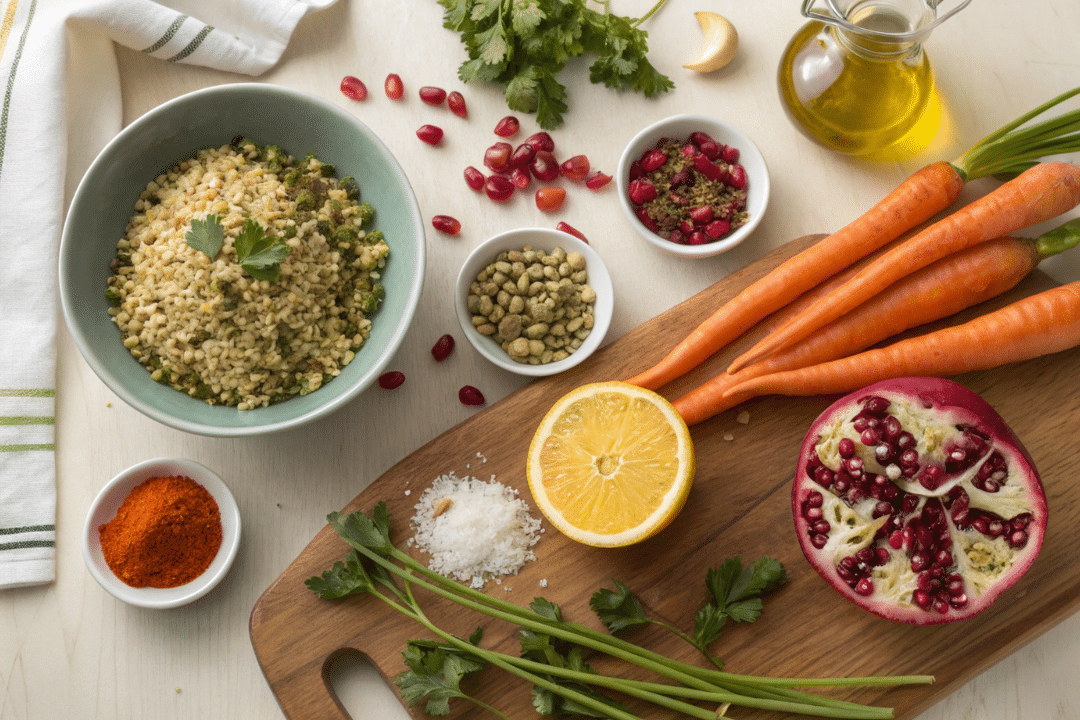
Focus on texture and balance: a chewy grain, sweet vegetables, oil for richness, and nuts for crunch. Below are essentials, practical buying notes, and measured cues so you shop and cook with confidence.
The Essentials
- Carrots — sweetness and body; choose firm, even-sized pieces so they brown, not steam.
- Freekeh — nutty structure and chew; cracked cooks faster, whole holds up longer.
- Olive oil — use 2 tbsp for dressing and a neutral oil (1–2 tsp for roasting) if you prefer.
- Salt and pepper — baseline seasoning; start with 1 tsp salt for the grain pot and adjust.
- Pistachios — add crunch and a mild buttery finish; sprinkle at the end to stay crisp.
Herbs and Flavor Lifts
Parsley adds a clean green snap. Mint brings cool sweetness. Dill or cilantro shifts the profile toward grassy or citrusy notes.
Swaps, Add-Ins, and Shortcut Choices
If freekeh isn’t on hand, use bulgur, brown rice, or barley and boost lemon or smoked paprika to replace the missing toast. For a heartier meal, add chickpeas, celery, roasted red pepper, olives, raisins, pistachios, and feta—each keeps a clear role: heft, crunch, sweet-smoky, brine, pop, crunch, and creamy salt.
| Ingredient | Role | Smart Swap | Taste/Texture Change |
|---|---|---|---|
| Carrots | Sweetness | Roasted red pepper | Less root sweetness, more smoky |
| Freekeh | Chewy and nutty base | Bulgur/barley | Softer, less smoky |
| Pistachios | Crunch | Toasted almonds | Sharper bite, less buttery |
| Olive oil | Finish and dressing | Neutral oil for roasting | Clearer olive aroma when saved for dressing |
How to Make It: Roast, Boil, Toss, and Build Your Bowl
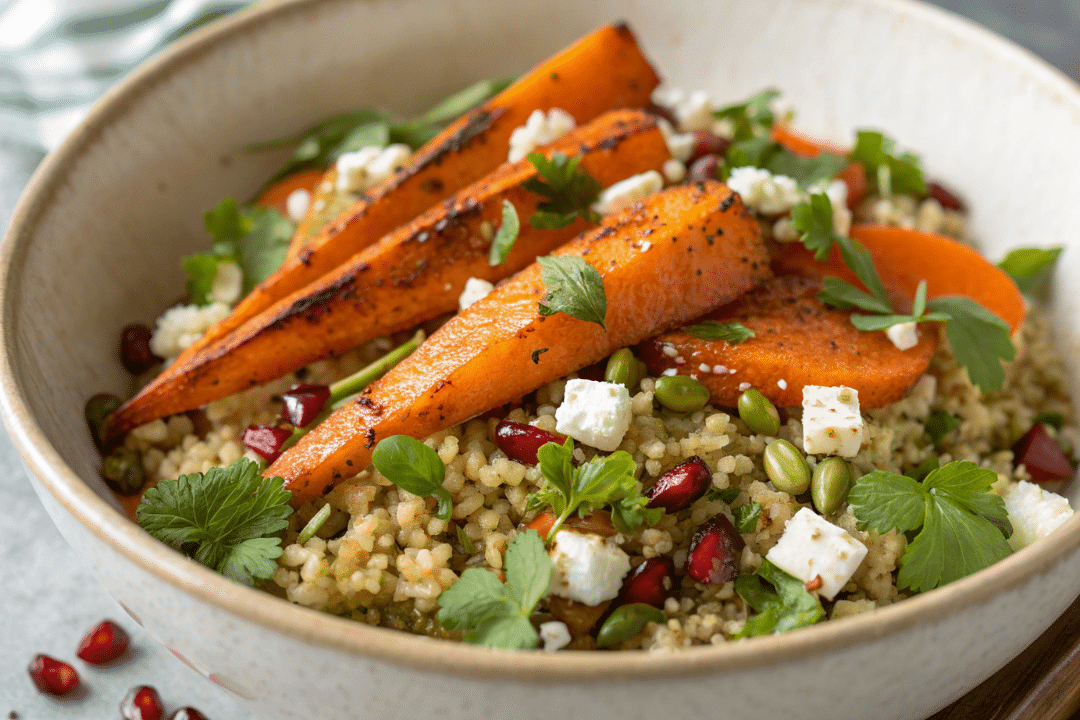
Start by sequencing tasks so each element finishes at the right moment and with the right texture. If using pickled ribbons, mix them first and set aside so they chill while you work.
Cook the Grain
Combine 1 cup freekeh and 3 cups cold water in a saucepan. Bring to a boil, cover, reduce to low, and simmer until tender—about 40 minutes for whole or 20 minutes for cracked.
Let it stand 5 minutes, drain any excess water, then fluff with a fork so it doesn’t clump. Look for tender grains that keep a slight chew.
Roast the Veg
Preheat the oven to 475°F. Toss peeled sticks with 1–2 tsp oil and 1 tsp salt, spread in a single layer, and bake 10–12 minutes, stirring once for even color.
Avoid crowding; crowded pans steam and lose caramelization. Aim for golden edges without drying the centers.
Dressing and Pickles
Whisk 3 tbsp olive oil with 2 tbsp lemon juice, 1 minced garlic clove, and pepper to taste. Taste as you go and add zest if you want more aroma without extra acid.
For pickled carrots: toss 1 cup julienned pieces with 3 tbsp rice vinegar, 1/4 tsp ground ginger, and 1 tsp kosher salt. Chill at least 30 minutes and set aside.
Assemble and Adjust
- Layer warm freekeh, top with baked vegetables, and spoon over dressing.
- Finish with pistachios and herbs so nuts stay crisp.
- Taste and correct: add salt if bland, more juice if heavy, a grind of pepper for depth.
| Step | Key cue | Minutes |
|---|---|---|
| Simmer grain | Grains are tender but chewy | 20–40 |
| Preheat oven | 475°F ready | 5–10 |
| Bake vegetables | Lightly caramelized edges | 10–12 |
| Quick pickle | Chilled, bright flavor | 30 (set aside) |
Conclusion
Finish the dish by reheating the grains and vegetables, then topping them with cool pickles, herbs, and pistachios so textures stay distinct.
Serve warm for a cozy weeknight, or chill it and treat the result as a packed salad that travels well for lunches.
Store components separately: keep the dressing in its jar, herbs and pickles in their own containers, and nuts until serving. That preserves crunch and keeps flavors fresh.
Plan for under an hour of hands-on time; total minutes vary with whole versus cracked grain. Reheat for a few minutes before assembling if you want it warm.
For variations, add chickpeas for protein, olives or feta for brine, and cream, or skip sweet add-ins to favor savory. Taste for bright acid, salt, and rounded olive oil—then change one variable at a time to learn what you prefer.

Roasted Carrot Freekeh Bowl with Pistachio
Ingredients
Method
- Combine freekeh and cold water in a saucepan. Bring to a boil, cover, reduce heat to low, and simmer until tender, about 20 minutes for cracked freekeh or 40 minutes for whole. Let stand for 5 minutes, drain any excess water, and fluff with a fork.
- Preheat the oven to 475°F (245°C). Toss carrot sticks with neutral oil and salt, spread them in a single layer on a baking sheet, and roast for 10–12 minutes, stirring once, until the edges are lightly caramelized and tender but not dried out.
- Whisk together olive oil, lemon juice, minced garlic, and pepper to make the dressing. Taste and adjust the seasoning or add lemon zest if desired.
- For optional pickled carrots, toss the julienned carrots with rice vinegar, ground ginger, and kosher salt, and chill for at least 30 minutes.
- To assemble the bowl, layer the cooked freekeh as the base, top with roasted carrots and optional pickled ribbons, drizzle with the dressing, and finish with pistachios and fresh herbs. Taste and adjust with additional salt, lemon juice, or pepper as needed.
Notes
FAQ
What is freekeh and how does it differ from other grains?
Can I make this bowl ahead and how should I store it?
How long does it take to cook freekeh on the stovetop?
What oven temperature and time give caramelized yet tender carrots?
Can I substitute another grain if I don’t have freekeh?
What dressing works best and how do I balance flavors?
Are there good protein additions for a heartier meal?
How can I keep the herbs bright and fresh in the bowl?
What’s a quick pickled carrot method for extra acidity?
Any tips to make this dish gluten-free?
About The Author

John
John Watson is the passionate food enthusiast behind MePlusFood.com. With a deep love for exploring culinary delights, he shares honest restaurant reviews, mouthwatering recipes, and culinary adventures. Join John on his flavorful journey to savor the world one bite at a time.