Roasted Dandelion Root Tea for a Smooth Herbal Brew
Roasted dandelion root tea transforms a common lawn weed into a rich, robust beverage. Every golden-brown steep carries the essence of wilderness—a liquid revelation. This humble root becomes a transformative drink that challenges your understanding of herbal infusions.
I discovered this magical brew during a quiet autumn afternoon. Curiosity led me to explore beyond traditional tea selections. The deep, almost coffee-like aroma promised something extraordinary—a promise each sip delivers with remarkable depth.
Key Takeaways
- Dandelion root tea offers a unique alternative to traditional beverages
- The roasting process enhances flavor and potential health benefits
- Simple to prepare with minimal specialized equipment
- Naturally caffeine-free herbal option
- Supports potential digestive and detoxification processes
Why Roasted Dandelion Root Tea Deserves a Place in Your Daily Routine
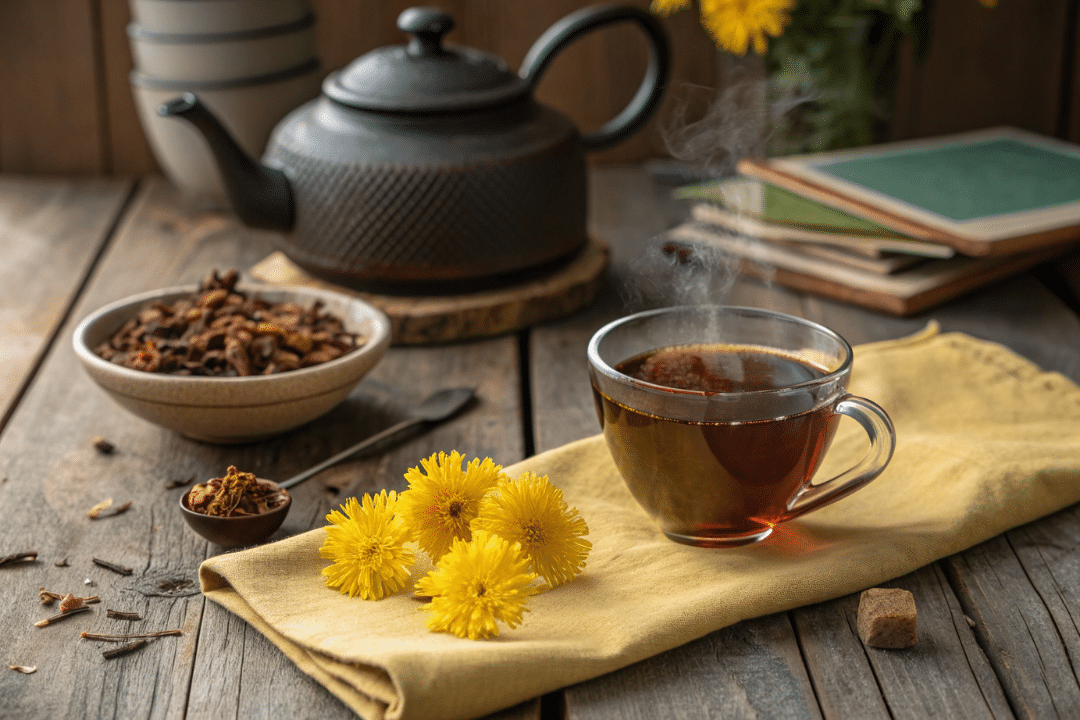
Dandelion root tea has changed from a simple lawn weed into a potent wellness drink. It works as both a health support and a real chicory coffee alternative. My journey with this herbal brew started with curiosity and doubt.
From Lawn Weed to Wellness Staple
Most people see dandelions as pesky garden intruders. Herbalists have long known them as nutritional powerhouses. Dandelion roots carry a rich history in traditional medicine.
- Rich in antioxidants
- Supports digestive health
- Provides a caffeine-free alternative to coffee
- Naturally low in calories
The Roasting Process That Transforms Flavor and Benefits
The roasting process is where the magic happens. I didn’t realize how crucial this step would be at first. It transforms the roots from intensely bitter to pleasantly mellow.
As the roots darken in the oven, their starches convert to sugars. Volatile compounds mellow out during roasting. The flavor shifts from aggressively herbal to something like dark roast coffee.
| Roasting Stage | Flavor Transformation | Nutritional Impact |
|---|---|---|
| Light Roast | Slightly bitter, herbal | Maximum raw nutrient preservation |
| Medium Roast | Balanced, nutty undertones | Enhanced flavor complexity |
| Dark Roast | Rich, coffee-like | Increased bioavailability of compounds |
This transformation isn’t just about taste. The roasting process also affects the properties of the root. It makes certain beneficial compounds more bioavailable while creating new ones.
Dandelion is incredibly forgiving to work with. Even if your first batch isn’t perfect, you’ll still get a drinkable brew. You’ll connect to generations of herbalists who recognized this plant’s value.
Health Benefits That Make This Herbal Brew Worth Brewing
Roasted dandelion root tea isn’t just a delightful beverage—it’s a powerhouse of potential health benefits. The bitter compounds in this humble herbal brew stimulate digestive secretions. This makes it a natural ally for digestive wellness.
The root’s mild laxative properties provide gentle support for maintaining regularity in the digestive system. This tea features prebiotic fibers that feed beneficial gut bacteria, promoting a healthy microbiome. A simple cup can help support digestive comfort.
- Supports digestive health through bitter compounds
- Provides gentle digestive regularity
- Feeds beneficial gut bacteria with prebiotic fibers
Researchers are exploring exciting potential in dandelion’s anti-inflammatory properties. Compounds like taraxasterol show promise in reducing inflammation markers throughout the body. Early research even suggests intriguing possibilities in cancer research.
Preliminary studies suggest selective toxicity to specific types of cancer cells. These are initial findings that require further investigation.
The diuretic effect of dandelion root tea is particularly noteworthy. It can be helpful during times of water retention. Consult with a healthcare provider if you’re taking medications like diuretics, lithium, or specific antibiotics.
Dandelion can interact with these drugs, so professional guidance is essential. Dandelion has a long safety record, but it’s a supportive herb—not a miracle cure. Individual responses can vary, and more research is needed to understand its potential fully.
How to Make Roasted Dandelion Root Tea at Home
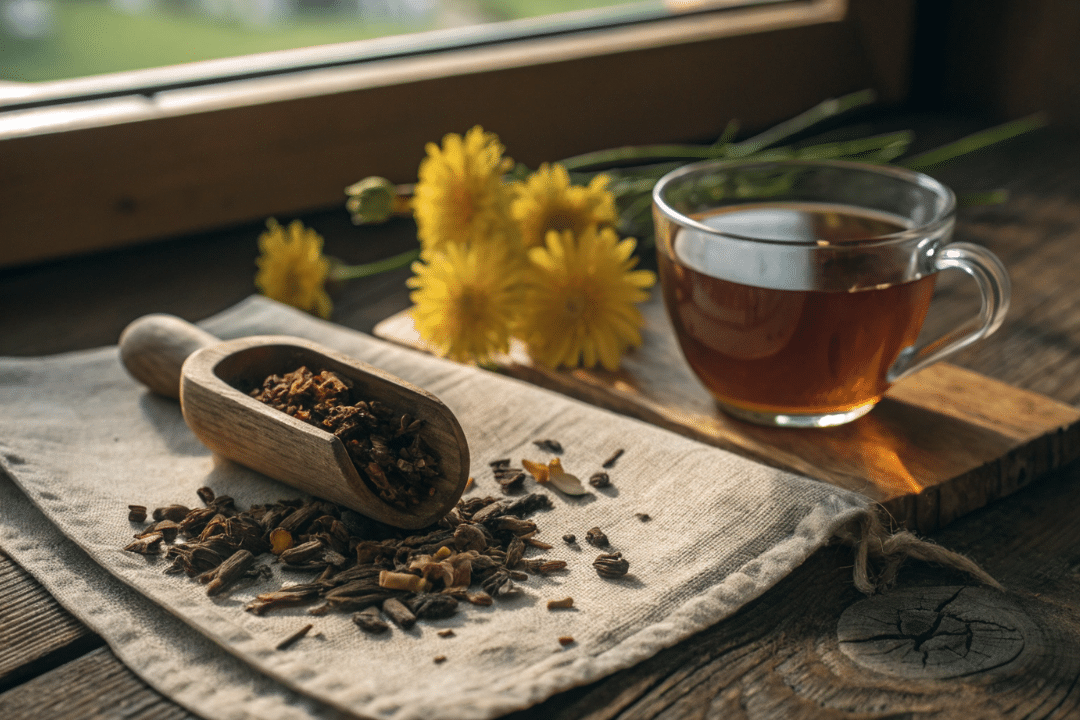
Making your own roasted dandelion root tea is a fun kitchen project. You can turn a simple garden weed into a tasty, healthy drink. Let me show you how to create this special herbal brew.
Gathering Your Wild Ingredients
Harvesting dandelion roots needs careful selection and preparation. Find patches away from chemicals or busy roads. Early spring or late fall works best because the plant’s nutrients are strongest then.
- Choose young, tender dandelion plants
- Use a garden fork or specialized root digger
- Clean roots thoroughly under running water
- Remove excess dirt and trim leaves
Roasting for Rich Flavor Profiles
Roasting changes dandelion roots from bland to bold. A slow, careful roasting process brings out deep, nutty flavors.
| Roasting Method | Temperature | Duration | Flavor Profile |
|---|---|---|---|
| Oven Roasting | 350°F | 15-20 minutes | Rich, coffee-like |
| Skillet Roasting | Medium heat | 10-15 minutes | Lighter, nuttier |
Brewing Your Perfect Cup
The brewing method matters for great dandelion root tea. Use filtered water and let the roots steep fully. This extracts maximum flavor and nutrients.
- Use 1-2 teaspoons of roasted roots per cup
- Pour boiling water over roots
- Steep for 5-10 minutes
- Strain and enjoy hot or cold
Try different steeping times to find what you like best. Some people prefer a stronger, bolder brew. Others enjoy a lighter taste.
Bringing Roasted Dandelion Root Tea Into Your Kitchen
Learning to harvest roots becomes an exciting culinary adventure. Start small and roast them on a weekend afternoon. Your first batch might feel like a gentle experiment in home herbalism.
Brewing this tea is about more than just creating a beverage. Pay attention to how the tea makes you feel while drinking. Notice any changes in the hours afterward.
You might see subtle shifts in your digestion or sleep patterns. Some people find it becomes a natural part of their wellness routine.
Always approach this practice with mindfulness. Check with your healthcare provider if you take medications or have health conditions. Start with small amounts to understand how your body responds.
The beauty of dandelion root tea lies in its versatility. You can prepare simple brews or experiment with creative blends.
Discovering value in unexpected places makes this practice special. Transforming a common lawn plant into a nourishing drink reconnects you with traditional herbal knowledge. Your kitchen can become a space of culinary exploration and wellness.
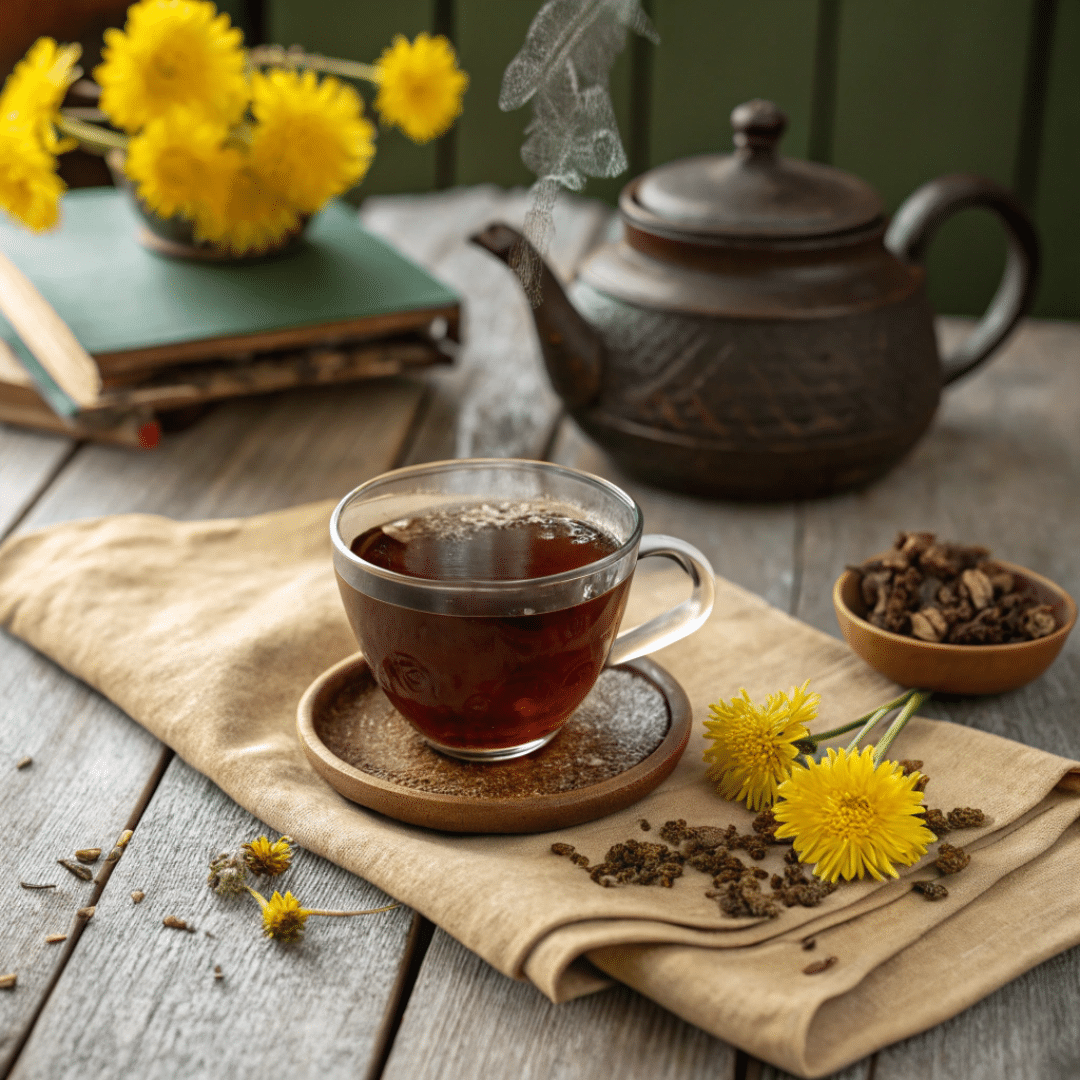
Roasted Dandelion Root Tea
Ingredients
Method
- Harvest young, tender dandelion roots from chemical-free areas.
- Clean roots thoroughly under running water, removing dirt and leaves.
- Preheat oven to 350°F or prepare skillet over medium heat.
- Cut roots into small uniform pieces for even roasting.
- Toss roots lightly with olive oil if using skillet method.
- Roast in the oven 15–20 minutes or on the skillet 10–15 minutes until golden brown and fragrant.
- Allow roasted roots to cool slightly.
- Measure 1–2 teaspoons of roasted roots per cup.
- Pour boiling water over the roots in a teapot or mug.
- Steep for 5–10 minutes, adjusting to preferred strength.
- Strain roots and serve hot, or chill for iced tea.
- Optional: add cinnamon, star anise, or a drizzle of maple syrup for flavor variation.
Notes
FAQ
Is roasted dandelion root tea caffeine-free?
How does dandelion root tea support liver health?
Can I use roasted dandelion root tea as a coffee substitute?
What are the digestive benefits of dandelion root tea?
How often should I drink roasted dandelion root tea?
Is roasted dandelion root tea good for inflammation?
Can I make roasted dandelion root tea at home?
Are there any potential side effects of drinking dandelion root tea?
About The Author

John
John Watson is the passionate food enthusiast behind MePlusFood.com. With a deep love for exploring culinary delights, he shares honest restaurant reviews, mouthwatering recipes, and culinary adventures. Join John on his flavorful journey to savor the world one bite at a time.