Spicy Korean Pork Belly Lettuce Wraps
Jump to Recipe
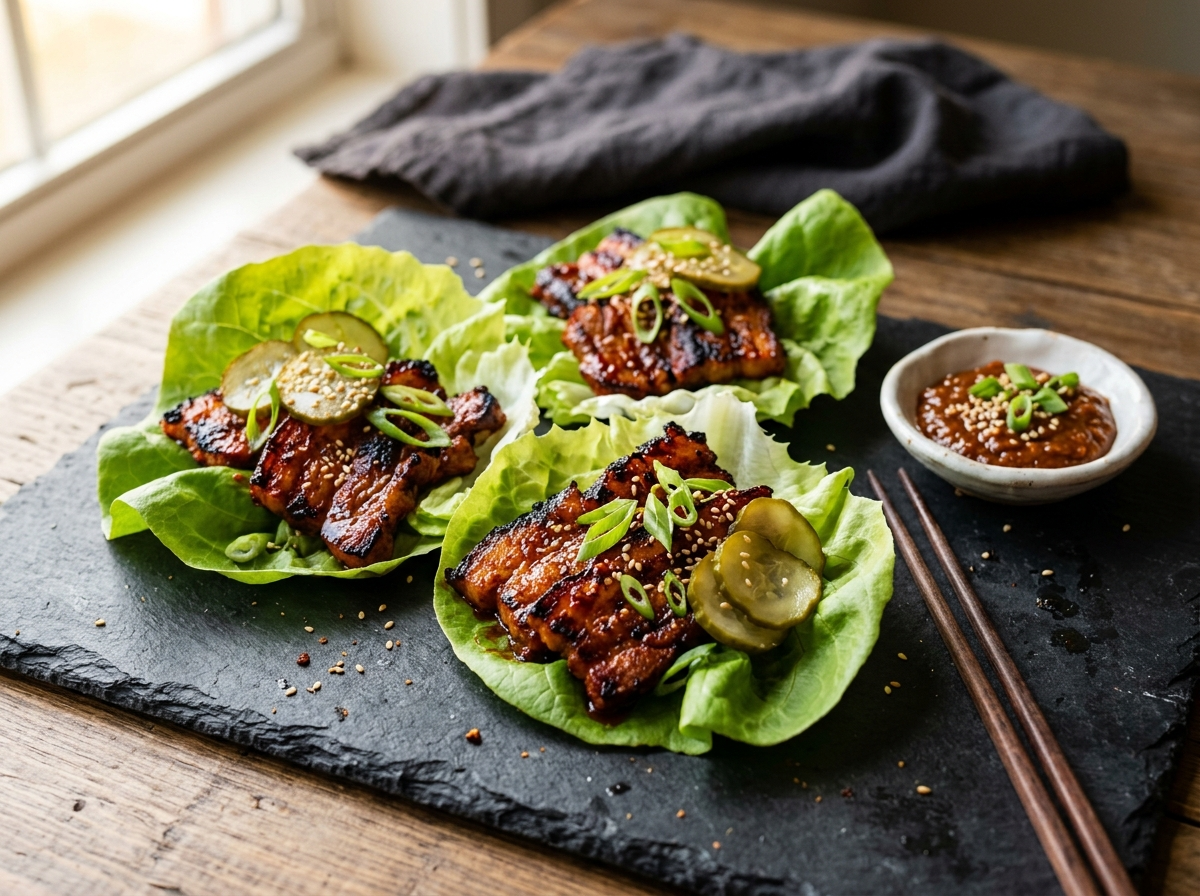
Pork belly lettuce wraps are a fixture at Korean BBQ tables for good reason. The fat in the pork renders as it cooks, the sugars in the marinade caramelize, and a cold, crisp lettuce leaf keeps everything in check.
This version uses gochujang paste, soy sauce, sesame oil, and a touch of honey, building the same fermented heat found in dishes like Korean braised beef short ribs. The marinade only needs 15 minutes, which puts this squarely in weeknight territory.
You cook the pork in batches on a cast iron or heavy skillet, not a grill. The result is the same sticky, charred edges without any outdoor setup.
Build each wrap at the table with a smear of ssamjang, a few slices of pork, some pickled cucumber, and a pinch of scallion. It eats like a full meal with almost no cleanup.
Why You’ll Love This Recipe
- Caramelized edges from a hot cast iron pan
- 15-minute marinade, dinner on the table in 40
- Each wrap is self-contained, no utensils needed
- Customizable heat level with more or less gochujang
Ingredient Notes
- Pork belly: Look for thin-sliced pork belly at Korean or Asian grocery stores, usually around 3-4 mm thick. If you only find a whole slab, pop it in the freezer for 30 minutes to firm it up, then slice with a sharp knife.
- Gochujang: I use a medium-heat gochujang like Haechandle or CJ brand. For less heat, reduce to 1 tablespoon and add an extra teaspoon of soy sauce to keep the depth.
- Sesame oil: Toasted sesame oil (dark, amber-colored) adds smokiness. Untoasted sesame oil is too mild here and won’t give you the same result.
- Honey: Honey helps the pork caramelize fast in the pan. Brown sugar works as a 1:1 swap but dissolves slightly slower.
- Butter lettuce: Butter lettuce has the right cup shape and flexibility to hold fillings without cracking. Romaine hearts work if that’s what you have, though they’re a bit more rigid.
- Ssamjang: This fermented soybean and chili paste is sold in tubs at Korean grocery stores. If you can’t find it, mix equal parts doenjang and gochujang with a small drizzle of sesame oil.
- Pickled cucumber: A quick 10-minute pickle in rice vinegar, sugar, and salt cuts through the richness of the pork. Thinly sliced radish works the same way.
Spicy Korean Pork Belly Lettuce Wraps
Ingredients
Method
- Combine the rice vinegar, sugar, and salt in a small bowl and stir until dissolved.
- Add the sliced cucumber and toss to coat. Set aside for at least 10 minutes, then sprinkle with sesame seeds before serving.
- In a medium bowl, whisk together the gochujang, soy sauce, sesame oil, honey, garlic, and ginger until smooth.
- Add the pork belly slices and toss well so every piece is coated. Let the pork marinate for at least 15 minutes at room temperature, or refrigerate for up to 24 hours.
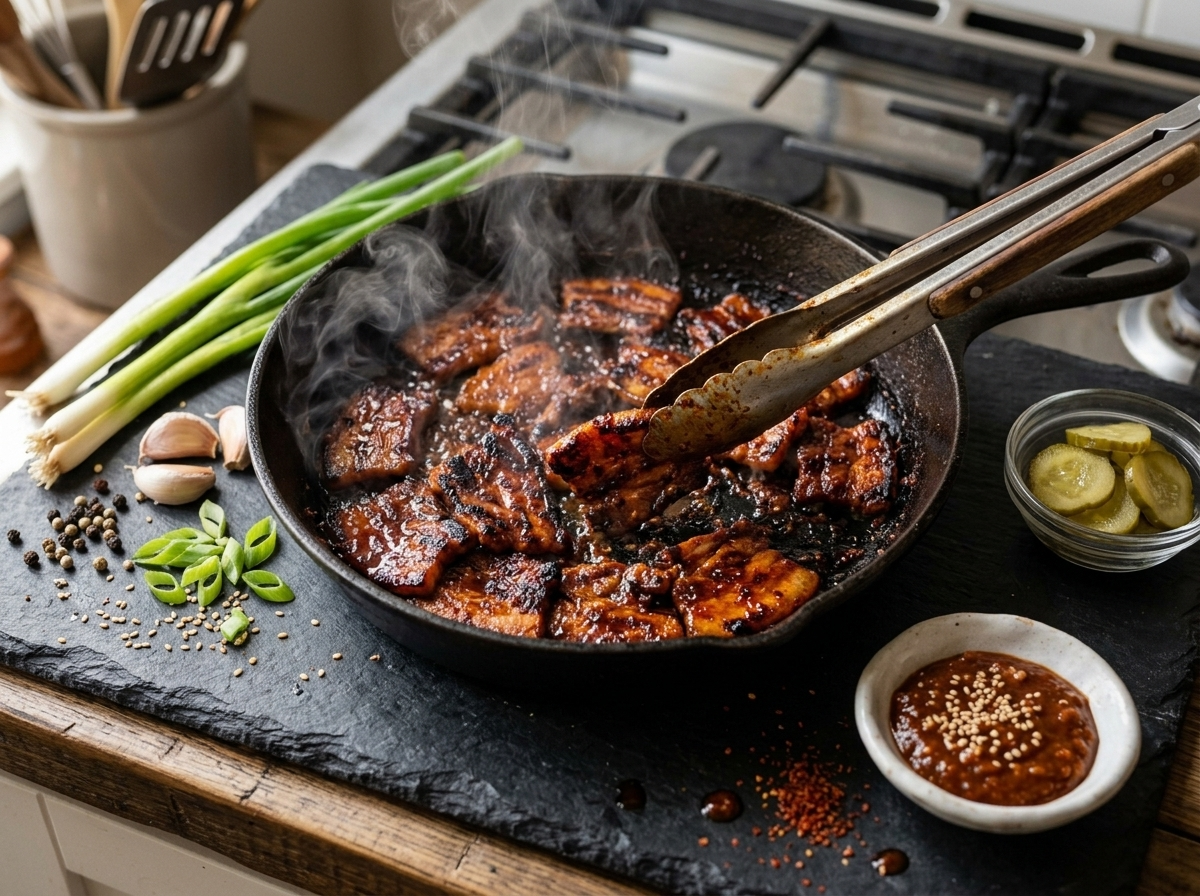
- Heat a 12-inch cast iron skillet over medium-high heat for 2 minutes. Add the neutral oil and swirl to coat.
- Add the pork belly in a single layer, working in 2-3 batches. Do not overcrowd the pan.
- Cook undisturbed for 90 seconds until the edges char and the marinade caramelizes. Flip with tongs and cook for another 60-90 seconds on the second side until cooked through and sticky at the edges.
- Transfer the cooked pork to a plate. Repeat with remaining batches, wiping out any burnt marinade between batches if needed.
- Arrange the cold lettuce cups on a large plate or board.
- Spread a small amount of ssamjang on the inside of each cup.
- Add 2-3 slices of pork belly to each cup, then top with pickled cucumber, sliced scallion, and a pinch of sesame seeds.
- Serve immediately with extra ssamjang on the side and steamed rice if using.
Notes
Tips for Success
- Pat the pork belly slices dry before marinating so the paste clings evenly to the surface.
- Cook pork in a single layer with space between slices, or you’ll steam instead of sear.
- Get the pan hot before adding the pork — the same high-heat searing logic behind maple bourbon glazed pork belly applies here — and you want audible sizzle within 2 seconds of contact.
- Let the pork sit undisturbed for 90 seconds per side to develop the charred, sticky edges.
- Rinse and dry your lettuce cups at least 30 minutes ahead so they’re cold and crisp at the table.
Variations
- Swap pork belly for thin-sliced beef short rib for a bulgogi-style wrap with the same sauce.
- Use firm tofu slabs marinated in the same gochujang mix for a plant-based version with crisp pan-sear.
- Add a fried egg on top of the assembled wrap for extra richness, common in Korean home cooking.
Storage and Reheating
Cooked pork belly keeps in an airtight container in the fridge for up to 3 days. Store the pork, lettuce cups, and pickled cucumber separately so nothing goes soggy.
To reheat, put the pork in a dry skillet over medium heat for 2-3 minutes until warmed through and the edges crisp back up. Microwaving works in a pinch but softens the caramelized crust.
The marinade itself can be mixed and refrigerated for up to 5 days, so you can marinate a fresh batch any night of the week.
Serving Suggestions
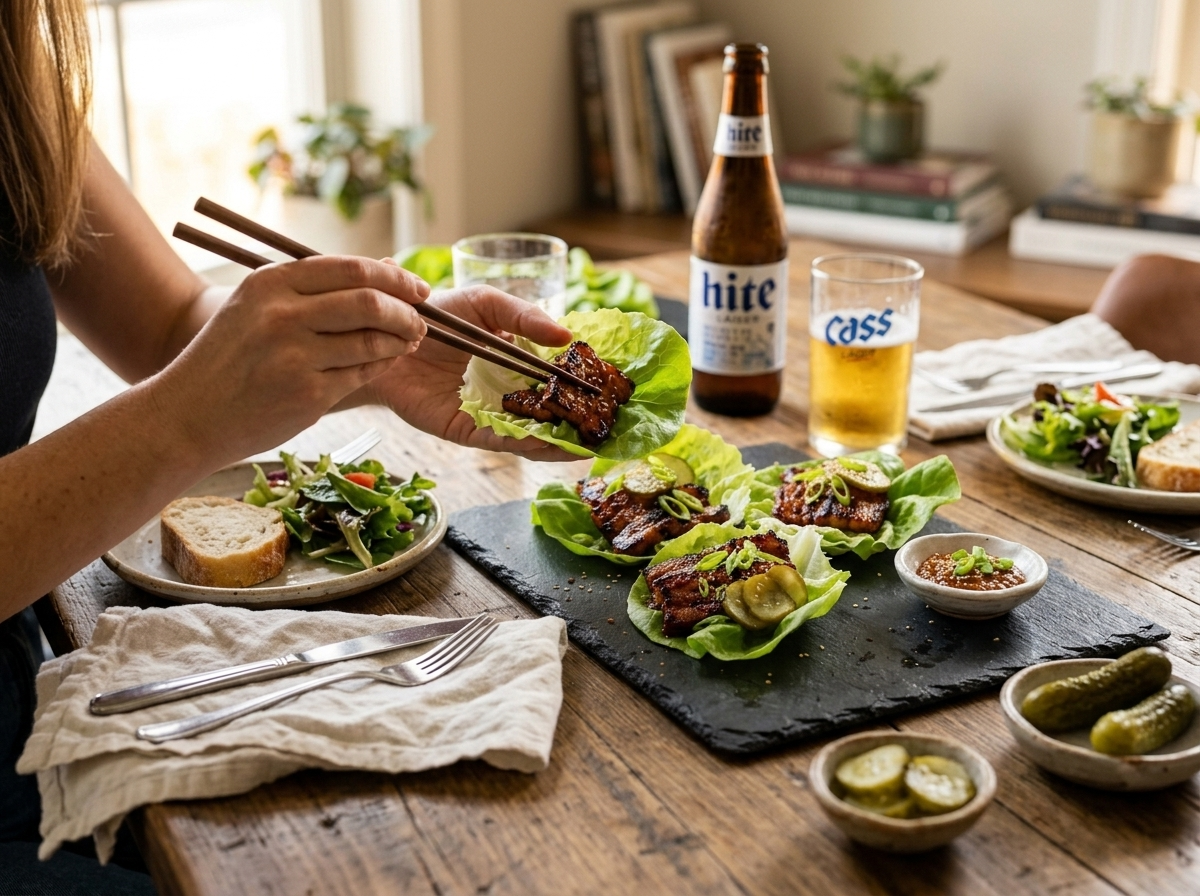
Lay everything out on the table separately and let people build their own wraps. A plate of cold lettuce cups, a bowl of sliced pork, small dishes of ssamjang, pickled cucumber, sliced scallion, and toasted sesame seeds covers all the bases.
Steamed short-grain rice on the side turns this into a more substantial meal, much like the approach used with miso glazed black cod where a simple side anchors the plate. A bowl of doenjang jjigae (Korean fermented soybean soup) pairs well if you want a full Korean spread.
For drinks, a cold Korean lager like Hite or OB cuts through the fat cleanly. A light makgeolli (rice wine) works just as well and keeps the Korean theme consistent.
FAQ
Why is my pork belly not caramelizing and just steaming in the pan?
The pan isn’t hot enough, or you added too many slices at once. Work in small batches on a cast iron or stainless skillet over medium-high heat, and make sure the pork is patted dry before it goes in.
Can I use gochugaru flakes instead of gochujang paste in the marinade?
Gochugaru gives heat but not the same fermented depth or sticky texture that makes the marinade cling to the pork. If you only have gochugaru, add a teaspoon of miso paste and reduce the amount to about 1.5 teaspoons to get closer to the flavor profile.
Can I marinate the pork belly overnight for these wraps?
Yes, up to 24 hours in the fridge works well and deepens the flavor. Beyond that, the salt in the soy sauce starts to draw out too much moisture and the texture gets slightly mushy.
What goes well alongside Korean pork belly lettuce wraps for a full dinner?
Steamed white rice, a quick cucumber namul (sesame-dressed cucumber), and kimchi are the most natural companions. A simple miso or doenjang soup rounds out the table without adding much prep time.
Are these Korean pork belly wraps gluten-free?
Not as written, because standard gochujang and soy sauce both contain wheat. Swap in tamari for the soy sauce and use a certified gluten-free gochujang (Bibigo makes one) to make the full dish gluten-free.
What is the difference between Korean pork belly wraps and Chinese moo shu pork wraps?
Korean ssam-style wraps use raw leafy greens as the wrapper and a gochujang-based sauce, while moo shu pork uses thin flour pancakes and hoisin sauce with stir-fried vegetables. The Korean version has no cooked wrapper and the flavor profile is spicier and more fermented.
Related recipes
About The Author

John
John Watson is the passionate food enthusiast behind MePlusFood.com. With a deep love for exploring culinary delights, he shares honest restaurant reviews, mouthwatering recipes, and culinary adventures. Join John on his flavorful journey to savor the world one bite at a time.