Spinach Feta Breakfast Flatbread
A warm, savory sheet of dough folded around a tangy filling can reset your morning routine in under 30 minutes.
Here I mean a fast, savory flatbread with spinach and feta that works either stuffed in a skillet or rolled thin as an oven-baked flatbread recipe.
The base is a two-ingredient dough—self‑raising flour and Greek yogurt—handled just until smooth. Wilt and squeeze the greens dry; excess water ruins texture. Salt the feta cheese lightly so the cheese remains briny but not overpowering.
Choose skillet-stuffed for soft pockets and a pan-seared edge, or a thin, oven-baked pizza version for crisp rims and toasted cheese. Finish with olive oil and a splash of mint sauce to brighten the profile.
Practical setup: one bowl, one skillet or sheet pan, common ingredients, and clear cues—dough feel, browning, and filling moisture—to guide you. Next: ingredients, base options, step-by-step methods, and diet-friendly variations.
Key Takeaways
- This recipe splits into two formats: skillet-stuffed or oven-baked pizza-style.
- Use a two-ingredient dough and watch the dough for readiness.
- Wilt and squeeze the greens thoroughly; moisture control is key to texture.
- Moderate salting of the feta keeps the filling balanced and not overly salty.
- A simple olive oil plus mint sauce finish brightens the dish without extra work.
Why this Spinach Feta Breakfast Flatbread Works on Busy Mornings
This quick skillet or oven version fits busy mornings because it needs little prep and cooks fast. Choose the path that matches your available time and desired texture.
Big Flavor from a Short Ingredient List
A two-ingredient dough plus a focused filling yields clear layers of flavor. Garlic, black pepper, and fresh herbs add aroma so the recipe feels complete without many parts.
Two Easy Paths: Skillet-Stuffed or Oven-Baked
Skillet-stuffed cooks about 3–5 minutes per side on medium heat for tender, chewy pockets. Oven versions roll thin and bake at 400–500°F for crisp edges and toasted toppings.
Make-Ahead Friendly for Meal Prep or Dinner
Prep the filling and portion the dough ahead. Cook to order so reheated pieces don’t feel like leftovers.
- Active time vs resting time: mix and shape are the main active minutes; dough rests are passive.
- Storage: keep cooked flatbreads in an airtight container up to 3 days; reheat in a skillet to avoid sogginess.
- Versatile for brunch spreads or a quick weeknight dinner.
| Method | Texture | Best for |
|---|---|---|
| Skillet-stuffed | Tender, chewy, creamy filling | Quick stovetop meals; handheld eating |
| Oven-baked | Crisp edges, toasted toppings | Brunch spreads and crisp slices |
| Make-ahead | Cook-to-order freshness | Meal prep and busy mornings |
If you try one method first, let me know which texture you prefer and how it makes you feel like cooking it again.
Ingredients that Make the Flavor Pop
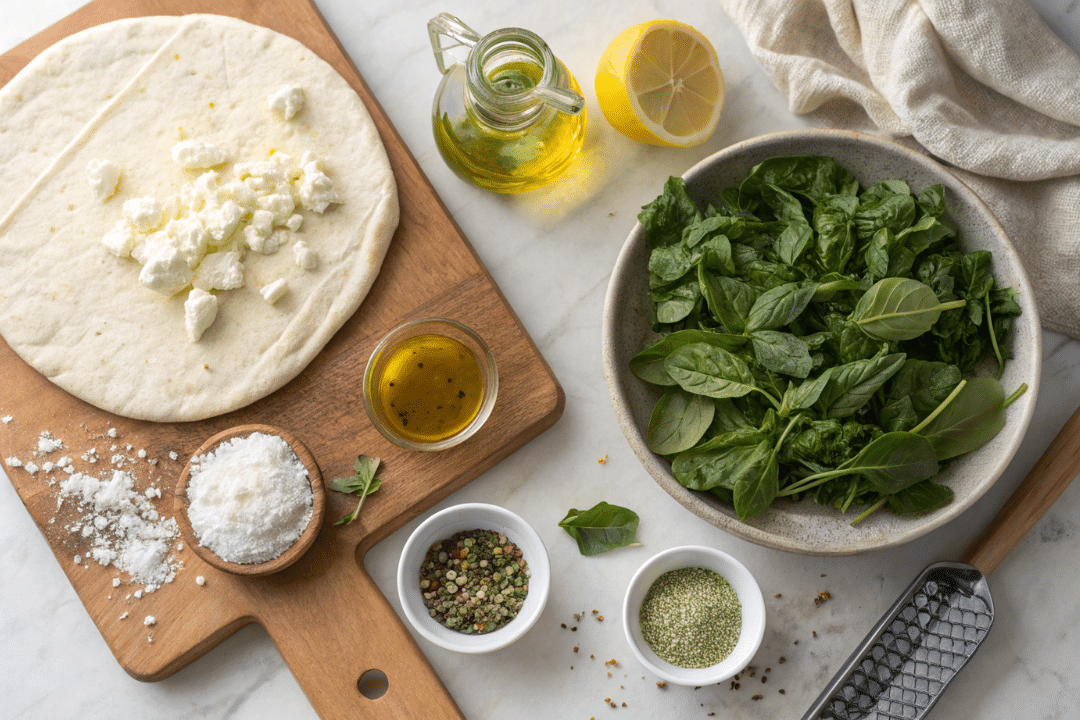
Build the filling with control: each ingredient should add texture, salt, or perfume so every bite reads balanced.
Greens: Wilt Fast, then Squeeze Every Drop
Wilt fresh baby greens briefly in a hot pan or microwave until just collapsed. Cool slightly, then press in a towel or use a fine sieve to squeeze out water. For frozen greens, thaw fully and squeeze; excess moisture makes the filling runny.
Cheese Choices and Salt Control
Choose a crumbly, briny cheese or a milder blend. Taste the cheese first—some brands sit in heavy brine and need no added salt. Crumble and fold; texture should stay chunky and creamy, not paste-like.
Aromatics: Garlic, Pepper, and Onions
Slice garlic thin and warm gently in olive oil for a sweet, fragrant base. Use black pepper for warmth and crushed red pepper for a focused heat. Thinly sliced onions are optional; sautéed until soft they add sweet moisture and depth without extra salt.
Herbs and Oil for Finishing
Mint brings a cool, bright contrast; thyme leans savory and woody—choose by method. Whisk fresh mint with olive oil for a simple sauce that brightens the filling and helps browning.
- Taste and adjust checklist: warm a spoonful, check salt, add pepper, then a drizzle of oil and herbs before stuffing or topping.
| Ingredient | Selection tip | Technique | Effect on final bite |
|---|---|---|---|
| Greens | Fresh baby or frozen chopped | Wilt/thaw, cool, squeeze dry | Keeps filling creamy, avoids sogginess |
| Cheese | Sheep’s milk or blended styles | Taste, crumble, adjust salt | Briny creaminess; controls overall salt |
| Garlic & onions | Fresh garlic; optional yellow onion | Gently warm garlic in oil; sauté onions | Sweetness and aroma, rounded flavor |
| Herbs & oil | Mint for bright, thyme for savory | Whisk with olive oil; drizzle before serving | Freshness and sheen; aids browning |
Choose your Flatbread Base: Quick Yogurt Dough or Yeasted Dough
Base choice shapes the result: a fast yogurt dough gives tenderness, while a yeasted dough adds chew and stretch. Use this framework to match your schedule and final texture.
Two-Ingredient Dough with Self-Raising Flour and Greek Yogurt
The quick dough uses self-raising flour and Greek yogurt. Start in a bowl, mix until a shaggy mass forms, then knead briefly until bouncy and soft. If the dough feels sticky, add flour a tablespoon at a time rather than dumping more in.
Pick this dough when you want minimal prep and a tender bite that suits stuffed pans. It handles skillet cooking well and produces soft pockets with a short hands-on time.
Yeasted Dough with Warm Water, Olive Oil, and a Short Rise for Chew
Proof active yeast in warm water with a pinch of sugar until it foams. Add flour, salt, a splash of olive oil, and optional yogurt, then mix and knead to a soft dough. Let it rise 30–60 minutes for a noticeable but short rise.
Choose yeast when you want more chew, better stretch for ultra-thin oven rounds, and deeper flavor. Make sure the yeast foams and the rise visibly expands before shaping.
- Hydration tip: a slightly wetter dough stretches thinner and bakes without a doughy center.
- Mixing tip: start in a bowl, then knead on a floured surface until springy.
- Texture cue: soft dough should feel pliable, not sticky or slack.
| Base | Best for | Key cue |
|---|---|---|
| Two-ingredient | Fast skillet pockets | Bouncy, easy-to-handle dough |
| Yeasted | Thin oven rounds, chew | Foamy yeast and visible rise |
| Both | Home cooks choosing texture | Soft dough that stretches without tearing |
How to Make Spinach Feta Breakfast Flatbread
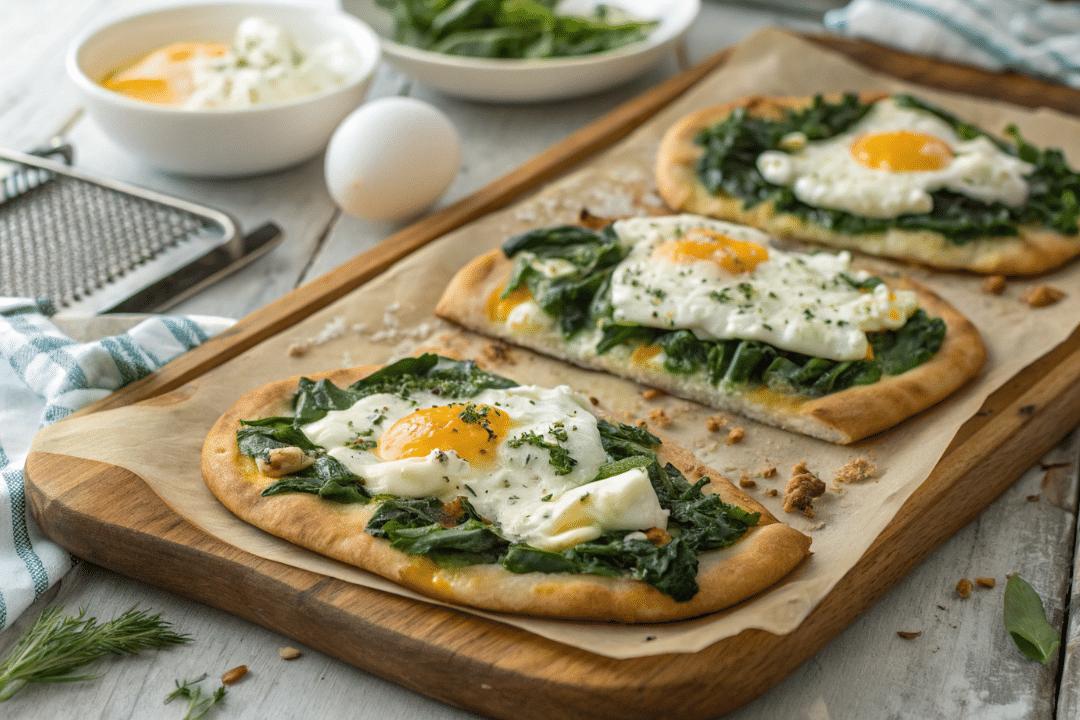
Work in short, focused stages: mix the dough, prepare a dry filling, then seal and cook. These cues keep the process predictable and the result consistent.
Mix and Knead to a Soft, Springy Dough
Combine ingredients until a shaggy mixture forms, then knead about 5 minutes until the dough feels bouncy and springs back when pressed. Make sure there’s no wet residue on your fingers.
If it’s sticky, sprinkle and fold to add flour a tablespoon at a time; knead briefly after each addition so the dough stays tender, not tough.
Build the Filling So It Stays Creamy, Not Watery
Cool cooked greens, press again to remove excess water, then fold into crumbled cheese and a small binder. Taste the cheese first and reserve extra salt—many cheeses are already briny.
Stuff, Seal, and Flatten Without Splitting
Keep the filling centered, pinch the seam firmly, then place seam-side down before gentle flattening. Edges split when you overfill, leave wet filling, or roll too thin at the seam.
Cooking: Skillet and Oven Paths
- Skillet: Preheat a dry nonstick pan over medium heat. Cook about 3–5 minutes per side until golden and cooked through; brush with oil only if the pan runs dry.
- Oven: roll very thin, brush with garlicky olive oil, top and bake hot (400–500°F) for crisp edges and toasted cheese spots.
| Method | Time Minutes | Done cues |
|---|---|---|
| Skillet | 6–10 | Golden crust, cooked through |
| Oven | 8–12 | Crisp edges, browned topping |
| Both | Minutes vary by heat | Edges crisp, filling set |
Finish with a mint sauce whisked into olive oil and a light drizzle just before serving to keep brightness and avoid wilting the herbs.
Variations, Swaps, and Serving Ideas for the US kitchen
Swap smartly: the right cheese or add-in keeps the filling stable and the crust crisp.
Cheese Swaps that Still Taste Great
Goat cheese adds tang and breaks into soft pockets. Ricotta gives mild creaminess and lowers salt; use more binder. For oven melts, mozzarella adds stretch. Taste before salting when using feta or bottled brined cheeses.
Vegetable Add-Ins
Sauté onions until soft to reduce moisture. Pat dry roasted red peppers and chop olives small to avoid seam tears. A few sun-dried tomatoes add intense tomato notes—use sparingly to avoid sogginess.
Protein Boosts and Diet Swaps
Serve with scrambled eggs, smoked salmon, or shredded leftover chicken for heft. For gluten-free dough, use a trusted GF self-raising blend and let the dough rest longer to hydrate. For vegan versions, swap coconut yogurt in the dough and use plant-based feta or seasoned tofu for tang.
- Make sure the checklist: keep fillings dry, taste cheese before adding salt, and adjust heat for browning.
- Serving ideas: sliced fruit, a simple green salad, or roasted potatoes make good sides for brunch or a light dinner.
| Swap | Example | Effect on salt & moisture | Cooking tip |
|---|---|---|---|
| Cheese | Goat, ricotta, mozzarella | Goat: tang, medium salt. Ricotta: low salt, higher moisture. Mozzarella: low salt, melts well. | Taste and reduce added salt; drain ricotta on paper if needed. |
| Veggies | Onions, roasted red pepper, sun‑dried tomato | Onions add moisture when not cooked; roasted peppers must be patted dry; sun‑dried add intensity, not water. | Sauté onions, dry peppers, and use small amounts of sun‑dried pieces. |
| Diet swaps | GF flour blend, coconut yogurt, plant feta | GF may need more rest; coconut yogurt lowers protein; plant feta varies in salt. | Rest GF dough 10–15 min; season vegan cheese assertively. |
I’d love to hear which swap you try—let me know what worked in your kitchen and what bit you changed.
Conclusion
Choose your path—quick skillet pockets or thin oven rounds—and focus on three simple techniques to avoid common mistakes.
Make sure the greens are well squeezed and the cheese is properly seasoned so the filling stays creamy, not soggy. Aim for a soft dough that stretches without tearing and does not cling to the counter.
Control heat: medium in the pan for even cooking, and a hot oven for quick browning. Use garlic and a light drizzle of olive oil for aroma and sheen without greasiness.
Treat this recipe as a template: swap cheeses or add-ins but protect the moisture balance. If you try it, let know which method you used and what filling ratio worked best in your pan or oven—tell me a bit about your result.

Spinach Feta Breakfast Flatbread
Ingredients
Method
- Combine self-raising flour and Greek yogurt in a bowl until a shaggy dough forms, then knead briefly on a floured surface until soft, bouncy, and no longer sticky.
- Cover the dough and let it rest for 10–15 minutes to relax the gluten and improve shaping.
- Wilt fresh spinach in a hot pan or microwave just until collapsed, cool slightly, then squeeze thoroughly to remove excess moisture.
- Warm olive oil gently in a small pan, add sliced garlic, and cook just until fragrant without browning.
- Chop the squeezed spinach and fold it into the crumbled feta along with garlic oil, black pepper, and optional red pepper, tasting before adding any salt.
- Divide the dough into equal portions and roll each into a round, keeping the center slightly thicker for stuffing or evenly thin for oven baking.
- Place filling in the center if stuffing, pinch edges closed, and gently flatten, or spread filling evenly on top for oven-style flatbreads.
- Cook stuffed flatbreads in a dry skillet over medium heat for 3–5 minutes per side until golden and cooked through, or bake thin flatbreads in a 400–500°F oven for 8–12 minutes until crisp at the edges.
- Finish with a light drizzle of olive oil and fresh herbs just before serving.
Notes
FAQ
How can I prevent the filling from becoming watery?
Which dough is best when I’m short on time?
Can I make these ahead and reheat later?
Should I add salt to the filling if I’m using a salty cheese?
How do I get crisp edges when baking in the oven?
What skillet and heat work best for stovetop cooking?
Can I substitute other greens or cheeses?
Any tips for sealing stuffed flatbreads so they don’t split?
How do I add a spicy kick without overpowering the other flavors?
What are simple side dishes to serve with these flatbreads?
About The Author

John
John Watson is the passionate food enthusiast behind MePlusFood.com. With a deep love for exploring culinary delights, he shares honest restaurant reviews, mouthwatering recipes, and culinary adventures. Join John on his flavorful journey to savor the world one bite at a time.