Tomato Olive Baked Polenta
Jump to Recipe
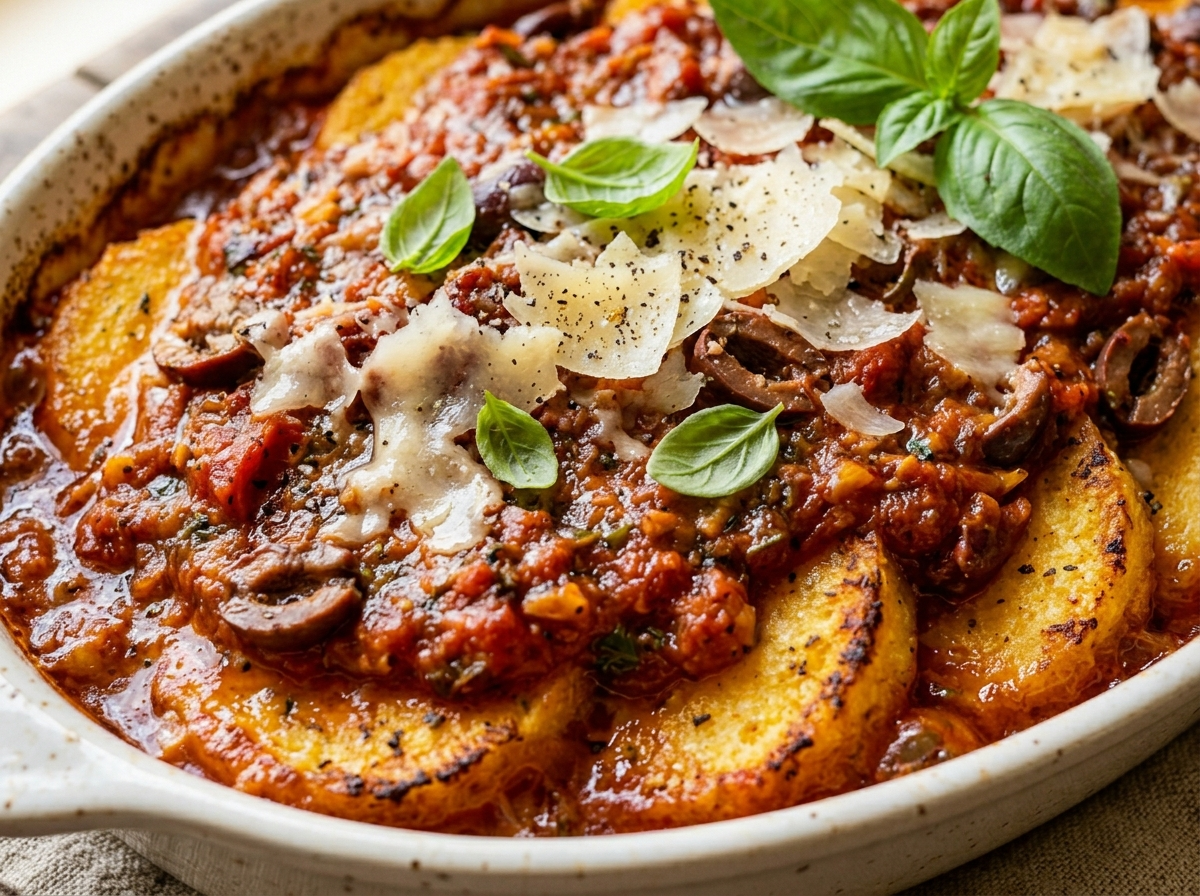
Baked polenta sits somewhere between a grain bowl and a pizza, which is exactly why it works so well as a weeknight dinner. The polenta sets as it cools, you slice it, lay the slices in a baking dish, and let the oven do the rest.
The tomato-olive topping is built from pantry staples: canned crushed tomatoes, kalamata olives, garlic, and dried oregano — the same kind of slow-baked tomato pantry base that makes dishes like this worth keeping on repeat. Nothing fancy, but together they produce a sauce that’s briny and slightly sweet with a little heat if you want it.
This dish eats like a full meal on its own, especially with a handful of crumbled feta or a poached egg on top. It also holds well, so leftovers reheat cleanly the next day.
Why You’ll Love This Recipe
- Crispy polenta edges with a saucy, briny tomato topping
- One baking dish, minimal prep, easy cleanup
- Naturally gluten-free and vegetarian as written
- Holds well in the fridge for next-day lunches
Ingredient Notes
- Polenta (coarse ground cornmeal): Use coarse or medium ground polenta, not the quick-cook or instant variety – it sets firmer and slices cleaner. If you can only find fine cornmeal, reduce the liquid by about 60 ml.
- Crushed canned tomatoes: A 400 g can of good quality crushed tomatoes is the base of the sauce. San Marzano style works particularly well here for sweetness and low acidity.
- Kalamata olives: Pitted kalamata olives give the best briny depth. Castelvetrano olives work as a milder substitute, or use a mix of both.
- Parmesan: Stir grated Parmesan into the warm polenta for richness. Pecorino Romano is a sharper swap, or skip it entirely and use nutritional yeast to keep the dish vegan.
- Dried oregano: Dried oregano holds up better in the baking sauce than fresh. If you have fresh, add it after baking as a garnish instead.
- Chili flakes: Optional but recommended. Half a teaspoon adds background warmth without making the dish hot. Omit for a kid-friendly version.
Tomato Olive Baked Polenta
Ingredients
Method
- Bring 1 liter of water to a boil in a 3-quart saucepan over high heat. Add 1 tsp fine sea salt.
- Pour in the polenta in a steady stream while whisking constantly to prevent lumps.
- Reduce heat to low and cook, stirring with a wooden spoon every 2 to 3 minutes, for 25 to 30 minutes until the polenta pulls away from the sides of the pan and is thick enough to hold a channel.
- Remove from heat. Stir in the butter and grated Parmesan until both are fully melted and incorporated.
- Lightly oil the baking dish with a little olive oil. Pour the polenta in and smooth to an even layer about 2 cm thick. Let cool at room temperature for 20 minutes until fully set and firm enough to slice.
- Heat 2 tbsp olive oil in a medium skillet over medium heat. Add the sliced garlic and cook for 1 to 2 minutes until fragrant and just starting to turn pale gold - do not let it brown.
- Add the crushed tomatoes, chopped kalamata olives, dried oregano, chili flakes if using, salt, and black pepper. Stir to combine.
- Simmer over medium-low heat for 5 minutes until the sauce thickens slightly. Remove from heat.
- Heat the oven to 200 C / 390 F.
- Once the polenta is set, use a sharp knife to cut it into 8 even rectangles or squares directly in the baking dish.
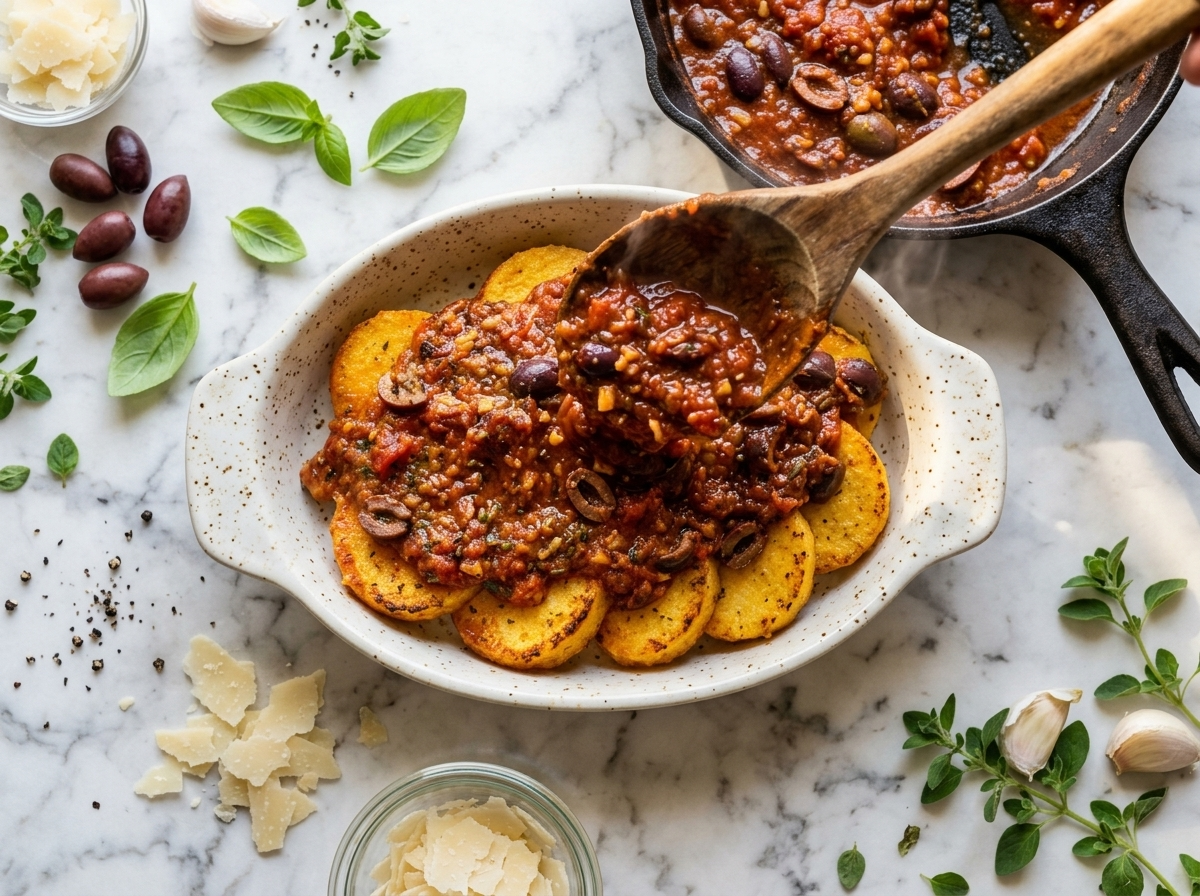
- Spoon the tomato-olive sauce evenly over the top of the polenta slices, spreading it to the edges of the dish so no polenta is left dry.
- Drizzle 1 tbsp olive oil over the surface. Scatter extra Parmesan on top if using.
- Bake for 25 to 30 minutes until the sauce is bubbling and the exposed polenta edges are golden and slightly crisp.
- Remove from the oven and rest for 5 minutes. Scatter fresh basil leaves over the top before serving.
Notes
Tips for Success
- Pour the cooked polenta into a lightly oiled baking dish and smooth it flat so slices are even thickness when you cut them.
- Let the polenta cool for at least 20 minutes before slicing so it holds its shape under the sauce.
- Spread the tomato sauce to the edges of the pan so the polenta slices stay moist on top while the undersides crisp.
- Scatter olives over the sauce last so they don’t sink to the bottom and lose their texture during baking.
- Check the polenta at 35 minutes – you want bubbling sauce and golden edges, not dried-out corners.
Variations
- Add crumbled Italian sausage to the tomato sauce before baking for a meat version.
- Top with torn fresh mozzarella in the last 5 minutes of baking for a stringy, melted finish.
- Swap olives for capers and sundried tomatoes for a puttanesca-style version with sharper, tangier flavor.
Storage and Reheating
Store leftovers in an airtight container in the refrigerator for up to 3 days. The polenta firms up more overnight, which actually makes slices easier to handle.
To reheat, place portions in an oven-safe dish at 180 C / 350 F for 12 to 15 minutes until the sauce is bubbling again. A microwave works in a pinch – cover loosely and heat on medium power for 2 minutes.
This dish also freezes well. Freeze individual portions with sauce on top in freezer-safe containers for up to 2 months. Thaw overnight in the fridge before reheating.
Serving Suggestions
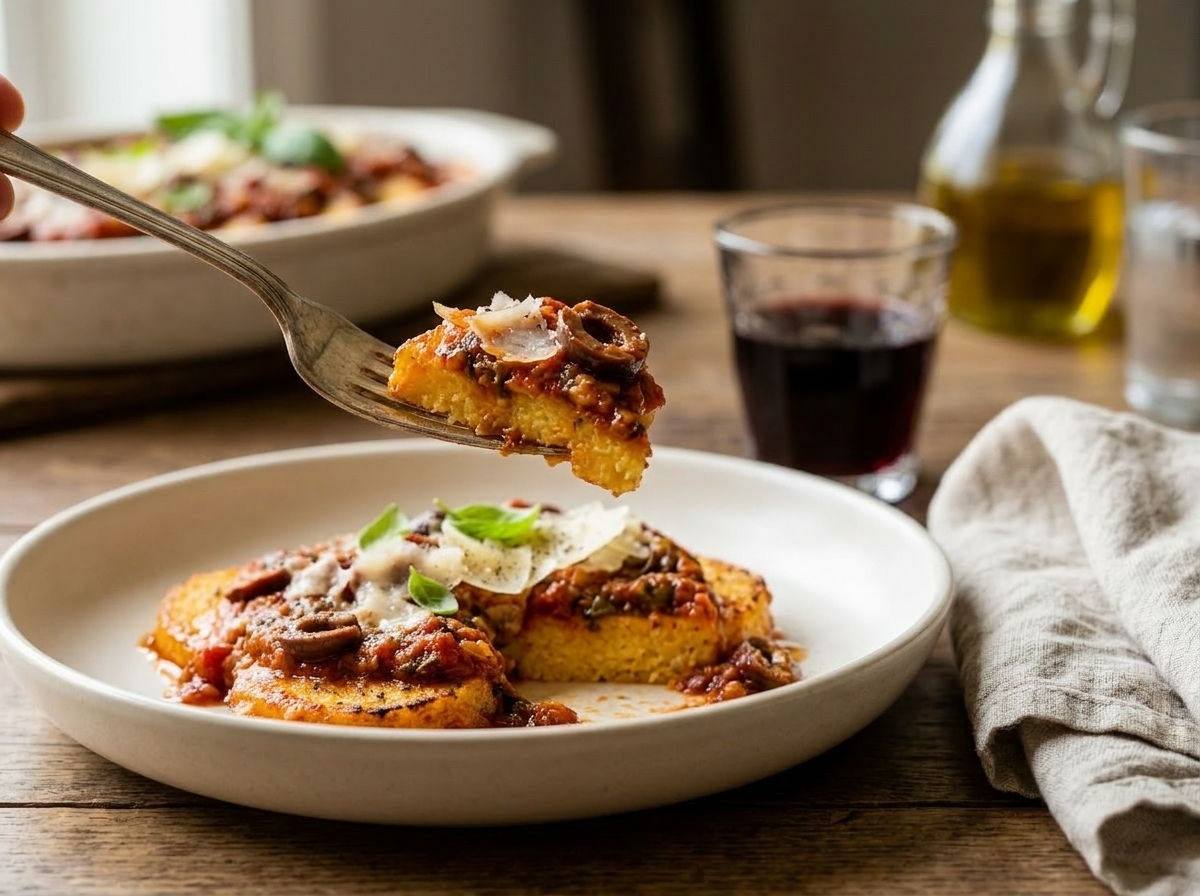
Serve straight from the baking dish with a green salad alongside – something with a sharp dressing like a peppery arugula and lemon salad cuts through the richness of the polenta well.
A poached or fried egg on top turns this into a more substantial plate, especially for a weekend brunch. Crumbled feta or goat cheese scattered over just before serving adds a creamy, salty contrast to the tomato sauce.
For a fuller dinner spread, pair with roasted broccolini or a bowl of white bean soup. A glass of dry Italian red like a Montepulciano or Barbera works well with the tomato-olive flavors.
FAQ
Why is my baked polenta soggy in the middle?
The polenta needs to be fully set before baking – if you slice it while still warm, it won’t hold up under the sauce. Let it cool for at least 20 minutes, and make sure the sauce isn’t too thin before you pour it over.
Can I use sun-dried tomatoes instead of kalamata olives in this polenta recipe?
Yes, sun-dried tomatoes in oil add a concentrated, sweet-savory depth that works well here. Use about 60 g, roughly chopped, and reduce the olive oil in the sauce slightly since the sun-dried tomatoes will add fat.
Can I make the polenta base the night before and bake it the next day?
This is actually the best approach for meal prep. Cook the polenta, pour it into the baking dish, and refrigerate uncovered overnight – it firms up beautifully. Add the tomato-olive topping and bake straight from the fridge, adding 5 extra minutes to the baking time.
What cheese goes best melted over tomato olive baked polenta?
Fresh mozzarella torn over the top in the last 5 minutes gives a soft, milky pull that balances the briny olives. Fontina is another good option if you want something more assertive and fully melted.
Is tomato olive baked polenta gluten-free?
Yes, as long as you use plain coarse cornmeal and check that your canned tomatoes have no added gluten-containing thickeners, the dish is naturally gluten-free. Always verify labels if you’re cooking for someone with celiac disease.
What is the difference between baked polenta and polenta gratin?
Baked polenta typically means set polenta slices baked with a topping like tomato sauce, while a polenta gratin layers the polenta with cream, cheese, and sometimes vegetables before baking until golden on top. This recipe is closer to the former – firmer texture, lighter profile.
About The Author

John
John Watson is the passionate food enthusiast behind MePlusFood.com. With a deep love for exploring culinary delights, he shares honest restaurant reviews, mouthwatering recipes, and culinary adventures. Join John on his flavorful journey to savor the world one bite at a time.