Transforming Leftovers into Spring Roll Grain Bowls
I love turning stray fridge bits into something that feels restaurant-level. A quick bowl built from last night’s char siu pork, shredded cabbage, and cooled rice noodles becomes a bright, crunchy meal in minutes.
I start with a base—either chilled vermicelli or warm steamed rice—then add crisp veg and thinly sliced pork I’ve reheated to 145°F for safety. The peanut sauce is my shortcut: peanut butter, tamari, lime, garlic, ginger, thinned with hot water so it clings and shines.
Vegan swaps like tofu, edamame, or tempeh work just as well, and a splash of oyster sauce deepens the savory notes when I want them. I pack components separately for lunches and keep the sauce on the side so everything stays lively up to 3–5 days.
For a quick refresher on rolling inspiration, I sometimes revisit a fresh shrimp rolls recipe and adapt its flavors into my composed bowls.
Key Takeaways
- Use noodles or rice as the base and layer textures for balance.
- Reheat pork to 145°F and slice thin for safe, easy assembly.
- Make a simple peanut sauce with peanut butter, tamari, lime, garlic, and hot water.
- Vegan proteins like tofu or tempeh are effective swaps.
- Store components separately; add sauce just before eating for best results.
Why Spring Roll Grain Bowls Make the Smartest Weeknight Upgrade
I often skip elaborate prep and turn leftover proteins and a quick noodle soak into something bright and new. The goal is all the fresh flavors of a spring roll without wrestling wrappers. That saves time and keeps dinner relaxed.
All the Fresh Spring Roll Flavors, None of the Rolling
You still get lime, herbs, crunchy cabbage, and creamy peanut sauce—only plated. Hydrating rice or vermicelli noodles in hot water takes minutes, then a rinse cools them for immediate assembly.
Herbs and shredded veg add lift. A squeeze of citrus and chopped peanuts finish the dish with brightness and crunch.
How this Recipe Fits Busy Schedules and Real-Life Leftovers
Leftover pork, rotisserie chicken, or cooked shrimp slide in and feel new. I batch the base, chop veggies once, and jar a sauce so I can assemble in the time it takes to set plates.
- Neutral noodles and rice tame any extra salt from seasoned protein.
- The format stretches food and budgets—nothing rots in the crisper.
- It’s a quick, colorful meal that scales up when I’m feeding a crowd.
Pantry and Fridge Check: the Flexible Ingredients You Already Have
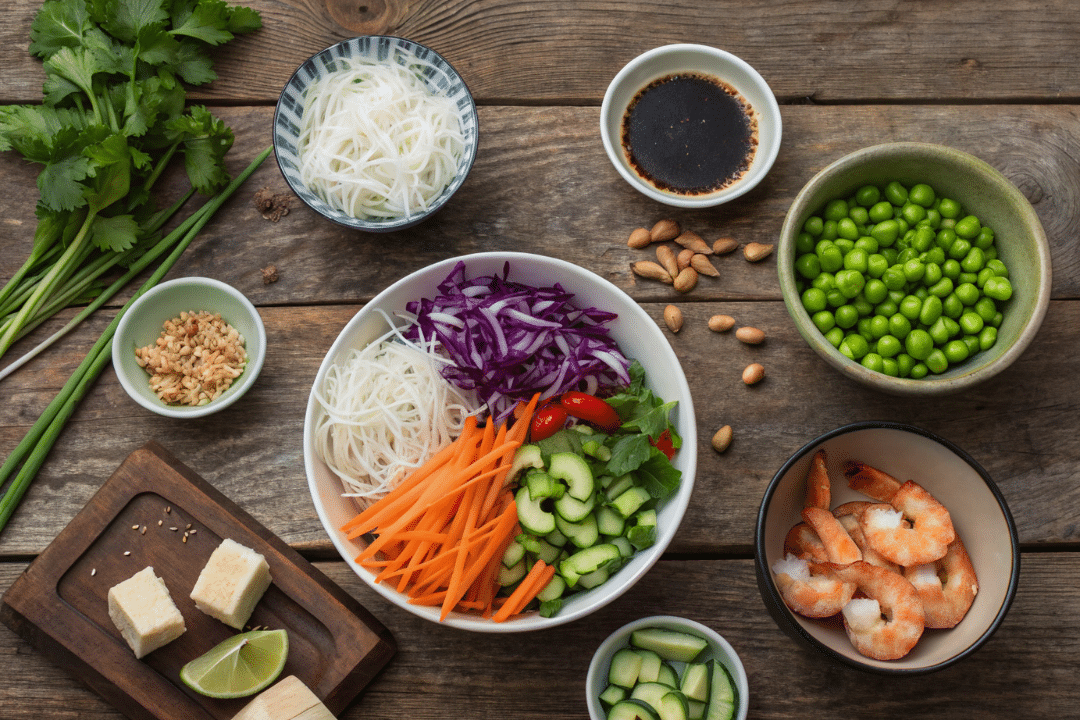
Open the fridge, and you’ll usually find the exact elements for a fast, flavorful meal. I scan for a cooked protein, a starch, a handful of crunchy veg, and a jarred or homemade sauce. That mindset keeps meals creative and waste low.
Base Layers: Rice Noodles, Vermicelli, or Cooked Rice
My bases rotate: rice noodles for lightness, vermicelli for speed, or warm steamed rice when I want comfort. Each one swaps in easily; use more rice for a heartier plate.
Vegetables and Fresh Herbs that Deliver Crunch and Color
I slice cabbage, carrots, cucumbers, and bell peppers thin so they mingle. Bean sprouts and scallions add snap. Cilantro is my default, but basil or mint lifts the aroma.
Protein Picks: Pork, Chicken, Shrimp, Tofu, or Edamame
Proteins are plug-and-play. Leftover pork tenderloin, quick-sautéed chicken, a handful of shrimp, or browned tofu all work. Edamame is a great vegetarian option.
Flavor Boosters: Soy Sauce, Sesame Oil, Garlic, Ginger, Lime, and Peanuts
A little garlic and ginger anchor the mix. Pantry boosters—light soy or tamari, a drizzle of sesame oil, and lime—do most of the heavy lifting. Peanuts add crunch or blend into a creamy dressing.
- Prep tip: slice veg thin and store in an airtight container; cabbage lasts longest for packed lunches.
- Substitutions: use tamari for gluten-free soy, sunflower butter for nut-free dressing, or canned tuna if you’re short on time.
- Storage-savvy: keep sauce separate and refrigerate components up to 3–5 days for best texture.
| Base | Best Pairings | Storage Tip |
|---|---|---|
| Rice noodles | Fresh herbs, crunchy veggies, tofu | Rinse, toss with oil, refrigerate 2–3 days |
| Vermicelli | Shredded cabbage, shrimp, cilantro | Hydrate per package, cool, store 2 days |
| Steamed rice | Hearty proteins like pork or chicken, sesame oil | Cool quickly, keep airtight 3–4 days |
From Spring Rolls to Bowls: Mapping Leftovers into a Balanced Meal
I sort scraps into roles—starch, veg, protein—and the bowl builds itself. This method keeps assembly fast and flavors clear.
Use-Up Guide: Proteins, Veggies, and Sauces that Convert Perfectly
Start by grouping: a cooked protein (pork, chicken, or shrimp), crisp veggies (cabbage, carrots, cucumbers), and a ready-to-pour sauce. If the protein already wears a glaze, cut back on added dressing and add lime and herbs for lift.
- Portion roughly 40% rice or noodles, 40% veggies, 20% protein.
- Slice proteins thin across the grain so they distribute evenly.
- Rinse noodles under cold water and set aside to avoid clumps.
- Thin leftover peanut or soy-based sauce with hot water to make a pourable dressing.
- Fold crunchy items in at the end; reserve delicate herbs for the top.
Portioning for Bowls So Every Bite Hits Noodles, Veg, Protein, and Sauce
I aim for contrast. Heat the rice if it’s cold and keep the veg crisp. Sprinkle chopped peanuts or sesame seeds for texture insurance.
| Leftover | Best Use | Quick Tip |
|---|---|---|
| Pork or Chicken | Sliced thin over rice for hearty bites | Reheat to 145°F if needed; slice across the grain |
| Shrimp | Laid on chilled vermicelli for light contrast | Use less dressing—shrimp often carry salt |
| Tofu / Edamame | Mix into veg for vegetarian protein | Press tofu, brown quickly for texture |
These ratios and steps turn leftovers into a reliable spring roll bowl or roll bowl in minutes. Store components separately for the best texture and assemble just before eating.
Cook Your Noodles or Grains Like a Pro
Good noodles make or break a fast weeknight plate, so I treat them with purpose. Start by reading package directions and eyeing texture, not just time.
Rice Noodles and Vermicelli: Simple, Fast Steps
For rice noodles, I follow the package instructions and stop just shy of fully tender, so they hold up under sauce. Rinse immediately under cold water to halt cooking and remove starch.
Vermicelli is weeknight gold. I cover it with boiling water for about five minutes, then drain and rinseit cold. That one step keeps strands separate and ready in minutes.
- Set aside noodles in a colander or toss with 1 tsp neutral oil if you need extra time before assembly.
- If strands clump, splash with warm water and separate with a fork before plating.
- Lightly season the base with a pinch of salt or a squeeze of lime so the dressing still shines.
When to Choose Steamed, Brown, or Cauliflower Rice
Pick steamed rice for comfort. Choose brown rice for a nuttier chew and longer hold time. Use cauliflower rice when you want something light and quick.
Reheat rice until hot and fluffy. Watch the clock—knocking a minute off cooking time often preserves a bouncy texture that stands up to sauce and toppings.
| Base | Quick cook cue | Holding tip |
|---|---|---|
| Rice noodles | Cook according package; rinse cold | Set aside in a colander; toss with oil if needed |
| Vermicelli | Cover with boiling water for 5 minutes | Drain, rinse cold; ready in minutes |
| Steamed/brown / cauliflower rice | Reheat until hot and fluffy | Keep covered; reheat briefly before serving |
Signature Peanut Sauce that Ties Everything Together
A glossy peanut sauce lifts every element and makes leftovers sing. It’s quick to whisk and forgiving when you tweak it.
My base formula: 1/2 cup creamy peanut butter, 1–2 tablespoons maple syrup or brown sugar, 1–2 tablespoons tamari or soy sauce, 2 tablespoons lime, plus minced garlic and grated ginger to taste.
How to Get the Right Texture
Whisk in hot water a tablespoon at a time until the sauce is pourable and glossy. If it resists, microwave 10–15 seconds to soften the peanuts and emulsify smoothly.
Swaps and Flavor Nudges
Nut-free? Use sunflower seed butter. Need soy-free? Swap in coconut aminos and then tweak the sweetness and salt. A few drops of sesame oil add toasty depth. Add extra lime if the mix feels heavy.
- Taste and adjust: more lime for brightness, a pinch of sugar for balance.
- Make a double batch and refrigerate in a jar up to 5 days; loosen with warm water before using.
- Finish with fresh herbs—cilantro, basil, or mint—for lift.
| Element | Ratio | Pro tip |
|---|---|---|
| Peanut butter | 1/2 cup | Use creamy for the easiest emulsifying |
| Liquid (lime + tamari) | ~2–3 tbsp lime; 1–2 tbsp tamari | Add tamari slowly; it controls salt |
| Water | 2–6 tbsp to thin | Stir in gradually until pourable |
Spring Roll Grain Bowls: Step-by-Step Assembly and Timing
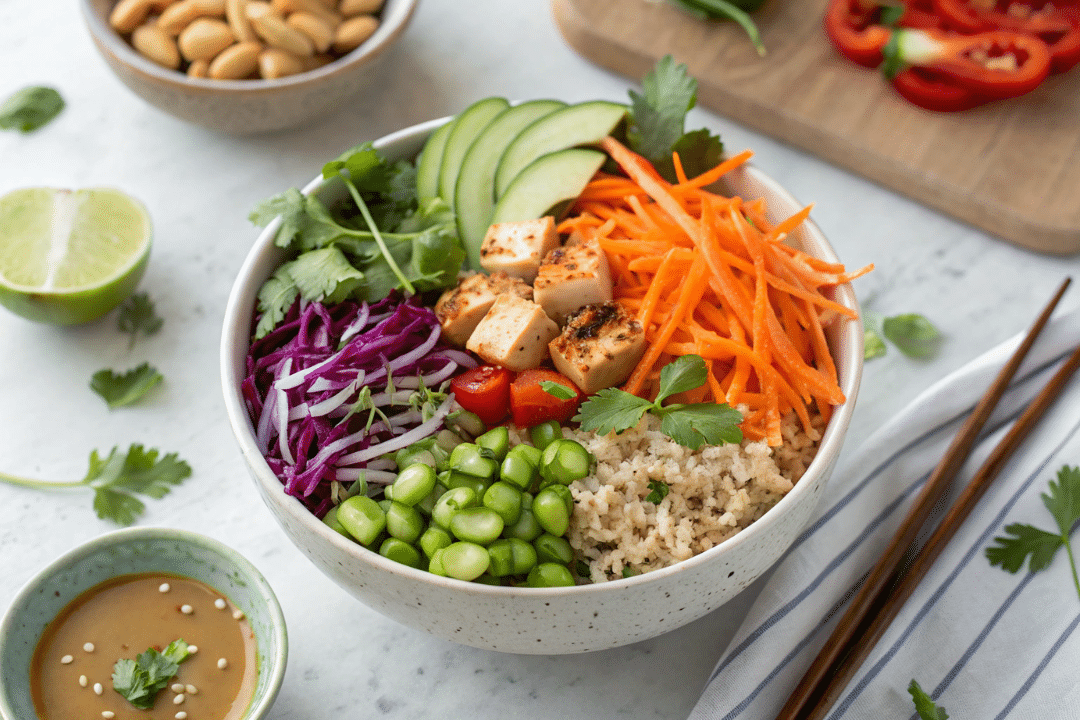
When I need dinner fast, I map a simple timeline so every element finishes at the same time. This keeps textures bright and flavors distinct. Follow the order, and the bowl lands balanced and on time.
Quick Protein Prep: Marinate, Stir-Fry, or Reheat
I start proteins first. For pork, I marinate it in char siu for 1–2 hours when I plan ahead and always reheat it to 145°F for safety.
Ground meat gets a fast stir-fry with garlic and ginger. Chicken I slice thin and sear until done. Shrimp cook in seconds, and I add them last to avoid toughness.
Layering Order for Maximum Texture and Flavor
While the protein cooks, I hydrate noodles for a few minutes, rinse, and fluff. Or I warm rice so the base is ready at the same time as the protein.
- Noodles or rice first.
- Sliced protein next.
- Tumble on crunchy veg and herbs.
- Generous drizzle of dressing to integrate everything.
Top Like a Pro: Finishing Touches
I finish with lime, sesame seeds, chopped peanuts, scallions, and fresh herbs. A light second pass of sauce on top locks flavors and makes the plate look restaurant-ready.
If I pack lunch, I keep dressing separate so the crunch stays crisp. I make sure every color and texture is visible—so the first bite tells the story.
| Step | Timing | Sensory cue |
|---|---|---|
| Protein (marinate/sear/reheat) | 1–15 minutes prep; marinate 1–2 hours if using char siu | Golden edges, juices run clear, thermometer reads 145°F for pork |
| Base (noodles or rice) | Soak/drain 3–5 minutes or reheat rice 1–2 minutes | Strands separate; rice steamy and fluffy |
| Finish & toppings | Assemble in 2–3 minutes; top just before serving | Citrus brightness, nut crunch, sesame aroma |
Variations, Meal Prep, and Make-Ahead Tips
A little planning means lunches feel fresh all week without last-minute scrambling. I treat these as flexible recipes that fit whatever I have on hand.
Veggie Swaps and Salad-Style Toppers
I rotate vegetables by season. Think cabbage, carrots, bean sprouts, bell pepper, cucumbers, and snap peas for a crunchy salad vibe.
Protein Options
For speed, I use ground chicken or pork. Shrimp cook fast. Tofu and tempeh work when I want plant-forward options.
Meal Prep Strategy
Pack components separately and keep the dressing on the side. Refrigerate in airtight containers and expect the best quality for 3–5 days, depending on freshness.
- Store veg between paper towels to keep salad toppings crisp.
- Vermicelli is great for cold lunches; warm rice makes dinner cozy.
- Refresh with a dash of soy sauce or a squeeze of lime before serving.
| Component | Best use | Storage window | Finishers |
|---|---|---|---|
| Noodles/vermicelli | Light, cold lunches | 3 days | Sesame, peanuts |
| Rice | Warm dinners | 3–5 days | Fresh herbs, lime |
| Proteins (chicken, shrimp, tofu) | Top and slice thin | 3–4 days | Soy sauce splash, sesame |
Conclusion
Leftovers become a fast, flavor-packed dinner when you trust simple ratios and bold sauce.
I aim for base, veg, protein, and just enough sauce so every bite shines. Rice noodles soften in minutes; rinse them cold, and they stay lively. I thin peanut sauce with hot water to pour, taste, and tweak with a touch of soy or a splash of lime.
Reheat pork to 145°F, store components 3–5 days, and finish with herbs, sesame, and chopped peanuts for crunch. The recipe adapts—cabbage, carrots, chicken, or tofu all fit.
Don’t overthink it. According to the package directions for noodles, quickly sear the protein, then assemble. For rolling inspiration, I sometimes check this crispy veggie egg rolls page and borrow its flavor ideas.
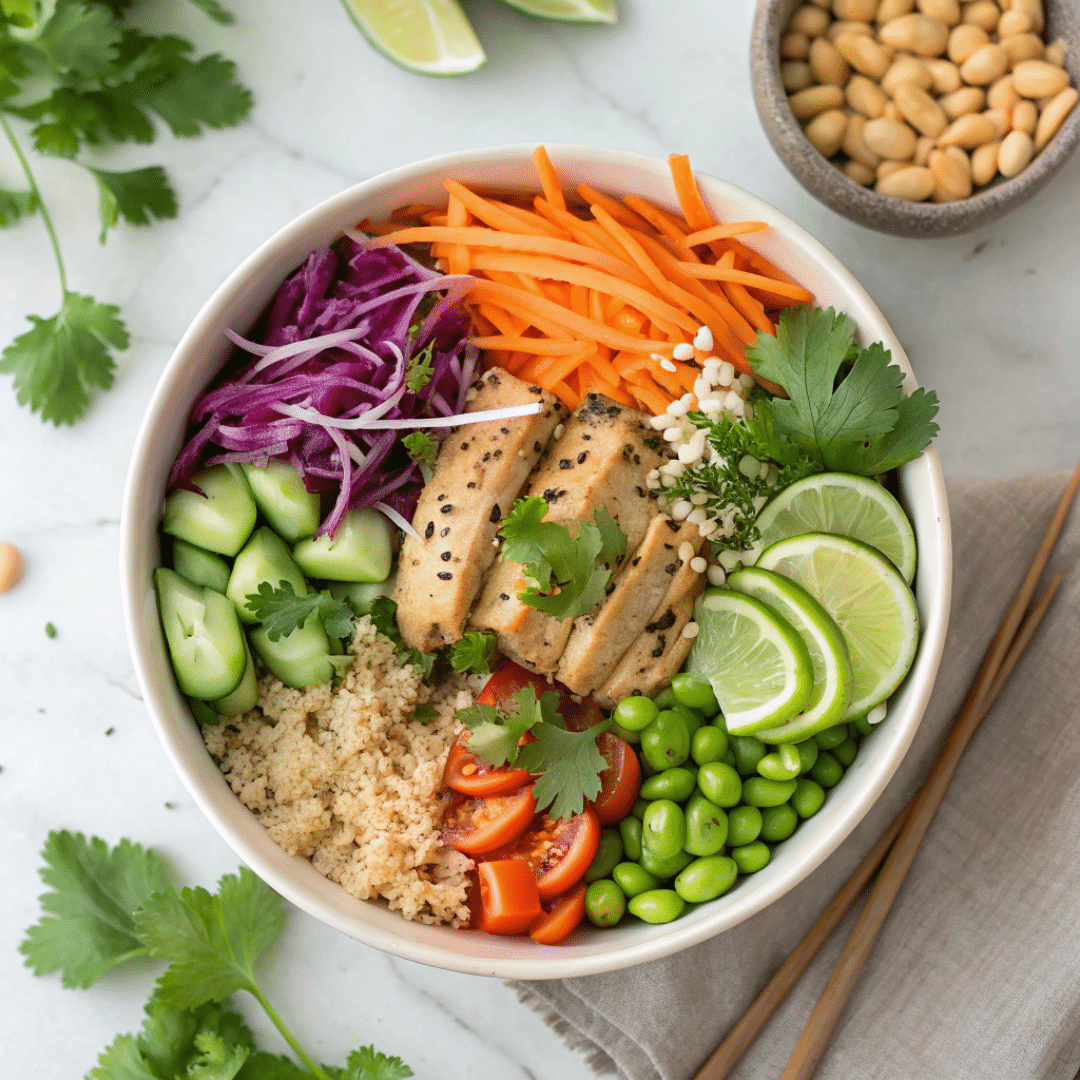
Spring Roll Grain Bowls
Ingredients
Method
- Cook rice noodles or vermicelli according to package directions; rinse under cold water and toss with a tsp of oil if not assembling immediately.
- Reheat rice if using as base, keeping it fluffy and separate.
- Slice or prepare your protein; reheat or stir-fry quickly if needed. Marinate proteins like pork in advance for extra flavor.
- Slice vegetables thin and combine in a bowl for quick layering.
- Whisk peanut sauce ingredients together, adding hot water gradually until pourable and glossy. Adjust flavor with extra lime, tamari, or maple.
- Layer base first (noodles or rice), then add protein, followed by vegetables and herbs.
- Drizzle with peanut sauce, then sprinkle chopped peanuts or sesame seeds on top.
- Serve immediately; for meal prep, keep dressing separate and add just before eating to preserve crunch.
Notes
FAQ
How do I turn leftover spring rolls into a quick grain bowl?
What bases work best if I don’t have rice noodles?
Can I use different proteins from my fridge?
What veggies and herbs should I prioritize?
How do I make a simple peanut sauce for these bowls?
Any tips for nut-free or soy-free swaps?
How long will assembled bowls keep for meal prep?
How do I keep noodles from clumping after cooking?
What’s the best order to assemble the bowl for texture?
Can I make the sauce ahead and how should I store it?
How can I adapt bowls to be more kid-friendly?
Any quick protein ideas when I don’t have leftovers?
About The Author

John
John Watson is the passionate food enthusiast behind MePlusFood.com. With a deep love for exploring culinary delights, he shares honest restaurant reviews, mouthwatering recipes, and culinary adventures. Join John on his flavorful journey to savor the world one bite at a time.