Venison Ragu with Wild Herbs and Rich Depth
The aroma of venison ragu with wild herbs transforms my kitchen into an Alpine sanctuary. Game meat simmering with rosemary and juniper creates a magical culinary experience. Each spoonful tells a story of tradition, wilderness, and deep flavor.
My first encounter with this wild game pasta sauce happened during a mountain retreat in Northern Italy. Local hunters shared recipes that had been passed down through generations. The complexity of venison—lean, nutrient-dense, and intensely flavorful—captured my imagination forever.
Key Takeaways
- Venison ragu represents a unique culinary tradition from Alpine regions
- Wild herbs dramatically enhance the depth of game meat flavors
- Slow cooking is essential for tenderizing and developing rich taste profiles
- This dish offers superior nutritional benefits compared to traditional meat sauces
- Home cooks can master this sophisticated yet approachable recipe with patience
Why Venison Ragu with Wild Herbs Transforms Your Pasta Night
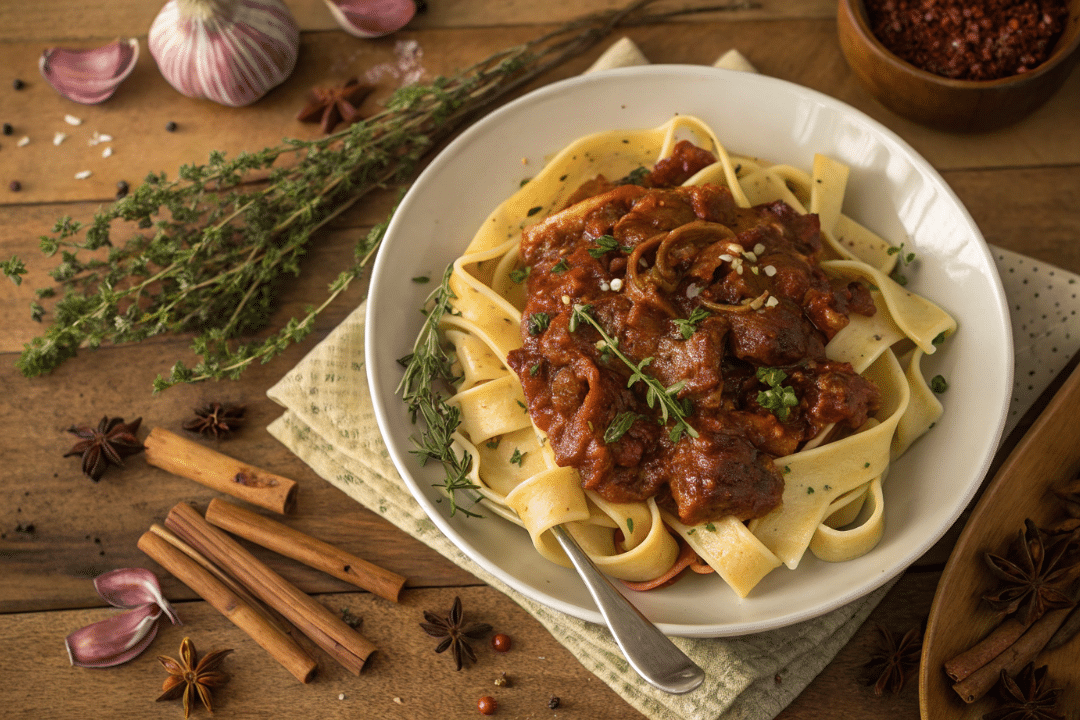
Elevate your pasta dinner from ordinary to extraordinary with an herb-infused venison ragu. This slow-cooked deer meat sauce tells a story of culinary tradition and wild flavor. It brings the rich wilderness directly to your dinner table.
The Nutritional Powerhouse Behind Wild Game
Wild venison packs a serious nutritional punch that sets it apart from traditional meats. This Italian-style venison ragu is more than just delicious.
- Significantly leaner than beef (up to 50% less fat)
- Higher protein content per serving
- Rich in essential minerals like iron and zinc
- Contains more B vitamins for energy metabolism
How Slow Cooking Tames the Gamey Flavor
The secret to incredible venison ragu lies in understanding the meat’s unique characteristics. Slow cooking transforms potentially tough meat into a tender, rich sauce. It will make your taste buds sing.
| Technique | Flavor Impact |
|---|---|
| Wine Marinade | Reduces gamey intensity |
| Acidic Ingredients | Softens meat texture |
| Long Simmering | Develops a complex flavor profile |
Traditional Italian Roots Meet Modern American Kitchens
This recipe is a culinary bridge connecting Alpine Italian traditions with contemporary American cooking. Home cooks can create restaurant-quality dishes using these time-honored techniques. These dishes celebrate both heritage and innovation.
Essential Ingredients for an Authentic Wild Game Ragu
Creating a rustic venison pasta recipe needs carefully chosen ingredients. These ingredients turn simple game meat into something special. The right cuts of venison and flavors make all the difference.
For the most tender and flavorful rustic venison pasta recipe, focus on these key venison cuts:
- Shoulder roast (most recommended)
- Neck roast
- Rump roast
Your foraged herb meat sauce needs a mix of ingredients. These create depth and complexity in every bite.
Meat and Base Ingredients
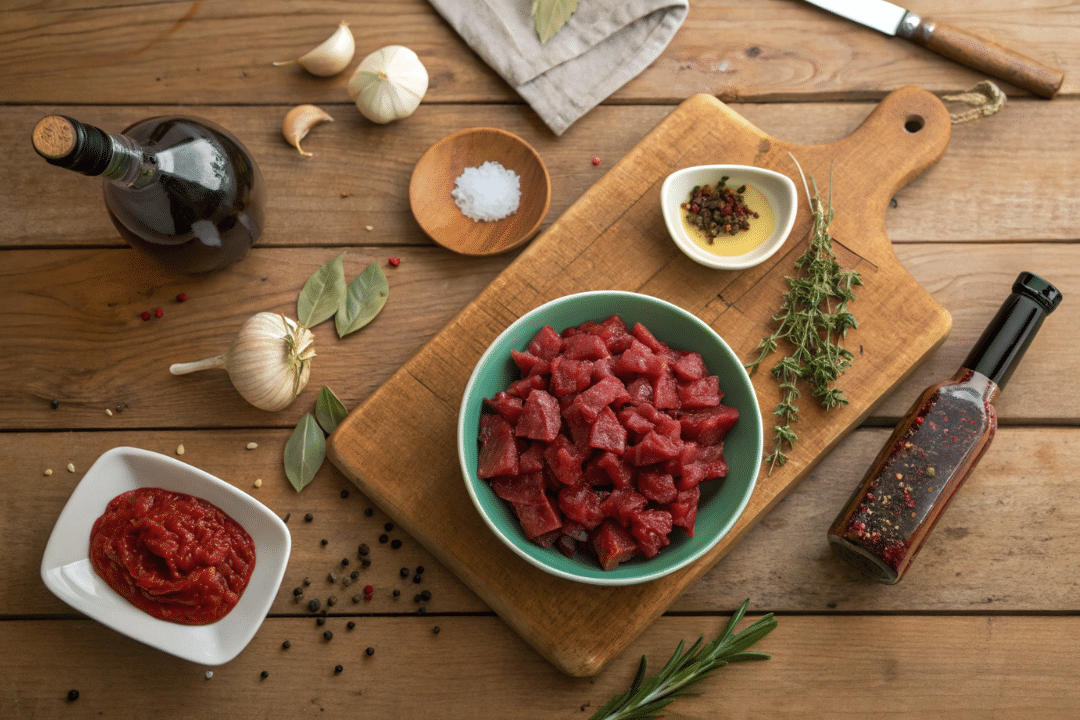
- 2 pounds venison, cut into 2-3 inch pieces
- 1 cup red wine
- 28 oz crushed tomatoes
- 6 oz tomato paste
- 2 cups beef or game stock
Aromatic Flavor Builders
- 1 large onion, diced
- 2 medium carrots, chopped
- 2 celery stalks, minced
- 4 garlic cloves, crushed
The magic of this foraged herb meat sauce comes from carefully selected herbs and spices. Fresh wild herbs like rosemary, thyme, and oregano make the ragu extraordinary. Dried herbs such as thyme, rosemary, and cinnamon create layers of flavor.
Pro tip: Look for venison cuts with good marbling and deep, rich color. Local farmers’ markets and specialty butchers often provide the highest quality game meats. These sources are perfect for your rustic venison pasta recipe.
Mastering the Cooking Techniques for Fall-Apart Tender Venison
Crafting perfect gourmet wild game recipes requires precision and passion. Creating hearty venison tomato sauce demands specific techniques. These methods transform tough meat into a melt-in-your-mouth delicacy.
The secret to incredible venison lies in understanding its unique characteristics. Wild game meat requires special handling to unlock rich flavors. Proper techniques achieve that tender, fall-apart texture every home cook dreams about.
Searing and Deglazing for Maximum Flavor
Searing is your first step to building depth in gourmet wild game recipes. Follow these crucial techniques:
- Pat the venison dry with paper towels to ensure perfect browning
- Season generously with kosher salt and freshly ground black pepper
- Heat a heavy Dutch oven with olive oil until it’s smoking hot
- Sear meat in small batches to prevent steaming
- Look for a deep golden-brown crust that signals maximum flavor development
Deglazing transforms your hearty venison tomato sauce by capturing concentrated flavor. Pour red wine into the hot pan and watch it sizzle dramatically. This lifts delicious browned bits from the bottom of the pot.
Stovetop vs Slow Cooker Methods
Both cooking methods have their champions. Each brings unique advantages to your venison ragu:
| Stovetop Method | Slow Cooker Method |
|---|---|
| Deeper flavor development | Incredible convenience |
| More direct control | Hands-off cooking experience |
| Shorter cooking time (3 hours) | Longer cooking time (6-8 hours) |
Regardless of the method you choose, the goal remains the same. Transform venison into a luxuriously tender sauce. It should cling perfectly to your pasta.
Bringing It All Together: Your Venison Ragu Journey
Creating a venison ragu with wild herbs transforms your kitchen into a culinary adventure. Time and technique work together to turn wild game into something special. This dish strikes a balance between rustic charm and refined flavor.
Preparing your venison ragu ahead of time enhances its depth and complexity. For optimal results, prepare this sauce 1-2 days in advance of serving. The wild herbs and rich meat flavors meld beautifully over time.
Always store the sauce and pasta separately to maintain perfect texture. Your ragu keeps wonderfully in the refrigerator for 3-4 days. It also freezes beautifully for up to 3 months.
Serving this venison ragu is an art form. Pair it with wide ribbon pastas, such as pappardelle or tagliatelle. These pastas capture every bit of the chunky sauce.
A generous sprinkle of freshly grated Parmigiano-Reggiano elevates the dish. Serve crusty bread on the side for soaking up the herb-infused juices. These simple additions transform your meal from simple to spectacular.
Experiment with leftovers to extend your venison ragu journey. Try spooning it over creamy polenta for a comforting meal. Use it as a luxurious filling for lasagna.
Each time you make this dish, you’ll build confidence with wild game. An intimidating ingredient becomes a meal that celebrates technique and flavor. This recipe rewards both patience and creativity.
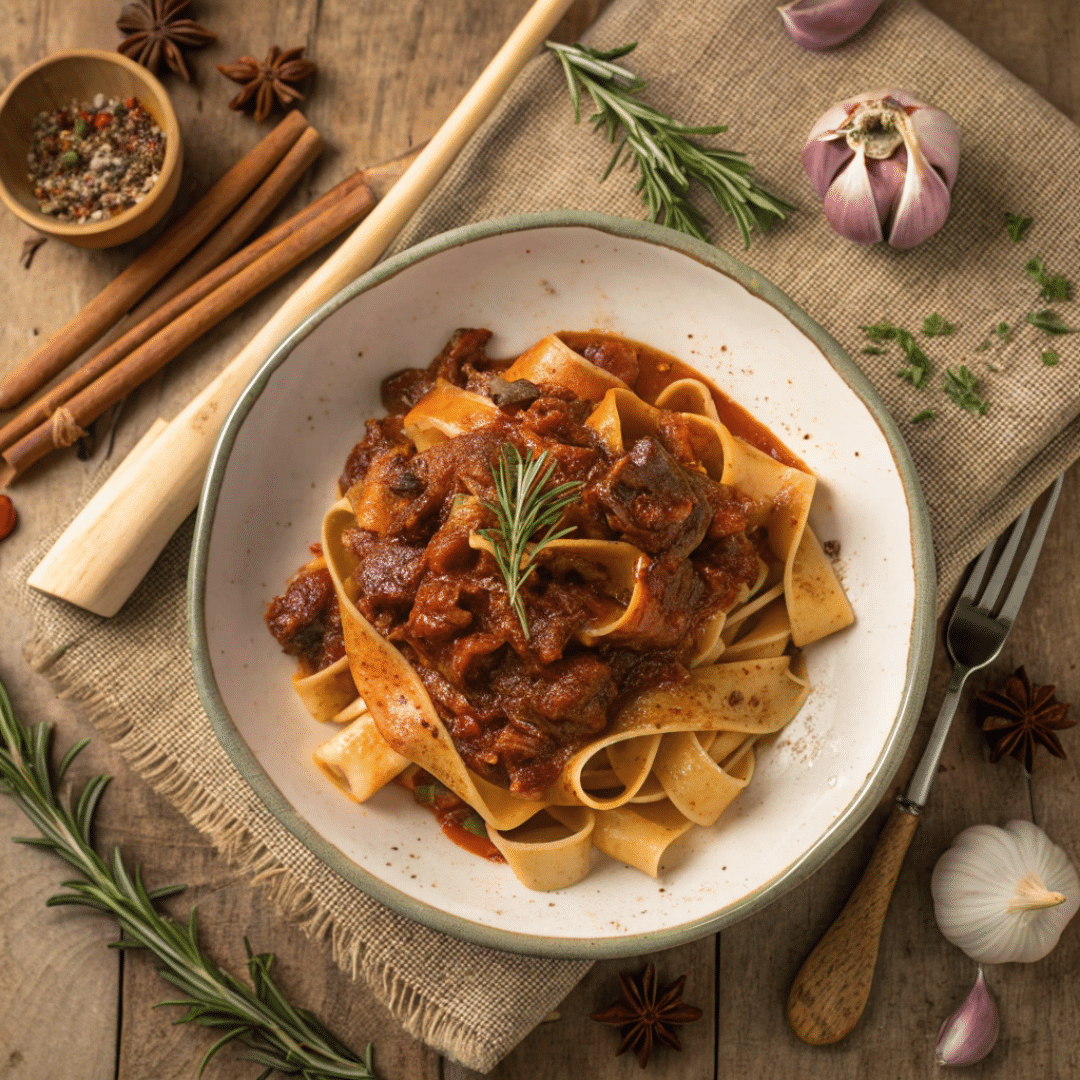
Venison Ragu with Wild Herbs
Ingredients
Method
- Pat venison dry and season generously with salt and pepper.
- Heat olive oil in a heavy Dutch oven until smoking hot.
- Sear venison in small batches until deep golden-brown, then remove from pot.
- Deglaze pan with red wine, scraping browned bits from the bottom.
- Add onions, carrots, celery, and garlic; sauté until softened.
- Return venison to the pot and add crushed tomatoes, tomato paste, stock, and herbs.
- Stovetop: Simmer gently for 3 hours until meat is fall-apart tender.
- Slow Cooker: Cook on low 6–8 hours for hands-off convenience.
- Adjust seasoning with salt, pepper, and additional herbs if needed.
- Serve hot over your favorite pasta with freshly grated Parmesan.
Notes
FAQ
Is venison difficult to cook for home cooks?
Where can I source quality venison for this recipe?
How do I handle the gamey flavor of wild venison?
Can I make this recipe ahead of time?
What are the best pasta shapes for this ragu?
Can I make this recipe without alcohol?
How long does the ragu need to cook?
Are there alternative serving suggestions beyond pasta?
About The Author

John
John Watson is the passionate food enthusiast behind MePlusFood.com. With a deep love for exploring culinary delights, he shares honest restaurant reviews, mouthwatering recipes, and culinary adventures. Join John on his flavorful journey to savor the world one bite at a time.