Warm Spiced Lentil Flatbread
Jump to Recipe
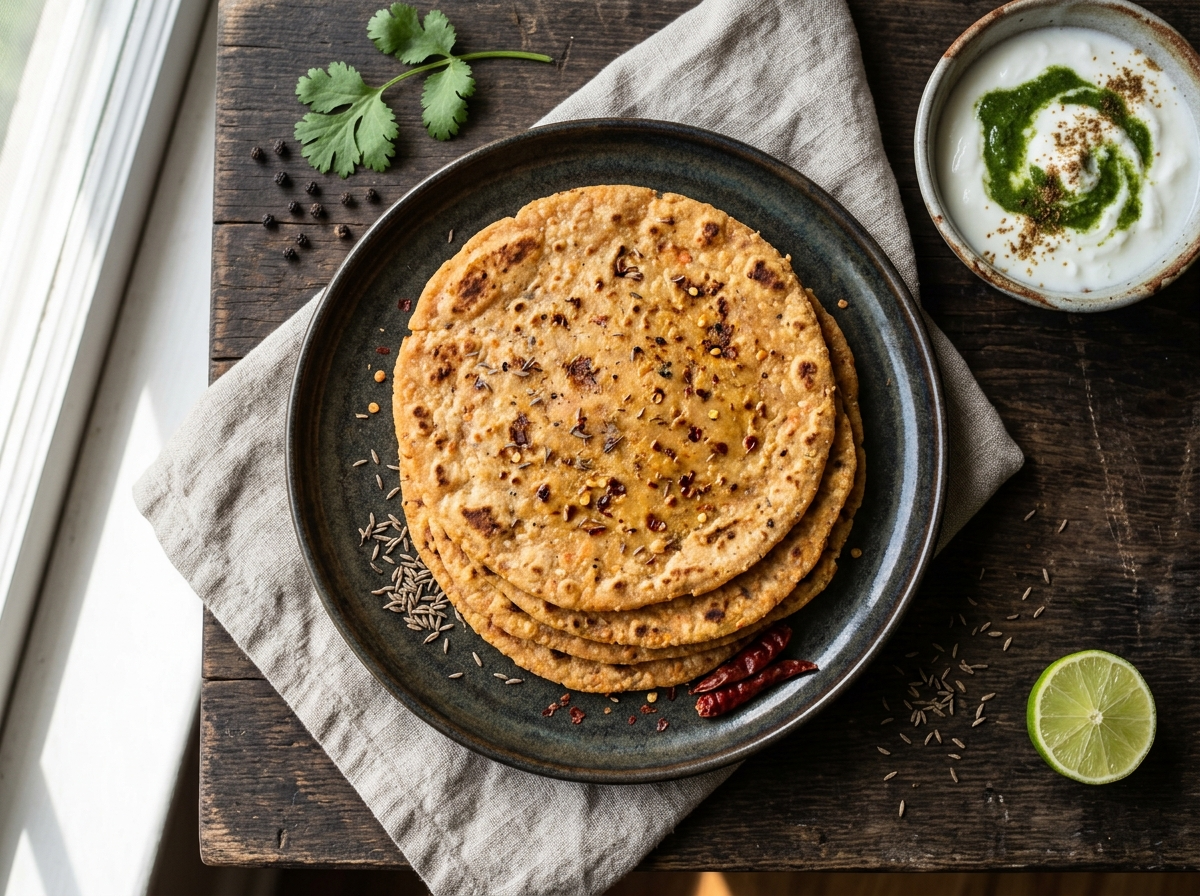
These flatbreads are made from a batter of soaked red lentils blended with warm spices, then cooked like pancakes in a hot skillet. No yeast, no oven, no resting time beyond the lentil soak.
The texture lands somewhere between a dosa and a thick crepe. The edges crisp up while the center stays slightly tender, and the cumin and coriander come through in every bite.
They work as a side to a bowl of dal or soup, as a wrap base, or on their own with a smear of yogurt or chutney. One batch makes four large flatbreads, enough for a light meal for two or a side for four.
All you need is a blender and a nonstick or cast iron skillet.
Why You’ll Love This Recipe
- Ready in 40 minutes including the lentil soak
- One blender, one skillet, minimal cleanup
- High in plant protein with no added flour needed
- Spiced throughout, not just on the surface
Ingredient Notes
- Red lentils: Use split red lentils (masoor dal), not green or brown. They blend smooth after soaking and give the batter its binding structure.
- Ground cumin: Freshly ground from whole seeds gives a more pronounced, earthy note. Pre-ground works fine but use a fresh jar.
- Ground coriander: Pairs with cumin to round out the spice blend. You can swap with garam masala for a warmer, more complex profile.
- Cayenne pepper: Adds background heat without taking over. Swap with smoked paprika if you want color with less heat.
- Fresh ginger: Grated ginger goes into the batter and brightens the spice blend. Ground ginger (half the amount) works as a substitute.
- Neutral oil: Used to grease the skillet between flatbreads. Avocado or sunflower oil both handle the heat without smoking.
Warm Spiced Lentil Flatbread
Ingredients
Method
- Place the drained soaked lentils in a high-speed blender with the water, cumin, coriander, cayenne, ginger, garlic, and salt.
- Blend on high for 60 seconds until the batter is completely smooth with no visible lentil pieces. It should pour like thick pancake batter. Add water 1 tbsp at a time if it's too thick to pour.
- Taste and adjust salt. Let the batter rest for 5 minutes while the skillet heats.
- Heat a 10-inch cast iron or nonstick skillet over medium-high heat for 2 minutes. Add about 1/2 tsp of oil and swirl to coat.
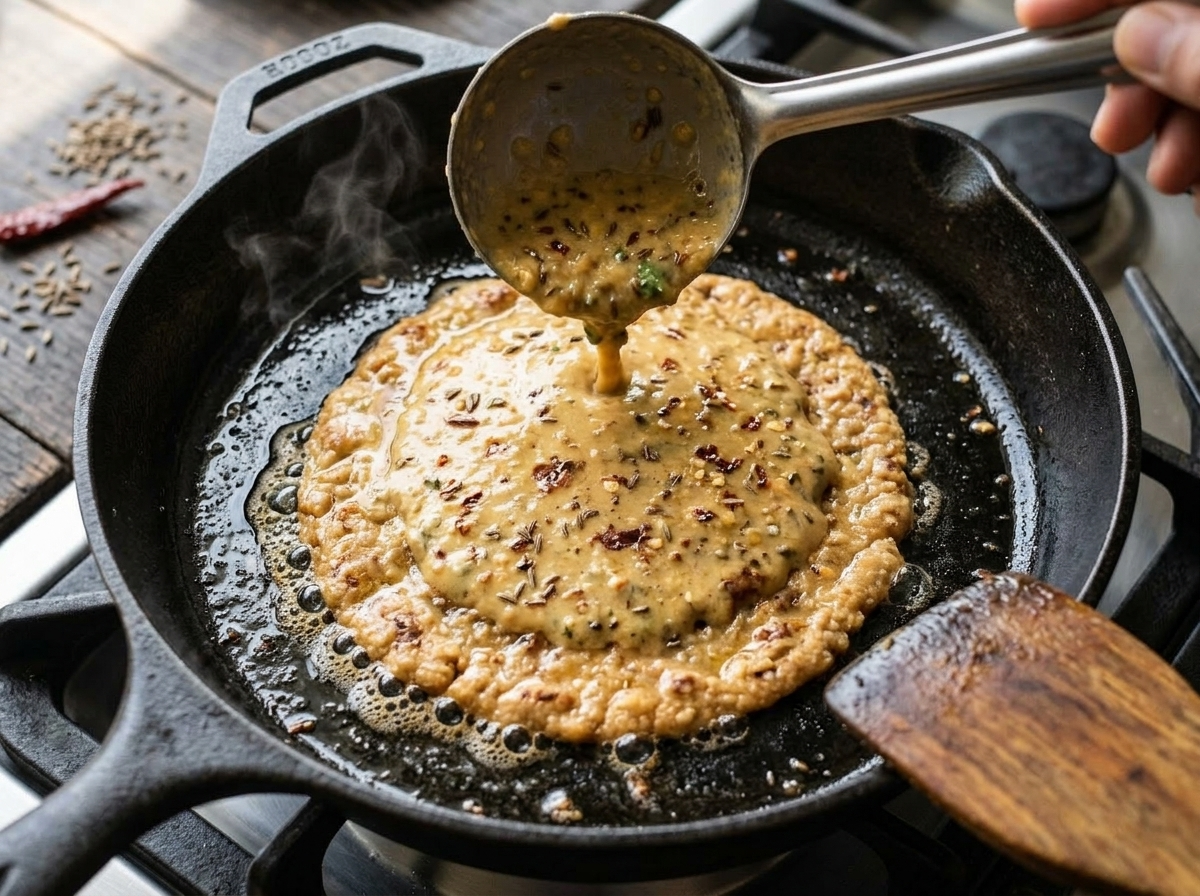
- Pour in roughly 1/3 cup of batter and immediately tilt the pan in a circular motion to spread it into a round about 7 inches wide.
- Cook undisturbed for 2 to 3 minutes, until the edges look dry and set and small bubbles break across the surface.
- Slide a flat spatula under the flatbread and flip in one confident motion. Cook the second side for 1 to 2 minutes until lightly golden and firm to the touch.
- Transfer to a plate or a 90 C / 195 F oven to keep warm. Add another 1/2 tsp oil to the skillet and repeat with the remaining batter, making 4 flatbreads total.
Notes
Tips for Success
- Soak the lentils for at least 2 hours so they blend completely smooth without grit.
- Blend the batter until no visible lentil pieces remain, about 60 seconds on high.
- Heat the skillet over medium-high until a drop of water skitters across the surface before adding batter.
- Pour the batter and immediately tilt the pan to spread it thin, as the batter thickens on contact with heat.
- Flip only once, when the edges look dry and small bubbles appear across the surface, about 2 to 3 minutes.
Variations
- Add 2 tbsp finely chopped spinach to the batter for extra color and a mild vegetal note.
- Stir in 1 tsp black mustard seeds and a pinch of turmeric for a South Indian dosa-adjacent flavor.
- Top each flatbread with thinly sliced scallions and sesame seeds before flipping for added texture.
Storage and Reheating
Store cooled flatbreads stacked between sheets of parchment paper in an airtight container in the refrigerator for up to 3 days.
Reheat in a dry skillet over medium heat for 1 to 2 minutes per side until warmed through and edges re-crisp. The microwave works in a pinch but softens the edges.
For freezing, wrap individual flatbreads in parchment, then store in a zip-lock bag for up to 2 months. Reheat from frozen in a skillet over medium-low heat, covered, for about 3 minutes per side.
Serving Suggestions
These flatbreads hold up well next to a bowl of red lentil soup or a thick dal, and pair just as naturally with a warm fennel lentil lunch plate. The spice profile in the flatbread echoes the dish, so the pairing feels intentional rather than incidental.
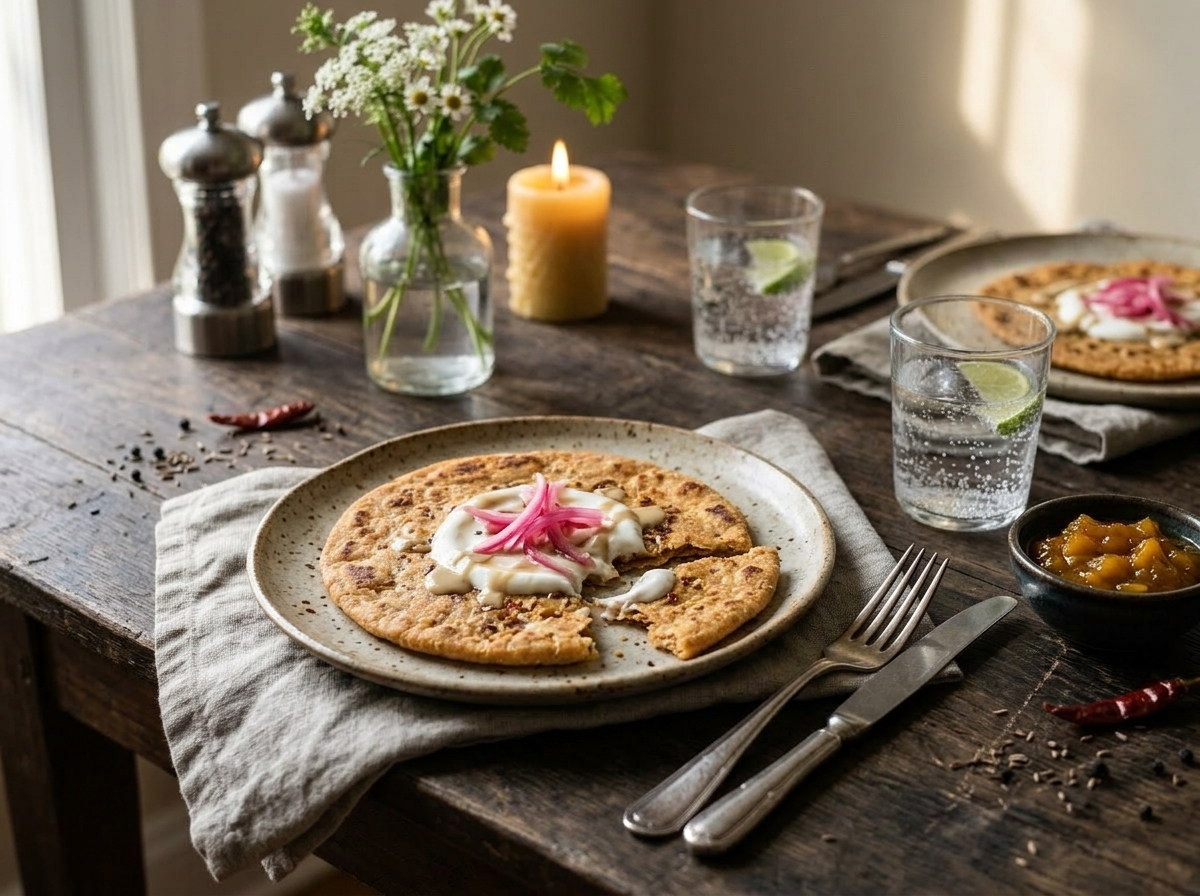
For a light lunch, spread one warm flatbread with plain yogurt, add a handful of dressed arugula, pickled red onion, and a drizzle of tahini. It eats like a full meal without much effort.
They also work as a base for a simple appetizer plate alongside cucumber raita, mango chutney, and a few crispy roasted chickpeas for crunch.
FAQ
Why is my lentil flatbread batter too thin and spreading out of control in the pan?
The lentils probably weren’t soaked long enough, so they absorbed less water. Drain more thoroughly before blending, or add 1 to 2 tbsp extra lentils and blend again to thicken.
Can I use green or brown lentils instead of red lentils for this flatbread?
Red split lentils are the right call here because they soften fully after soaking and blend into a smooth batter. Green or brown lentils stay grainy even after blending and won’t give you the same cohesive flatbread.
Can I make the lentil flatbread batter the night before?
Yes. Soak the lentils, blend the batter, and refrigerate it covered for up to 12 hours. Give it a stir before cooking since the batter can settle and separate slightly overnight.
What dips or sauces pair best with warm spiced lentil flatbread?
Plain yogurt with a pinch of cumin is the fastest option. Mango chutney, cucumber raita, or a smooth hummus all complement the spice blend without competing with it.
Is this lentil flatbread gluten-free?
The recipe contains no wheat flour, so it’s naturally gluten-free as written. If you have celiac disease, check that your spices are labeled gluten-free since some share processing facilities with gluten-containing grains.
How do I know when the lentil flatbread is ready to flip?
Look for dry, set edges and small bubbles breaking across the surface, which usually takes 2 to 3 minutes on medium-high heat. If it tears when you try to slide a spatula under it, give it another 30 seconds.
About The Author

John
John Watson is the passionate food enthusiast behind MePlusFood.com. With a deep love for exploring culinary delights, he shares honest restaurant reviews, mouthwatering recipes, and culinary adventures. Join John on his flavorful journey to savor the world one bite at a time.