Warm Up with My Simple Chickpea Dill Soup Recipe
I love how a bright, lemony chickpea dill soup can turn pantry staples into a cozy, protein-forward dinner in about 30 minutes. The aroma of sautéed garlic and onion, the gentle simmer of broth with orzo, and a final squeeze of lemon make it feel both fresh and homey.
I keep this recipe one-pot and relaxed—sweat aromatics, simmer with broth and pasta, then finish off-heat so herbs stay vivid. I’ll point out timing so the pasta stays al dente, and share simple swaps like rice or quinoa if you want a different texture.
Also, it reheats well (orzo can puff, so add pasta when reheating or cook it just shy of done). Store chilled for up to four days or freeze portions for up to three months—then loosen with a splash of broth when warming.
Key Takeaways
- This is a quick, one-pot weeknight meal that’s ready in ~30 minutes.
- Plant protein from legumes gives the bowl a creamy, satisfying bite.
- Finish with fresh lemon and herbs off the heat to preserve bright flavor.
- Cook orzo al dente or add it at reheat to avoid a pasty texture.
- Store in the fridge up to 4 days; freeze up to 3 months in airtight bags.
Why this Lemony, Herb-Packed Chickpea Dill Soup Belongs in Your Weeknight Rotation
This lemon-forward, herb-bright bowl is exactly the kind of weeknight lifeline I reach for when I want big flavor with little fuss. It tastes fresh and clean, but still fills you up.
The flavor profile is simple: citrus lifts the broth, herbs add an aromatic pop, and tender legumes give a gentle chew. I stir the herbs in off the heat so their color and scent stay vivid.
Light, Bright, and Cozy: Flavor Notes and Feel
Citrus keeps the broth lively. Fresh herbs thread through each spoonful. The overall impression is lively, not heavy—perfect when you want comfort without weighing down the evening.
Who It’s Perfect For
- Fast weeknight dinners when you need dinner in minimal time.
- Protein-packed lunches that reheat well the next day.
- Meal-prep: double the batch for ready-to-eat leftovers all week.
| Occasion | Prep & Time | Why it works |
|---|---|---|
| Quick lunch | 10–15 minutes | Light, reheats well, stays bright with lemon |
| Weeknight dinner | 25–35 minutes | Comforting but not heavy; fills you up |
| Meal prep | Make-ahead, stores 3–4 days | Scales easily and tastes better the next day |
Ingredients that Build Big Flavor Fast
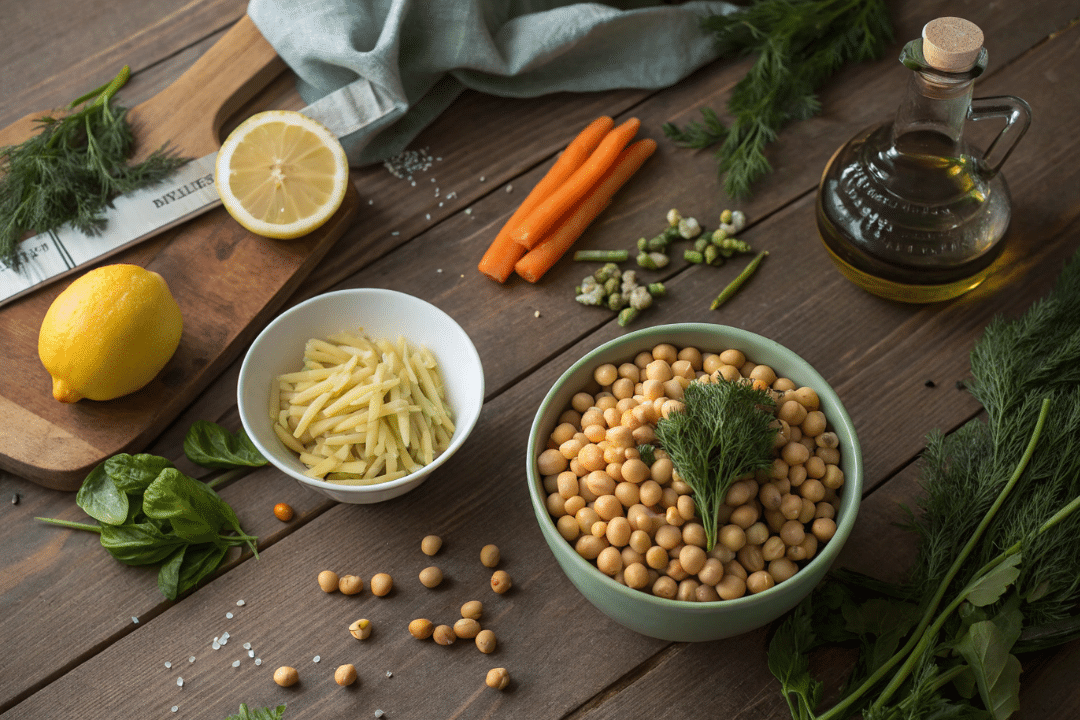
With just cans, a cup of pasta or rice, and a lemon, you can make a weeknight meal that sings. Below are the pantry stars, fresh boosters, and small extras that do the heavy lifting.
Pantry Stars
- 2 cans chickpeas — quick protein and creaminess straight from the can.
- 3/4 cup orzo (or substitute rice) — gives body and comfort.
- 8 cups low-sodium vegetable broth (or chicken broth) — use low-sodium so you control salt.
Fresh Boosters
- Onion, carrots, celery — a classic mirepoix sautéed in olive oil for depth.
- Garlic — add after the veg softens so it stays bright, not bitter.
- Lemon zest and juice — zest early, fresh lemon at the end for lift.
- Fresh dill — stir in off the heat to keep color and flavor vivid.
Optional Adds
- Kale or spinach — wilt in the last few minutes for greens.
- Parsley, chili flakes, or a spoon of Greek yogurt — for freshness, heat, or creaminess.
- Want more make-ahead ideas? Check my guide to vegan slow-cooker meals for meal prep inspiration.
Step-by-Step: From Sauté to Simmer to Fresh Dill Finish
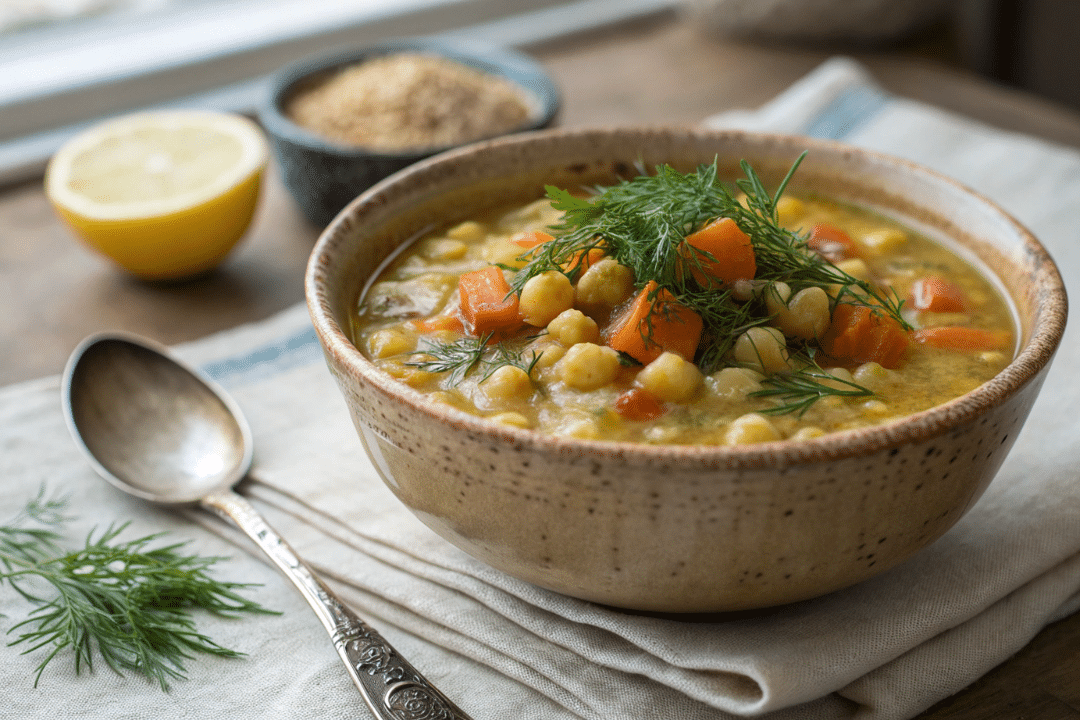
I’ll guide you through each step with clear cues—what to smell, when to check texture, and how long each stage should take so you get it right the first time.
Sweat the Aromatics in Olive Oil for Deep Flavor
Heat a wide pot over low to medium heat and add olive oil. Add the onion, carrot, and celery, and sweat gently for 8–10 minutes, until soft and fragrant.
When they’re tender, add the garlic and stir for about 1 minute—just until you can smell it start to bloom.
Pour in Broth, Add Chickpeas and Pasta, and Simmer Until Just Tender
- Pour in the broth and bring it to a steady boil.
- Add chickpeas and orzo (or rice), and simmer uncovered, stirring occasionally, until the pasta is just shy of tender—about 5–10 minutes, depending on the brand.
- The moment the pasta reaches al dente, reduce the heat to low to protect the fresh flavors you’ll add next.
Finish with Lemon Juice and a Shower of Fresh Dill Off the Heat
Remove the pot from the heat, stir in lemon juice and chopped fresh dill, then taste and finish with salt and cracked pepper. For shine, drizzle a little oil over the dish before serving.
| Grain | Simmer Time | Tip |
|---|---|---|
| Orzo | 5–10 minutes | Check early to avoid a mushy texture |
| Rice | 15–20 minutes | Start with a longer simmer and test toward the end |
| Quinoa | 12–15 minutes | Rinse first for the best texture |
Avgolemono-Style Option: How to Temper Eggs for a Silky Broth
If you want a silkier finish, try an avgolemono-style twist that turns the broth velvety and bright. I’ll walk you through the calm, confident notes so you avoid scrambled eggs and get a smooth result.
What Tempering is and How to Avoid Scrambled Eggs
Tempering is simply warming eggs slowly so they blend into the hot liquid without curdling. Whisk whole eggs and extra yolks with fresh lemon juice in a bowl until smooth.
When to Add the Egg-Lemon Mixture and How to Manage Heat
- Ladle about 3/4 cup hot broth into the egg-lemon mix very slowly, whisking constantly to raise the temperature.
- With the pot over low heat, pour the warmed egg mixture into the pot in a thin stream while stirring steadily.
- Stir gently for about a minute, then let the pan sit on low so the broth thickens slightly—this takes roughly 5 minutes.
- Do not let the pot boil after the eggs go in; boiling will curdle and dull the lemon flavor.
- Taste and adjust seasoning at the end. For a richer body, add an extra yolk; for a lighter texture, use fewer yolks.
Chickpea Dill Soup Substitutions and Smart Swaps
Short on orzo? No problem — a few simple swaps keep the bowl satisfying. I’ll show what to change and why it matters, so you can cook with what you have.
No Orzo? Use Rice, Quinoa, or Potatoes for the Body
- If you’re out of orzo, rice is my go-to. It holds up well and makes the meal heartier.
- Quinoa adds a lighter texture and a protein boost, making it great for a grain-forward bowl.
- Diced potatoes add creaminess as they break down. Mash a few for extra body if you skip pasta.
Broth and Greens Choices
Choose low-sodium vegetable broth to keep it vegetarian, or opt for chicken broth for a classic, cozy feel.
- Kale adds chew and structure; spinach wilts fast and feels tender.
- Use dill for its signature aroma, or swap in parsley for a peppery, bright finish — both work well together.
Finishers: creaminess, seasoning, and oil
For creamy richness, stir in Greek yogurt or sour cream. For a dairy-free option, skip the dairy and finish with a drizzle of good olive oil.
Taste and adjust salt and pepper at the end. Add chili flakes for heat or a pinch of turmeric for warm color.
| Swap | Texture | Why use it |
|---|---|---|
| Rice | Hearty | Holds up and fills bowls |
| Quinoa | Light, slightly chewy | More protein, nutty flavor |
| Potatoes | Creamy when broken | Adds body without pasta |
Timing, Yield, and Texture Tips
Timing matters more than you think. A few precise minutes at each stage keep the pot brothy and lively, not thick and stodgy. I’ll share simple cues so you finish with a bright bowl every time.
Quick Timing Cues
- Budget about 8–10 minutes to soften aromatics so they taste sweet and full.
- Pasta usually needs 5–10 minutes, depending on the brand; check a piece at the early mark and stop when it’s al dente.
- To prevent over-swollen orzo, reduce the heat as soon as it’s tender and finish flavoring off the burner.
- If you plan to have leftovers, cook the pasta slightly underdone or boil it separately and add it to each bowl when serving.
- Another approach is to hold the pasta back and add it when reheating the soup to preserve texture.
Keep the broth at a gentle simmer, not a rolling boil. Vigorous bubbling speeds up the clock and can push a perfect al dente piece into overcooked territory in a few careless minutes.
Stir occasionally to prevent the pasta from sticking and clumping. If the pot thickens as it sits, loosen it with a splash of warm broth before serving. Or swap in a cup of cooked rice at the end if you want to avoid any pasta swelling.
| Stage | Minutes | Tip |
|---|---|---|
| Sweat aromatics | 8–10 | Low heat until soft and fragrant |
| Cook pasta | 5–10 | Check early; stop at al dente |
| Finish | 1–2 | Reduce heat and add herbs off the burner |
Storage, Reheating, and Freezer Notes
Cool the pot close to room temperature, then move portions into airtight containers. I keep them in the fridge for up to four days and label each one with the date so nothing gets forgotten.
Refrigerate Safely and Loosen Thickened Bowls
Reheat on the stovetop over medium-low heat for a few minutes, stirring to ensure the heat spreads evenly. If the mix tightens, add a splash of broth or water until it’s back to spoonable. In the microwave, stop and stir every minute to maintain gentle and even heat.
Freezer-Friendly Guidance and How to Refresh
- Chill completely before freezing. Lay flat in sealed bags for faster thawing.
- Freeze up to three months; thaw overnight in the fridge for best results.
- Orzo swells in storage—add fresh pasta or rice when you reheat for a lighter texture.
- Brighten with a squeeze of lemon and a sprinkle of fresh dill after reheating to revive aroma.
| Method | Time | Reheat tip | Extra |
|---|---|---|---|
| Fridge | Up to 4 days | Stovetop, medium-low, 3–5 minutes | Add broth or water if thick |
| Freezer (flat bags) | Up to 3 months | Thaw overnight, then warm gently | Keep herbs out; add fresh after reheating |
| Microwave | Reheat in 1–2 minutes | Stop & stir each minute | Finish with lemon and dill |
Quick notes: a little planning keeps leftovers tasting bright. Follow these steps, and your next bowl will feel like it was made minutes ago.
Serve it Right: Toppings, Sides, and Pairing Ideas
Small extras at the table can turn a humble bowl into a memorable meal in minutes. I like to set out a few simple toppings so everyone can customize their bowl.
Drizzle, Herbs, Pepper, and Bread
I always finish each serving with a ribbon of olive oil for shine and rounded flavor. A sprinkle of fresh dill and a dash of black pepper amplify the herb-citrus notes.
Keep a small dish of coarse salt nearby to adjust the seasoning at the table. Warm, crusty bread is perfect for dipping and catching every last drop.
Make it a Full Plate
- For a light meal, toss a lemony side salad with mixed greens and a splash of olive oil.
- Indulge in a golden grilled cheese—melty cheese pairs well with the bright broth.
- Feta-topped bruschetta adds a salty, tangy contrast that complements the citrusy base perfectly.
| Pairing | Why it works | Serve with |
|---|---|---|
| Crusty bread | Soaks up broth, adds crunch | Butter or olive oil |
| Grilled cheese | Comforting, rich contrast | Sharp cheddar or fontina |
| Lemony salad | Bright, refreshing balance | Mixed greens, vinaigrette |
If you’re hosting a casual dinner, lay out olives, marinated veggies, and extra herbs so guests build their own bowls. These small touches make simple recipes feel like a special, shared meal.
Nutritional Spotlight: Protein, Fiber, and Feel-Good Benefits
Think of this bowl as a balanced, easy meal that pulls double duty: comforting and nourishing. I’ll outline what each part adds and simple swaps to sharpen the nutrition for your goals.
Plant Protein, Fiber-Rich Veggies, and Whole-Grain Options
Legumes deliver the base of protein and slow-burning carbs. They also bring iron and a hearty texture that helps meals feel complete.
The vegetable base—comprising onion, carrots, celery, and greens—provides vitamins like K and magnesium, as well as fiber and color. Those bits boost nutrient density without extra effort.
- Swap white pasta for brown rice or whole-wheat shapes to increase fiber and staying power.
- Stir in a spoonful of Greek yogurt for a protein boost with minimal added fat.
- Use olive oil in moderation; it adds flavor and healthy fat while keeping the total fat intake moderate.
- Want more fullness? Add an extra scoop of legumes or a ladle of cooked rice to your bowl.
| Component | Key benefit | Quick tweak |
|---|---|---|
| Legumes | Protein, iron, slow carbs | Add an extra 1/2 cup for more satiety |
| Vegetables | Vitamins, minerals, fiber | Boost greens to double the micronutrients |
| Whole grains | Higher fiber, lasting energy | Use brown rice or whole-wheat pasta |
| Finishers | Fat for flavor and absorption | Drizzle olive oil; yogurt for creaminess |
Conclusion
This one-pot approach saves time and keeps flavor lively from first stir to last spoon. Start by sweating onion, carrots, and celery in olive oil, add garlic for a minute, then build with broth and pasta or rice—watch the minutes so the grain stays al dente.
Finish off the heat with lemon juice and dill to lock in the aroma. If you try the avgolemono-style twist, temper the eggs slowly for a silky result. Keep a cup or two of warm broth handy to loosen leftovers when reheating.
Store chilled up to four days or freeze flat for three months. Season with salt, pepper, and a drizzle of good olive oil at the end. I can’t wait for you to try this recipe—give it a go tonight and enjoy a simple, bright dinner from your pot.
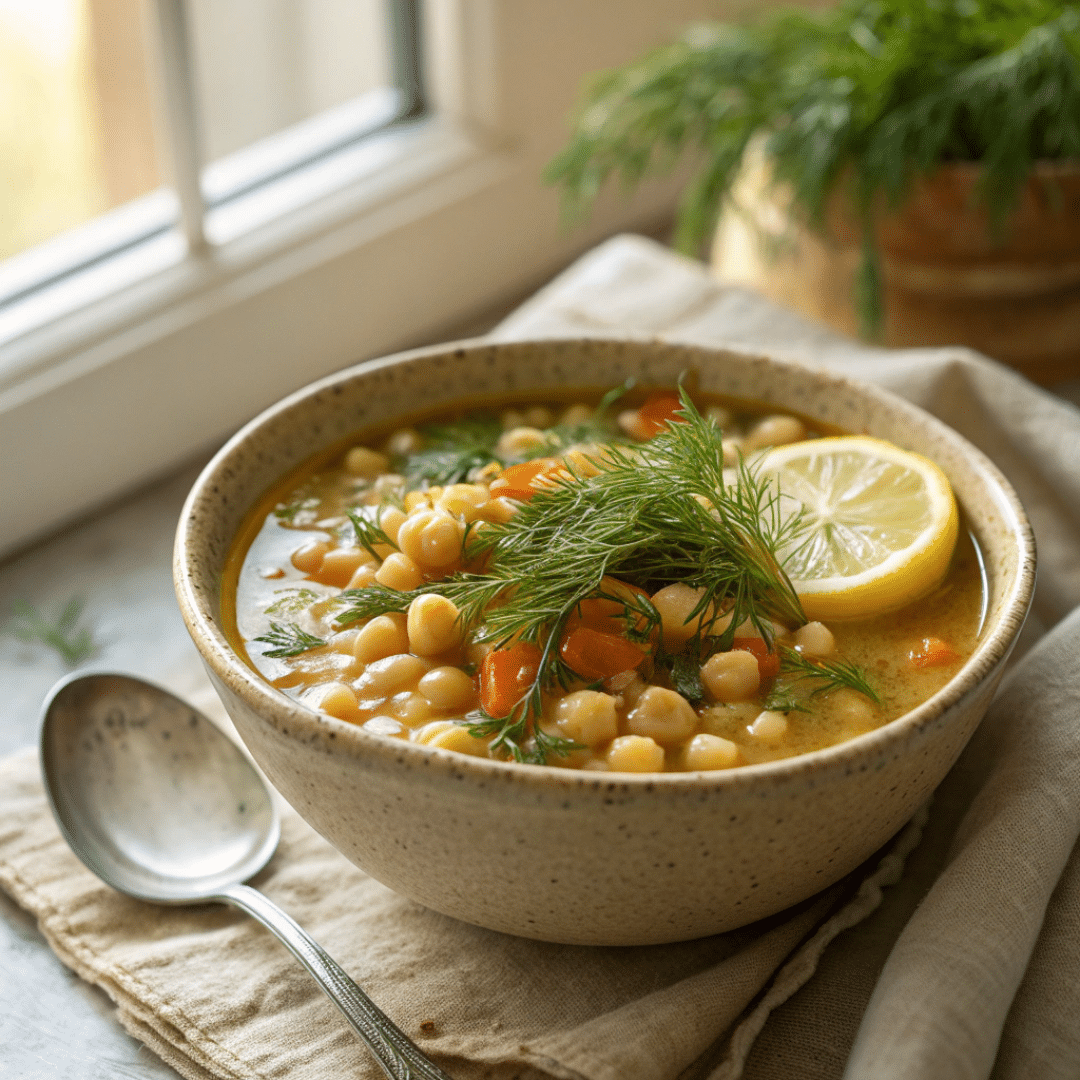
Chickpea Dill Soup
Ingredients
Method
- Heat olive oil over low–medium heat in a wide pot. Add onion, carrot, and celery; sweat for 8–10 minutes until soft and fragrant.
- Add garlic; stir 1 minute until aromatic.
- Pour in broth; bring to a boil. Add chickpeas and orzo (or rice/quinoa). Simmer uncovered, stirring occasionally, until pasta is just tender (orzo 5–10 min, rice 15–20 min, quinoa 12–15 min).
- Remove from heat; stir in lemon juice and chopped dill. Taste, season with salt and cracked pepper. Drizzle with olive oil for shine.
- Whisk eggs with extra yolks and lemon juice. Slowly ladle 3/4 cup hot broth into eggs while whisking.
- Pour egg mixture into soup over low heat in a thin stream, stirring constantly. Do not boil. Let sit 5 min to thicken. Adjust seasoning.
Notes
FAQ
What makes this lemony, herb-packed recipe a good weeknight option?
How do I keep the aromatics from burning when sautéing?
Can I use rice instead of orzo, and how does that change cook time?
Is there a vegetarian way to make this with the same depth of flavor?
How do I temper eggs for the avgolemono-style version without scrambling them?
What’s the best way to add fresh herbs so they stay vibrant?
How long does the finished dish keep in the fridge, and how should I reheat it?
Can I freeze this, and are there components I should leave out before freezing?
What are smart swaps for greens and creaminess?
How do I prevent pasta or rice from becoming mushy when stored?
What simple toppings and sides make this a complete meal?
How can I boost protein and fiber without changing the flavor much?
About The Author

John
John Watson is the passionate food enthusiast behind MePlusFood.com. With a deep love for exploring culinary delights, he shares honest restaurant reviews, mouthwatering recipes, and culinary adventures. Join John on his flavorful journey to savor the world one bite at a time.