Roasted Butternut Squash Soup with Crispy Fried Sage
Jump to Recipe
Roasted Butternut and Sage Soup gets its flavor from caramelizing squash in the oven before it ever touches the pot, rather than boiling raw cubes into a puree. The high heat browns the edges and pulls out sugars that a straight simmer never coaxes out.
I roast the squash at 400 F / 200 C for about 35 minutes, until the edges are deep gold and a fork slides in with zero resistance. That caramelization is the whole point of this recipe. Skip it and the soup tastes flat, more like baby food than something you’d want a second bowl of.
Fresh sage goes in twice here, once simmered into the base and once fried crisp in butter for the topping. The fried leaves turn brittle and savory, a good contrast against the smooth puree underneath.
This one comes together in about an hour, most of it hands-off roasting time, and it freezes well for weeks of lunches.

Why You’ll Love This Recipe
- Roasting caramelizes the squash for deeper flavor
- Comes together with one sheet pan and one pot
- Freezes well for easy weekday lunches
- Crispy fried sage adds crunch to every bowl
Ingredient Notes
- Butternut squash: Choose one heavy for its size with matte, tan skin, that’s a sign it’s ripe and starchy-sweet. Peeled and cubed, you want about 1 kg / 2.2 lb.
- Fresh sage: Dried sage works in the base at a third of the amount, but skip it for the fried garnish since it won’t crisp the same way.
- Vegetable stock: Use low-sodium so you control the salt yourself. Chicken stock works too if you’re not keeping the soup vegetarian.
- Heavy cream: Coconut milk swaps in for a dairy-free version and adds a faint sweetness that pairs well with the squash.
- Nutmeg: A small pinch rounds out the squash’s sweetness. Don’t overdo it, it turns bitter fast past a quarter teaspoon.
- Butter: Used to fry the sage leaves crisp for garnish. Olive oil works but won’t give the same nutty background flavor.
Roasted Butternut Squash Soup with Crispy Fried Sage
Ingredients
Method
- Heat the oven to 200C / 400F.
- Toss squash cubes with 2 tbsp olive oil, salt, and pepper on a sheet pan, spreading them in a single layer.
- Roast for 30 to 35 minutes, flipping once, until the edges are deep gold and a fork slides in easily.
- While the squash roasts, melt 2 tbsp butter in a large pot over medium heat.
- Add onion and cook 5 to 6 minutes until soft and translucent.
- Add garlic and chopped sage, cook 1 minute until fragrant.
- Add the roasted squash, stock, and nutmeg. Bring to a simmer and cook 10 minutes.
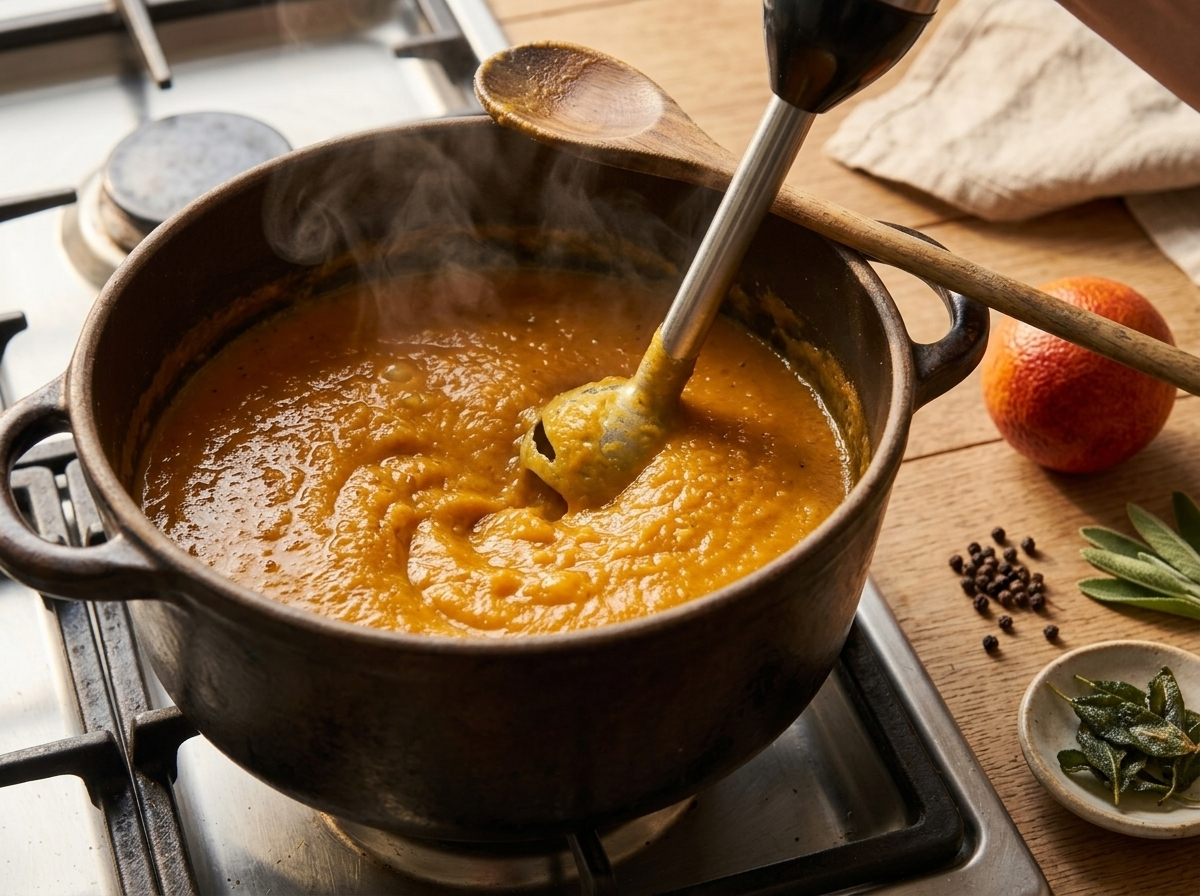
- Blend until smooth with an immersion blender, or in batches in a countertop blender.
- Stir in the cream off the heat, then season with salt and pepper to taste.
- Melt 2 tbsp butter in a small skillet over medium heat.
- Add whole sage leaves and fry 20 to 30 seconds per side until crisp, then transfer to a paper towel.
- Ladle the soup into bowls and top with the fried sage leaves.
Notes
- Roast squash in a single layer for even caramelization, not steamed softness.
- Fry sage leaves just before serving so they stay crisp on top.
- Blend hot soup in batches, venting the lid to avoid pressure buildup.
- Add cream off the heat to keep it from curdling.
- Season with nutmeg sparingly, it turns bitter if overdone.
Tips for Success
- Cut squash cubes uniform, about 2.5cm/1-inch, so they roast and caramelize at the same rate.
- Roast in a single layer without crowding the pan, or the squash steams instead of browning.
- Fry sage leaves in butter for 20 to 30 seconds only, they burn fast and turn bitter past that point.
- Blend hot soup in batches if using a countertop blender, since hot liquid expands and can blow the lid off.
- Taste after stirring in the cream, since cold cream mutes seasoning and you’ll likely need another pinch of salt.
Variations
- Swap half the butternut for peeled apple and roast it alongside for a sweeter, tarter finish.
- Stir in a spoonful of miso or a splash of apple cider vinegar at the end for more depth.
- Top with toasted pumpkin seeds and a drizzle of brown butter instead of cream for a nuttier bowl.
Storage and Reheating
Roasted Butternut and Sage Soup keeps well in the fridge for up to 4 days in an airtight container. Let it cool to room temperature before sealing so condensation doesn’t water down the texture.
For longer storage, freeze in portioned containers for up to 3 months. Thaw overnight in the fridge before reheating.
Reheat on the stovetop over medium-low heat, stirring occasionally, for about 8 minutes until steaming. If it thickened in the fridge, loosen it with a splash of stock or water, and add cream after reheating if you froze it without dairy since cream can separate when frozen and thawed.
Serving Suggestions
Roasted Butternut and Sage Soup works as a starter or a full meal depending on portion size. A crusty piece of sourdough or a grilled cheese sandwich turns a small bowl into dinner.
For a starter course, ladle it into small cups and top with fried sage and a swirl of cream. It pairs well with a simple green salad dressed in lemon and olive oil, or roast chicken if you want more protein at the table.
A glass of dry white wine, like a Chenin Blanc, complements the squash’s sweetness without competing with the sage.

FAQ
Why is my roasted butternut and sage soup watery instead of thick?
Watery soup usually means the squash wasn’t roasted long enough to caramelize, or too much stock went in before blending. Roast until the edges are deep gold and fork-tender, about 35 minutes, and add stock gradually, blending to check consistency before pouring in the rest.
Can I use coconut milk instead of heavy cream in this soup?
Yes, coconut milk works as a dairy-free swap and complements the squash’s sweetness with a faint coconut note. Use full-fat coconut milk for the same richness as cream, and stir it in off the heat so it doesn’t separate.
Can I freeze roasted butternut and sage soup after it’s blended?
Yes, this soup freezes well for up to 3 months once it’s fully cooled. Freeze it before adding cream if possible, since dairy can separate and turn grainy after thawing, then stir the cream in fresh after reheating on the stovetop.
What goes well with roasted butternut and sage soup for dinner?
Crusty sourdough bread or a grilled cheese sandwich turns this soup into a full meal. A simple green salad with a lemony vinaigrette or a piece of roast chicken rounds out the table if you want more protein alongside it.
Is roasted butternut and sage soup gluten free?
Yes, this soup is naturally gluten free as written, since it’s built from squash, stock, aromatics and cream. Double check your stock’s label though, since some brands add wheat-based thickeners, and skip croutons if serving to someone avoiding gluten.
What’s the difference between butternut squash soup and pumpkin soup?
Butternut squash has denser, sweeter flesh than most pumpkin varieties, which gives this soup a richer body without needing much added sugar. Pumpkin soup tends to be more watery and milder, so recipes using pumpkin often lean harder on spice to compensate.
Related recipes
About The Author

John
John Watson is the passionate food enthusiast behind MePlusFood.com. With a deep love for exploring culinary delights, he shares honest restaurant reviews, mouthwatering recipes, and culinary adventures. Join John on his flavorful journey to savor the world one bite at a time.