Charred Octopus with Romesco Sauce
Jump to Recipe
Octopus gets a bad reputation for being tricky, but the process is straightforward once you understand the two-step method: braise until tender, then char hard and fast.
The braising liquid does most of the work. A low simmer for 45 to 60 minutes breaks down the muscle fibers so the flesh becomes yielding, not rubbery. After that, a dry ripping-hot cast iron or grill does the rest in under four minutes.
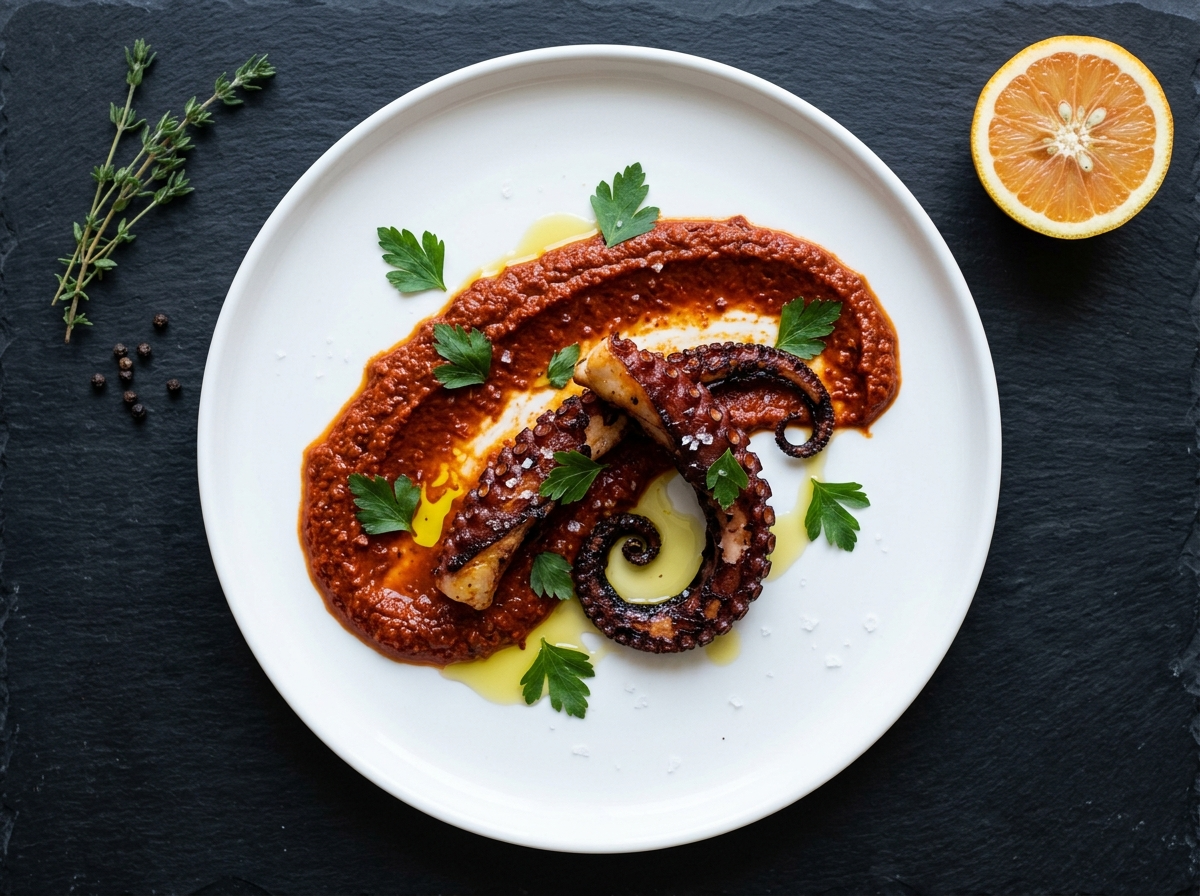
Romesco is the natural partner here. Roasted red peppers, almonds, garlic, and sherry vinegar blend into a sauce that is smoky, slightly acidic, and thick enough to anchor each piece of octopus on the plate — the same smoky, charred-and-sauced approach that makes bold starters work.
This recipe serves four as a starter or two as a main. It works for a dinner party because the braise can happen a full day ahead, and the romesco keeps in the fridge for a week.
Why You’ll Love This Recipe
- Braise-ahead method means no stress on the day
- Romesco doubles as a dip or spread for other meals
- High-heat sear delivers real char without a grill
- Restaurant-style plating from a home kitchen setup
Ingredient Notes
- whole octopus (cleaned): Ask your fishmonger to clean it. Frozen octopus often produces more tender results than fresh because the ice crystals break down the fibers during thawing.
- roasted red peppers: Jarred peppers in brine work fine here. If you roast your own, char them directly over a gas flame, then steam in a covered bowl for 15 minutes before peeling.
- blanched almonds: Toast them dry in a skillet until pale gold before blending. Marcona almonds add a richer flavor if you have them.
- sherry vinegar: This is the backbone of the romesco’s acidity. Red wine vinegar is a direct substitute, though it’s slightly sharper.
- smoked paprika: Use sweet smoked paprika (pimentón de la vera) for the romesco. Hot smoked paprika is fine if you want a bit of heat.
- olive oil: Use a mild extra virgin for the romesco so it doesn’t overpower the peppers. Reserve a finishing-quality oil for drizzling at the end.
Charred Octopus with Romesco Sauce
Ingredients
Method
- Place the cleaned octopus in a large stockpot. Add the water, white wine, bay leaves, peppercorns, smashed garlic, and sea salt.
- Bring to a boil over high heat, then immediately reduce to a low simmer. The surface should bubble gently, not roll.
- Cook uncovered for 45 to 60 minutes, until a skewer or paring knife slides into the thickest part of an arm with no resistance.
- Remove the octopus and transfer to a sheet pan. Let it cool for 15 minutes, then cut the arms away from the body with scissors or a knife. Discard the body or reserve for another use.
- Pat the arms completely dry with paper towels on all sides. This step is critical for a proper sear.
- Toast the blanched almonds in a dry skillet over medium heat for 3 to 4 minutes, stirring often, until pale gold and fragrant. Remove from the heat.
- Add the toasted almonds, roasted red peppers, garlic, crushed tomatoes, sherry vinegar, smoked paprika, and sea salt to a food processor or blender.
- Pulse until roughly combined, then drizzle in the olive oil while processing to a thick, slightly textured sauce. Taste and adjust salt and vinegar. Set aside at room temperature.
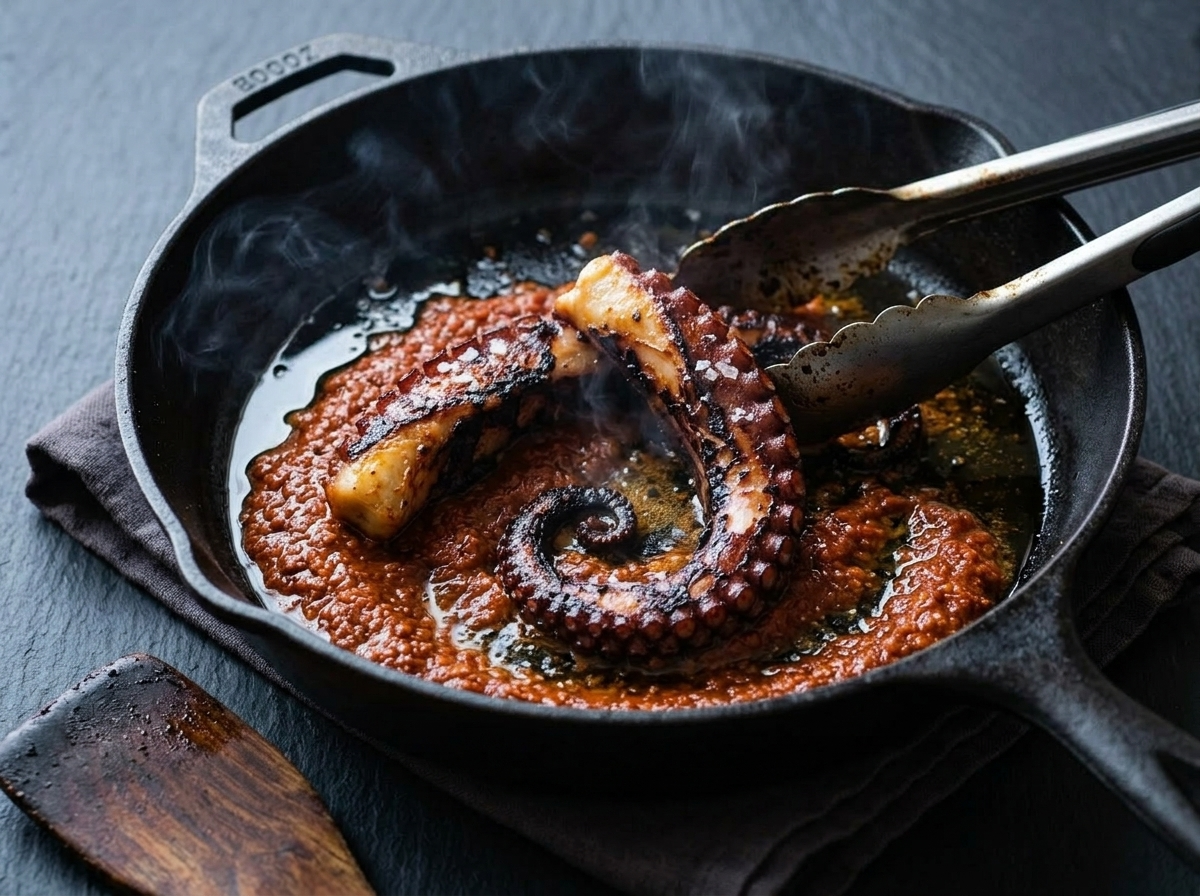
- Heat a cast iron skillet over high heat for 3 to 4 minutes until it just begins to smoke.
- Add 2 tbsp olive oil, then lay the dried octopus arms in a single layer. Do not move them for 90 seconds, until charred on the underside.
- Flip and char the other side for another 60 to 90 seconds. The edges should look deep brown and slightly crisped.
- Spoon the romesco generously across warm plates. Lay 2 to 3 octopus arms over the sauce per portion.
- Finish with a drizzle of olive oil, a pinch of flaky salt, and torn flat-leaf parsley. Serve immediately.
Notes
Tips for Success
- Simmer the octopus at a bare bubble, not a rolling boil, to keep the texture tender rather than spongy.
- Pat the braised octopus arms completely dry before searing or they will steam instead of char.
- Preheat your cast iron skillet for at least 3 minutes over high heat before the octopus touches the surface.
- Blend the romesco to a rough, slightly chunky texture rather than a smooth puree for better grip on the plate.
- Add the sherry vinegar to the romesco in two stages, tasting between additions, to control the acidity level.
Variations
- Grill the octopus over wood charcoal for a deeper, ash-inflected smokiness instead of cast iron.
- Swap almonds in the romesco for toasted hazelnuts and add a teaspoon of harissa for a North African angle.
- Slice the braised octopus into rounds and serve the romesco as a dip with grilled bread for a mezze-style spread.
Storage and Reheating
The braised octopus keeps refrigerated in its cooking liquid for up to 2 days. Store the arms whole and slice just before searing.
Romesco keeps in a sealed jar in the fridge for up to 7 days. A thin layer of olive oil on top prevents oxidation and keeps the color bright.
To reheat, sear the cold braised arms directly from the fridge in a hot dry pan for 2 to 3 minutes per side. Do not microwave – it toughens the flesh.
Serving Suggestions
Spoon the romesco in a wide swoosh across a warm plate, then lay two or three charred octopus arms over it. Finish with thinly sliced parsley, a pinch of flaky salt, and a drizzle of good olive oil.
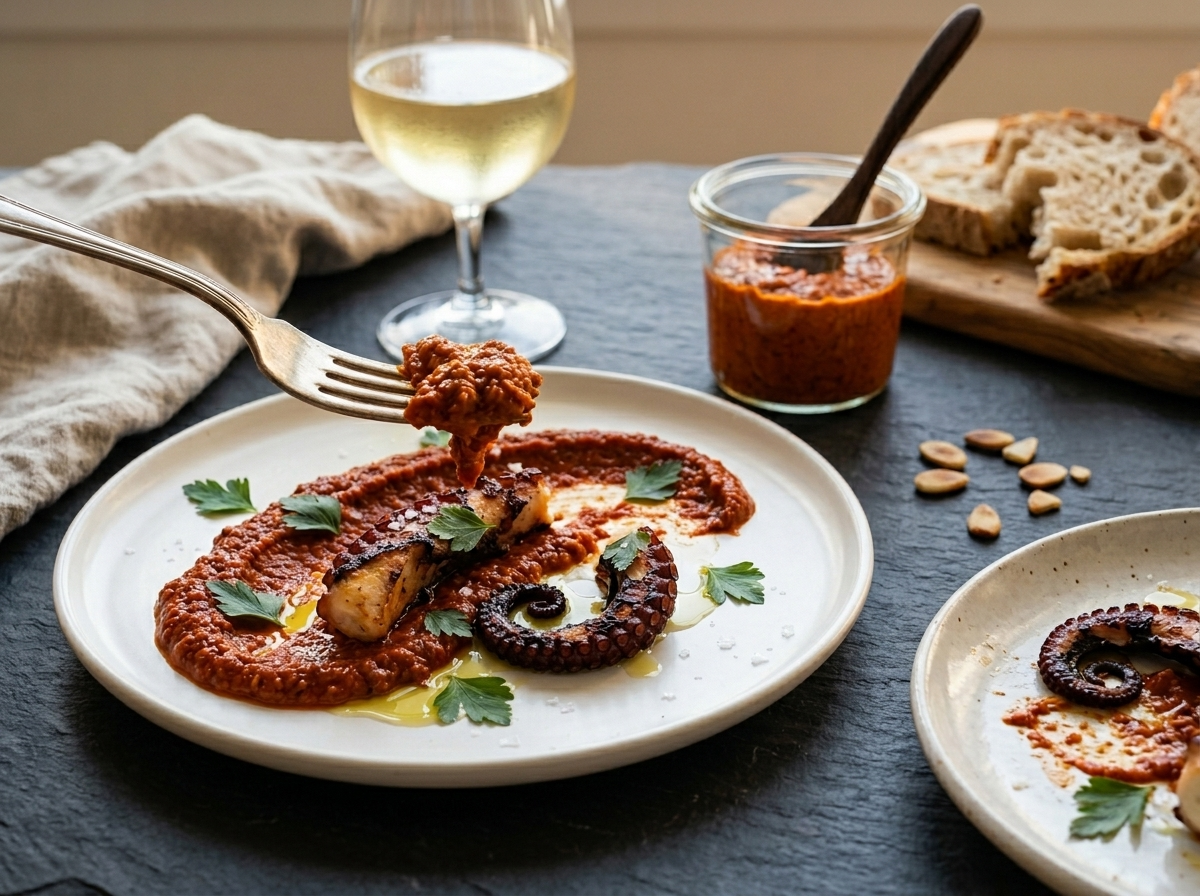
For a fuller plate, add a few slices of grilled sourdough to soak up the sauce, or serve alongside vegetables roasted with garlic and lemon for a plant-forward side.
This dish pairs well with a chilled glass of Albariño or a dry, mineral-forward Cava. The acidity in both cuts through the richness of the romesco and mirrors the sherry vinegar in the sauce.
FAQ
Why is my charred octopus rubbery even after braising?
The most common cause is not braising long enough or at too high a temperature. The octopus needs a low, gentle simmer for at least 45 minutes until a skewer slides in with no resistance. Boiling hard seizes the proteins and toughens them.
Can I use jarred roasted peppers instead of fresh for the romesco?
Yes, jarred peppers work well and save time. Drain them thoroughly and pat dry before blending, otherwise the extra moisture makes the sauce too loose.
Can I braise and char the octopus the day before serving a dinner party?
The braise can absolutely be done the day before. Store the arms in the cooking liquid overnight in the fridge, then pat dry and sear them fresh just before serving to keep the char crisp.
What goes well with charred octopus besides romesco?
Crispy smashed potatoes with aioli, grilled broccolini with lemon, or a charred vegetable salad with lemon dressing all work alongside charred octopus. Grilled sourdough is worth adding to the plate to catch the sauce.
Is this charred octopus recipe gluten-free?
The octopus and romesco are naturally gluten-free as written. Just make sure any smoked paprika or canned tomato products you use are certified gluten-free, as cross-contamination can occur in some brands.
What is the difference between Spanish romesco and a generic red pepper sauce?
Traditional romesco is thickened with toasted nuts and stale bread, giving it body and a slightly gritty texture. A generic roasted red pepper sauce skips those elements and tends to be thinner, smoother, and less complex in flavor.
About The Author

John
John Watson is the passionate food enthusiast behind MePlusFood.com. With a deep love for exploring culinary delights, he shares honest restaurant reviews, mouthwatering recipes, and culinary adventures. Join John on his flavorful journey to savor the world one bite at a time.