Zucchini Breakfast Fritters: A Healthy Breakfast Idea
I make zucchini breakfast fritters the way I wish every morning could feel—warm, crisp edges and a tender center that tastes like summer on a plate. I pick medium zucchini for grating; their thin skin and small seeds yield a better texture when I shred them by hand. I salt and squeeze out moisture because that step is the secret to crispness, then pan-fry in olive oil about 3 to 5 minutes per side for a golden color.
Serve them warm with a dollop of sour cream or Greek yogurt, or dip into tzatziki, marinara, or aioli to change the mood. You can refrigerate cooked patties up to five days or freeze for three months—reheat in a 350°F oven or a hot skillet to keep them crisp.
Key Takeaways
- Use medium zucchini for the best texture when grating by hand.
- Salt and firmly squeeze out moisture to ensure crisp edges.
- Pan-fry for 3–5 minutes per side in olive oil to achieve even browning.
- Serve warm with sour cream, Greek yogurt, or savory dips.
- Store in the fridge for up to 5 days; freeze for up to 3 months and reheat in the oven.
Why these Crispy Fritters Belong on Your Breakfast Table
There’s a simple trick that turns shredded veg into crisp rounds with tender centers every single time. I use a quick salting step, a firm squeeze, and a hot skillet to get that contrast—crunchy edges, soft middle.
Crispy Edges, Tender centers, Never Soggy
Salting the shredded zucchini draws out excess water. I let it sit for a few minutes, then squeeze the strands dry in a clean towel. Moisture control is the key to avoiding limp results.
Pan-fry in olive oil over medium heat for 3 to 5 minutes per side. If the edges brown too quickly, lower the heat slightly. When the outside is deep golden, the inside will be set and light.
Fast, Pantry-Friendly, and Kid-Approved
- Mostly pantry ingredients—flour, eggs, baking powder, salt, and pepper—so you can grab what you need without a trip to the store.
- The batter mixes in minutes, and the short fry time makes these ideal for busy mornings.
- Kids love the golden edges; serve with yogurt or a simple dip and watch them disappear.
- These recipes scale easily for a weekend brunch—keep cooked pieces warm in a low oven while you finish the next batch.
What are Zucchini Breakfast Fritters?
I love how a simple mix of grated summer squash and scallions transforms into small, golden cakes that you can eat right away. They are savory, pancake-style morsels that balance a tender middle with a crisp edge.
A Savory Pancake-Style Fritter with Shredded Zucchini
These cakes combine shredded zucchini with eggs, a small amount of flour, baking powder, and green onions. I season with salt and pepper, then squeeze out excess liquid so the batter stays scoopable. A touch of baking powder gives a gentle lift for a light center.
How They Differ from Hash Browns or Latkes
Unlike potato latkes, which rely on starch for structure, this version leans on the squash’s moisture and flavor. That makes them lighter in texture and fresher in taste.
- I pan-fry them in a shallow layer of oil to achieve a golden crust, rather than deep-frying.
- Serve hot as a side or use them as a base for eggs and a quick sauce.
- The batter should be thick enough to hold its shape so each cake flips cleanly.
| Feature | This Squash Cake | Hash Browns | Latkes |
|---|---|---|---|
| Main ingredient | Shredded zucchini | Shredded potato | Grated potato |
| Texture | Light, slightly fluffy | Crunchy, dense | Dense, starchy |
| Moisture control | Salt and squeeze out water | Drying by pressing | Pressing and squeezing |
| Best served as | Side or base for eggs | Side dish | Main or side |
Ingredients that Make the Flavor Pop
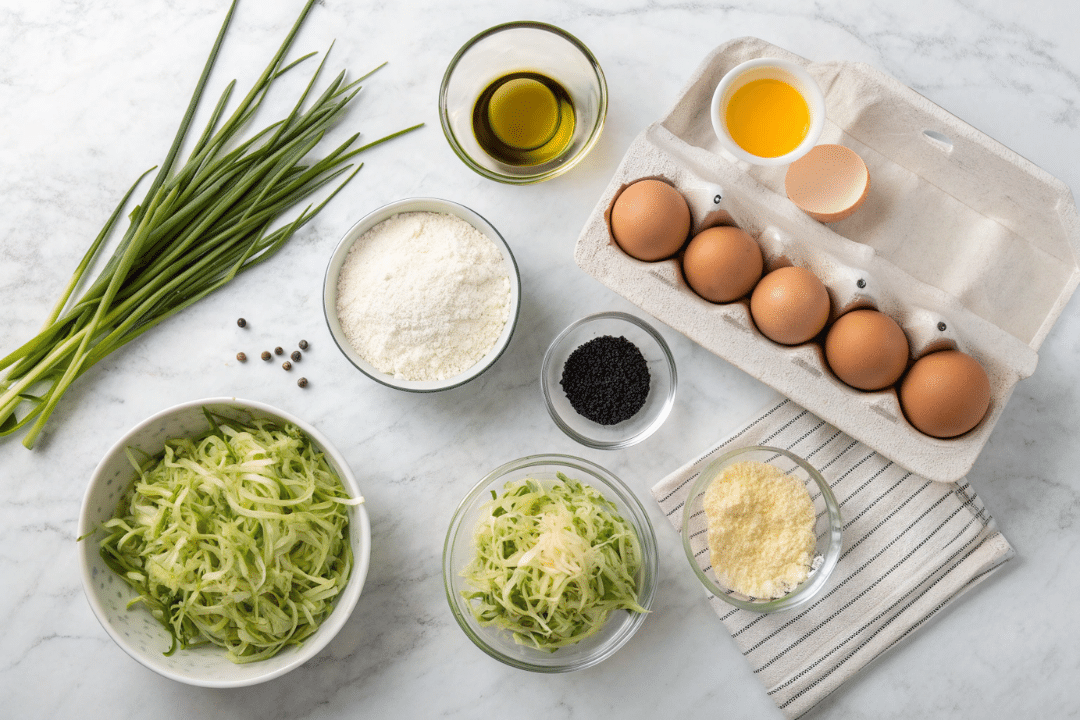
I rely on a handful of trusted ingredients to lift texture and flavor—small changes, big payoff. Below, I list components with sensory cues and smart swaps so you can adapt these recipes to what’s in your kitchen.
Produce and Binders
I choose medium zucchini because the tender skin and smaller seeds grate easily and blend into the batter. Eggs are the backbone of the bind; they hold the mixture without weight.
Structure and Seasoning
A few spoonfuls of flour and a teaspoon of baking powder give structure and a light lift. Season the mix early with sea salt and fresh black pepper so it tastes even. Green onions or chives add a mild allium note; garlic and lemon zest brighten the whole batch.
Fat and Optional Add-ins
Olive oil creates that golden brown crust with a clean flavor. Want extra richness? Fold in mozzarella, cheddar, or feta. For firmer texture, stir in seasoned breadcrumbs or panko.
- Dill, basil, or chives for a bright herb flavor.
- Use a pinch (about 1 teaspoon) of baking powder for lift.
- Start simple, then add cheese or herbs once you know the texture you like.
| Component | Why it matters | Smart swap |
|---|---|---|
| Medium zucchini | Tender skin, small seeds, blends smoothly | Yellow summer squash |
| Eggs + flour | Bind and give structure | Egg substitute + gluten-free flour |
| Olive oil | Golden brown crust, clean flavor | Avocado oil for higher smoke point |
| Cheese/breadcrumbs | Richness or tightened texture | Panko or grated parmesan |
Tools You’ll Actually Use
I start by setting out the few tools that make the whole process easy and reliable. The right gear saves time and maintains consistent texture, so you can skip trial and error.
Must-Have Hand Tools
- I reach for a box grater for quick shredding; it gives control and a sound bite.
- When I’m making a large batch, the food processor’s grater blade speeds things up without compromising texture.
- A clean kitchen towel or cheesecloth is how I quickly and efficiently squeeze out moisture.
Cookware and Portioning
- Use a heavy skillet or quality nonstick pan for even browning and easy flips.
- Keep a roomy bowl for mixing, and a 1/4-cup measure or trigger scoop to portion evenly.
- A squeeze bottle or small dish helps you control the amount of oil that goes into the pan.
| Tool | Why it matters | Pro tip | Best for |
|---|---|---|---|
| Box grater | Simple, manual shred with texture | Use the medium side for even shreds | Small batches |
| Food processor | Fast, uniform shredding | Use the grater blade, pulse to avoid mush | Large batches |
| Cast-iron skillet | Even heat and deep color | Preheat 3–4 minutes before oil | Crispy edges |
| Clean kitchen towel | Removes excess moisture | Wring tightly to get better firm | Any batch size |
Step-by-Step: Make Zucchini Fritters that Stay Crisp
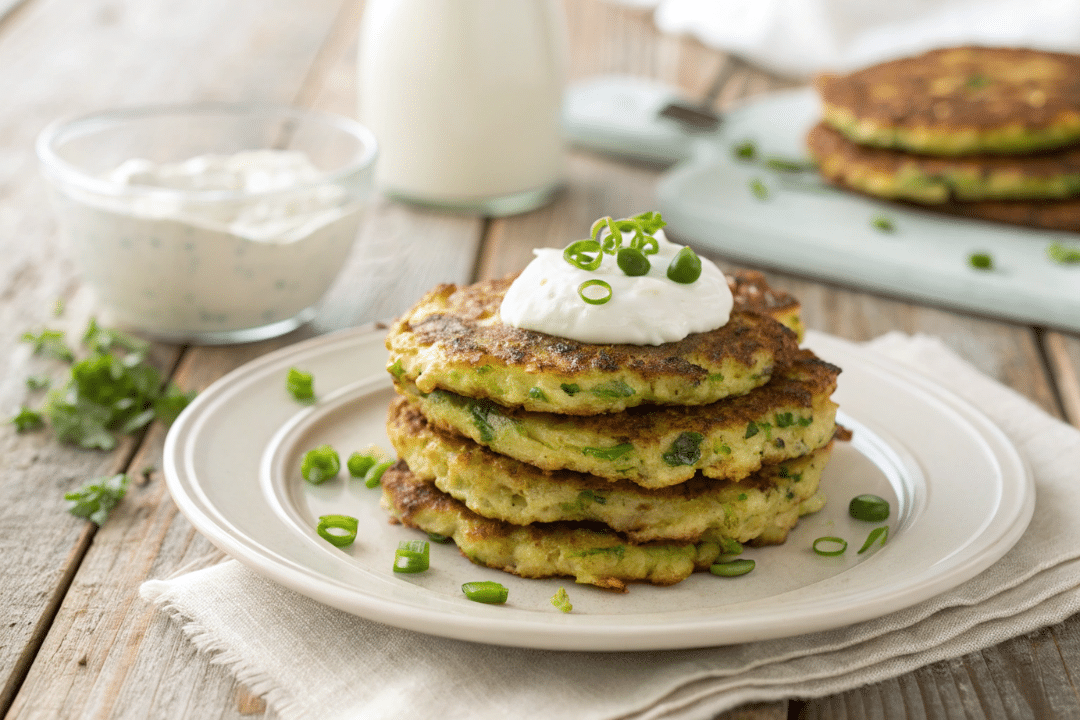
A reliable routine—grate, rest, squeeze, and fry—makes these turn out crisp and light. I’ll walk you through each step with sensory cues so you trust your eyes more than exact measures.
Grate and Salt to Draw out Moisture
Grate the squash and sprinkle a pinch of salt. Let it sit for about 10 minutes, until water beads form on the shreds.
Squeeze Out as Much Liquid as Possible
Gather the shreds in a clean towel and squeeze hard over the sink. You want to remove as much liquid as you can so the cakes are crisp.
Mix the Zucchini Mixture in a Large Bowl
In a large bowl, combine the drained shreds with eggs, flour, baking powder, chopped green onions, and pepper. The mixture should hold a mound on a spoon; add a spoonful of flour if it slumps.
Preheat the Skillet over Medium Heat and Add Oil
Heat your skillet over medium heat until a drop of batter sizzles gently. Add a thin slick of oil to coat the surface.
Pan-Fry in Batches Until Deep Golden, 3 to 5 Minutes Per Side
Portion the batter and flatten lightly. Cook 3 to 5 minutes per side until the edges are deep golden brown and the center is set. If they brown too fast, lower the heat; if they don’t sizzle, increase it slightly.
- Transfer cooked pieces to a rack or paper towel to drain.
- Add more oil between batches as needed, and keep finished ones warm in a 200°F oven while you finish the rest.
Pro Tips for Restaurant-Level Results
Mastering three simple moves allows you to achieve consistent, crunchy results without fuss. I’ll show you why each step matters so you can make reliable fritters at home.
The Squeeze Technique that Prevents Soggy Results
Salt the shredded zucchini and let it sit for a while. That draws water out, and squeezing the strands hard in a clean towel is the single biggest booster of crispness.
If the mixture loosens as you wait, stir and add a teaspoon of flour or breadcrumbs to thicken it. Dry shreds mean a firmer batter and a browned crust that holds together.
Heat Management: Crisp Outside, Cooked-Through Inside
Preheat the pan until it’s hot, then use medium heat as your baseline. A lively sizzle tells you the oil is ready; adjust the heat up or down so the edges brown without burning before the center cooks.
Portioning for Even Cooking and Clean Flips
Scoop about 1/4 cup each and flatten slightly. Thinner patties cook through faster and flip cleanly with a thin spatula.
- Don’t crowd the pan—space lets steam escape and keeps the crust crisp.
- Transfer the cooked pieces to a rack or paper towel and season them while still hot for the best flavor.
- Keep a grater handy for fresh shreds, and add a splash of oil between batches as needed.
Zucchini Breakfast Fritters
I share easy, practical variations so you can make the recipe fit gluten-free, cheesy, or herby moods. These small swaps keep the same cozy flavor while meeting dietary needs.
Gluten-Free and Whole-Grain Swaps that Work
For gluten-free, use a measure-for-measure GF flour and gluten-free breadcrumbs. Oat flour works well too, but add a spoonful of breadcrumbs if the batter seems loose.
White whole wheat flour gives a mild, nutty note without a heavy texture. These swaps use eggs as the binder and require the same squeeze-and-dry step to prevent sogginess.
Cheesy Variations: Cheddar, Mozzarella, or Feta
Cheddar brings a classic melty pull. Mozzarella is mild and stretchy. Feta adds a salty tang that brightens the mix.
Herby Spins: Dill, Basil, or Chives
A spoonful of chopped dill gives a fresh lift. Basil adds Italian warmth; chives offer a delicate onion note. Add lemon zest and a pinch of pepper for an extra burst of brightness.
Air Fryer and Oven Notes for Lighter Cooking
Air fryer: spray lightly with oil, arrange a single layer, and flip halfway for even browning. Oven: brush each cake with olive oil and bake on a hot sheet; baking yields lighter results but less crisp than pan-frying. Serve warm with a spoonful of lemony yogurt for a bright finish. These tweaks make a handy side for brunch boards or quick weeknight meals.
- For gluten-free: measure-for-measure GF flour + GF breadcrumbs.
- Whole-grain option: white whole wheat flour.
- Cheese picks: cheddar, mozzarella, feta.
- Herbs: dill, basil, chives; add lemon zest and pepper.
- Air fryer: light oil spray, flip once; oven: brush with olive oil, bake until golden.
| Flour / Method | Texture | Best use |
|---|---|---|
| GF flour + GF crumbs | Light, slightly tender | Gluten-free diets |
| White whole wheat | Nuttier, firmer | Whole-grain preference |
| Oven / Air fryer | Lighter, less crisp | Low-oil or quick batch |
How to Serve Zucchini in the Morning
Serving is where these little cakes shine—contrast, texture, and a touch of acid make each bite sing. I keep the approach simple so you can plate quickly and enjoy every forkful.
Top with Greek Yogurt or Sour Cream and Chives
I like a generous spoon of Greek yogurt on hot cakes, then a shower of chopped chives. Use sour cream if you want a tangier note.
Add a Fried or Poached Egg for Extra Protein
A fried or poached egg turns two to three patties into a filling plate. The runny yolk acts like a rich sauce and boosts protein.
Pairings: Bacon, Simple greens, or Fresh Fruit
- For heft, pair with crisp bacon or sausage and a handful of dressed salad greens.
- For lightness, add fresh fruit—citrus or berries cut through the richness.
- Squeeze a lemon wedge over the plate just before serving to brighten flavors.
- Serve about two to three cakes per person; a cup of fruit or a small greens salad makes a nice side dish.
- Set out a small cup of chopped herbs so everyone finishes their plate their own way.
| Pairing | Why it works | Suggested amount |
|---|---|---|
| Greek yogurt / sour cream | Creamy, cool contrast | 1–2 tbsp per plate |
| Egg (fried/poached) | Adds warm protein and sauce | 1 egg per person |
| Fruit or greens | Bright acid or fresh crunch | 1 cup fruit or a handful of greens |
Dips and Sauces that Love these Fritters
Pairing the right sauce can turn a simple plate into a crowd-pleasing moment. I like sauces that add contrast—cool, bright, or rich—so each bite feels balanced. Season hot fritters with a pinch of salt before saucing. Keep yogurt-based dips chilled for a cool contrast against the warm cakes. Thin the aioli with a little oil for a drizzly finish.
Top Pairings and Quick Notes
- Tzatziki: cool yogurt, cucumber, and dill—my top pick for a fresh match.
- Marinara: bright tomato acidity that cuts through the crisp edges.
- Aioli: garlicky richness; thin with oil for a pourable dip.
- Creamy dill sauce: herb-forward, great when you’ve added dill to the batter.
- Lemony yogurt: yogurt, lemon zest, cracked pepper, and a pinch of salt—fast and bright.
- Tartar sauce: tangy and surprisingly good with the vegetable’s natural sweetness.
- Set out two sauces so that everyone can find a favorite combination.
- Keep dips cold and fritters hot for best contrast.
- Leftover sauces make terrific sandwich spreads the next day.
| Sauce | Profile | Best with |
|---|---|---|
| Tzatziki | Cool, herby, tangy | Fresh, light plates |
| Marinara | Acidic, tomato-forward | Heavier, savory servings |
| Aioli / Creamy dill | Rich, garlicky / Herb-forward | Egg-topped plates or cheesy versions |
Make-Ahead, Storage, and the Best Way to Reheat
I often cook ahead so weekday mornings feel effortless—here’s my method for keeping edges crisp. It saves you time and means a hot plate in just a few minutes when you need it.
Refrigerate and Freeze the Right Way
Cool cooked cakes completely before storing. Refrigerate in an airtight container up to 5 days. Freeze for up to 3 months.
For freezing, place each piece in a single layer between sheets of parchment paper. Stack and freeze flat so they slide out easily when needed.
Reheat to Restore Crispness
- Oven: preheat to 350°F and bake on a rack over a sheet pan for 8–12 minutes to re-crisp the edges.
- Skillet: warm a teaspoon of oil in a skillet and heat a few minutes per side for a crunchy finish.
- Microwave: use for speed, then finish in a hot skillet for a minute if you want extra crisp.
| Method | Why | Portion |
|---|---|---|
| Oven baking | Even heat, restores crunch | 2–3 cups warm per sheet |
| Skillet | Quick re-crisp | One to two at a time |
| Microwave + finish | Fast, then crisp | Single servings fastest |
Label containers with date and portion size. Hold finished batches at 200°F if you’re cooking for a crowd. Serve warm with a spoonful of yogurt or sour cream for brightness.
Troubleshooting: Too Wet, Falling Apart, or Pale
A few quick checks will get your patties back to golden, not greasy. Start by watching the batter and the pan. Minor fixes work fast.
Fixing Batter Consistency and Moisture Issues
If the mixture looks loose, add a spoonful of flour or a tablespoon of breadcrumbs and stir until it forms a mound on a spoon. If you see a lot of liquid pooling, discard it and squeeze as much of the remaining shreds as possible next time.
As the zucchini mixture releases liquid, skim off the excess liquid from the bowl. If you grated too fine on the grater, next time use the larger holes for less water retention.
Oil Temperature and Skillet Choices
Preheat your skillet well. Pale cakes usually mean the pan wasn’t hot enough—heat until a drop of batter sizzles. Cook about 3–5 minutes per side, adjusting heat so the outside browns and the center cooks through.
- If fritters break when flipping, make them smaller and thinner to set faster.
- Use a cast-iron or a reliable nonstick pan to reduce sticking on the first flip.
- If oil smokes, lower the heat and swap in fresh olive oil for a clean flavor.
- Try a teaspoon of batter as a test to check the heat, seasoning, and color before cooking the whole batch.
For a different veggie base, see my guide to crispy potato cakes for tips that cross over to this recipe: crispy potato fritters.
Conclusion
Take this easy method to the stove and you’ll have crisp zucchini fritters that hold up through reheating and sharing.
I use medium zucchini, salt, and a firm squeeze, then pan-fry in olive oil for about 3 to 5 minutes per side, until golden brown and tender in the center. This recipe is a reliable way to utilize pantry staples and make minor tweaks—such as adding cheese, herbs, or substituting flour—to suit your taste.
Serve them as a warm side, top with yogurt or an egg, and make a double batch to freeze for quick meals. Try it once and you’ll see how simple steps and a short time make a lasting kitchen win.
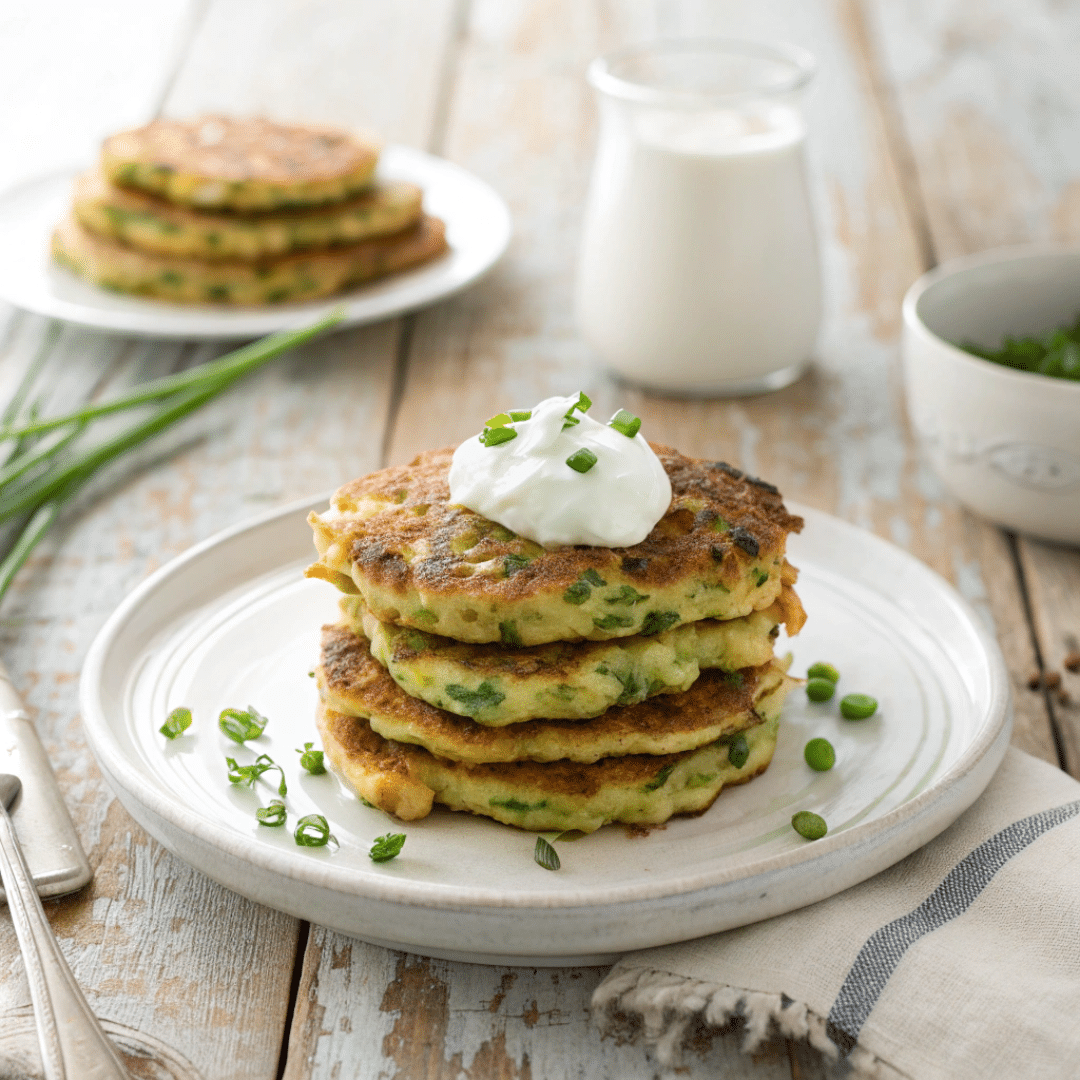
Zucchini Breakfast Fritters
Ingredients
Method
- Shred the zucchini using a box grater or food processor.
- Sprinkle the shredded zucchini with salt and let sit for 10 minutes to draw out excess water.
- Gather the zucchini shreds in a clean towel and squeeze out as much liquid as possible.
- In a large bowl, combine the drained zucchini with eggs, flour, baking powder, green onions, and pepper.
- If desired, fold in cheese, herbs, or breadcrumbs for extra richness or firmer texture.
- Preheat a skillet over medium heat until a drop of batter sizzles gently.
- Add a thin layer of olive oil to coat the pan.
- Scoop about 1/4 cup of batter per fritter and flatten slightly in the skillet.
- Cook 3–5 minutes per side until the edges are deep golden brown and the center is set.
- Adjust heat as needed: lower if edges brown too quickly, raise if they aren’t sizzling.
- Transfer cooked fritters to a wire rack or paper towel to drain excess oil.
- Keep finished fritters warm in a 200°F oven while cooking remaining batches.
- Serve warm with a spoonful of Greek yogurt, sour cream, or a fried/poached egg.
- Garnish with extra herbs and a squeeze of lemon if desired.
- Store leftovers in an airtight container in the fridge up to 5 days or freeze up to 3 months.
- Reheat in a skillet with a teaspoon of oil, in the oven at 350°F, or microwave then crisp in a skillet for best results.
Notes
FAQ
What makes these zucchini breakfast fritters crisp instead of soggy?
How long does it take to make the batter and cook the fritters?
Can I use a box grater or should I use a food processor?
What binder and flour options keep them together without gluten?
How do I adjust for extra flavor—cheese or herbs?
Can I make these ahead and reheat them later?
My patties fall apart when I flip—how do I fix that?
Are there lighter cooking methods than pan-frying?
What sauces or toppings pair best for a morning plate?
How much salt should I use when drawing out moisture?
Can I add protein like cooked bacon or shredded chicken?
What skillet is best for even browning?
How do I stop the kitchen from getting greasy while cooking?
Can I make a larger batch for a crowd without losing texture?
About The Author

John
John Watson is the passionate food enthusiast behind MePlusFood.com. With a deep love for exploring culinary delights, he shares honest restaurant reviews, mouthwatering recipes, and culinary adventures. Join John on his flavorful journey to savor the world one bite at a time.