Duck Confit Shepherd’s Pie
Jump to Recipe
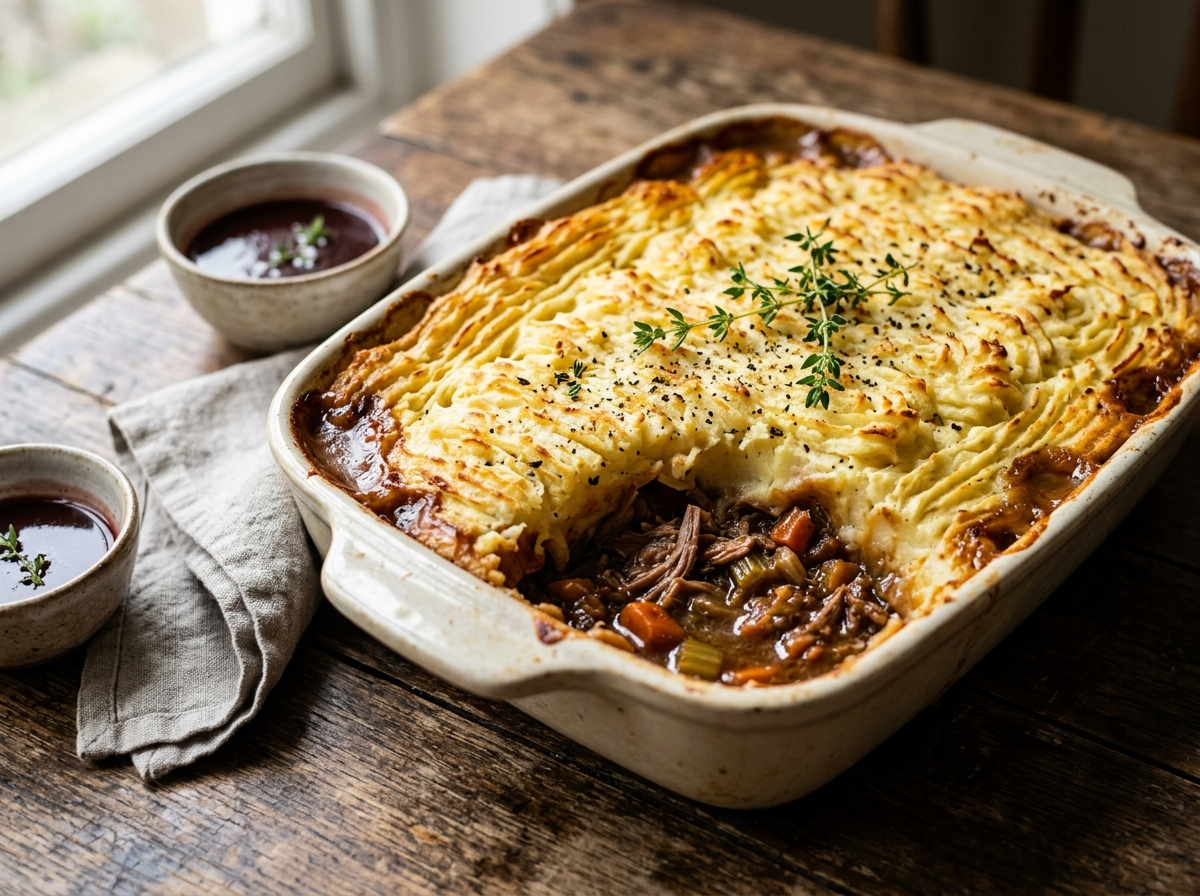
Duck confit shepherd’s pie is what happens when a French bistro classic meets a British comfort dish. The duck legs are already fully cooked, so the filling comes together fast, and the fat left in the confit jar does most of the flavoring work.
The filling is built on a base of shallots, carrots, and thyme, deglazed with red wine and finished with duck stock. It’s savory, slightly glossy, and thick enough to hold under the mash without turning soupy.
The mashed potato topping gets piped or spread over the top and baked until the ridges turn golden and the edges bubble. It eats like a full meal with nothing extra needed.
You can use store-bought duck confit legs and have this in the oven within 40 minutes of starting. Or make your own confit a day ahead and it gets even better.
Why You’ll Love This Recipe
- Store-bought confit makes this a genuine weeknight option
- The duck fat in the filling adds flavor no ground meat can match
- Filling and mash can both be made a full day ahead
- One baking dish, no complicated sauces or roux needed
Ingredient Notes
- Duck confit legs: Store-bought duck confit (D’Artagnan or similar) works perfectly here. If making your own, cure the legs at least 24 hours and cook low and slow at 90 C / 195 F for 8 hours.
- Duck or chicken stock: Duck stock deepens the filling flavor noticeably. Good-quality chicken stock is a reliable substitute if duck stock isn’t available.
- Red wine: A dry red like Merlot or Côtes du Rhône works well. Deglaze with it to lift the browned bits from the pan, which carry most of the fond flavor.
- Russet potatoes: Russets give the lightest, fluffiest mash. Yukon Golds work if you prefer a creamier, slightly denser topping that browns a little less crisply.
- Shallots: Shallots are sweeter and more delicate than yellow onion here. You can use one medium yellow onion if needed, but reduce the quantity slightly.
- Fresh thyme: Fresh thyme gives a cleaner herbal note than dried. Use half the amount of dried thyme if that’s what you have.
- Duck fat: The rendered fat from the confit jar is gold – use it to sauté the vegetables instead of oil or butter. It carries the duck flavor directly into the filling base.
Duck Confit Shepherd's Pie
Ingredients
Method
- Remove the duck confit legs from their jar and let them sit at room temperature for 15 minutes. Pull the meat from the bones and shred it into bite-sized pieces, discarding the skin and bones. Reserve 2 tablespoons of the fat from the jar.
- Heat the reserved duck fat in a large ovenproof skillet over medium heat. Add the shallots and carrots and cook for 6 to 8 minutes, stirring occasionally, until the shallots are soft and lightly golden at the edges.
- Add the garlic and tomato paste and stir for 1 minute until the tomato paste darkens slightly and smells nutty.
- Pour in the red wine and scrape up any browned bits from the pan. Let it reduce for 2 to 3 minutes until most of the wine has evaporated.
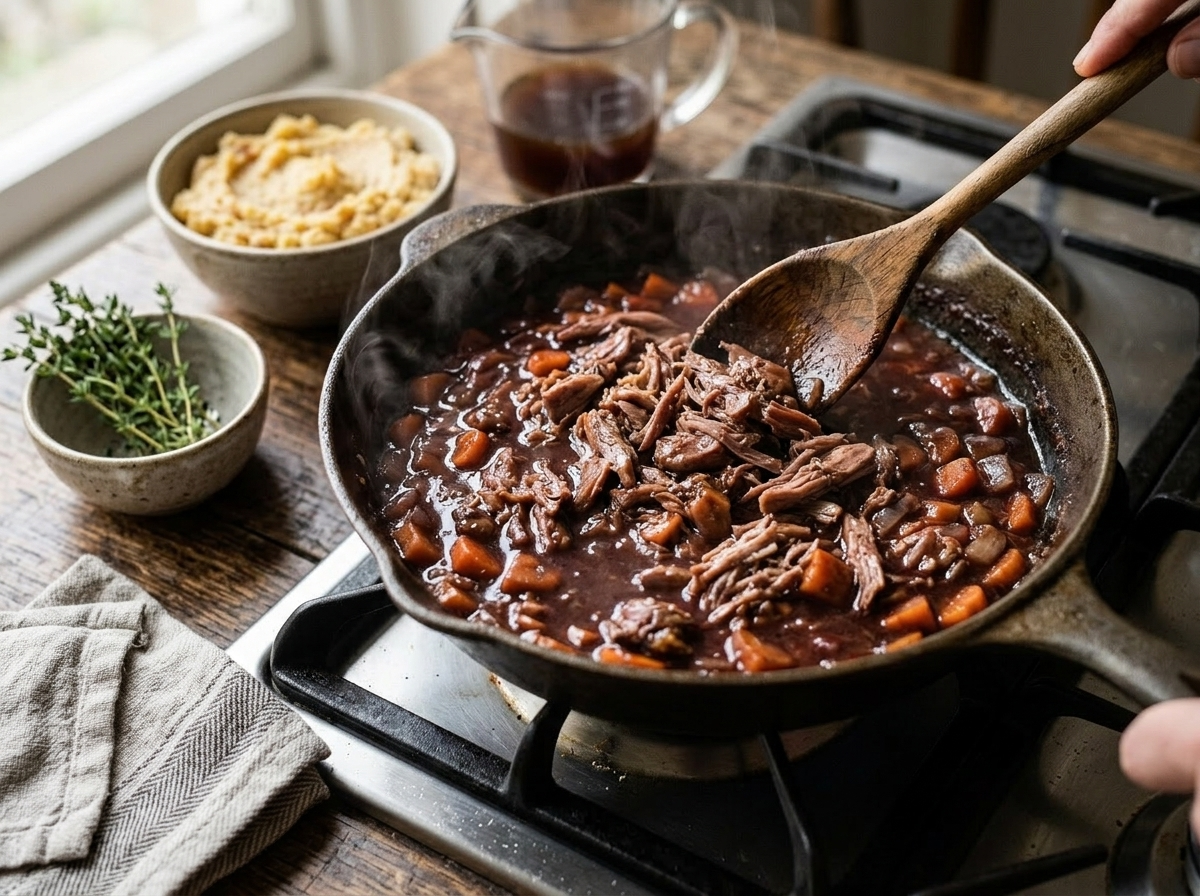
- Add the stock, thyme leaves, rosemary, and Worcestershire sauce. Bring to a simmer and cook uncovered for 12 to 15 minutes, stirring occasionally, until the liquid has reduced and coats the back of a spoon.
- Fold in the pulled duck meat and stir gently to combine. Taste and season with salt and pepper. Transfer to a 2-quart baking dish and spread in an even layer. Set aside.
- Place the potato chunks in a large saucepan, cover with cold salted water, and bring to a boil. Cook for 15 to 18 minutes until completely tender when pierced with a knife.
- Drain the potatoes well and return them to the pot over low heat for 1 minute to steam off any excess moisture. Pass through a potato ricer into a bowl or mash thoroughly until smooth.
- Add the butter, warm cream, egg yolk if using, salt, and white pepper. Stir until the mash is smooth, thick, and holds peaks. Do not overwork or it will become gluey.
- Heat the oven to 200 C / 390 F.
- Spoon the mash over the duck filling and spread it to the edges with a spatula, or pipe it using a large star tip to create ridges across the surface.
- Brush the top of the mash lightly with the melted butter.
- Bake on the center rack for 25 to 30 minutes until the potato topping is golden brown at the ridges and the filling is visibly bubbling at the edges.
- Remove from the oven and rest for 8 to 10 minutes before serving. This lets the filling firm up so portions hold their shape on the plate.
Notes
Tips for Success
- Pull the duck meat while it’s still warm from the confit jar so it shreds cleanly without tearing.
- Brown the shallots and carrots until they smell nutty before adding the wine – this builds the base flavor.
- Reduce the stock-wine mixture until it coats a spoon before adding the duck meat, or the filling will be watery.
- Pipe the mash with a large star tip to create ridges that catch heat and brown faster than a flat surface.
- Let the finished pie rest 8 to 10 minutes before serving so the filling sets and slices come out clean.
Variations
- Add 1 cup cooked green lentils to the duck filling for extra body and fiber.
- Swap half the mashed potato topping with mashed parsnip for a sharper, earthier crust.
- Stir 2 tablespoons of black olive tapenade into the filling for a Provençal-style variation.
Storage and Reheating
Store leftovers in the baking dish covered tightly with plastic wrap, or transfer to an airtight container. It keeps well in the refrigerator for up to 3 days.
To reheat, cover the dish loosely with foil and warm at 175 C / 350 F for 20 to 25 minutes until the filling is hot through. Remove the foil for the last 5 minutes to re-crisp the mash topping.
The assembled, unbaked pie freezes well for up to 2 months. Freeze before baking, then bake from frozen at 190 C / 375 F for 55 to 65 minutes covered, then 10 minutes uncovered.
Serving Suggestions
This pie doesn’t need much beside it. A simple green salad — like a charred vegetable salad with sharp dressing — cuts through the duck fat nicely and adds contrast without competing with the filling.
If you want a vegetable side, roasted haricots verts or braised bitter greens like escarole work well. Avoid anything starchy – the mash already covers that ground.
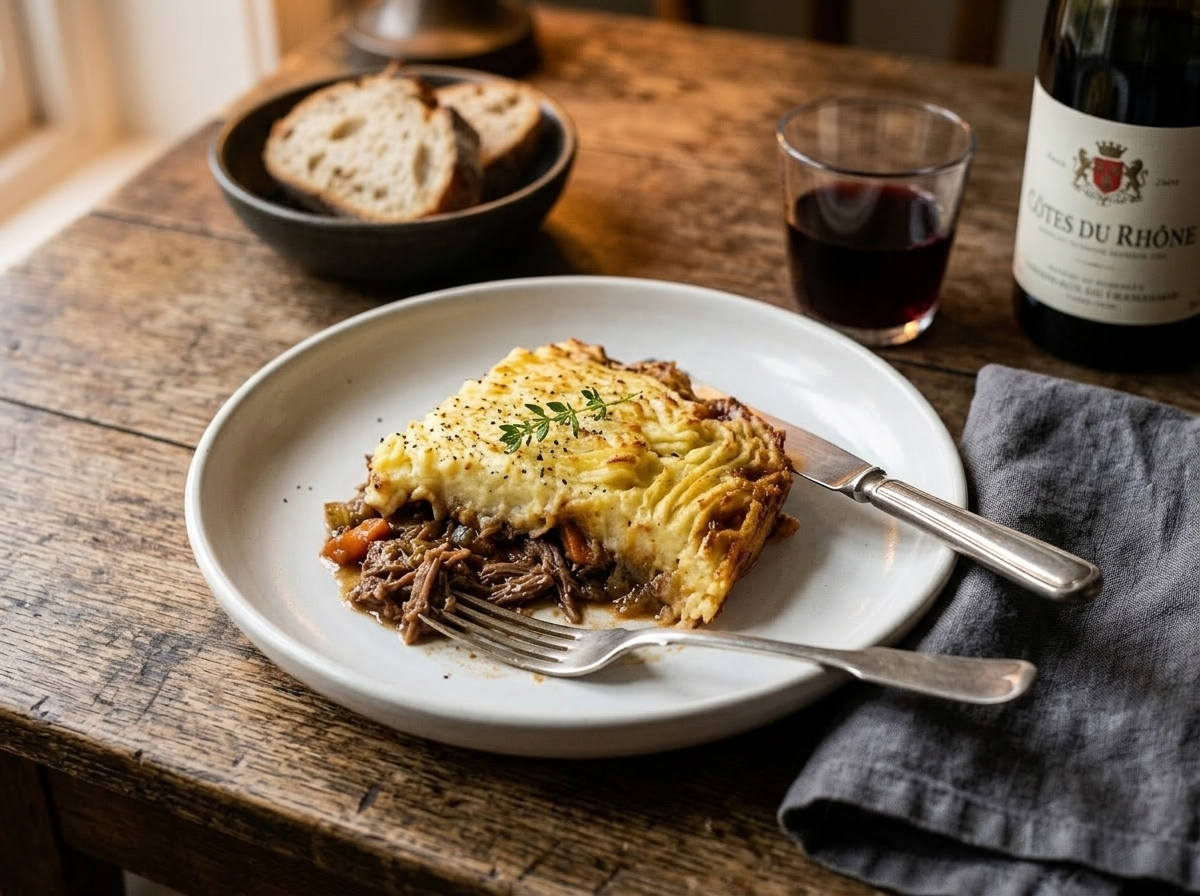
For drinks, a medium-bodied red like a Burgundy pinot noir or a Côtes du Rhône pairs naturally with the duck. A dry French cider is also a good match if you’re skipping wine.
FAQ
Why is my duck confit shepherd’s pie filling too watery?
The filling needs to reduce until it coats a spoon before you add the pulled duck meat. If you skip that step or add too much stock, the liquid won’t absorb and it will pool under the mash. A tablespoon of tomato paste stirred in early also helps thicken it.
Can I use duck breast instead of duck confit legs in this recipe?
Duck breast doesn’t have enough connective tissue or fat to replicate the texture of confit. The filling would come out dry and the flavor would be noticeably thinner. Stick with confit legs, or substitute chicken thigh confit as the closest alternative.
Can I assemble the duck confit shepherd’s pie the night before and bake it the next day?
Yes, this is one of the better make-ahead pies because the filling actually improves overnight as the flavors settle. Assemble completely, cover and refrigerate, then add 10 to 15 minutes to the bake time since you’re starting from cold.
What’s the difference between duck confit shepherd’s pie and a traditional shepherd’s pie?
Traditional shepherd’s pie uses minced lamb with a simple gravy, while this version uses slow-cooked duck leg meat with a wine-reduced duck stock sauce. The fat content, texture, and depth of flavor are all significantly different – the duck filling is richer and less lean.
Is duck confit shepherd’s pie gluten-free?
This recipe uses no flour in the filling or the mash, so it’s naturally gluten-free as written. Just confirm your stock and any store-bought confit are also certified gluten-free, as some brands add wheat-based thickeners.
How do I get the mashed potato topping on the duck confit shepherd’s pie to brown properly?
The mash needs to be thick and not too wet – add butter and cream gradually so it holds peaks. Brush the surface lightly with melted butter before baking and make sure your oven is at full temperature, at least 200 C / 390 F, for the last 15 minutes.
About The Author

John
John Watson is the passionate food enthusiast behind MePlusFood.com. With a deep love for exploring culinary delights, he shares honest restaurant reviews, mouthwatering recipes, and culinary adventures. Join John on his flavorful journey to savor the world one bite at a time.