Buttery Pan-Seared Scallops with Fresh Sweet Pea Puree
Jump to Recipe
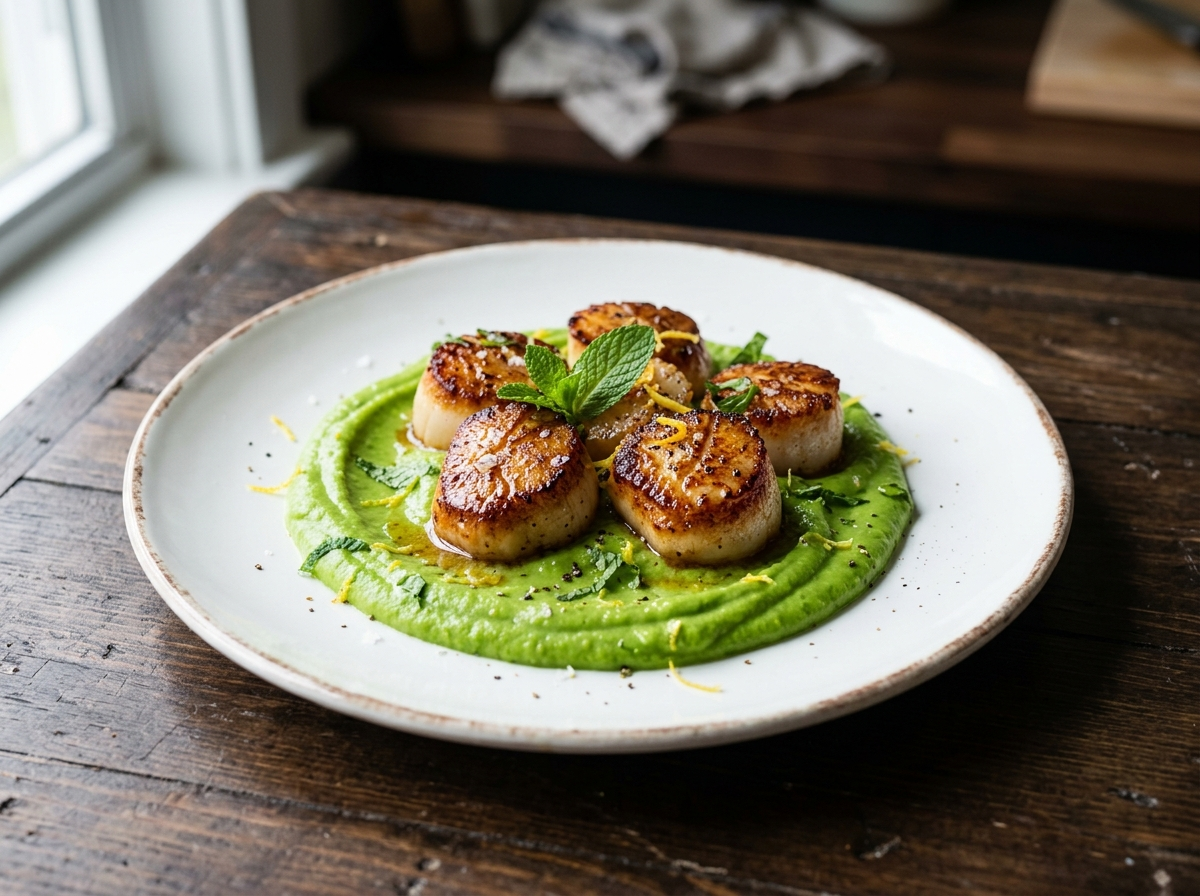
Pan seared scallops with pea puree is a stovetop dish that pairs a deep golden crust on the scallops with a bright, silky puree made from frozen peas, butter, and fresh mint. The whole plate comes together in about 20 minutes once the scallops are patted dry.
The contrast is what makes this work. You get a caramelized, almost nutty crust on the outside of the scallop and a tender, barely-cooked center, set against a puree that’s cool green and just sweet enough to need nothing but a squeeze of lemon.
The one thing that ruins this dish every time is a wet scallop. If there’s any surface moisture left, the pan steams the scallop instead of browning it, and you end up with a gray, flabby piece of seafood instead of a crust.
It’s simple enough for a Tuesday but looks like something off a menu, similar to seared tuna with wasabi avocado cream, which makes it a good one to keep in rotation for date nights at home.
Why You’ll Love This Recipe
- Ready in about 20 minutes start to finish
- Deep golden crust with no deep fryer needed
- Pea puree stays bright green and stays silky
- Feels like a restaurant plate on a weeknight
Ingredient Notes
- Sea scallops: Use dry-packed, not wet-packed scallops, since wet-packed ones are treated with a solution that makes them nearly impossible to sear properly. U10 or U12 size (10-12 per pound) works best here.
- Frozen peas: No need to thaw first, they cook fast in the simmering shallot and butter base. Fresh peas work too if they’re in season, just add a minute or two to the simmer time.
- Heavy cream: Adds body and a slightly rounder flavor to the puree. Swap in extra vegetable stock for a dairy-free version, the texture stays smooth either way.
- Fresh mint: Gives the puree a clean, slightly sweet edge that plays well against the browned butter. Basil or tarragon can stand in if you want a different note.
- Avocado oil: A high smoke point oil is what lets the pan get hot enough for a real crust without burning. Grapeseed or refined canola oil work the same way.
Buttery Pan-Seared Scallops with Fresh Sweet Pea Puree
Ingredients
Method
- Melt 2 tbsp butter in a small saucepan over medium heat, add the shallot, and cook 3 minutes until soft and translucent.
- Add the peas and stock, bring to a simmer, and cook 3 to 4 minutes until the peas are bright green and tender.
- Transfer to a blender with the mint, cream, lemon juice, salt, and pepper. Puree 1 minute until fully smooth.
- Push through a fine-mesh sieve for a silkier texture if you like, then keep warm over low heat, stirring in a splash more stock if it thickens too much.
- Pat scallops completely dry with paper towels and remove the small tough side muscle if still attached. Season both sides with salt and pepper right before cooking.
- Heat avocado oil in a heavy skillet over high heat until it shimmers and just starts to ripple, about 2 minutes.
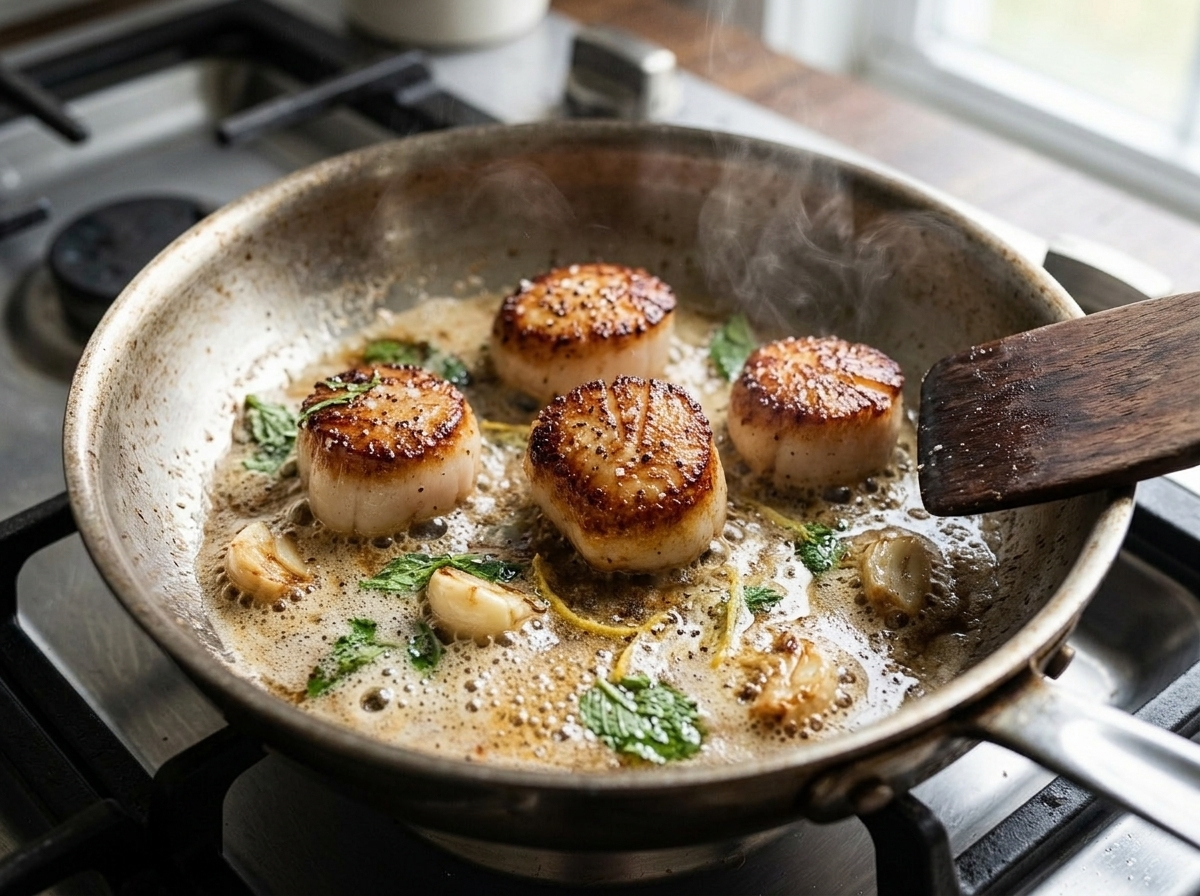
- Add scallops in a single layer, flat side down, without crowding the pan. Sear 90 seconds undisturbed until a deep golden crust forms.
- Flip the scallops, add 2 tbsp butter and the smashed garlic, and sear 60 to 90 seconds more until opaque throughout with a firm, springy center and an internal temp of 130 F / 54 C.
- Remove scallops immediately to a plate. Don't leave them in the residual heat of the pan, they turn rubbery fast.
- Spoon warm pea puree onto plates and spread into a swirl with the back of a spoon.
- Arrange 3 scallops per plate on top of the puree, then drizzle with the browned butter and garlic left in the pan.
- Finish with a scatter of fresh mint, a squeeze of lemon, and serve right away while the scallops are still hot.
Notes
- Pat scallops bone dry, wet scallops steam instead of forming a crust.
- Don't move scallops while searing, let the crust form undisturbed for 90 seconds.
- Remove the small side muscle from each scallop before cooking for even texture.
- Reserve a splash of the pea simmering liquid to loosen the puree if it's too thick.
- Sear scallops last, right before plating, since they lose their crust fast if they sit.
Tips for Success
- Pat scallops completely dry with paper towels before seasoning so they sear instead of steam.
- Use a heavy stainless or cast iron skillet, the same kind that works well for pan roasted cod, and let it get fully hot before adding scallops.
- Don’t crowd the pan, sear scallops in two batches if needed so each piece keeps full contact with the surface.
- Pull scallops off heat the moment they hit 130 F / 54 C internal, much like the timing used for pan seared venison, since they keep cooking a bit off the stove.
- Strain the pea puree through a fine-mesh sieve if you want a silkier, restaurant-style texture.
Variations
- Swap mint for fresh basil or tarragon in the puree for a different herbal note against the browned butter.
- Add crisped pancetta or bacon lardons on top for a smoky, salty contrast to the sweet peas.
- Use bay scallops instead of sea scallops and cut the sear time to about 45 seconds per side.
Storage and Reheating
Pea puree keeps well in an airtight container in the fridge for up to 3 days. Cooked scallops are best eaten the day they’re made, but leftovers hold for 1 day in the fridge.
Reheat the puree gently in a small saucepan over low heat, stirring in a splash of stock or cream if it’s thickened up. Warm leftover scallops in a lightly oiled skillet for about 30 seconds per side, just enough to take the chill off without turning them rubbery.
The pea puree freezes well for up to 2 months in a sealed container. Cooked scallops don’t freeze well, the texture turns tough and watery once thawed, so freeze them raw if you’re planning ahead.
Serving Suggestions
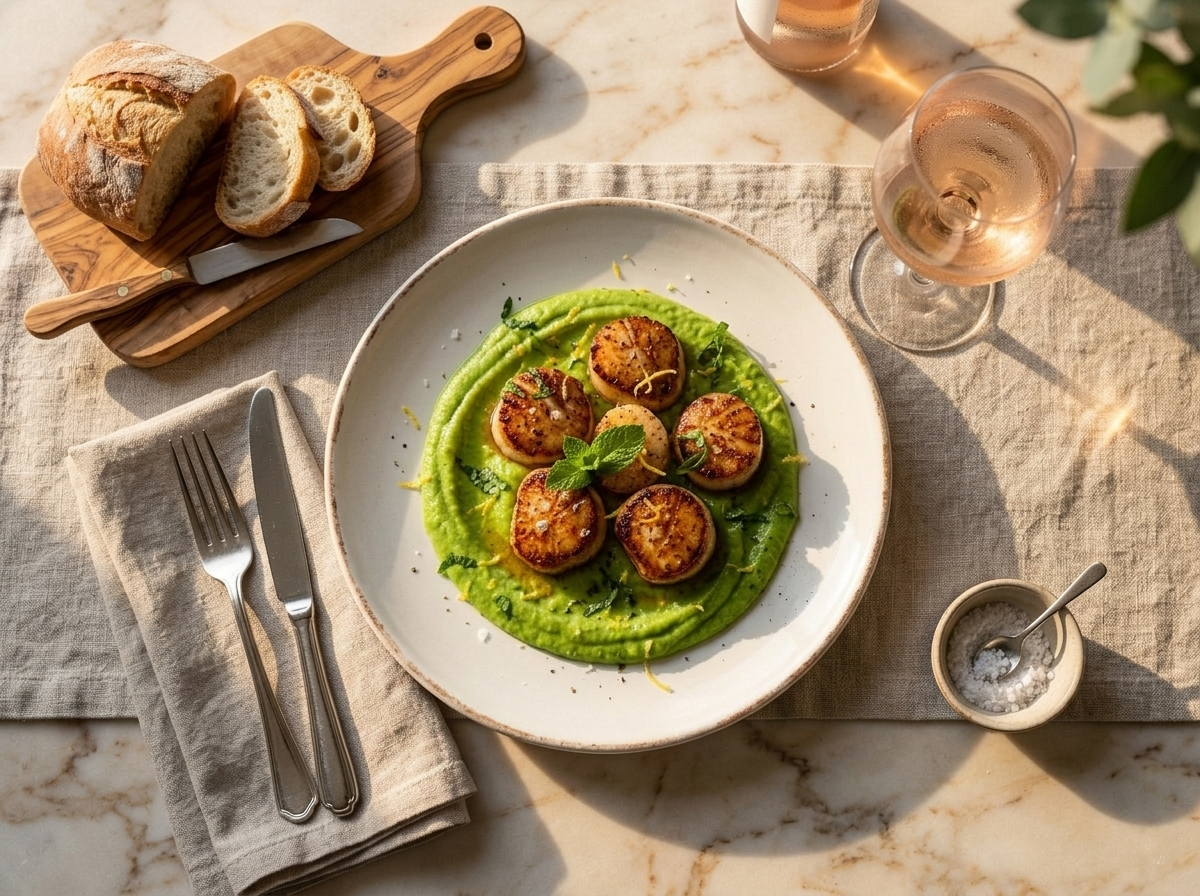
Crusty bread, roasted asparagus, or a lemony arugula salad round out the plate without competing with the sweetness of the peas. A small pile of crispy roasted potatoes works too if you want something heartier.
A crisp Sauvignon Blanc or dry rosé cuts through the browned butter and matches the brightness of the mint in the puree.
For a dinner party, plate 3 scallops per person over a spoonful of puree as a starter course, much like crispy soft shell crab, or serve 4 to 5 scallops as a light main with a side salad.
FAQ
Why do my pan seared scallops turn out rubbery instead of tender?
Rubbery scallops usually mean they went past 130 F / 54 C internal or sat in the pan too long. Sea scallops cook fast, about 90 seconds per side over high heat, and they keep cooking a bit after you pull them off. Take them out at a firm, springy touch with an opaque center, not when they feel hard.
Can I swap the mint for another herb in the pea puree?
Yes, basil or tarragon both work in place of mint and give the puree a different herbal edge without changing the texture. Start with the same amount, about 6 to 8 leaves, then taste before adding more since basil and tarragon are stronger than mint. Chives work too for something milder.
Can I make the pea puree ahead of time for scallops with pea puree?
Yes, the pea puree keeps in an airtight container in the fridge for up to 3 days and reheats well in a saucepan over low heat with a splash of stock or cream. Make the puree a day ahead for a dinner party and sear the scallops fresh right before serving, since they don’t hold up once cooked.
What pairs well with pan seared scallops and pea puree for a dinner?
Crusty bread, roasted asparagus, or a lemony arugula salad round out the plate without competing with the sweetness of the peas. A crisp Sauvignon Blanc or dry rosé cuts through the browned butter nicely. For a heavier meal, add a small pile of crispy roasted potatoes on the side.
Is pan seared scallops with pea puree gluten free?
Yes, this dish is naturally gluten free as written, since scallops, peas, butter, and shallots contain no gluten. Just check that any stock you use in the puree is labeled gluten free, since some brands add wheat-based thickeners. Skip the cream and use extra stock for a dairy-free version.
What’s the difference between bay scallops and sea scallops for this recipe?
Sea scallops are larger, about the size of a golf ball, and hold up better to a hard sear, which is what this recipe is built around. Bay scallops are smaller and sweeter but cook in under a minute, so they’re easy to overcook. If you use bay scallops, cut the sear time to about 45 seconds per side.
Related recipes
About The Author

John
John Watson is the passionate food enthusiast behind MePlusFood.com. With a deep love for exploring culinary delights, he shares honest restaurant reviews, mouthwatering recipes, and culinary adventures. Join John on his flavorful journey to savor the world one bite at a time.