Pan Seared Venison with Blackberry Jus
Jump to Recipe
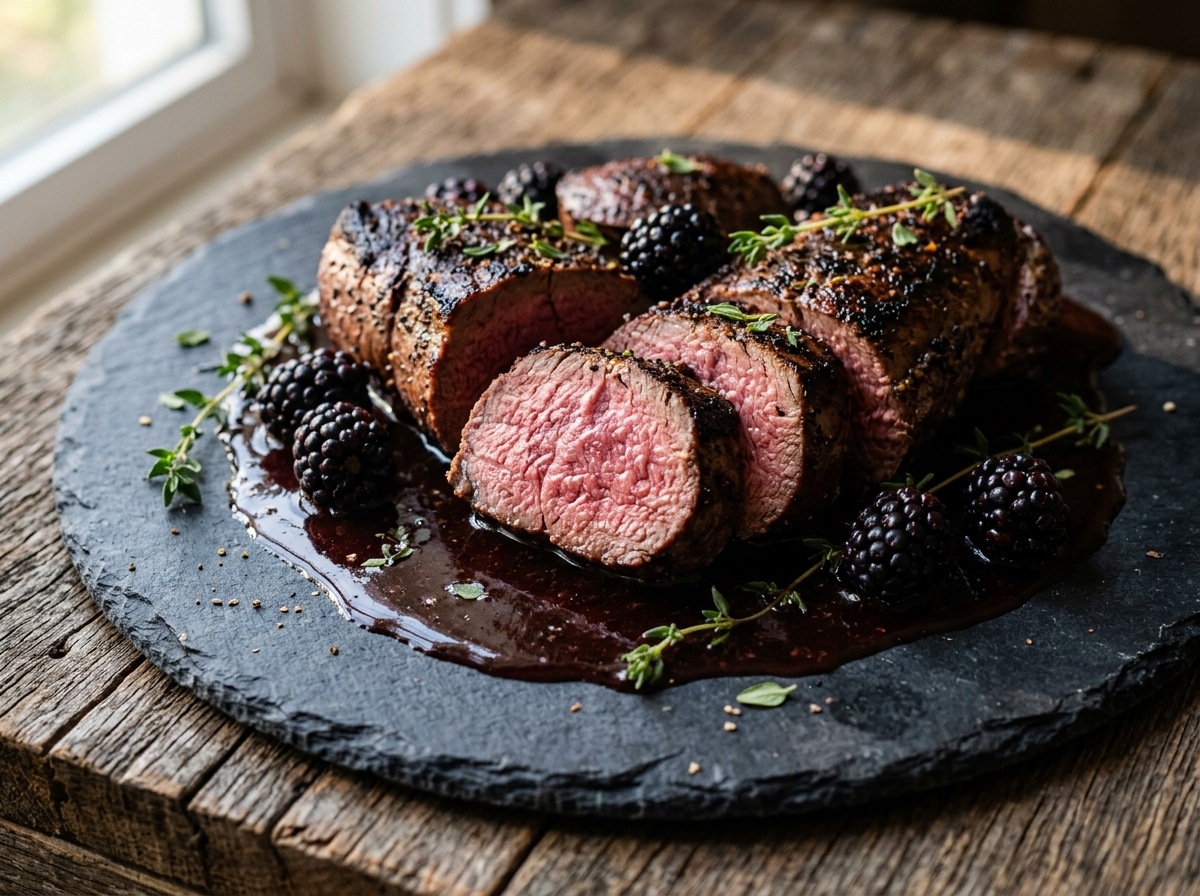
Venison loin is one of the leanest, most flavorful cuts you can cook on a stovetop. Because it has almost no internal fat, the margin between perfectly pink and dry is narrow – but once you know the cues, it’s consistent every time.
The blackberry jus comes together in the same pan after you sear the meat, following the same single-pan logic as a tart fruit reduction for duck breast. You get fond from the venison, sweetness from the berries, a little sharpness from red wine vinegar, and depth from beef stock. It takes about 8 minutes and no extra equipment.
This dish works for a weeknight dinner or a dinner party. The jus can be made ahead, the venison cooks fast, and the whole plate looks far more involved than it is.
I use a cast iron skillet here. The heat retention gives you a hard, even sear without the meat steaming in its own moisture.
Why You’ll Love This Recipe
- Seared crust, pink center – no oven required
- Blackberry jus built from pan drippings in 8 minutes
- Leaner than beef with a deeper, more mineral flavor
- One skillet, minimal cleanup, 40 minutes total
Ingredient Notes
- venison loin steaks: Loin or backstrap cuts work best here – tender, uniform thickness, and they sear evenly. If you only have haunch steaks, pound them to about 2.5 cm thick before cooking.
- fresh blackberries: Fresh give the clearest flavor, but frozen work fine. Thaw and drain them first so excess water doesn’t slow down the reduction.
- beef stock: Use a good-quality stock or bone broth. A thin, pale stock will give you a watery jus – reduce it by half on its own before adding if needed.
- red wine: A dry red like Merlot or Pinot Noir works well. Avoid cooking wine – the salt throws off the jus balance. Omit and add an extra 60 ml stock if you prefer alcohol-free.
- red wine vinegar: Adds the acidity that keeps the jus from tasting flat or overly sweet. Balsamic vinegar is a fair swap and adds a little more body.
- unsalted butter: Whisked in off the heat at the end, it gives the jus a glossy finish and rounds out the acidity. Skip it for a dairy-free version – the sauce will be slightly thinner but still good.
- fresh thyme: Woody herbs like rosemary or sage also work well with venison. Use one sprig of rosemary in place of three thyme sprigs if that’s what you have.
Pan Seared Venison with Blackberry Jus
Ingredients
Method
- Remove venison steaks from the fridge 20 minutes before cooking and pat completely dry with paper towel.
- Season generously on both sides with flaky sea salt and cracked black pepper just before cooking.
- Heat a 12-inch cast iron skillet over high heat for 2 minutes until smoking. Add the oil and swirl to coat.
- Add two venison steaks at a time. Sear for 2 to 2.5 minutes per side until deeply brown and crusted. Do not move them during searing.
- Check internal temperature - pull at 52 C / 125 F for medium-rare. Transfer to a warm plate, loosely cover with foil, and rest for 5 minutes. Repeat with remaining steaks.
- Reduce the skillet heat to medium. Add the shallot and garlic to the pan drippings and cook for 2 minutes, stirring, until softened and lightly golden.
- Pour in the red wine and scrape up all the browned bits from the pan. Let it bubble and reduce by half, about 2 minutes.
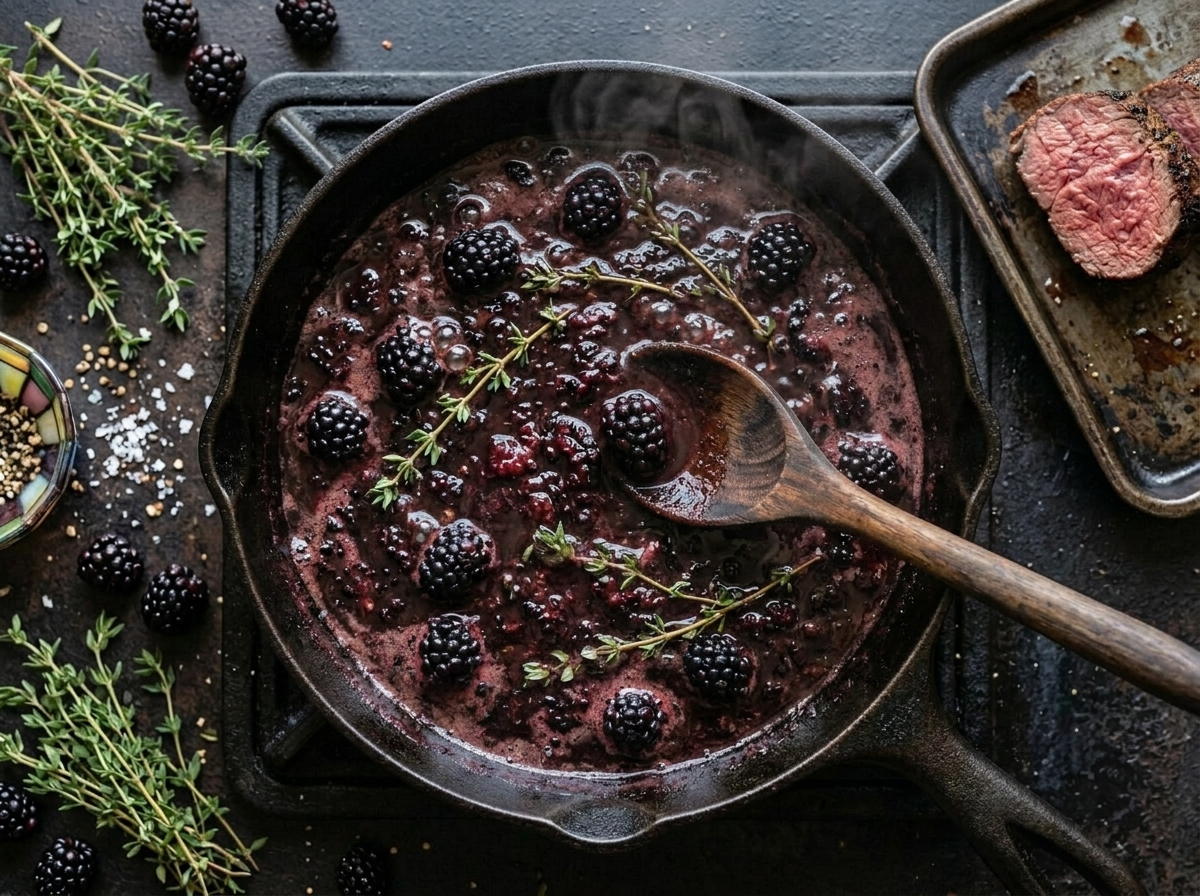
- Add the blackberries, beef stock, red wine vinegar, and thyme sprigs. Stir and crush the blackberries lightly with the back of the spoon.
- Simmer over medium heat for 6 to 8 minutes until the jus has reduced by about a third and coats the back of a spoon.
- Remove the thyme sprigs and garlic. Strain the jus through a fine-mesh sieve into a small saucepan, pressing the solids to extract all the liquid.
- Return the saucepan to low heat. Taste and add honey if needed. Remove from heat and whisk in the cold butter cubes one at a time until the jus is glossy and silky.
- Slice each venison steak against the grain into 3 to 4 pieces or serve whole. Spoon the blackberry jus over the meat and serve immediately.
Notes
Tips for Success
- Pat venison steaks completely dry with paper towel before seasoning – surface moisture kills the sear.
- Let steaks sit at room temperature for 20 minutes before cooking so the center heats evenly.
- Use a cast iron or stainless skillet preheated until smoking before adding oil – this prevents sticking and builds fond, the same dry-and-sear technique that produces a proper crust on other lean, delicate proteins.
- Rest venison on a warm plate loosely covered with foil for at least 5 minutes – it continues cooking slightly and the juices redistribute.
- Strain the jus through a fine-mesh sieve before serving for a clean, restaurant-style finish.
Variations
- Swap blackberries for fresh cherries and add a splash of port for a classic venison cherry sauce.
- Add a teaspoon of juniper berries crushed into the jus for a more game-forward, Nordic-style flavor.
- Use the same searing method with venison medallions cut 2 cm thick – reduce cook time to 90 seconds per side.
Storage and Reheating
Cooked venison steaks keep in an airtight container in the fridge for up to 3 days. Store the blackberry jus separately in a sealed jar for up to 4 days.
To reheat the venison without drying it out, warm it in a low oven at 120 C / 250 F for 8 to 10 minutes until just heated through. Avoid the microwave – it toughens the lean meat fast.
Reheat the jus gently in a small saucepan over low heat, whisking in a small knob of butter to restore the gloss. If it has thickened too much, add a splash of stock to loosen it.
Serving Suggestions
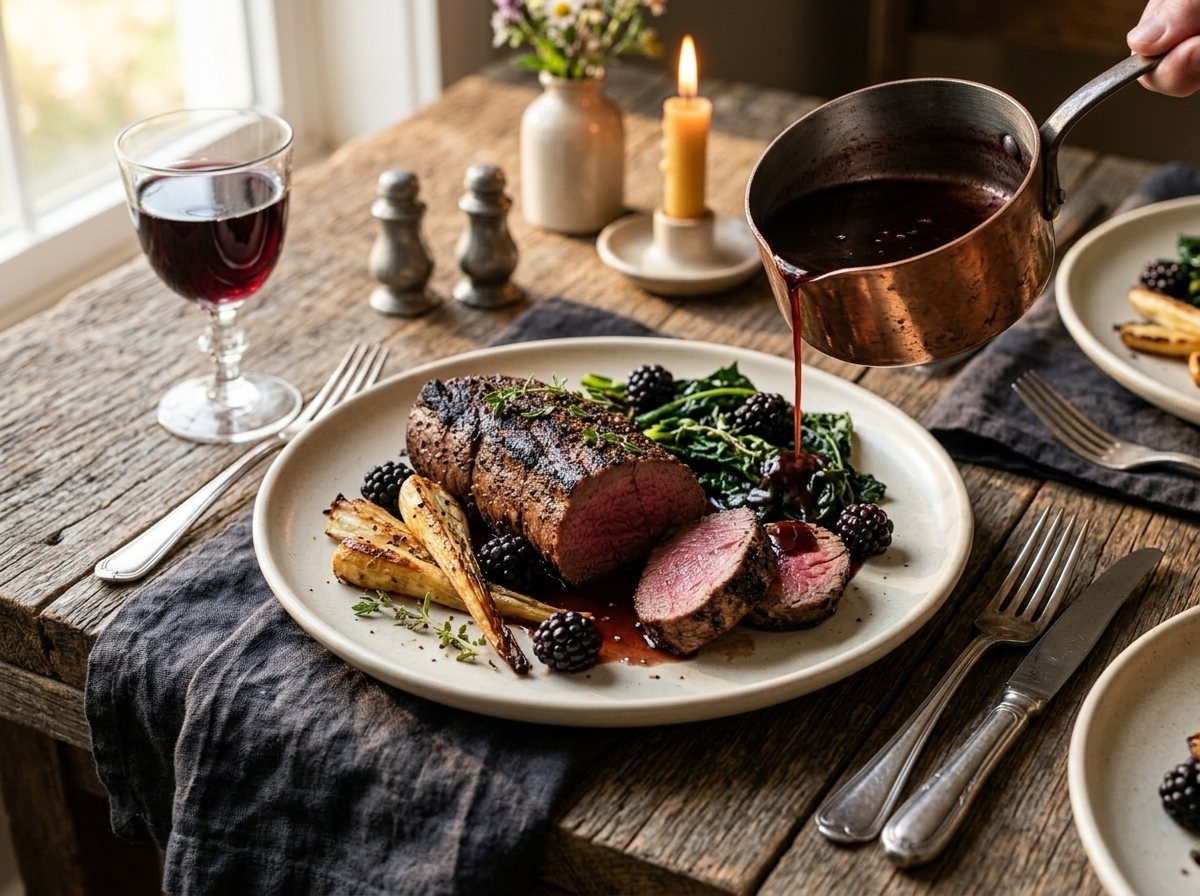
Creamy mashed potato or celeriac puree is the most natural base for this dish – the richness offsets the lean venison and gives the jus somewhere to pool, in the same way a creamy wild mushroom risotto provides an earthy, luxurious backdrop for bold pan sauces. Roasted parsnips or carrot wedges alongside add color and a natural sweetness that echoes the blackberries.
For a lighter plate, serve the venison over a bed of wilted cavolo nero or buttered green beans. The bitterness of the greens cuts through the jus cleanly.
A glass of Pinot Noir or a medium-bodied Merlot pairs well here. If you want something non-alcoholic, a tart cherry or pomegranate juice over ice works with the fruit notes in the sauce, much like the tart pomegranate glaze that defines a similar pan-seared preparation.
FAQ
What internal temperature should venison loin be for medium-rare?
Pull venison loin off the heat at 52 C / 125 F internal – it will rise to about 57 C / 135 F during the 5-minute rest. At that temperature the center is pink, tender, and not gamey. Going above 65 C / 150 F dries it out significantly.
Why does my venison steak turn gray instead of getting a brown crust?
The pan wasn’t hot enough, or the surface of the meat was wet. Venison needs a very hot, dry pan to form a proper Maillard crust – pat the steaks completely dry and wait until the oil just starts to smoke before adding them.
Can I use frozen blackberries for the jus instead of fresh?
Yes, frozen blackberries work fine. Thaw them fully and drain off the excess liquid before adding them to the pan, otherwise the jus takes longer to reduce and can taste diluted.
Can I make the blackberry jus the day before and reheat it?
The jus keeps well in the fridge for up to 4 days. Reheat it slowly in a small saucepan and whisk in a small knob of cold butter just before serving to bring back the gloss and silky texture.
What’s the difference between venison loin and venison haunch for pan searing?
Loin and backstrap are the most tender cuts and need only 2 to 3 minutes per side over high heat. Haunch is leaner and slightly firmer – it works for searing but benefits from being pounded to an even thickness first, and it’s easier to overcook.
Is pan seared venison gluten-free?
This recipe is naturally gluten-free as written. Just check that your beef stock is certified gluten-free, as some commercial brands use wheat-based additives.
About The Author

John
John Watson is the passionate food enthusiast behind MePlusFood.com. With a deep love for exploring culinary delights, he shares honest restaurant reviews, mouthwatering recipes, and culinary adventures. Join John on his flavorful journey to savor the world one bite at a time.