Apple Thyme Breakfast Skillet
Bright fruit and savory roots meet in a single-pan hash that wakes the senses and cuts cleanup time.
Start with hot fat, brown onions 2–3 minutes, then add diced white-fleshed sweet potatoes and cook until edges crisp and centers just soften. Add apples near the end to keep their shape, and finish eggs covered for 5–7 minutes to set the whites while keeping the yolks to your preference.
This is a salt-forward, herb-lifted dish where restrained sweetness plays a supporting role. Expect crisp-edged potatoes, tender cubes of fruit, and eggs cooked to your liking. Swap logic is simple: use bacon, sausage, or ground pork for savory depth, or keep it vegetarian with extra herbs and a splash of vinegar or a drizzle of maple.
Why one pan matters: better browning, fewer dishes, faster cleanup, and tighter heat control so nothing sticks. For a related sturdy morning bowl, see my take on kale and egg breakfast bowls.
Key Takeaways
- Start in hot fat; brown onions briefly to build flavor.
- Cook sweet potatoes until tender, then add apples later to retain texture.
- Cover eggs 5–7 minutes to set whites and control yolk doneness.
- Balance: salt-forward base, herbal lift, and restrained sweetness.
- One skillet equals better browning and faster cleanup.
What Makes an Apple Thyme Breakfast Skillet Taste Balanced, Not Sweet
A careful mix of browning, salt, and a touch of acid keeps fruit from dominating a savory hash. Start by thinking in three layers: texture, aroma, and seasoning.
Why Apples Work with Onions and Herbs
Sautéed apples soften, release juice, and can become jammy if overcooked. That juice helps glaze potatoes, but also raises the sweetness.
Onions add savory depth and a mild bitterness when browned. Fresh thyme adds an herbal backbone, shifting the profile away from dessert and toward savory comfort.
Choosing the Right Potatoes and How to Judge Doneness
White-fleshed sweet potatoes run starchier and less sweet than orange varieties, so they brown well without over-sweetening. Orange sweet potato will taste sweeter and can caramelize faster.
| Trait | Orange sweet potato | White-fleshed sweet potato |
|---|---|---|
| Sweetness | Higher | Lower |
| Browning potential | Fast, sticky glaze | Good, crisp edges |
| Texture when cooked | Soft, tender | Firm, mealy |
- If apples taste “loud,” add salt, freshly cracked black pepper, and a splash of vinegar to tame them.
- Look for potatoes with matte surfaces, light brown edges, and a knife that meets slight resistance—those cues mean they are ready for the fruit.
- Technique: high heat to get color, then steady heat so everything cooks through without turning mushy. This approach works for similar morning recipes and keeps your routine simple.
Ingredients and Smart Swaps for a Fast, Filling Breakfast
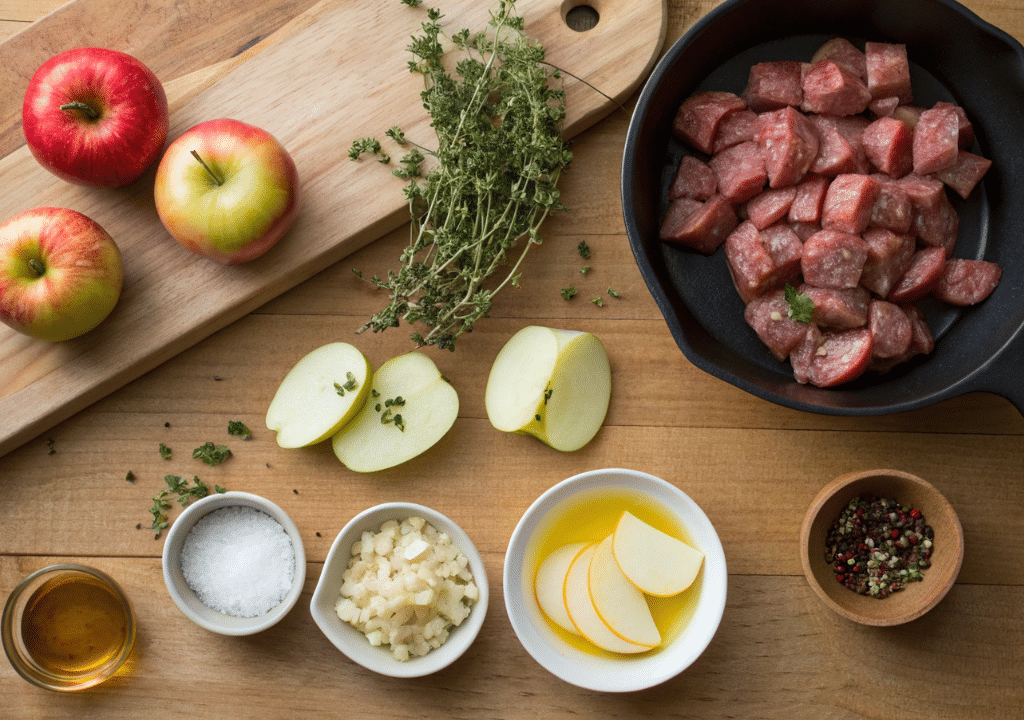
Start with a clear pantry plan so the pan delivers crisp edges, tender fruit, and set eggs every time.
Core Flavors
Must-haves: apples, fresh thyme, a sweet white onion, salt, and pepper. These define the savory-sweet balance that keeps the dish from leaning dessert-like.
Protein Choices
Bacon renders fat that boosts browning but raises salt levels quickly; add less salt later. Sausage or ground pork gives a meatier texture. If you use sausage, brown and drain most of the grease so the potatoes stay crisp.
Fat and Finish
| Fat | Effect | When to use |
|---|---|---|
| Butter | Rounds flavor; browns quickly | Low-medium heat, finish for gloss |
| Olive or coconut oil | Higher smoke point; clean sear | High heat for initial browning |
| Rendered meat fat | Deep flavor; faster color | Use sparingly to avoid soggy bits |
Finish with a splash of apple cider vinegar for lift or a light drizzle of maple syrup to soften edges.
Eggs and Doneness
Make wells and cracks in eggs. Look for opaque whites that hold their shape for set whites, glossy yolks for runny yolks, or matte yolks for fully cooked. Adjust the heat and cover to reach the target.
- Simple ingredient list: potatoes, onion, apples, thyme, oil or butter, bacon/sausage/ground pork, eggs, salt, pepper.
- Season the potatoes early; taste and re-season after the eggs cook.
- Optional add-ins: mushrooms or garlic—cook them after onions but before apples so they release moisture and brown.
- Need alternatives? Use chicken sausage, a plant-based protein, or skip meat and add a splash of vinegar for balance.
For a related sturdy morning bowl idea, see a similar sturdy morning bowl.
Apple Thyme Breakfast Skillet Step-by-Step in Minutes
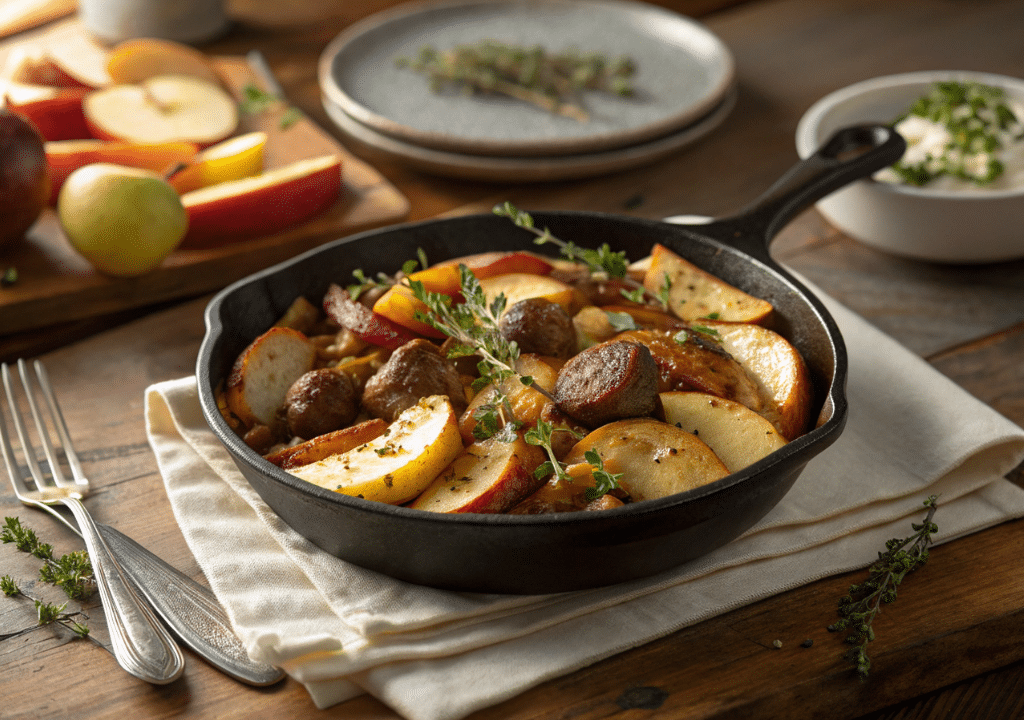
Small temperature changes and clear timing make this recipe predictable and repeatable. Start by heating fat in a heavy pan until the oil or butter shimmers; the surface should feel hot but not smoking.
When to Use Medium-High vs Medium Heat
Use medium-high for quick browning—it adds savory color to onions and meat without long cook time. Reduce the heat to medium when you add the diced potato so the pieces soften without sticking or burning.
Sequence and Timing
- Brown onions on medium-high until edges turn golden, about 2–3 minutes.
- Spread diced potato in a single layer; cook on medium, stirring every few minutes until tender at the edges.
- Add fruit and herbs late so cubes soften but hold shape; season now with salt and pepper.
- Cook bacon or sausage until crisp and brown (about 8–10 minutes), then fold into the mixture and drain excess fat if needed.
- Make wells, crack eggs, cover the pan, and set whites in 5–7 minutes for runny to medium yolks.
Finish with a quick taste check: adjust salt for the bacon, grind fresh pepper, and sprinkle fresh thyme leaves for aroma.
| Stage | Heat | Key cue |
|---|---|---|
| Preheat fat | Medium-high | Oil shimmers; pan feels hot |
| Potatoes | Medium | Single layer, lightly browned edges |
| Fruit & herbs | Medium | Soft cubes, intact shape |
| Egg finish | Low-medium covered | Whites set in 5–7 minutes |
Serving Ideas and Make-Ahead Tips that Hold Up
Plate intentionally: potatoes on top for texture, eggs set just before serving. This keeps crisp edges visible and prevents yolks from breaking when you move the pan to the table.
Do a quick salt check if you used bacon. Cooked pork adds salt early; taste the base before adding more. If needed, use a light sprinkle at the end rather than heavy seasoning up front.
Best Garnishes
Green onions add a bright bite. Parsley brings a fresh, herbaceous lift. A light dusting of cinnamon gives a faint warmth that echoes the fruit without turning sweet.
Meal Prep and Reheating
Make the potato-and-fruit base up to 48 hours ahead. Cool quickly, then refrigerate in a shallow container so pieces dry slightly and don’t steam into mush.
Reheat in a dry skillet over medium. Toss the base for 4–6 minutes, spreading pieces in a single layer until the edges re-crisp and the center is hot through (check by tasting one piece).
| Task | Method | Timing & cue |
|---|---|---|
| Re-crisp potatoes | Skillet, medium heat | 4–6 minutes; edges brown and firm |
| Reheat whole portions | Oven, 350°F on a baking sheet | 8–12 minutes; hot in center, edges crisp |
| Eggs added fresh | Make wells, cover the pan | 5–7 minutes; whites set, yolks as desired |
- Store leftovers separated when possible so fruit does not weep into the potato pieces.
- Variation: swap bacon for sausage or a plant protein; keep the same cook sequence so texture remains consistent.
Conclusion
Finish strong by keeping technique simple: brown aromatics, soften the roots, and add fruit late so pieces hold their shape. Then make wells and cover to steam-set the whites while keeping yolks to taste.
Two control knobs matter most: steady heat to build color without burning, and timing—fruit goes in near the end. Use salt, pepper, and a splash of acid to keep sweetness restrained. Fresh thyme reads savory when onions and pepper anchor the base.
This recipe translates to other morning recipes: swap potato type, change the protein, or add a touch of vinegar to lift the dish. If the potatoes brown and the fruit stays intact, you’ve nailed the balance.
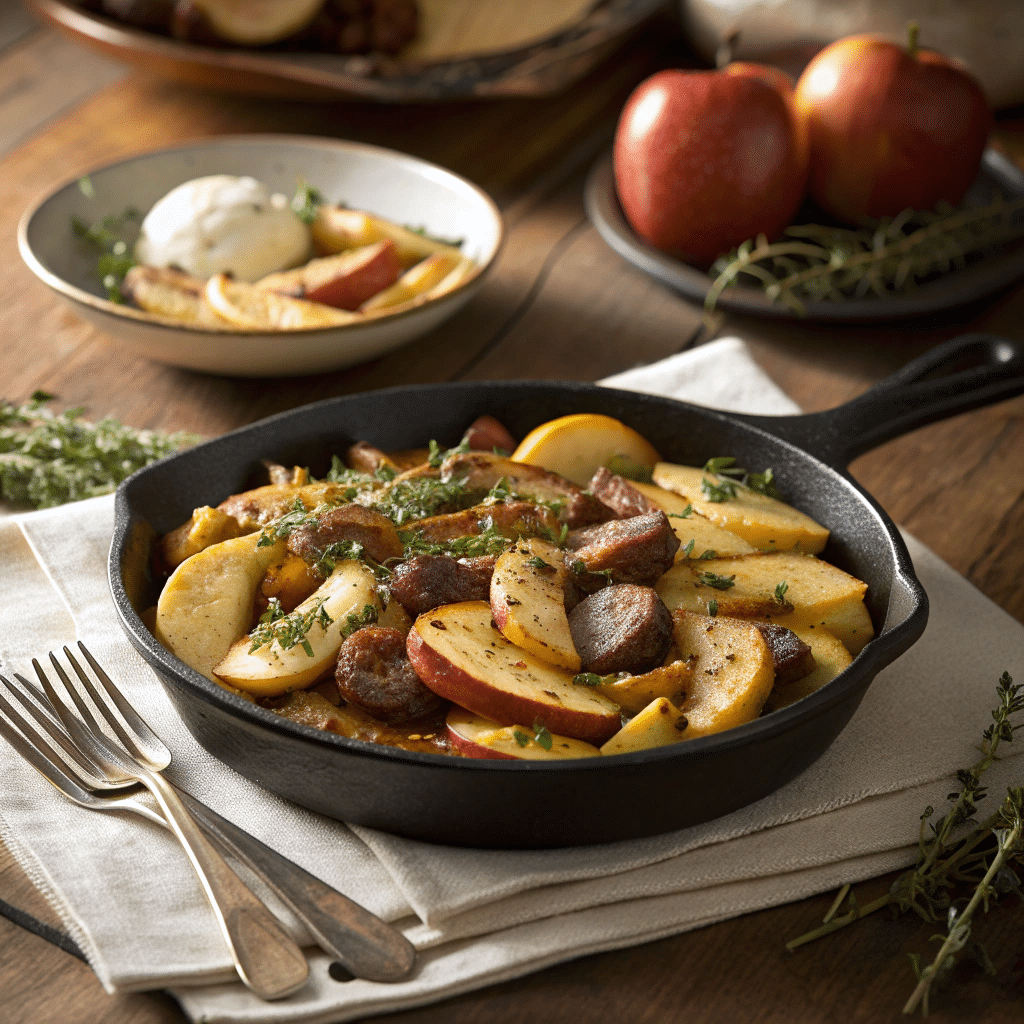
Apple Thyme Breakfast Skillet
Ingredients
Method
- Heat oil, butter, or rendered meat fat in a large skillet over medium-high heat until shimmering.
- Add diced onion and cook for 2–3 minutes until softened and lightly golden at the edges.
- Add diced potatoes in a single layer, reduce heat to medium, and cook while stirring every few minutes until edges are lightly browned and potatoes are nearly tender.
- Season the potatoes with salt and black pepper and continue cooking until a knife meets slight resistance.
- Add apples and fresh thyme and cook until the fruit softens but still holds its shape.
- If using bacon or sausage, cook separately until browned, drain excess fat, and fold into the skillet.
- Taste and adjust seasoning, adding a small splash of apple cider vinegar if apples taste overly sweet.
- Make small wells in the skillet, crack eggs into each well, and cover the pan.
- Cook on low to medium heat until egg whites are set and yolks reach your preferred doneness.
- Finish with fresh thyme, cracked pepper, and optional herbs before serving.
Notes
FAQ
What makes this apple thyme breakfast skillet taste balanced instead of overly sweet?
Why do fruit and onions work together in a savory breakfast pan with herbs?
How do I choose the right potatoes for the skillet: sweet potato vs white-fleshed varieties?
What are smart ingredient swaps for a fast, filling version of this breakfast?
Which core flavors should I emphasize when assembling the skillet?
What protein options work best: bacon, sausage, or ground pork?
Should I use butter or oil, and is a little maple syrup or vinegar appropriate?
How should I cook eggs in the skillet: set whites, runny yolks, or fully cooked?
When should I use medium-high heat versus medium heat when heating the pan?
Why brown the onions first, and how long should that take?
How do I cook potatoes until tender without them sticking to the pan?
When I add fruit and herbs, how do I keep them tender but not mushy?
What’s the best method to cook and fold browned bacon or sausage into the mixture?
How long does it take to set egg whites by covering the pan?
What final seasoning checks should I perform before serving?
What garnishes work best with this dish?
How should I meal prep and reheat so potatoes stay crisp and eggs remain enjoyable?
About The Author

John
John Watson is the passionate food enthusiast behind MePlusFood.com. With a deep love for exploring culinary delights, he shares honest restaurant reviews, mouthwatering recipes, and culinary adventures. Join John on his flavorful journey to savor the world one bite at a time.