Savory Oat Pancakes with Fresh Herbs
Savory oat pancakes with herbs smell like warm grain and bright green leaves, and they turn breakfast into something savory and homey.
These are not sweet stacks. Ground oats act as a bread-like flour that yields a tender center and crisp edges. Expect visible brown spots when the heat is right and a chew that feels satisfying rather than cakey.
The core workflow is simple: grind oats, whisk dry and wet ingredients in a mixing bowl, let the batter rest, then cook on medium heat and flip when bubbles appear. Small technique cues — batter thickness, pan temperature, and flip timing — make the difference between sticking and golden rounds.
This recipe adapts well for busy mornings, lunch plates, or a relaxed dinner swap. I’ll show egg-free, dairy-free, and gluten-free swaps, plus fixes for thin batter or undercooked middles. Fresh herbs, garlic, ginger, and black pepper lift the flavor without adding sweetness.
Key Takeaways
- Oats ground into flour create a hearty, unsweet base that mimics bread.
- Aim for a pourable but thick batter; rest it before cooking for better texture.
- Cook on medium heat and flip when small bubbles form and edges set.
- Easy swaps make the recipe egg-free, dairy-free, or gluten-free.
- Use fresh herbs, aromatics, and pepper to brighten each bite.
Ingredients that Make Savory Oat Pancakes with Herbs Taste Bright and Satisfying
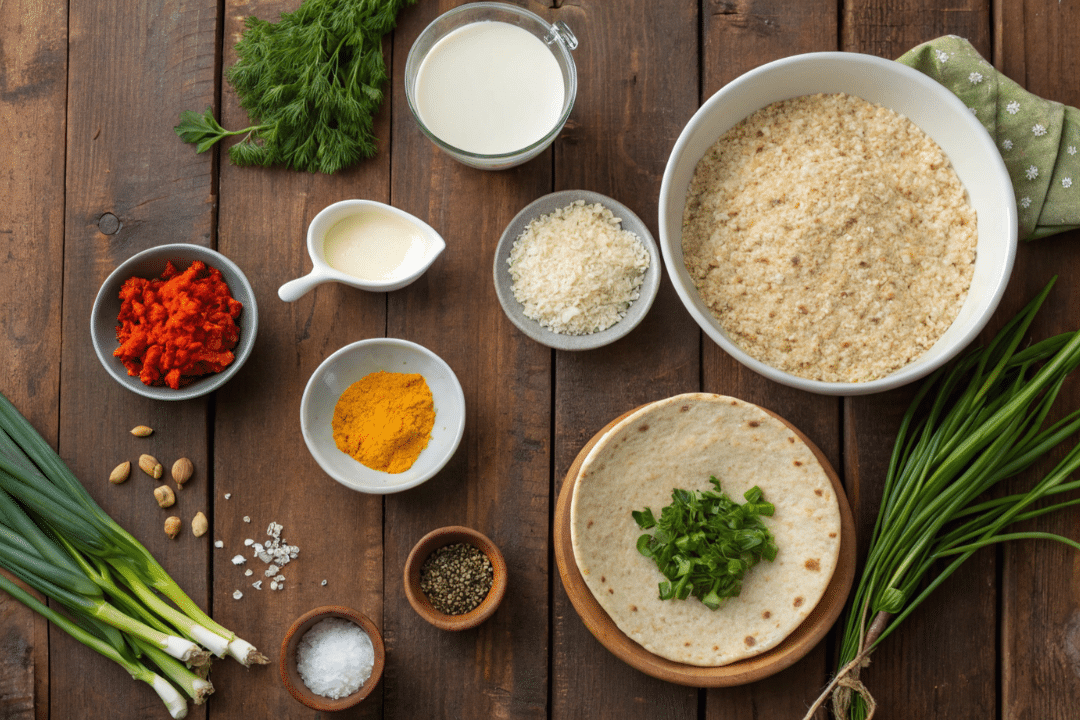
Good savory batter begins with a dependable flour base, lively aromatics, and smart binders. Each ingredient plays a clear role: texture, flavor, or lift. Below, I explain practical choices and why they work.
Grains and Binders
Grind rolled oats into a fine flour to improve spread and tenderness; it behaves like a light bread flour once hydrated. Add a spoon of chickpea flour for structure and protein, or a little semolina for a toothsome, crisp edge.
Aromatics and Spices
Cilantro and ground coriander bring fresh, citrusy notes. Garlic and ginger add warmth; green chili gives clean heat. Use black pepper for background bite and salt to sharpen the herb flavors.
Veggies and Fiber
Finely chop the onion and mushrooms, grate the carrots, and stir in peas for sweet pops. Spinach wilts quickly and boosts color and fiber without overwhelming the batter.
Liquids, Lift, and Fat
Buttermilk yields tang and tenderness; water keeps the grain flavor lighter. Baking powder and a pinch of baking soda create bubbles that prevent a dense center. For cooking, choose ghee for a nutty aroma, neutral oil for even browning, or coconut oil for crisp edges.
- Keep sugar out to emphasize the savory profile.
- Adjust liquid so the batter pours but isn’t runny.
- Sauté mushrooms or aromatics first for deeper flavor.
Mixing the Batter So It Spreads Well and Cooks Evenly
A smooth batter begins at the grinder: turn whole oats into a soft flour for even heat transfer. If you like, dry-roast the oats 2–3 minutes first; that brings a light aroma and a deeper color.
Why fine flour matters. Finely ground flour reduces grit and helps the pancake cook through without a wet center. It also makes the batter more uniform so each round browns consistently.
Mixing Order and Limits
Use a mixing bowl and whisk. Combine dry ingredients first, then whisk the liquids in a separate bowl. Pour the wet into the dry and stir until no dry pockets remain.
Stop mixing as soon as it comes together. Overmixing tightens the batter and yields a tough texture.
Dialing Consistency and Resting
The batter should pour in a ribbon, then settle. It should not run like milk. Adjust with water or buttermilk in 1–2 tablespoon increments until you get that ribbon cue.
Let the batter rest about 10 minutes. In that time the oats hydrate and the mix thickens. After resting, the batter often becomes spoonable; add a splash of water if you need to loosen it.
- Portion: 1/4 cup for thin, fast-cooking rounds; 1/2 cup for thicker circles.
- Use the same cup each time so size stays consistent.
- Give the bowl a quick stir between pours so the vegetables don’t sink.
Cooking On Medium Heat for Golden Brown Savory Pancakes
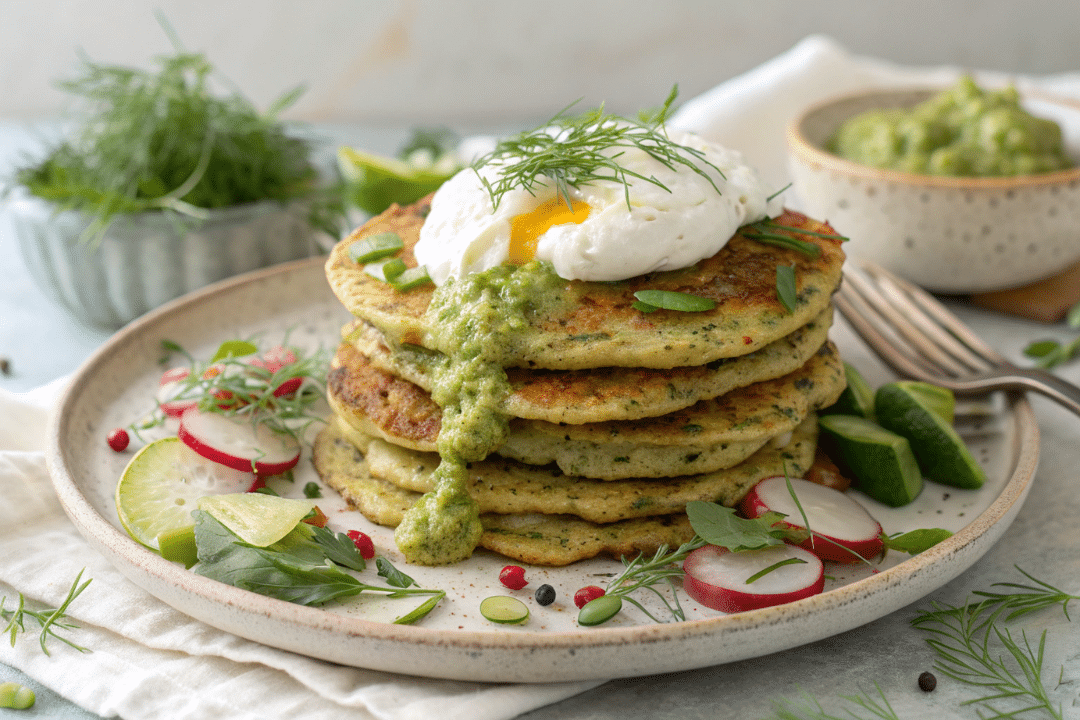
Heat control makes the difference between a browned, tender pancake and one that’s raw inside or charred outside.
Skillet Setup
Preheat a heavy skillet over medium heat until a drop of water skitters across the surface. Wipe a thin film of oil or a small knob of ghee across the pan so the batter slides and browns.
Pour, Spread, and First-Side Cues
Pour batter into the center and gently spread into an even round. Listen for a steady sizzle, watch for tiny bubbles, a dulling surface, and edges that lift slightly. Those cues tell you it’s time to flip.
When to Flip and Cook for Minutes
Flip once and do it confidently; avoid pressing down. Aim for about 2–3 minutes per side. Look for mottled golden brown spots, crisp edges, and a center that springs back when touched.
Common Fixes
| Issue | Cause | Fix |
|---|---|---|
| Thick batter | Too little liquid | Thin with 1–2 tbsp water, rest 5 minutes, then cook |
| Sticking | Pan not hot enough or no fat | Preheat longer, add a thin oil film, don’t flip early |
| Pale color | Low heat or little fat | Raise heat slightly and add more oil at edge |
| Undercooked middle | Heat too high or too thick | Lower heat, cover briefly, cook a few extra minutes |
Move finished cakes to a warm plate while you finish the batch. For alternate grain ideas, see this acorn flour pancakes recipe.
Ways to Serve and Customize Savory Oat Pancakes with Herbs
Treat each warm round as a base for bright chutneys, creamy spreads, and crisp vegetables. Small changes to toppings alter texture and flavor in a single bite.
Sauces and Sides
Choose a bright coriander chutney for acid and herb lift, or a tangy tomato chutney for depth. Hummus adds body; pesto brings herb richness. For a familiar note, serve ketchup as a casual side.
| Sauce / Side | Flavor role | Best pairing |
|---|---|---|
| Coriander chutney | Fresh, acidic | Leafy greens, egg, onion |
| Tomato chutney | Tangy, sweet | Roasted carrots, zucchini |
| Hummus | Creamy, nutty | Sautéed mushrooms, spinach |
| Basil pesto | Herb-rich, oily | Grilled zucchini, arugula |
Build a Breakfast Stack
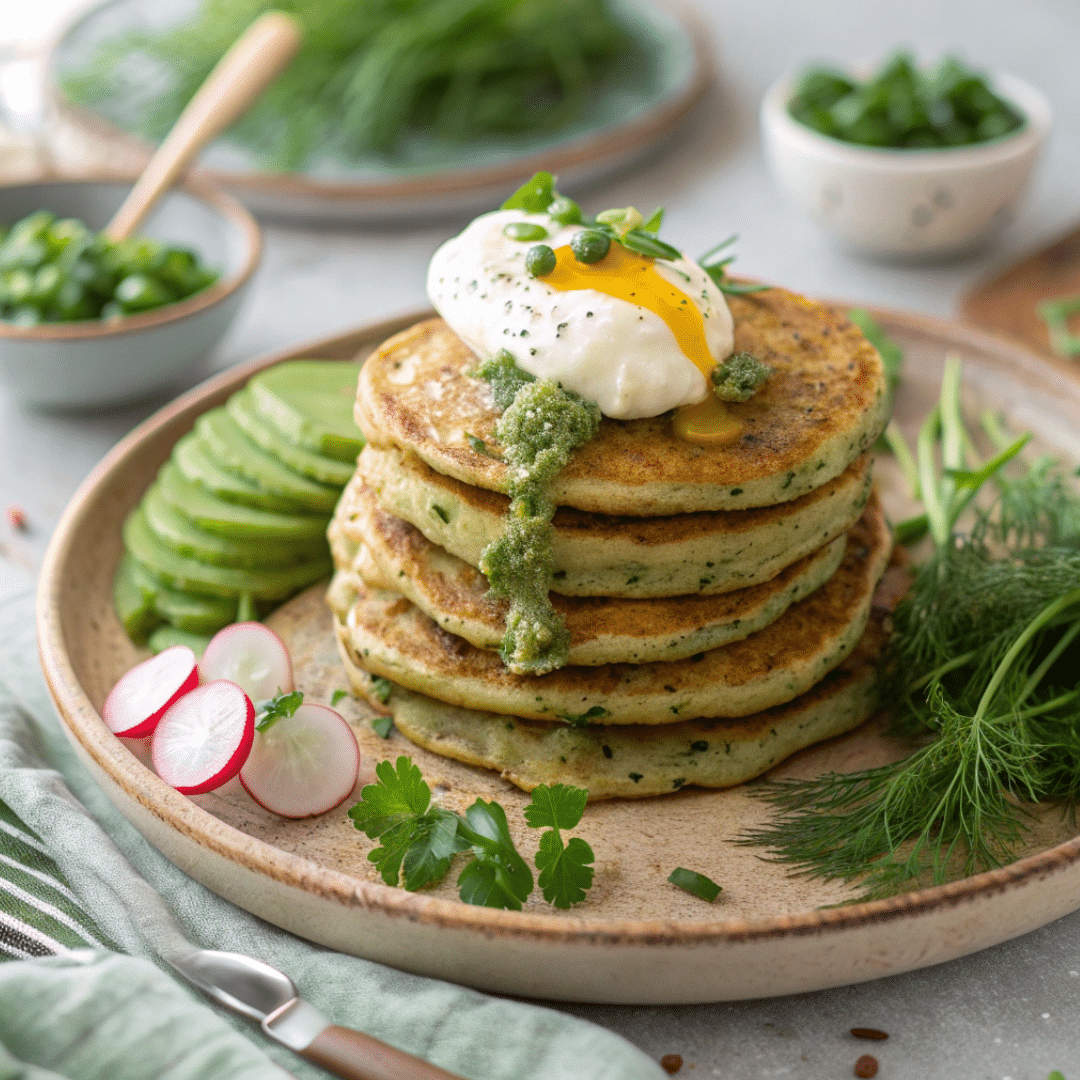
Layer greens first so they act as a moisture barrier. Add thin zucchini ribbons, then sliced red onion for bite. Top with a jammy farm egg and a smear of mustard or pesto.
Meal-Prep and Reheating
Cool cooked rounds on a rack to avoid trapped steam. Stack between paper towels, wrap in foil, then refrigerate to limit sogginess. To reheat, warm in a dry pan or lightly oiled skillet until edges re-crisp—about 2–3 minutes per side.
- Treat rounds like small flatbreads that carry sauces and crunchy veg.
- Pick spreads (chutney, hummus, pesto) to balance heat and pepper bite.
- Use sautéed mushrooms or grated carrots for texture and natural sweetness.
For more ideas on a mushroom-forward breakfast, see this easy mushroom breakfast. Once you control the batter and heat, you can make savory variations any day.
Conclusion
The best results come from focusing on four repeatable steps that control texture and flavor. Grind oats into a fine flour, keep the batter pourable but not runny, let it rest briefly, and cook on steady heat until bubbles form and edges set.
Fine flour improves crumb; a splash of water or a cup of buttermilk controls spread. A thin film of oil in a hot skillet helps brown the surface and prevent sticking. Flip once, confidently, and look for a center that feels set, not wet.
Practice these cues, and the method becomes second nature. Try different ingredients and sauces, but keep the batter consistency the same so each pancake turns out reliably good the next time you cook.
Savory Oat Pancakes with Fresh Herbs
Ingredients
Method
- Grind rolled oats into a fine flour. Optionally dry-roast 2–3 minutes for aroma and deeper color.
- In a mixing bowl, combine oat flour, chickpea flour, semolina, baking powder, baking soda, salt, black pepper, and ground coriander.
- In a separate bowl, whisk buttermilk with garlic, ginger, and chopped herbs.
- Pour wet ingredients into dry, stirring gently until just combined. Stop mixing once incorporated to avoid tough pancakes.
- Fold in chopped onion, mushrooms, carrot, peas, and spinach. Batter should pour in a ribbon but not be runny. Adjust with 1–2 tbsp water or buttermilk if needed.
- Let batter rest 10 minutes to hydrate oats and thicken slightly.
- Preheat a heavy skillet over medium heat. Lightly oil or butter the surface.
- Pour 1/4–1/2 cup batter per pancake, spreading gently into rounds.
- Cook 2–3 minutes until edges lift, surface dulls, and tiny bubbles form. Flip and cook 2–3 minutes more until golden brown and cooked through.
- Transfer pancakes to a warm plate while finishing the batch.
Notes
FAQ
How do I make rolled oats into a smooth flour for the batter?
Can I replace all-purpose flour with chickpea flour or semolina?
What fresh aromatics work best for bright flavor?
How do I keep shredded spinach or carrots from making the batter too wet?
Should I use water or buttermilk for the liquids?
How long should the batter rest before cooking?
What size scoop should I use for even pancakes?
How do I set up my skillet for even browning?
When is the right time to flip a pancake?
How many minutes per side should I cook them?
What if the batter is too thick or too thin?
Why do my pancakes stick to the pan?
How can I keep them crisp when reheating from the fridge?
What sauces and sides pair well?
Can I add mushrooms, peas, or zucchini to the batter?
Are these suitable for meal prep?
About The Author

John
John Watson is the passionate food enthusiast behind MePlusFood.com. With a deep love for exploring culinary delights, he shares honest restaurant reviews, mouthwatering recipes, and culinary adventures. Join John on his flavorful journey to savor the world one bite at a time.