Caramelized Apple Millet Porridge
The caramelized apple millet porridge delivers a spoonable, porridge-like base with syrupy fruit on top and clear timing for busy mornings.
You get a creamy millet that stays tender without getting gummy, a simple stovetop method, and stovetop fruit that finishes in about 10 minutes. Start the grain in water, add milk later to prevent scorching, and use a 1 cup to 4 cups liquid ratio as a reliable baseline.
The texture reads spoonable or pudding-style if blended. Flavors stay mild and nutty, brightened with cinnamon and vanilla. This recipe fits weekday breakfast meal prep and reheats well with a splash of milk; customize with maple, nut butter, or toasted nuts for richness.
Key Takeaways
- A reliable breakfast recipe: creamy base plus stovetop fruit ready on a weekday timeline.
- Texture cues: spoonable, porridge-like, or pudding-style if you blend.
- Core technique: start millet in water, add milk later to prevent sticking.
- Timing: fruit cooks in about 10 minutes; grain simmers longer for creaminess.
- Meal prep win: holds well and reheats with a splash of milk.
- Quick customizations: maple, coconut sugar, nut butters, fruit, or nuts.
Why Millet Belongs in Your Breakfast Rotation
Choose millet as a breakfast grain when you want a mild, steady base that won’t glue up as it cooks. It’s an ancient, gluten-free whole grain that behaves more like rice pudding than a fluffy rice or sticky oat.
What it Tastes Like and Why It Won’t Turn Gummy
The flavor reads mild and lightly nutty, with a faint corn-like note that takes to cinnamon and vanilla. Cooked properly, the tiny grains soften but stay separate, avoiding the gluey texture some rolled oats make.
Gluten-Free Whole Grain Perks
As a whole grain, it adds protein, fiber, and antioxidants compared with many processed cereals. Those elements help meals feel filling and steady without overselling health claims.
Where to Find it and What to Look For
Look in the rice and grains aisle, breakfast cereals, or the baking section. Choose hulled millet with uniform grain size and a fresh smell. Bob’s Red Mill is widely available; you can also buy many varieties online.
| Buy | Look for | Cook cue | Use case |
|---|---|---|---|
| Hulled millet | Even color, no off smell | Simmer until tender, grains separate | Breakfast bowls, grain salads |
| Toasted millet | Lightly browned, nutty aroma | Shorter cook time, watch for toasting | Deeper flavor in porridge-style bowls |
| Whole grain mixes | Clear cooking instructions on the bag | Follow the package; adjust the liquid slowly | Batch cooking, meal prep |
Feel free to follow the bag instructions if times vary and to adjust the liquid slowly while you learn how your stovetop behaves.
Ingredients that Make Caramelized Apple Millet Porridge Taste Like Fall
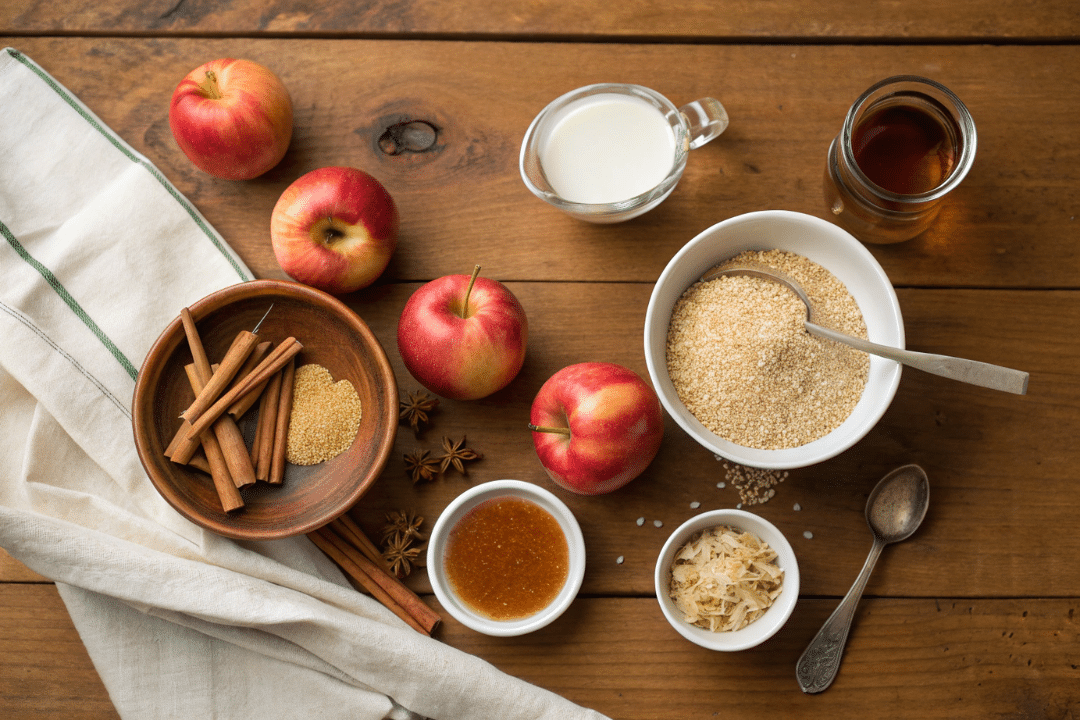
A clear ingredient list removes guesswork. Use 1 cup of grain, 2 cups of water, and 2 cups of milk as a starting formula. Add a teaspoon of cinnamon, a tablespoon of maple syrup, a splash of vanilla, and a pinch of salt to round the base.
Base Essentials and What Each Does
The grain gives body and chew. Water starts to simmer, so the bottom won’t scorch. Milk finishes cooking and makes the texture creamy. Cinnamon perfumes the pot early and links the fruit to the grain. Maple syrup is a clean, adjustable sweetener. Vanilla and salt are quite enhancers that lift natural flavors.
Skillet Fruit: Ingredients and Purpose
Dice firm or soft fruit, depending on the texture you want. Use brown sugar or coconut sugar to make a syrupy pan glaze. A squeeze of lemon keeps the fruit bright as it reduces. A small pinch of salt balances sweetness.
Milk Choices by Vibe
| Milk | Vibe | Notes |
|---|---|---|
| Dairy | Classic, rich | Use whole for silkiness |
| Oat | Extra creamy | Great for thick bowls |
| Almond | Light | Lower calorie, subtle nutty note |
| Walnut / Coconut / Soy | Depth or aroma | Choose for flavor or protein |
Toppings and Finishing Touches
Pick one creamy topper (yogurt or peanut butter) and one crunchy topper (toasted nuts or coconut). Add bananas for softness, blueberries for tang, or dried fruit for chew. Sprinkle walnuts for a toasted bite.
Step-by-Step Method for a Creamy, Spoonable Bowl
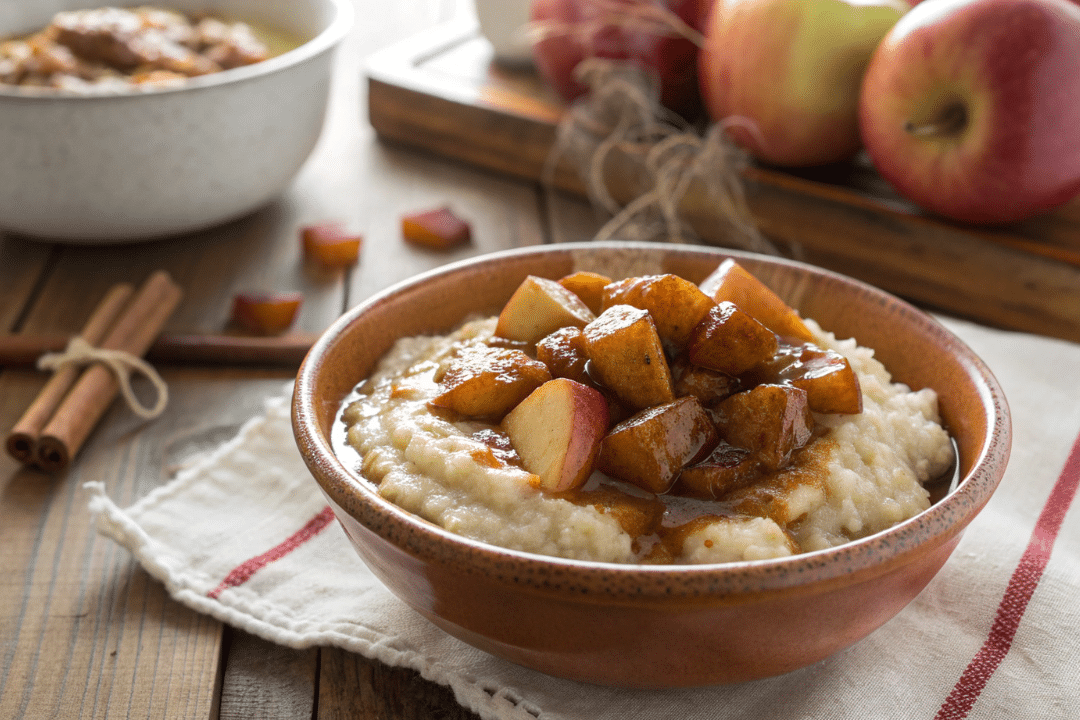
Control your heat from the first minute: bring the water to a boil, then reduce the heat so the milk won’t scorch later.
Use a 2-quart pot and a silicone spatula. Rinse the grain if dusty. Combine the grain, water, and cinnamon in the pot, then bring to a boil for even flavor and tidy cooking.
Simmer then Build Creaminess
After the boil, reduce the heat to a steady simmer. Cook about 10 minutes until the water is mostly absorbed and the grains begin to soften.
Add Milk and Finish Low
Pour in the milk, then stir in maple syrup, vanilla, and a pinch of salt. Cook on low heat about 20 more minutes, stirring every few minutes and more often in the last five minutes.
Timing and Texture Cues
- Stir lightly at 5-minute marks; watch the pot corners where it sticks first.
- If the mix tightens early, add a splash of milk and keep cooking until tender.
- Judge doneness by bite: grains should be soft, not sandy.
- For a pudding-like texture, pulse with an immersion blender in short bursts.
Finish by stirring in butter if you like, then serve warm. This routine prevents scorched milk, undercooked grit, and an overly thick final bowl.
Caramelized Apples While the Millet Cooks
Make the fruit topping while the grain builds creaminess, so both finish at the same time.
For a fast stovetop finish, heat a wide pan over medium-low heat. Add diced apples, a tablespoon of brown or coconut sugar, a squeeze of lemon, a sprinkle of cinnamon, and a pinch of salt. Stir often and cook about 10 minutes until juices reduce into a light syrup that coats the spoon.
Choosing Fruit and Cut Size
Small dice melt into jammy pieces; thicker wedges keep their shape on top of bowls. Use firmer varieties if you want distinct bites; sweeter types break down faster.
Slow-Spiced Option for a Brunch Bake
For weekends, simmer fruit with vegan butter, a splash of water, vanilla, and arrowroot for 1.5–2 hours. Spoon over the grain, top with a walnut and star anise crumble (pulse walnuts with coconut sugar and a small star anise), then bake 20–30 minutes at 375°F for a warm, layered dish.
- Time the fruit to the milk phase so both end together.
- Use a wide pan to concentrate juices instead of steaming.
- Look for the cue: juices are reduced by half, and syrup coats the spoon.
| Cut | Result | Approx. time |
|---|---|---|
| Small dice | Jammy, spreads | 8–12 minutes |
| Thicker slices | Distinct pieces | 10–14 minutes |
| Slow simmer | Deep spice, bake-ready | 90–120 minutes + 20–30 bake |
Make it Yours: Variations, Swaps, and Prep-Ahead Strategy
With clear ratios and quick fixes, you can scale and store this dish without losing its texture. Start modestly with maple syrup; taste after the fruit and add more only if needed.
If you prefer honey or regular sugar, swap them earlier in the cook so they dissolve evenly. Note: sugar tastes sharper; maple tastes rounder.
Thickness and Liquid Control
Remember the anchor: 1 cup of grain to 4 cups of total liquid. For a creamier bowl, increase milk by a half cup per cup; for a lighter bowl, use more water.
If the mix tightens near the end, add a splash of milk, stir, then simmer two minutes to reset the texture.
Batch Cooking and Storage
Halve or double the batch using the same ratio for reliable results. Leftovers keep 4–5 days refrigerated.
Before chilling, stir in a little milk to prevent a dense “brick.” Reheat on the stove or in short microwave bursts, loosening with milk or water as needed.
Seasonal and Savory Options
Try pumpkin puree and warm spices in fall, or fold in blueberries late for bright color. For bananas, finish with browned butter and a sprinkle of walnuts.
To go savory, skip sweeteners and fruit. Add salt, olive oil or butter, and hearty toppings such as roasted vegetables, fried eggs, or crispy chickpeas.
| Swap | When to add | Effect | Suggested toppings |
|---|---|---|---|
| Maple syrup/honey | After the milk phase, taste, then adjust | Round sweetness / floral note | Walnuts, yogurt |
| Pumpkin puree | Stir in the last 5 minutes | Body and spice carrier | Toasted coconut, cinnamon |
| Blueberries/bananas | Blueberries added late; bananas finish in the pan | Tang or caramel depth | Peanut butter, walnuts |
| Savory (no sweetener) | Throughout, finish with salt | Grain-forward, meal-ready | Roasted veg, crispy chickpeas |
Conclusion
A simple routine ties the whole breakfast together: start the grain in water, bring to a boil, then reduce the heat and finish with milk for a creamy result.
Done feels clear — soft, not gritty grain and fruit that shines in a glossy syrup. You can have the complete bowl on the table in about 30 minutes of cook time.
Store leftovers in one container for 4–5 days. Reheat gently and thin with a splash of milk if the pot looks thick; it’s an easy fix.
Make it yours: choose your milk, decide on a smooth or textured porridge, and add crunchy toppings for contrast. Follow the steps, taste as you go, and you’ll cook millet porridge with confidence.
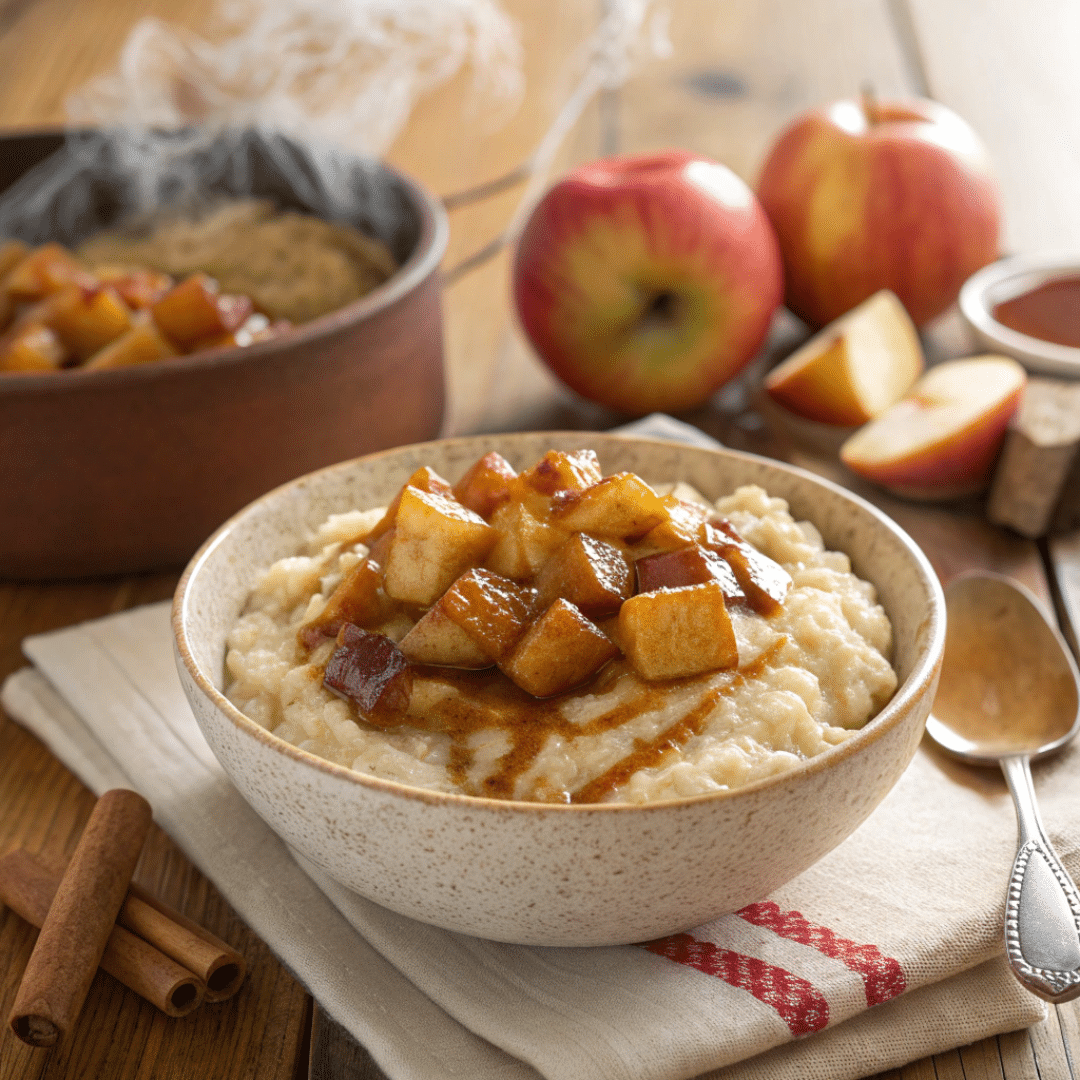
Caramelized Apple Millet Porridge
Ingredients
Method
- In a 2-quart pot, combine millet, water, and cinnamon; bring to a boil.
- Reduce heat to a steady simmer and cook ~10 minutes until water mostly absorbs and grains begin to soften.
- Add milk, maple syrup, vanilla, and a pinch of salt. Simmer on low for 20 minutes, stirring occasionally and more frequently in the last 5 minutes. Adjust milk if porridge thickens too much.
- While millet cooks, heat a wide pan over medium-low. Add diced apples, sugar, lemon juice, cinnamon, and salt. Cook 8–12 minutes for small dice or 10–14 minutes for thicker slices until juices reduce and coat the spoon.
- Stir in butter (optional) to porridge for extra richness.
- Serve warm bowls: spoon millet, top with caramelized apples, drizzle extra maple syrup if desired, and finish with chosen toppings.
Notes
FAQ
What makes millet a good choice for breakfast?
How do I prevent the grains from turning gummy?
What liquid ratio should I use for a creamy bowl?
Can I use only milk instead of water and milk?
How long does it take to cook the grain until soft?
What apples and cut size are best for making the fruit topping?
How do I make the fruit topping without burning the sugar?
Can I use maple syrup, honey, or coconut sugar interchangeably?
How can I make the porridge smoother like a pudding?
What are good toppings and flavor boosters?
How do I scale the recipe for batch cooking and storage?
Any tips for savory variations?
About The Author

John
John Watson is the passionate food enthusiast behind MePlusFood.com. With a deep love for exploring culinary delights, he shares honest restaurant reviews, mouthwatering recipes, and culinary adventures. Join John on his flavorful journey to savor the world one bite at a time.