Charred Cabbage with Garlicky Caraway Butter
Jump to Recipe
Charred cabbage with caraway butter is cabbage cut into thick wedges, seared cut-side down in a cast-iron skillet until the edges blacken, then finished in the oven with a garlicky caraway butter until the core goes tender. The char does the heavy lifting here, turning plain cabbage into something closer to a caramelized side dish.
This one comes together in about 45 minutes and uses a single skillet from start to finish. You sear the wedges in two batches so each one gets real contact with the heat, then everything roasts together once the butter goes in.
If your skillet isn’t ripping hot before the cabbage hits it, you’ll end up with steamed, slightly bitter wedges instead of caramelized ones. Give the pan a few extra minutes over high heat if you’re not sure it’s ready.
I lean on caraway here because it plays well with butter and garlic without needing much else. This eats like a full side dish next to roast pork or a simple sausage.
Why You’ll Love This Recipe
- One skillet handles searing and roasting, so cleanup stays minimal
- Deep char on the cut sides caramelizes the cabbage’s natural sugars
- Caraway butter adds a savory, slightly anise-like backbone
- Ready in about 45 minutes with mostly hands-off oven time
Ingredient Notes
- cabbage: Green cabbage works best here. Pick a dense, heavy head so the wedges hold together through searing and roasting.
- butter: Unsalted lets you control the seasoning. Salted works too, just cut back on the added salt.
- caraway seeds: Toast briefly in the butter to wake up their anise-like flavor. Fennel seeds or cumin are fair substitutes.
- garlic: Mince it fine so it softens quickly in the hot butter instead of burning.
- lemon juice: Added at the end for brightness. Cider vinegar works as a substitute.
- olive oil: Used for brushing the cabbage and for searing. A neutral oil with a high smoke point also works.
- parsley: Fresh and chopped, for color and a bit of freshness against the rich butter.
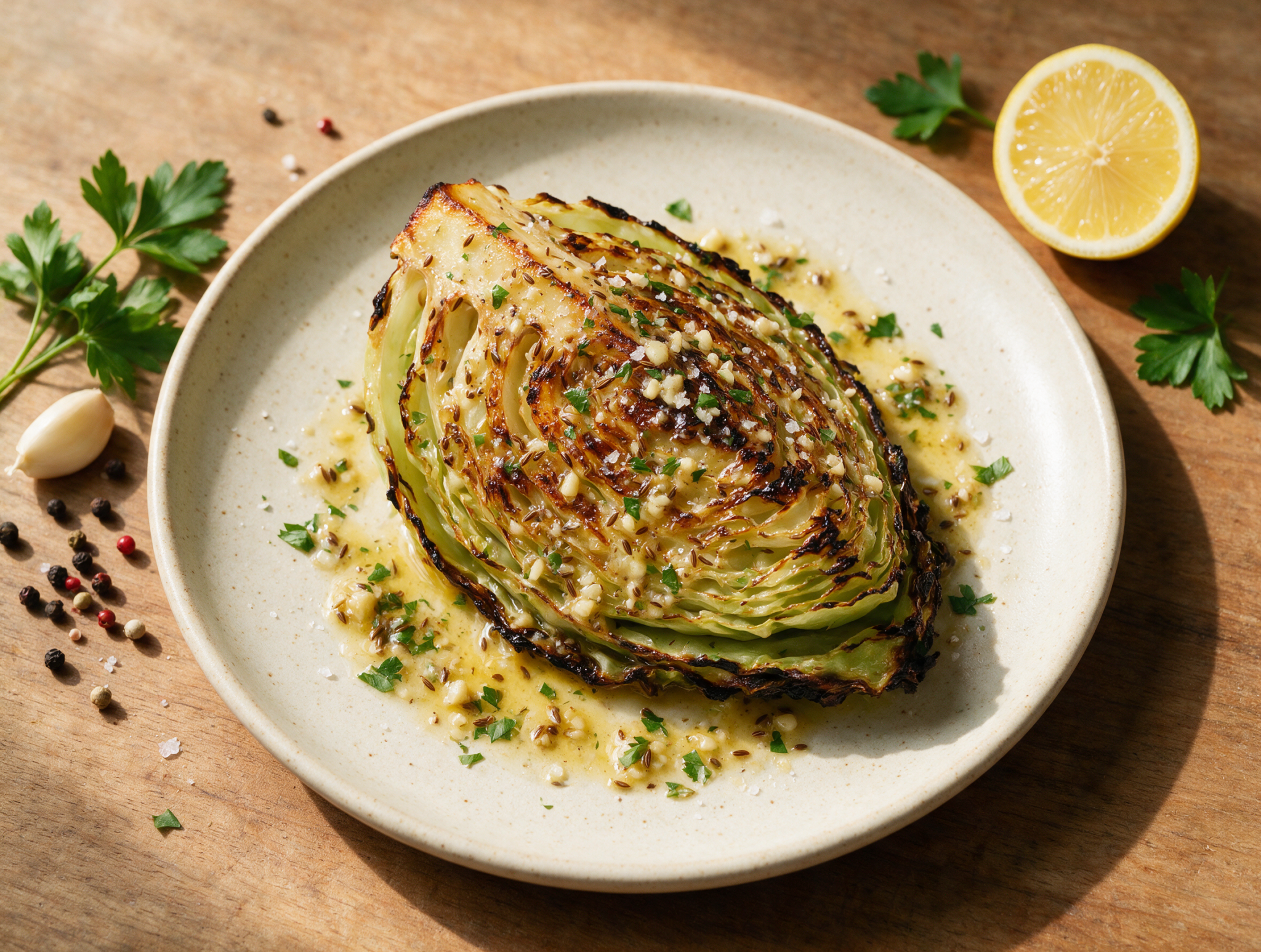
Charred Cabbage with Garlicky Caraway Butter
Ingredients
Method
- Heat the oven to 220 C / 425 F. Cut the cabbage into 4 wedges through the core, keeping the core intact so each wedge holds together.
- Brush the cut sides of each wedge with 2 tbsp of the olive oil and season both cut faces with salt and pepper.
- Heat the remaining 1 tbsp olive oil in a 12-inch / 30 cm oven-safe cast-iron skillet over high heat until shimmering. Working in 2 batches of 2 wedges so the pan isn't crowded, sear cut side down for 3 to 4 minutes per cut side until deeply charred and blackened at the edges. Set seared wedges aside on a plate.
- Reduce the heat to medium. Melt the butter in the same skillet, then add the caraway seeds and garlic. Cook for 1 to 2 minutes until fragrant and the butter smells nutty.
- Return all 4 wedges to the skillet, cut sides up, nestling them into the butter. Spoon some of the butter over the tops.
- Transfer the skillet to the oven and roast for 20 to 22 minutes, until a knife slides through the core with little resistance.
- Remove from the oven and spoon the remaining butter and pan juices over the wedges. Drizzle with lemon juice and scatter with parsley and flaky salt.
- Serve warm, straight from the skillet.
Notes
- Cut wedges through the core so they don't fall apart in the skillet
- Use a heavy cast-iron skillet, it holds heat steady enough for real char
- Don't skip toasting the caraway seeds, raw seeds taste dull
- Sear in batches, crowding the pan drops the temperature and stalls caramelization
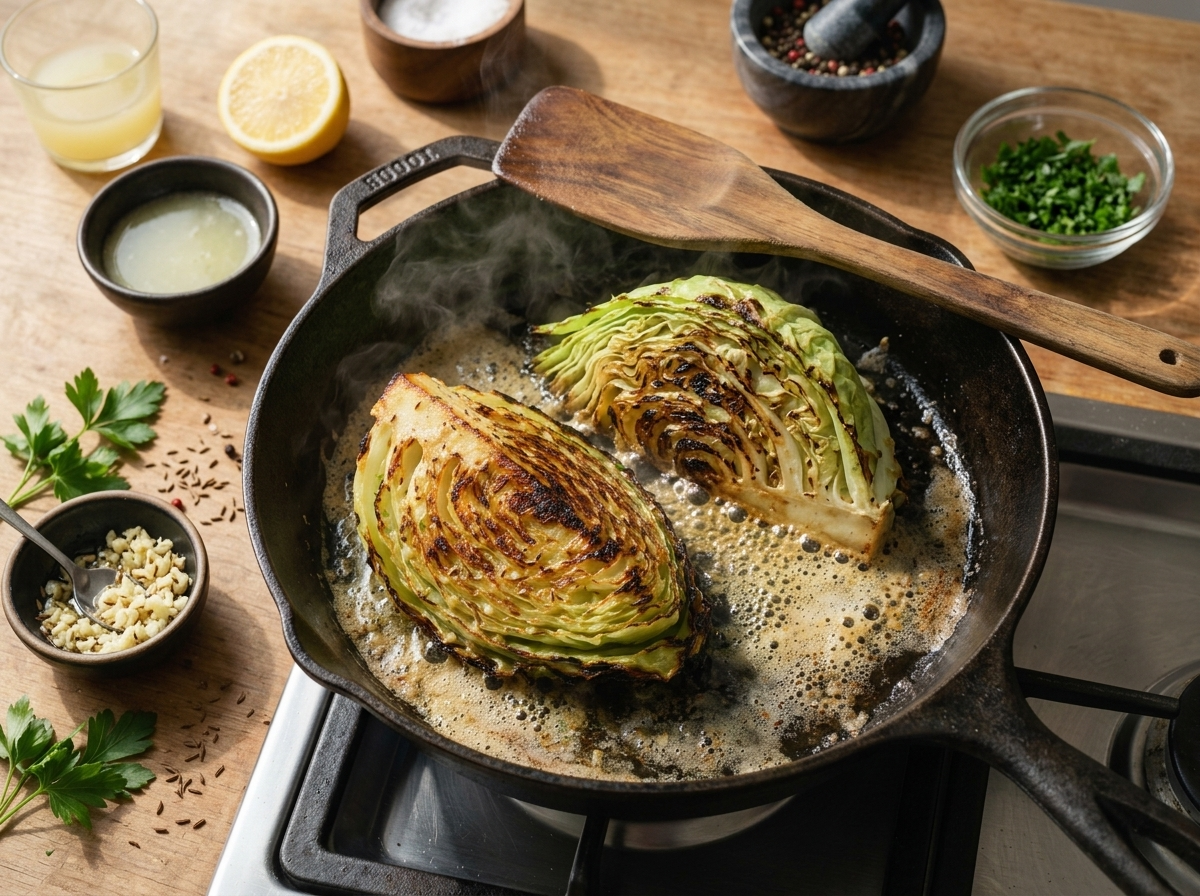
Tips for Success
- Get the skillet ripping hot before the cabbage goes in, so the cut sides caramelize instead of steaming.
- Sear only 2 wedges at a time in the 12-inch skillet so each one gets full contact with the heat.
- Leave the core intact when cutting wedges so they hold together through searing and roasting.
- Toast the caraway seeds in the butter just until fragrant, about 1 to 2 minutes, so they don’t turn bitter.
- Check doneness with a knife at the thickest part of the core, not the leafy edges, which cook faster.
Variations
- Swap caraway seeds for fennel seeds or cumin for a different but equally warm background flavor.
- Finish with grated Parmesan or crumbled feta for a salty layer against the sweet charred cabbage.
- Use red cabbage instead of green for a deeper color and a slightly peppery bite.
Storage and Reheating
Charred cabbage with caraway butter tastes best straight from the skillet, when the edges are still crisp and the butter is glossy.
Leftovers keep in an airtight container in the fridge for 3 to 4 days. Reheat in a 180 C / 350 F oven for 8 to 10 minutes until warmed through. The edges will soften some, but the caraway butter flavor holds up.
You can make the caraway butter up to 3 days ahead and keep it chilled, then char and roast the cabbage fresh right before serving. I don’t recommend microwaving, it turns the cabbage soggy.
Serving Suggestions
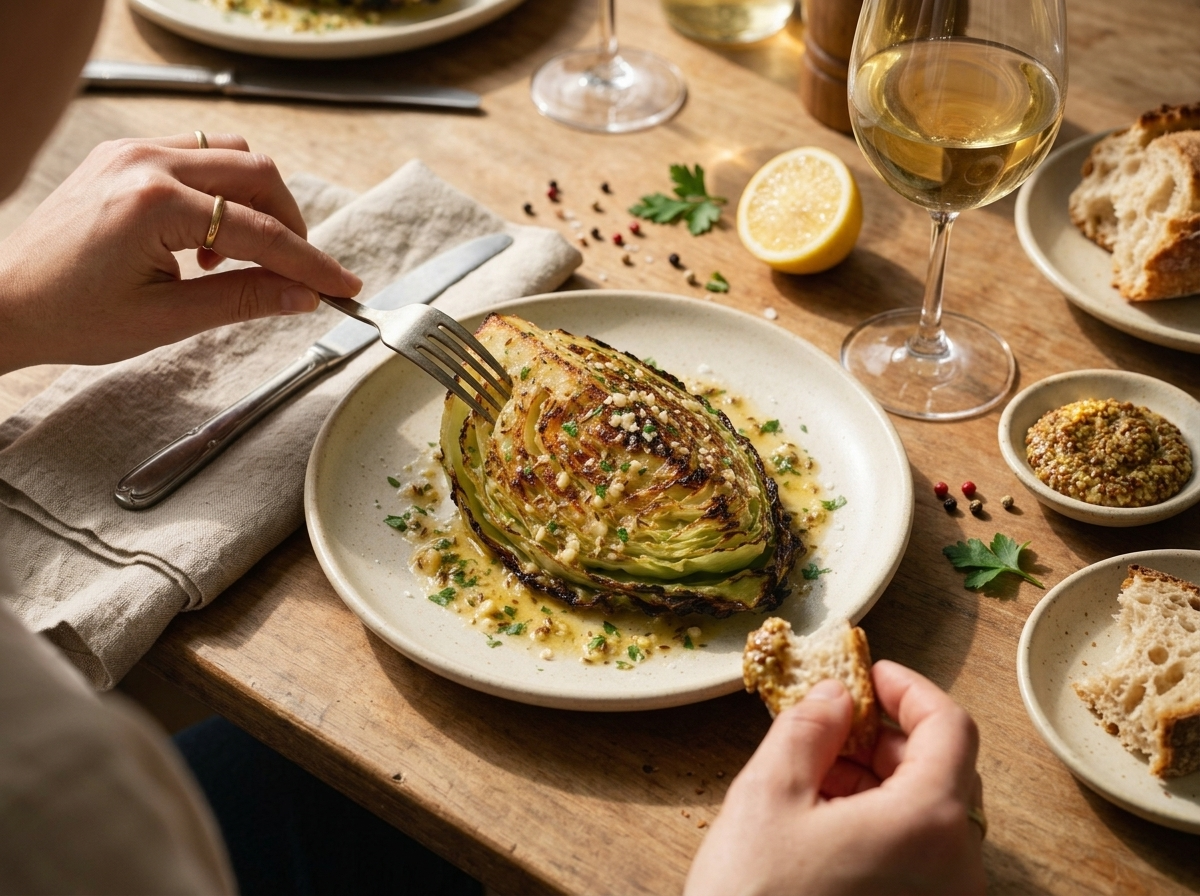
Charred cabbage with caraway butter sits well next to something rich, like roast pork loin, seared kielbasa, or a simple pan-fried sausage. The caraway ties into classic Eastern European and German flavors, so this plays easily alongside pierogi or a mustard-forward potato salad.
For a lighter meal, spoon the wedges over warm farro or barley so the grains soak up the buttery pan juices. A dollop of sour cream, whole-grain mustard, or a squeeze of extra lemon on the side balances the richness.
FAQ
Why is my charred cabbage bitter instead of caramelized?
Bitterness usually means the skillet wasn’t hot enough before the cabbage went in, so the cut sides steamed instead of caramelizing. Get the cast-iron skillet ripping hot, almost smoking, before adding the wedges, and don’t move them for the full 3 to 4 minutes so the sugars have time to brown. If edges blacken too fast on the second batch, lower the heat slightly.
Can I use red cabbage instead of green cabbage for this recipe?
Yes, red cabbage works the same way and gets an even deeper, glossier char once it hits the hot skillet. It’s slightly firmer than green cabbage, so add 2 to 3 extra minutes in the oven to get a knife through the core cleanly. The caraway butter tastes just as good against its more peppery flavor.
Can I make charred cabbage with caraway butter ahead of time?
Charred cabbage with caraway butter is best fresh, but you can make the caraway butter up to 3 days ahead and keep it chilled. Char and roast the cabbage right before serving for the crispest edges. Leftovers keep in the fridge for 3 to 4 days and reheat in a 180 C / 350 F oven for 8 to 10 minutes.
What goes well with charred cabbage and caraway butter?
Charred cabbage with caraway butter pairs well with something rich and savory, like roast pork, seared kielbasa, or a pan-fried sausage, since the caraway echoes classic German and Eastern European flavors. It also works next to farro or barley to soak up the buttery pan juices, with sour cream or mustard on the side.
Is charred cabbage with caraway butter gluten free and can I make it dairy free?
Charred cabbage with caraway butter is naturally gluten free, since cabbage, butter, and caraway seeds contain no gluten. To make it dairy free, swap the butter for a neutral vegan butter or olive oil and add the caraway seeds and garlic to that instead. The technique and timing stay exactly the same either way.
What’s the difference between charring cabbage in a skillet and roasting it whole in the oven?
Charring cabbage in a skillet gives deep, blackened caramelization on the cut faces in just a few minutes, while roasting a whole head takes much longer and never develops that same contact char. The skillet method also lets the caraway butter baste directly into the wedges as they roast. I prefer the crisp-outside, tender-inside contrast wedges give you.
You might also like
About The Author

John
John Watson is the passionate food enthusiast behind MePlusFood.com. With a deep love for exploring culinary delights, he shares honest restaurant reviews, mouthwatering recipes, and culinary adventures. Join John on his flavorful journey to savor the world one bite at a time.