Discover My Simple Green Pea Pesto Pasta Recipe
I reach for this green pea pesto pasta when I want a fast, feel-good dinner that still tastes restaurant-level.
The dish leans on a few pro touches: reserve starchy cooking water, emulsify oil and cheese into a silky sauce, and add a bright squeeze of lemon to lift richness.
I keep measurements small and clear so you can scale up or down: use about 2 cups of peas, 1/2 cup olive oil, 1/3 cup grated Parmesan, and 2 tablespoons lemon juice, then adjust salt to taste.
Expect vivid color, gentle sweetness from peas, and a glossy sauce that clings to every noodle. I’ll also show quick make-ahead steps and simple storage tips so leftovers reheat with the same texture.
For the full method and a related twist I tested last spring, see my favorite green garlic turn in this spring pesto recipe.
Key Takeaways
- This recipe is weeknight-fast but tastes elevated.
- Reserve starchy water and emulsify for a silky sauce.
- Balance acid and richness with lemon and cheese.
- Use pantry-friendly ingredients and smart swaps.
- Make-ahead tips help leftovers reheat without losing texture.
Fresh, Weeknight-Easy Flavor that Tastes Like Spring
On busy weeknights, I rely on a bright, herb-forward sauce that comes together in minutes and tastes like spring.
I build flavor from the ground up: sweet peas meet herb-forward pesto for a sauce that is bright, creamy, and light enough to carry quick pasta without feeling heavy.
Fresh basil and a touch of garlic give the dish that signature perfume. Good olive oil rounds the edges and helps the sauce cling instead of separating.
A squeeze of lemon keeps things lively and prevents the sauce from tasting flat. I salt and pepper in stages so seasoning stays vivid, and I always save some starchy cooking water to emulsify the sauce for silkiness.
I aim for contrast: a silky sauce over tender noodles, a sprinkle of cheese, and a crunchy topping so every bite has dimension. It feels like early-spring comfort and doubles as a composed salad when served with greens.
| Flavor element | Why it matters | Quick tip |
|---|---|---|
| Basil & garlic | Adds aroma and herb lift | Pulse briefly to keep color bright |
| Olive oil + water | Creates a silky, emulsified sauce | Whisk in reserved pasta water slowly |
| Lemon + salt | Balances richness and sharpness | Taste as you go, add more lemon last |
Ingredients & Smart Substitutions for Bright, Creamy Results
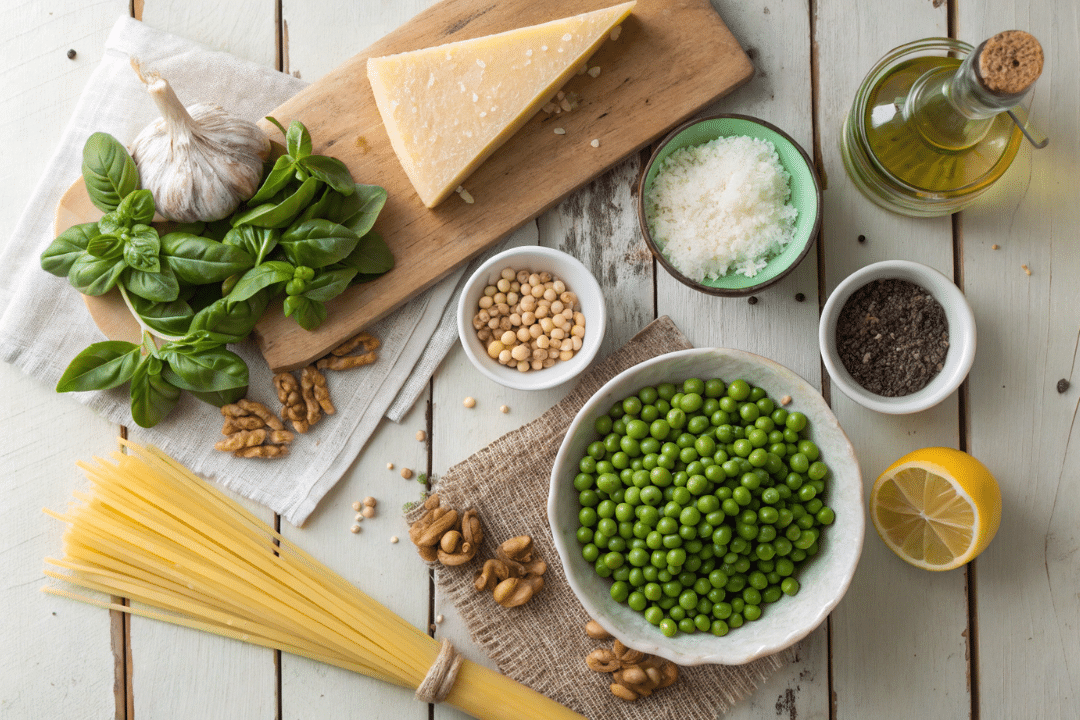
Start with reliable ingredients and small swaps, and you’ll get a glossy, flavorful sauce every time. I write this list to explain why each item matters and how to adapt it when your pantry is low.
Pantry and Produce
I use frozen peas because they’re sweet, consistent, and fast. Blitz a cup of sauce into the sauce and fold another cup through the cooked noodles for pops of texture.
Fresh basil and parsley layer the herbs; a small clove of garlic adds warmth. A squeeze of lemon brightens the whole bowl.
Cheeses and Textures
Finely grated parmesan (or parmesan cheese) melts into the emulsion for savory depth. Stir in mozzarella pearls or a spoonful of ricotta for creaminess. Toasted panko gives a crunchy finish.
Pasta Picks and Swaps
Shells trap sauce, but whole wheat adds nuttiness. For protein and gluten-free options, choose red lentil or chickpea pasta. You can also toss in chickpeas or white beans for extra protein.
- I prep pesto up to 4–5 days ahead; keep it in a small cup under a film of olive oil.
- When cooking from any package, salt the water well so the noodles carry flavor.
| Pasta | Why | Best swap |
|---|---|---|
| Shells | Catch sauce | Whole wheat shells |
| Chickpea | High protein | Red lentil |
| Gluten-free | Allergy-friendly | Brown rice blend |
Green Pea Pesto Pasta — Step-by-Step
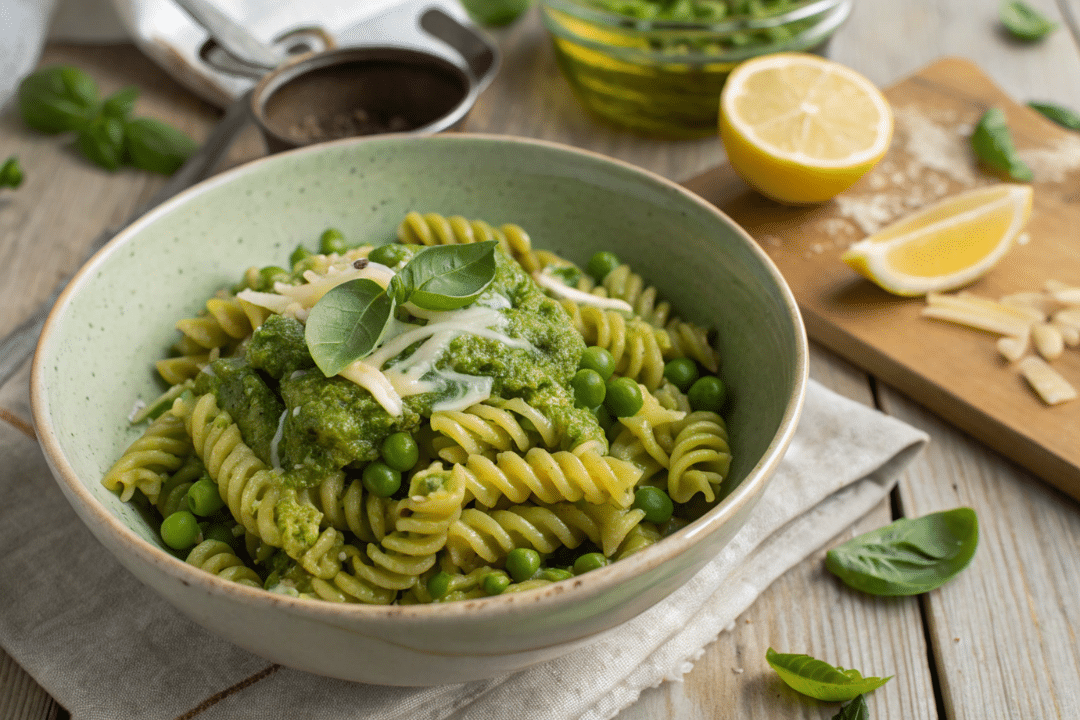
I’ll show the precise moves—timing, texture, and tiny tricks—that make this dish sing.
Cook Pasta According to Package Instructions and Reserve Pasta Water
I bring a large pot of salted water to a rolling boil and cook 1 lb small shells until just shy of al dente—about 2 minutes less than the package instructions. This keeps the noodles springy when tossed with sauce.
Before you drain, reserve 1/2 cup of the cooking water. That starchy water is the secret to a glossy emulsion.
Whir the Pea Pesto in a Food Processor
In a food processor, combine 1 1/4 cups peas, 2 cloves garlic, 1 1/4 cups basil, 1/2 cup parsley, 1/4 cup parmesan, 1 Tbsp lemon zest, and 2 Tbsp lemon juice. Pulse to break things down.
With the motor running, slowly stream in 1/4 cup olive oil until the mixture is smooth and spoonable. Taste and season with salt and pepper.
Toss and Emulsify
Scrape the pesto into a large bowl. Add hot pasta and toss, adding the reserved water 1–2 Tbsp at a time until the sauce clings and looks glossy. Keep tossing to marry the flavors.
Finish with Texture
Crisp 6 slices of prosciutto in 2 Tbsp oil over medium heat, 6–8 minutes, and drain. Toast 1/2 cup panko 3–5 minutes, then toss with 1 tsp lemon zest and 1/4 cup parmesan for crunchy breadcrumbs.
Fold in the remaining peas, a handful of arugula, and mozzarella pearls. Shower the bowl with the lemon-parmesan crumbs and chopped prosciutto. Serve right away—the contrast of silky sauce and bright crunch is everything.
| Step | Time | Cue |
|---|---|---|
| Boil & cook | 8–10 minutes | 2 minutes less than the package instructions |
| Process pesto | 2–3 minutes | Silky, spoonable texture |
| Crisp & toast | 3–8 minutes | Shatteringly thin prosciutto, golden crumbs |
Variations, Add-Ins & Protein Boosts
Little tweaks turn the same sauce into a lush spread, a picnic-ready salad, or a hearty weeknight bowl. I keep changes simple so the dish stays fast and forgiving.
Ricotta Boost for Extra Creaminess
When I want more richness, I blend ricotta into the pea pesto while the noodles cook. A splash of reserved cooking water loosens the mix, so it stays silky.
It makes a great dip for crackers or a thick crostini spread. Make it ahead and store under a thin film of oil for easy serving.
Pasta Salad Vibe — Warm or Room Temp
For a picnic-friendly pasta salad, I fold in peppery arugula, mozzarella pearls, and extra lemon. That brightens the bowl and keeps it lively, whether you serve it warm or at room temp.
Plant-Powered and Protein-Forward Options
I often stir in a can of chickpeas or buttery white beans for plant protein. They take on flavor and make the serving feel complete without fuss.
For higher-protein, gluten-free swaps, use red lentil or chickpea shells; they hold up well and match the sauce texture.
- A quick grate of Parmesan and a drizzle of good olive oil lift the final bite.
- Top with grilled chicken, salmon, or shrimp for a fast path to a protein-forward dinner.
- Frozen peas keep their sweet snap through these variations—no need to overcook.
| Add-in | Why | Quick tip |
|---|---|---|
| Ricotta | Turns the sauce silky and spreadable | Loosen with 1–2 Tbsp reserved water |
| Chickpeas / white beans | Plant protein, hearty texture | Rinse and fold in after tossing |
| Arugula & mozzarella | Pasta salad brightness and creaminess | Add lemon so it tastes fresh at room temp |
Make-Ahead, Storage, Reheating & Nutrition Notes
Do a little work on a day off and your weeknight cooking pays you back in speed and flavor. I prep the major pieces so assembly takes just a few minutes when hunger calls.
Prep Timeline
I make the pesto sauce 4–5 days ahead and keep it in a jar under a thin film of oil. It stays vivid and ready to loosen with a splash of reserved water.
The cooked pasta can be made up to 3 days ahead. Toss it with a teaspoon or two of oil to stop sticking and store it covered in the fridge.
Leftovers and Reheating
Store leftovers in an airtight container in the refrigerator for up to 5 days. I don’t freeze this — the emulsion can break, and frozen peas lose their fresh texture.
To reheat, warm a skillet over medium for about 5 minutes with a spoonful of water, stirring until the sauce shines. For a fast serving, microwave for about 60 seconds and stir before tasting.
- Keep an eye on salt and pepper: salted cooking water and cheese add a lot, so season at the end.
- For gentle revival, heat a small cup of water in the pot to create steam and loosen the sauce without overcooking the noodles.
Nutrition Snapshot & Dietary Notes
Per serving: ~294 kcal; 17 g carbs; 6 g protein; 24 g fat; 4 g saturated fat; 5 mg cholesterol; 1159 mg sodium; 498 mg potassium; 4 g fiber; 7 g sugar. High in vitamins A and C, with about 132 mg of calcium and 2 mg of iron.
The recipe is plant-based, adaptable, and becomes gluten-free if you use GF pasta. Frozen peas keep color and texture through reheating and make this an easy, nutritious weeknight option.
| Item | Quick note | Typical timing |
|---|---|---|
| Make pesto | Store under oil | 4–5 days |
| Cooked pasta | Toss with oil to prevent sticking | Up to 3 days |
| Reheat method | Skillet with a splash of water or a 60s microwave | 5 minutes or 60 seconds |
Conclusion
With a food processor, a squeeze of lemon, and about ten minutes, I turn frozen peas into a silky pesto that lifts simple noodles into a memorable bowl. I keep a cup of reserved water on hand to coax the sauce glossy and smooth.
The wins are practical: few ingredients, a quick blend, and easy make-ahead pesto for busy nights. I taste for salt and pepper, finish with a scatter of parmesan and a drizzle of olive oil, then serve in a wide bowl so the aroma rises.
Whether you choose a warm serving or a chilled pasta salad, this recipe flexes to your time and pantry. When you’re ready, grab the lemon juice, a couple cloves of garlic, and those frozen peas — it’s minutes to a bright, satisfying dish I make again and again.
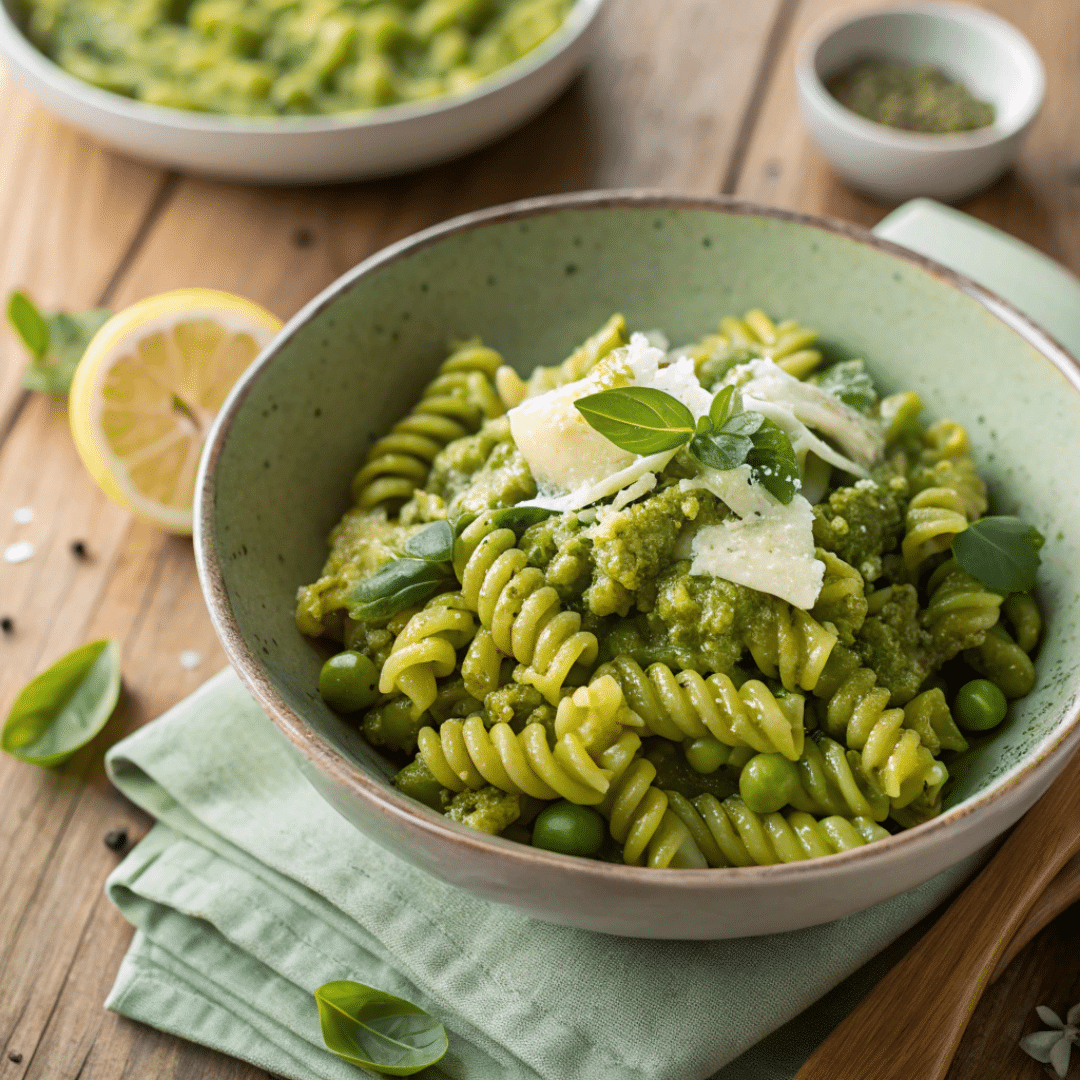
Green Pea Pesto Pasta
Ingredients
Method
- Bring a large pot of salted water to a boil and cook pasta 2 minutes less than package instructions. Reserve 1/2 cup pasta water.
- In a food processor, combine 1 1/4 cups peas, garlic, basil, parsley, parmesan, lemon zest, and lemon juice; pulse until coarsely combined.
- With processor running, slowly stream in olive oil until smooth and spoonable. Season with salt and pepper.
- Drain pasta and transfer to a large bowl. Toss with pesto, adding reserved pasta water 1–2 Tbsp at a time until sauce is glossy and coats noodles.
- Crisp prosciutto slices in a skillet over medium heat, 6–8 minutes, then drain.
- Toast panko breadcrumbs 3–5 minutes; toss with lemon zest and parmesan.
- Fold in remaining peas, arugula, and mozzarella pearls if using.
- Top pasta with lemon-parmesan crumbs and crisped prosciutto. Serve immediately.
Notes
FAQ
How do I cook the pasta so the sauce clings well?
Can I use frozen peas or do I need fresh ones?
What can I substitute if I don’t have basil?
Is there a dairy-free or vegan version of this dish?
How long will the pesto and prepared pasta keep in the fridge?
Can I make this ahead for a gathering or picnic?
What proteins pair best with this recipe?
How do I prevent the sauce from tasting bland or oily?
Any tips for turning this into a warm or room-temperature pasta salad?
What keys to successful texture finishes like crispy prosciutto or lemon-parmesan breadcrumbs?
About The Author

John
John Watson is the passionate food enthusiast behind MePlusFood.com. With a deep love for exploring culinary delights, he shares honest restaurant reviews, mouthwatering recipes, and culinary adventures. Join John on his flavorful journey to savor the world one bite at a time.