Garlic Rosemary Rice Skillet
Jump to Recipe
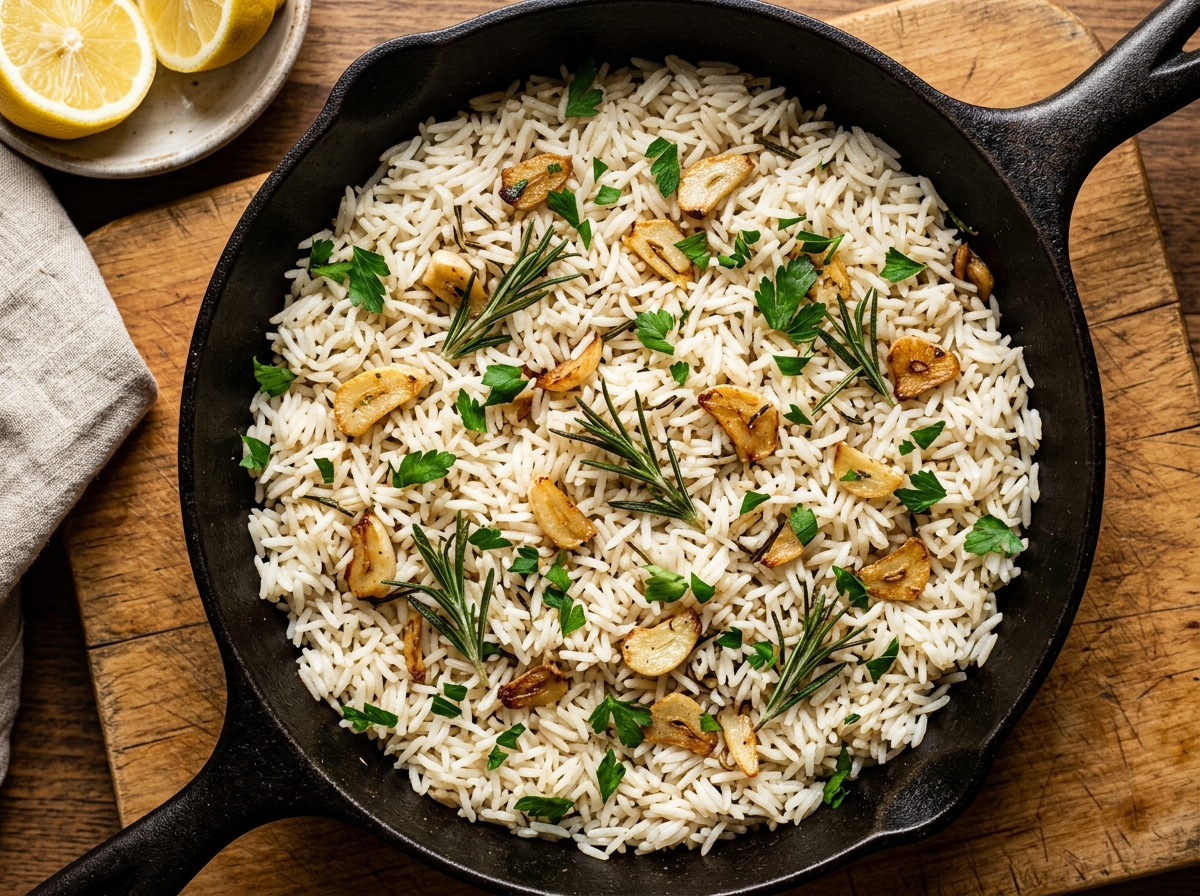
This skillet starts the same way risotto does: toast the raw rice in fat before adding any liquid. That two-minute step builds a nutty base that plain steamed rice never has.
Fresh rosemary and six cloves of sliced garlic go in early, so their flavor cooks into the rice rather than sitting on top of it. By the time the liquid absorbs, the bottom layer of rice is lightly crisp against the pan.
It comes together in about 40 minutes on a single burner with one pan to wash. The rice eats well on its own or alongside roasted chicken, grilled fish, or braised vegetables.
Why You’ll Love This Recipe
- One skillet, minimal cleanup, full-flavored result
- Toasted rice adds nutty depth without extra work
- Fresh rosemary and garlic cook into every grain
- Scales easily from two to eight servings
Ingredient Notes
- long-grain white rice: Long-grain rice keeps grains separate after cooking. Basmati works well here. Short-grain or arborio will turn sticky and is not recommended.
- fresh rosemary: Fresh rosemary holds up to the sauté step without turning bitter. Dried rosemary can substitute at half the amount, but strip out any woody stems before adding.
- garlic: Six cloves sliced thin gives a mellow, sweet garlic flavor as they cook down. Minced garlic burns faster, so watch the heat more closely if you go that route.
- olive oil: Extra-virgin olive oil gives the best flavor here. Butter or a mix of butter and oil also works and adds a richer finish to the toasted rice.
- chicken stock: Low-sodium chicken stock keeps the rice savory without pushing salt levels high. Vegetable stock keeps this fully vegetarian and tastes just as good.
- lemon zest: Zest from half a lemon stirred in at the end brightens the dish. It is optional but it cuts through the richness of the olive oil noticeably.
Garlic Rosemary Rice Skillet
Ingredients
Method
- Rinse the rice in a fine-mesh sieve under cold running water until the water runs clear. Drain well and set aside.
- Heat the olive oil in a 12-inch heavy-bottomed skillet over medium heat until shimmering.
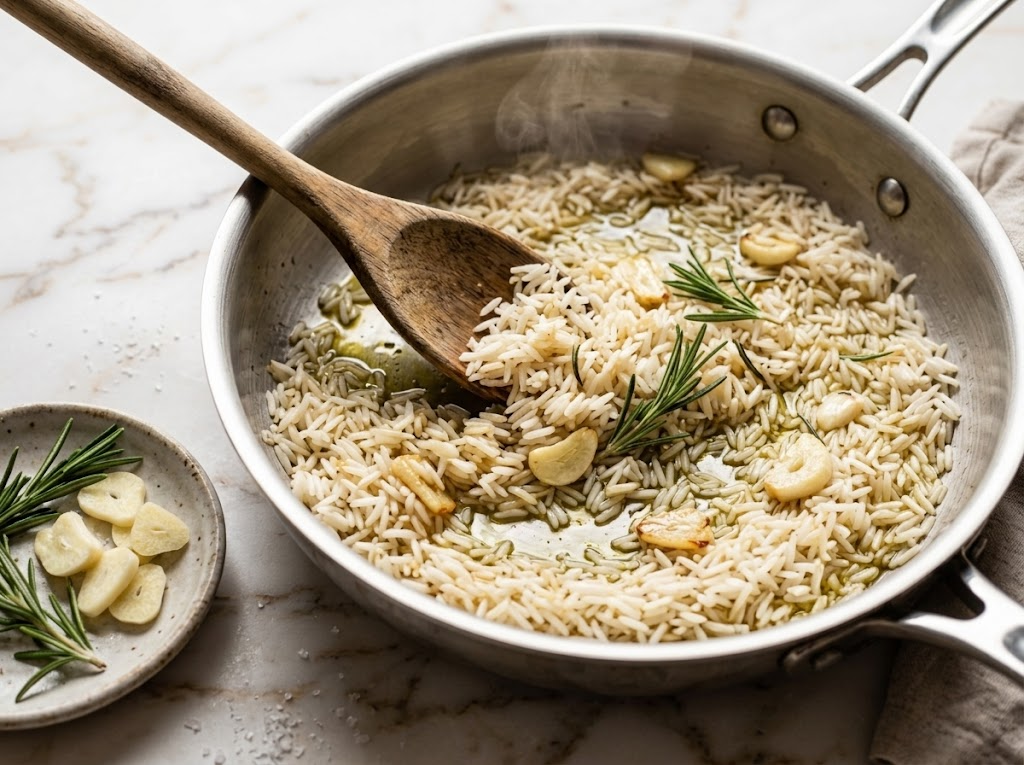
- Add the drained rice and stir constantly for 2 minutes until the grains turn opaque and smell faintly nutty.
- Add the sliced garlic and chopped rosemary. Stir for 1 minute until the garlic softens slightly and smells fragrant, without browning.
- Pour in the warm stock carefully. Add salt and black pepper. Stir once to combine.
- Bring to a gentle boil, then reduce heat to low. Cover with a tight-fitting lid and simmer for 18 minutes without lifting the lid.
- Remove the skillet from the heat. Leave the lid on and let the rice rest for 5 minutes.
- Remove the lid and fluff the rice with a fork. Stir in the lemon zest if using. Taste and adjust salt.
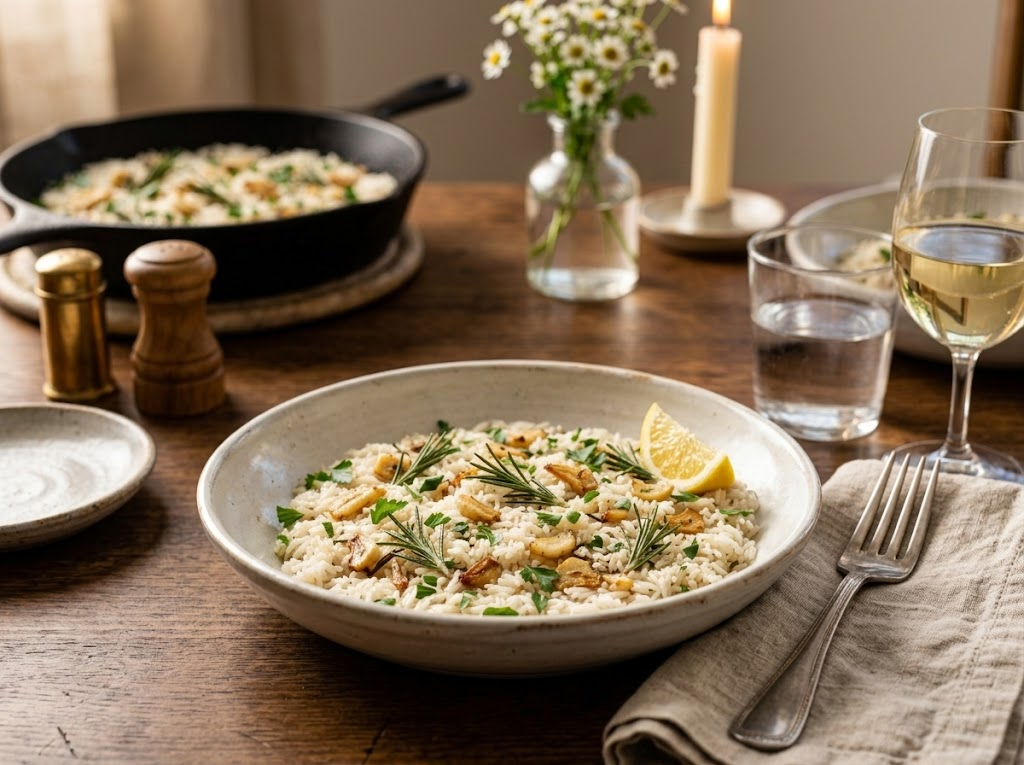
- Scatter chopped parsley over the top and serve straight from the skillet.
Notes
Tips for Success
- Toast the dry rice in oil for 2 full minutes, stirring constantly, until the grains smell faintly nutty.
- Add garlic and rosemary after the rice is toasted, not before, so they soften without scorching.
- Pour in warm or room-temperature stock to prevent the rice from seizing and cooking unevenly.
- Keep the lid on and resist lifting it during the 18-minute simmer so steam pressure stays consistent.
- Let the rice rest off the heat for 5 minutes before fluffing to allow residual steam to finish the grains.
Variations
- Add 150 g halved cherry tomatoes with the stock for a lighter, slightly acidic rice.
- Stir in 80 g freshly grated Parmesan and a knob of butter off the heat for a richer finish.
- Use brown basmati rice, increase stock to 480 ml, and extend simmer time to 40 minutes.
Storage and Reheating
Store cooled rice in an airtight container in the refrigerator for up to 4 days. Spread it flat so it chills quickly and evenly.
To reheat, add 2 tablespoons of water or stock per cup of rice to a skillet over medium heat, cover, and warm for 4 to 5 minutes until the rice is hot throughout. Microwave reheating works too: cover loosely and heat in 60-second bursts, stirring between each.
Frozen rice keeps for up to 2 months. Freeze in single-serving portions and thaw overnight in the fridge before reheating.
Serving Suggestions
This rice works well under braised lamb, roasted chicken thighs, or pan-seared salmon. The crisp bottom layer holds up to saucy proteins without turning soggy immediately.
For a plant-forward plate, spoon it alongside roasted root vegetables or a simple white bean garlic stew. A handful of chopped flat-leaf parsley scattered on top adds freshness and color before serving.
It also holds well in a grain bowl format with sliced avocado, a soft-boiled egg, and a drizzle of tahini the way a lemon lentil zucchini bowl builds its layers. The garlic rosemary flavor pairs particularly well with lemon-dressed greens.
FAQ
Why is the bottom of my garlic rosemary rice sticking to the skillet?
A light crust at the bottom is intentional and adds texture. If the rice is burning rather than just crisping, the heat is too high. Keep it at a low simmer once the lid goes on and use a heavy-bottomed skillet that distributes heat evenly.
Can I use dried rosemary instead of fresh in this rice skillet?
Yes, use half the amount, about 1 teaspoon. Add it at the same time as the garlic. Dried rosemary can be slightly coarser, so chop it briefly before adding if the texture bothers you.
Can I make this garlic rosemary rice ahead and keep it crispy?
The rice reheats well but loses the initial crispiness after refrigerating. To revive some texture, reheat it in a dry skillet over medium heat for 3 to 4 minutes without stirring until the bottom layer crisps again.
What protein pairs best with garlic rosemary rice?
Roasted chicken thighs, pan-seared lamb chops, or grilled swordfish all match the rosemary and garlic profile well. For a vegetarian plate, a soft-boiled egg or braised white beans work just as naturally.
Is this garlic rosemary rice skillet gluten-free?
Yes, as long as you use a certified gluten-free stock. Plain long-grain rice, olive oil, garlic, and rosemary are all naturally gluten-free. Check your stock label because some brands add wheat-based flavor enhancers.
How is this different from pilaf?
This recipe follows the pilaf method: toast the rice in fat, sauté aromatics, then cook in stock, much like the technique behind herb roasted tomato farro. Traditional pilaf often uses onion and butter as the base; this version uses garlic and rosemary with olive oil, giving it a more Mediterranean character.
About The Author

John
John Watson is the passionate food enthusiast behind MePlusFood.com. With a deep love for exploring culinary delights, he shares honest restaurant reviews, mouthwatering recipes, and culinary adventures. Join John on his flavorful journey to savor the world one bite at a time.